Jim Lawley

Jim Lawley is a former university lecturer who has lived and worked in Spain for 40 years.

The National Trust’s abuse of language

From our UK edition

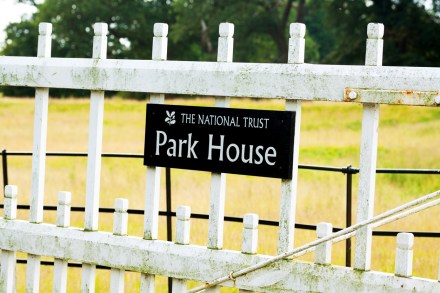
‘Remember to bring your childrens bikes with you so you can all enjoy the estate,’ the National Trust’s website says, inviting visitors to its parkland site at Crom beside the shores of Upper Lough Erne in Northern Ireland. If, like me, you think omitting the apostrophe in ‘children’s’ is a bad look for an organisation that claims to raise ‘the standard of presentation and interpretation’ at the places it looks after, then steel yourself; it gets much worse. The National Trust can’t even be bothered to make sure its pronouncements are written in correct English You see, the National Trust may ‘look after nature, beauty and history for everyone to enjoy’ but it doesn’t seem to care much about the English language.

Spain isn’t afraid of England at all

From our UK edition

England play Spain this evening in the final of the 2024 UEFA European Football Championship. On Wednesday evening England’s last-minute goal eliminated the Netherlands and simultaneously disappointed many Spaniards who were hoping that the game would go to extra time: extending the match would have left the team they play tonight that little bit more tired. People here don’t think that England will be able to survive 90 minutes’ open play against this Spanish team Over the last few days there’s been much talk in Spain of how different each team’s route to the final has been. Spain arrive in Berlin trailing clouds of glory. They’ve put on some exhilarating displays and won all six matches, scoring 13 goals while conceding just three.

There’s one place in Spain that hasn’t turned against tourists

From our UK edition

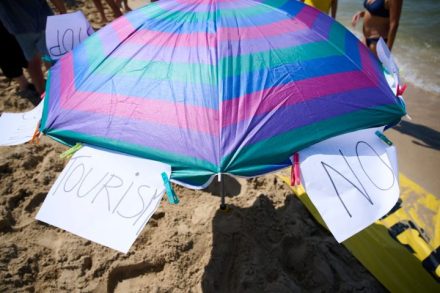
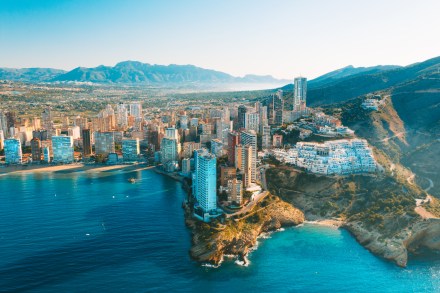
Would you like to spend the winter in Benidorm? I guess it depends on the alternatives, but I wasn’t surprised recently to hear of a couple, both in their late-sixties, from Wolverhampton who spend January and February in the Spanish town. They’re not alone; last year over a million Brits chose Benidorm as a holiday destination.   Is success turning into excess? The locals in some tourist hotspots certainly seem to think so It’s not just the Brits and Benidorm; tourism is booming throughout Spain. In 1954, when Spain began promoting package holidays, there were only one million foreign tourists. Last year there were 85 million and the forecast for 2024 is for up to a hundred million.

Pedro Sanchez may come to regret passing Spain’s amnesty law

From our UK edition

When has any nation’s government amnestied hundreds of people facing criminal charges in return for the votes that allow it to stay in office? That’s what Spain’s government has just done. After last July’s general election, Pedro Sánchez, the incumbent left-wing prime minister, discovered that he needed the 14 votes of two Catalan separatist parties in order to cling onto power. The price of those 14 votes? A general amnesty for several hundred people accused of criminal activities during Catalonia’s secession push, including 2017’s illegal declaration of independence. The amnesty bill, fast-tracked through parliament, was passed yesterday after a spectacularly acrimonious debate: 177 votes in favour and 172 against.

Javier Milei won’t stop insulting Pedro Sanchez’s wife

From our UK edition

The Spanish ambassador in Buenos Aires was recalled to Madrid yesterday after Argentina's president Javier Milei described the wife of Spain's prime minister as ‘corrupt’. Today Spain's foreign ministry summoned Argentina's ambassador in Madrid to demand an apology.  Albares declared that unless Milei apologised, Spain’s government would 'take any measures deemed necessary to defend our sovereignty'  Milei, who was speaking at a rally in Madrid, also mocked Spain's prime minister Pedro Sánchez for taking a five-day break last month in order to decide if he wanted to continue as prime minister.

Catalonia has gone cold on independence

From our UK edition

Is Catalonia's independence movement dead in the water? Elections held in the region on Sunday reveal that support for separatist parties dropped significantly. Between them, the hard-line Junts per Catalunya, the Republican Left of Catalonia (ERC) and two small separatist parties only managed 61 seats – of which 35 went to Junts. In the regional parliament, 68 seats are required for a majority. This is an anticlimatic end to an impassioned, and at times dramatic, saga for the region. On 27 October 2017, confident that the European Union would welcome a new, freedom-loving net-contributor to its budget, Catalonia boldly declared itself 'an independent and sovereign state'.

Life lessons from the oldest people in the world

From our UK edition

María Branyas Morera, aged 117, is the oldest person in the world. She was born in California on 4 March 1907 to Spanish parents who decided to return home in 1915. The voyage was an early lesson in adversity: her father died and María lost the hearing in one ear after she fell from the upper deck. The family settled in Catalonia and María worked as a nurse during the Spanish Civil War. After contracting pneumonia in 1993, she moved into a nursing home in Olot, some 70 miles north of Barcelona. There she played the piano until she was 108 and recovered from Covid-19 in 2020. A resilient, pragmatic approach to adversity and rapidly changing circumstances also helps María is one of about 20,000 centenarians in Spain.

How to make the new natural history GCSE worthwhile

From our UK edition

Teaching for a new GCSE in natural history looks likely to begin next year. It’s part of the Department for Education’s ‘flagship sustainability and climate change strategy’. Apparently this subject is intended to teach pupils ‘how to keep the world safe’. Baroness Floella Benjamin, for instance, suggests it will show them how they can ‘save the world from catastrophe’. Paying attention to non-human life might cure some teenagers of their unhealthy obsession with selfies However well-meant such declarations may be, natural history is in fact about identifying and studying plants and animals, not fretting about ‘the plight of our planet’ and ‘how to rescue it’. Worried about what teenagers would in fact be studying, I wrote to the OCR examination board.

Do Spaniards have the right to eat in restaurants at midnight?

From our UK edition

Yolanda Díaz, one of Spain’s deputy prime ministers, raised eyebrows during last summer’s election campaign when she arranged to be filmed doing the ironing. ‘I love ironing’, she announced virtuously. ‘I spend hours, almost every day ironing’, she went on, warming to her theme. ‘When I get home from work’, she concluded with evident self-satisfaction, ‘I iron my clothes and everyone else’s.’ Now the 52-year-old Labour Minister in Spain’s minority left-wing government has irritated even more people by suggesting that the nation’s restaurants should close earlier: ‘It’s madness to carry on extending opening times; a restaurant still open at 1 o’clock in the morning is not reasonable’, she declared.

How Catalan separatists are taking control of immigration

From our UK edition

In Spain’s general election last July, the right-wing Partido Popular and the even more right-wing Vox won 170 seats, just short of the 176 they needed to form a government. The support of an MP from Navarre and another from the Canary Islands took them to 172 but that only added to the frustrating sense of ‘so near and yet so far’.   60 per cent of Catalans say there is too much immigration Then Pedro Sánchez, the incumbent left-wing prime minister, stepped in, cobbled together an alliance with six other parties and, with 179 votes, was duly re-elected.

The peculiar ritual of Spain’s Christmas lottery

From our UK edition

Half of Britain is said to have watched The Morecambe and Wise Christmas Show in 1977. Spain’s Christmas lottery, broadcast live to the nation each year on the morning of 22 December and marking for many the start of the holidays, is a similar moment of national unity. Spaniards everywhere down tools, watching with bated breath as lives throughout the country are transformed. Lottery tickets are untraceable so previous years have seen furtive-looking men carrying suitcases full of banknotes descend on bars, lottery outlets and banks This year the television cameras and the giant spherical cage containing thousands of numbered wooden balls will be in place as usual.

Why are the Spanish so loyal to the EU?

From our UK edition

An upright Englishman, some years after marrying into a Spanish family, finally breaks his cardinal rule. In a moment of sudden daring at an extended family lunch, he challenges the totem of the Spanish renaissance: the Euro. The stunned silence that follows this blasphemy is filled by one of his in-laws: ‘Aha! Just what I expected... I know exactly what you are... You’re an euroescéptico!’ ‘Eh-oo-ro-es-THEP-ti-co’, she repeats slowly, each of the seven syllables a hammer blow to the poor Englishman’s standing. As this scene from the novel Spanish Practices suggests, the Spanish people’s faith in the European Union is often as blind as it is widespread – not a breath of criticism is permitted.

Pedro Sanchez’s grubby deal to stay in power

From our UK edition

In 2017 the Catalan premier, Carles Puigdemont, having first organised an illegal referendum and then declared unilateral independence from Spain, escaped arrest by hiding in the boot of a car. While other Catalan leaders went to prison for sedition, Puigdemont fled to Belgium where he’s spent most of the last six years living comfortably in self-imposed exile. Now he’s preparing to make a triumphant return to Spain as a free man. The socialist prime minister, Pedro Sánchez, who has just been officially re-elected, has granted an amnesty to Puigdemont and hundreds of others facing fines and imprisonment for their part in that push for independence. Sánchez had previously promised the Spanish people that such an amnesty was impossible.

The Catalan volte face that has disgusted Spain

From our UK edition

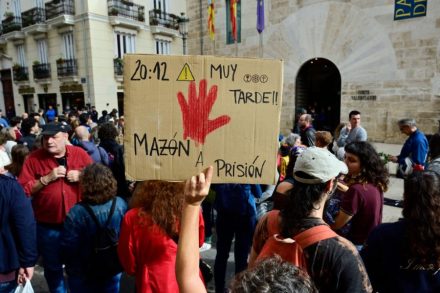
This weekend saw protests across Spain after the acting prime minister, socialist Pedro Sánchez, agreed to a general amnesty for Catalan separatists in return for parliamentary votes to enable him to stay in power. The amnesty will benefit hundreds of separatists facing fines or imprisonment for their involvement in the illegal referendum on independence for Catalonia in 2017, the subsequent unilateral declaration of independence and the concomitant street violence. There have been nine consecutive nights of often violent protest outside the socialist party’s headquarters in Madrid. But Sunday’s demonstrations, convened by the conservative opposition, held at noon in over 50 Spanish cities and attended by hundreds of thousands, were peaceful.

Spaniards are horrified by an amnesty for separatists

From our UK edition

When has a government ever offered an amnesty to fugitives from justice in order to stay in office? That’s what’s happening in Spain at the moment. Following July’s general election the only way in which the caretaker prime minister, the socialist Pedro Sánchez, can cling to power is by cutting a deal with a hodgepodge of small parties, including two Catalan separatist groups. Their price includes a general amnesty for those indicted for their involvement in the illegal referendum on independence for Catalonia in 2017 and the subsequent unilateral declaration of independence. In July’s election Sánchez’s left-wing party, PSOE, won just 121 seats.

Can Spain’s monarchy survive?

From our UK edition

‘We, who are as good as you, swear to you, who are no better than us, to accept you as our king and sovereign lord, provided you observe all our laws and liberties; but if not, not.’ This famous oath of allegiance, sworn hundreds of years ago by the noblemen of Aragon in northern Spain to their king, also neatly expresses the transactional attitude of many contemporary Spaniards to their monarchy. They were willing to accept the restoration of the Bourbon dynasty as part of the post-Franco democratic settlement provided the king deserved their loyalty – but if not, not. And for many, the alleged misdemeanours (personal and financial) of ex-King Juan Carlos mean that he broke that covenant and so forfeited his right to their loyalty.

The secret to learning a language quickly

From our UK edition

Becoming proficient in a so-called ‘easy’ language (for English speakers, French is relatively easy) often takes hundreds of hours; a difficult language (Mandarin anyone?) takes several thousand. That’s good for language teachers, but not so good for the learners.  Language teaching today is where medicine was in the 18th century Even after putting in all those hours of following an expensive course, many people never become proficient. How can so much time and effort amount to such little progress? Language learning happens inside the brain, making the processes involved difficult to observe and understand – that’s why language teaching today is where medicine was in the 18th century, and why, all too often, language lessons are associated with failure.

What to do about rude words in Scrabble

From our UK edition

‘Nice,’ my junior school teacher once surprised the class by announcing, ‘isn’t nice.’ We shouldn’t, Miss Morris went on to explain, describe food as ‘nice’ but instead as ‘tasty’, ‘delicious’ or perhaps ‘tempting’. Similarly, rather than saying that a person is ‘nice’ we should indicate in what way they are nice, describing them for example as ‘charming’, ‘generous’, ‘thoughtful’ or ‘drop dead gorgeous’. All scatological terms will only score half points (but anyone who adds ‘scato-’ to the front of ‘logical’ obviously deserves bonus) Well, she didn’t say that last one. In fact, she rather had it in for the word ‘gorgeous’.

The quiet thrill of moss hunting

From our UK edition

Did you know that an expert on mosses is called a bryologist? And did you know that there are 754 species of moss in The British Isles? No? Well then you can be forgiven for not knowing that my brother, Mark, I write with pride, recently discovered another moss – number 755 – new not only to The British Isles but also to science. Only about 40 naturalists actively study mosses in Britain Poking around along the banks of the River Camlad (the only river, I’m told, that flows from England into Wales) in Montgomeryshire, Mark came across an unfamiliar plant growing in dispersed patches on a riverbank at the edge of a pasture.

Spain’s controlled anarchy

From our UK edition

Life expectancy in Spain is 83 years – amongst the highest in the world. Deep, trusting relationships with family and friends surely contribute to this longevity. Orwell emphasised the ‘essential decency’ of the Spanish people, ‘above all, their straightforwardness and generosity. A Spaniard’s generosity, in the ordinary sense of the word, is at times almost embarrassing … And beyond this, there is generosity in a deeper sense, a real largeness of spirit, which I have met with again and again in the most unpromising circumstances.