Isabel Hardman

Isabel Hardman

Isabel Hardman is assistant editor of The Spectator and author of Why We Get the Wrong Politicians. She also presents Radio 4’s Week in Westminster.

Can Burnham afford to delay raising defence spending?

Can Andy Burnham really delay setting out how he will raise defence spending to 3 per cent of GDP by 2030 until next year’s spending review? The first hostile Labour question that he received at his first Prime Minister’s Questions yesterday came from Tan Dhesi, the Labour MP who chairs the defence select committee. Dhesi’s argument was that ‘vibes alone just will not be enough’ and that the Prime Minister was ‘kicking the can down the road’ by ‘waiting for a fiscal event in a future year’. It is, though, not one being made by a critical mass of Labour MPs, and that is presumably why Burnham feels more comfortable with a bit of can-kicking.

Burnham can’t keep being a people pleaser

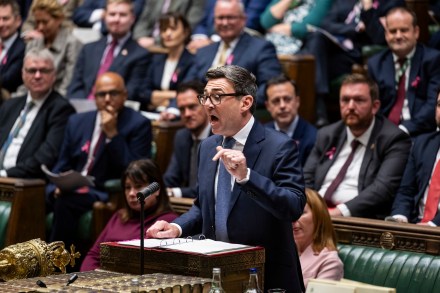
Andy Burnham had a reasonable first outing at Prime Minister’s Questions today. He didn’t flounder, but he didn’t make it look easy, either. He did, though, manage to provide answers to Kemi Badenoch’s questions in a way that his predecessor had routinely failed to. Unlike Keir Starmer, Burnham actually engaged with what the leader of the opposition was asking. It’s early days, though: he also agreed to have meetings with a lot of MPs about their pet issues, and he may find that he quite quickly gives up both the habit of answering the question and of accepting invitations to discuss everything with everyone.  Badenoch opened by jokingly congratulating the new prime minister on his ‘stamina’, which raised a laugh.

How is Burnham different to Starmer?

What is Andy Burnham really going to do that’s different from his predecessor? When he made his first address to MPs as prime minister yesterday, Burnham did promise ‘substantial change’, and suggested that this change would have to involve correcting ‘a series of wrong turns’ made from the 1980s onwards. Those wrong turns were substantial: ‘Political power was centralised, economic power privatised and the country deindustrialised. Austerity followed, hollowing out councils and depriving them of the agency to act to reverse any of it, and then Brexit compounded the damage, ushering in a decade of low growth and stalled regeneration.’ That’s quite a list: one that also conveniently skips over the Blair and Brown Labour governments of which Burnham was a part.

Has Andy Burnham considered the consequences of early prison releases?

Victims will start receiving letters from today informing them that they will be affected by the early release of prisoners, after Andy Burnham confirmed that those convicted of manslaughter will be exempt from the scheme. The Prime Minister had been responding largely to the outcry over the potential release of two of the killers of PC Andrew Harper. While those two men should remain behind bars, Burnham’s solution has left the prisons system in an even more precarious position. This is always the risk when politicians make policy because of an emotional reaction: they can end up skewing the system in a way that has quite profound consequences elsewhere. In this case, though, there are profound consequences whether prisoners are released early or kept inside.

How radical does Andy Burnham want to be?

Is Andy Burnham running a ‘circuit breaker’ government from the one led by Keir Starmer, or is it a ‘continuity’ administration? Chancellor John Healey seems to think it’s the latter, telling Sky News that: ‘This Labour government has been a government of change for the last two years. We now step that up with Andy Burnham as leader. We’re a continuity of a Labour government with a change of leader, looking to see growth in every postcode, give people just a little bit of breathing space, whether they’re in households or businesses, but above all to see growth, hope and some future for all parts of this country.’ What does that word salad really mean?

Burnham’s council housing pledge falls short

We are starting to see a pattern in the announcements that Andy Burnham has made over his first few weeks as Prime Minister. He makes a promise that’s full of belief and righteousness, and then has to follow that up with a policy where the detail contains an admission that he hadn’t fully thought this one through.  Most notably, we’ve had the ‘end rough sleeping' pledge, which, on contact with reality, turned into a plan for everyone to get a ‘route out of rough sleeping by Christmas’. This week, we saw the difference between Burnham's argument that new affordable housing funding should be 'dedicated to council housing', and the reality.

Britain is in for a difficult autumn

How hard is this autumn going to be? This week’s economic figures suggest pretty hard: job losses, higher-than-expected borrowing, and higher inflation (more from Michael Simmons on this here). But anyone following Andy Burnham around might be forgiven for thinking that the big issues in this country are bus journeys and fly tipping. Granted, the first is important and the latter the kind of thing that really makes people feel their local areas are out of control, which then feeds into a wider sense of political failure. The Prime Minister has also been talking further about his pledge to end rough sleeping, which seems both as expensive and unlikely as his promise to fix the social care crisis.

Why Burnham might regret his No.10 North plan

How realistic is Andy Burnham’s plan to make No. 10 North responsible for the government’s ‘growth mission’? The Prime Minister’s argument is that taking that function away from the Treasury and giving it to No. 10 ‘means you’ve got maximum power to unlock the blockages where they exist in the wider Whitehall system’ – and that basing that mission in Manchester rather than Downing Street is part of a ‘huge transfer of power’ out of Whitehall. Burnham also wants to make more use of the Treasury’s Darlington campus, which is still being built and which Rachel Reeves worked from just twice in 2025 when she was chancellor, so it’s quite a low bar to do ‘more’ with that.

Should Prevent be scrapped?

The warning from the Children’s Commissioner that the Prevent programme can’t help ‘a cohort of children intoxicated by extremism’ might initially sound quite inconvenient to the government. But the detail of the report published today by Dame Rachel de Souza is probably something ministers will find quite useful because it allows them to talk about one of Labour’s comfort areas.  The Commissioner finds that seven in ten referrals to the counter-extremism programme involved children who did not have a clear ideology but who had been exposed to damaging online content such as the idolisation of ‘famous’ attackers, sharing extreme pornography and videos of violence, and talking about weapons.

Will Yvette Cooper’s new mental health centres work?

Are mental health centres in libraries, banks and high street locations really going to make much of a difference? Health Secretary Yvette Cooper has unveiled the new facilities today with a £343 million funding package and a claim that this is ‘the biggest redesign of mental health services in a generation’. In any other healthcare setting, that would be a pretty bold claim to make, but instead it just underlines how little work there has been on making mental health services work within the wider NHS.

Andy Burnham must get used to being unpopular

Andy Burnham is apparently enjoying his first taste of unpopularity as prime minister, in the form of the furore over the early release of domestic abusers and the killers of PC Andrew Harper. The Prime Minister made his frustration at the limitations of his situation clear yesterday with a lengthy post on X where he said he wanted to go further in restricting eligibility for early release, but couldn’t. In reality, though, this is a very mild taste for Burnham of the difficulties he will really face: more of a whiff of unpopularity rather than anything that will linger in the mouth.

Why Burnham's borrowing bonanza won't work

Why Burnham’s borrowing bonanza won’t work

The Treasury has plans to kick start the economy with a £9bn borrowing bonanza – something Michael Simmons wrote about in The Spectator in June. Could this reveal something about Burnaham and Healey's plans for the upcoming budget? Also Ed 'Miliwatt' heads to Washington. How will he get on with his American counterparts? James Heale speaks to Michael Simmons and Isabel Hardman.

Andy’s care plan

It's Wednesday, which means there's another announcement from Downing Street. Yes, another one. Today, Andy Burnham is talking social care, and this time, he wants to build a 'cross-party consensus' to fix the broken system. Unfortunately neither Kemi Badenoch nor Sir Ed Davey were able to attend in person, but in a far more successful assemblage, James Heale, Tim Shipman, and Isabel Hardman have come together to talk over the details of what was announced. Tim also assesses what direction the new PM may be heading in over assisted dying legislation. You can read Isabel's piece on Andy's social care plans here Produced by Henry Lloyd and Ed Parker.

Andy's Care Plan

Burnham won’t reform social care with ‘cross-party consensus’

Does Andy Burnham really believe that cross-party consensus is going to resolve the decades-long stalemate on the funding of adult social care? Of course he doesn't, not least because he wouldn't be giving a speech about it this morning: he would have succeeded back in 2009 when he made his first set of proposals on the matter. The new prime minister is probably the figure who bears the greatest scars on their back out of everyone who has attempted to reform social care – and that includes people who've been plugging away at this without much reward, such as the economist Andrew Dilnot.

Burnham must also tackle the quality of Britain’s social care

Andy Burnham knows that ‘fixing’ social care will drain political capital away from him faster than a teenager emptying their parents’ bank account. At the moment, he is clearly more focused on funding mechanisms to put the sector on a sustainable footing and the way in which it will or won’t be enmeshed with the NHS. But there’s another longer-term drain on his – or any future prime minister's – capital too, which is the quality of care that’s available. The debate has understandably been focused on the financial aspect, but, for a long time, we have not had an open discussion of what adult social care should actually be like for the people in the system.

Anas Sarwar’s peerage is hardly a surprise

To the surprise of very few in Scottish politics, bar apparently himself, Anas Sarwar is stepping down as leader of the Scottish Labour party to take up a peerage and serve as a minister in Andy Burnham's government. Sarwar had ruled out this prospect himself during the Holyrood election campaign, but now that he's past the painful result that Labour got in May, he's off for the new life he said he didn't want.  Sarwar was, of course, the first senior Labour figure to call for Keir Starmer to step down – he held a press conference back in February telling the then prime minister that 'the distraction needs to end, and the leadership in Downing Street needs to change'.

Does Burnham really know how to change Britain?

Andy Burnham told his Cabinet this morning that they need to give people a ‘sense that help is coming’. He was largely focused on the cost of living as he addressed ministers, but one of his other big themes in the past 24 hours since taking over as prime minister has been moving power out of Westminster and ‘into every postcode in the land’. It’s the kind of pitch that most new PMs make before they start to realise the limits of their own power, and wonder whether they want to let go of any more of it in the way they’d initially suggested. Burnham is coming into government at a time when the British state seems pretty powerless.

Yvette Cooper is a left-field pick for Health Secretary

What does Yvette Cooper as Health Secretary mean for the NHS? It's a question no one thought to ask before today, which underlines why her appointment is quite left-field. Cooper does have experience: she was a junior minister in the health department back in the very early days of the Blair government and was part of the team that implemented the Sure Start programme. But it's been a while since those days, and Cooper hasn't talked that much about health since. Like her new boss, Cooper pledged to integrate health and social care when she and Andy Burnham were candidates in the 2015 Labour leadership election. Beyond that, we just have to go on how she has conducted herself as a minister.

No, we don’t need a better tone at PMQs

Keir Starmer has been quite an irritable – and irritating at times – performer in the Commons as prime minister. His sessions with Kemi Badenoch in particular have been marked by pompous lectures about how she should be conducting Prime Minister's Questions, along with lofty comments about the ‘spirit in which’ the opposition has been behaving. Starmer hasn't seen anything wrong with this attitude because he made the fatal mistake early on of buying his own hype about what a committed and decent public servant he is, rather than being anxious about whether he was actually meeting his own standards. This means that he seems genuinely appalled by any question that suggests he is in fact not meeting those standards.