
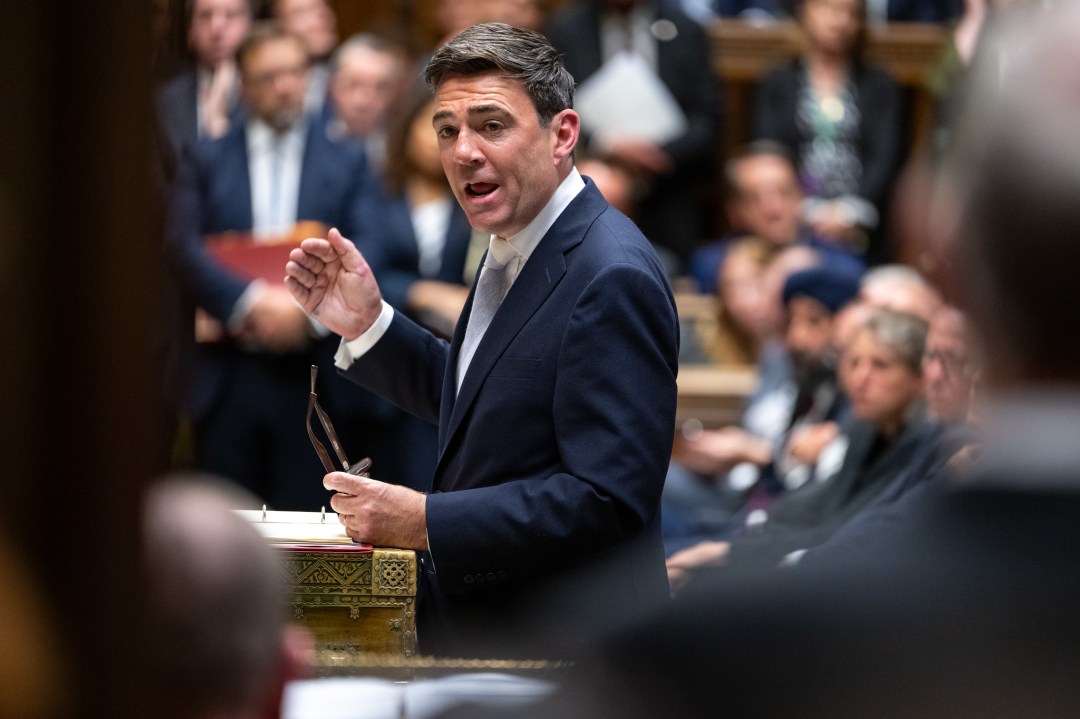
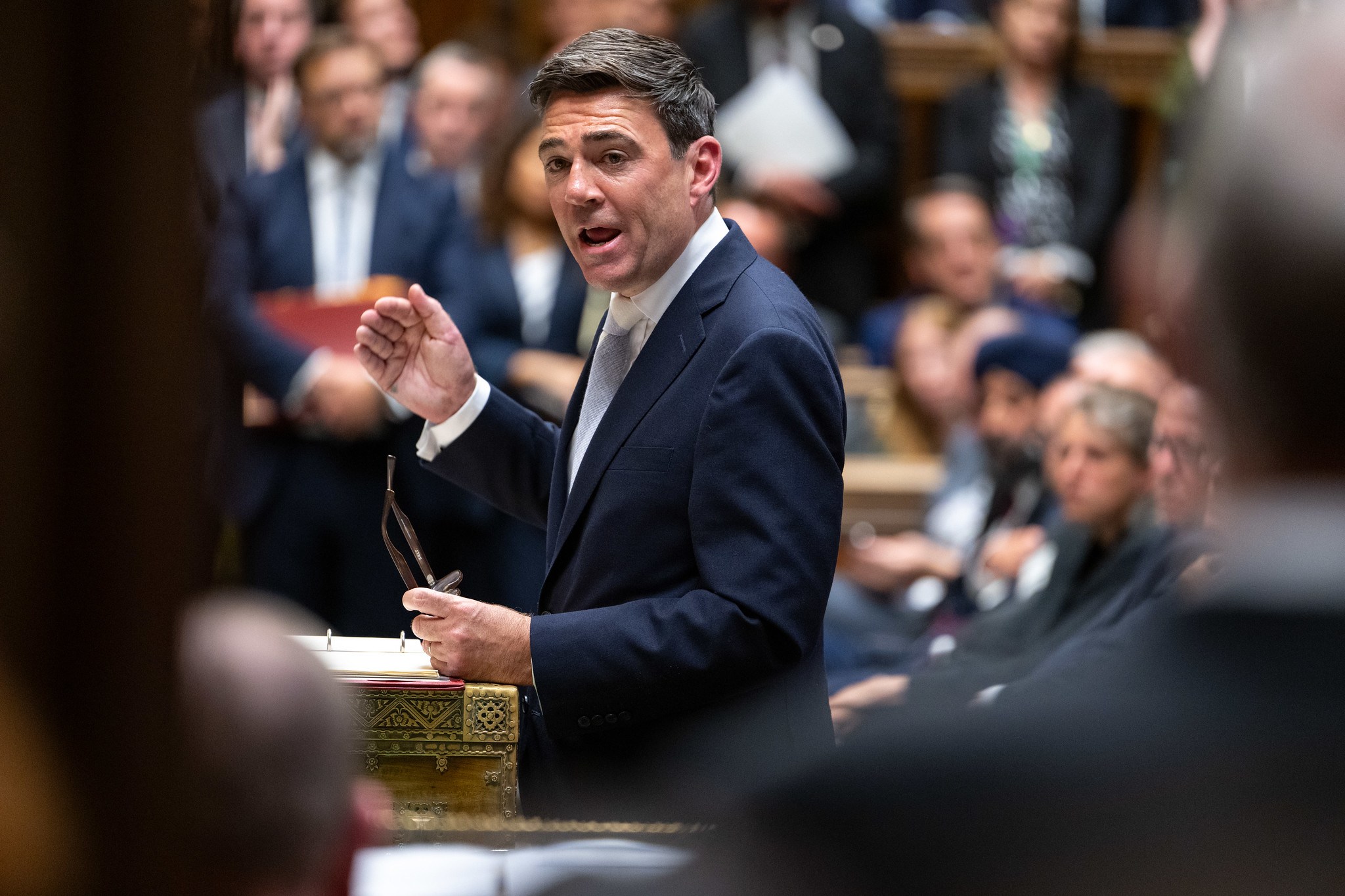
Kemi Badenoch attacked Andy Burnham on defence spending again for the second Prime Minister’s Questions where the pair faced each other. This time, she had the new PM on the ropes. Burnham struggled with her repeated questions on how he would fund defence spending so that it will reach 3.5 per cent of GDP by 2035 – or indeed whether it will reach 3 per cent by 2030. He ended up spending more time explaining why her proposals for welfare cuts wouldn’t work than he did answering the question of how he would fund defence, leading Badenoch and those watching to conclude that he didn’t really know.
Badenoch opened by saying that after last week’s session, it wasn’t clear if Burnham would or would not raise defence spending to 3 per cent of GDP by 2030. She asked whether John Healey was right to have resigned as defence secretary from Keir Starmer’s government over the matter. Burnham gave a similar answer to the one he offered last week: he’d appointed Healey because of his commitment, and that the government was serious about reaching its commitment for 2035 – thus dodging the point about the 2030 target.
The Tory leader then reminded the chamber that Burnham had served in Jeremy Corbyn’s shadow cabinet, and she would therefore not be taking lectures from him on defence. She brought up her plan to fund the armed forces using welfare cuts, and asked Burnham was he unable or unwilling to raise defence spending to 3 per cent? He went on the attack in response, saying he wanted an ‘honest conversation across this despatch box’, and said he had looked at Badenoch’s plan. He said that taking £4 billion out of housing benefit ‘would create levels of homelessness in this country that we haven’t seen before’. He added: ‘We will do everything to support our national security, but it can’t come at the expense of social security. Having strong national security also depends on having resilience in our communities.’ It’s worth pointing out that despite this new slogan about national security not coming at the expense of social security, Burnham himself was mooting welfare cuts to fund defence shortly before he became prime minister: he just believes that he can cut the bill in a way that doesn’t cause any hardship.
Badenoch called that answer ‘unbelievable’, adding that ‘we need to fund our defence, not spend all of our money on welfare’. She asked whether he was going to approve the Rosebank oil field, and then demanded he ‘tell the country where he is going to find the money’. Burnham accused her of wanting to ‘make crude cuts to housing benefit’ and once again warned ‘you will make families homeless, you will increase rough sleeping on our streets’. He did insist that he would ‘bring the welfare budget down’, saying the government would respond to Alan Milburn’s final report on young people and employment later in the year. He turned to another rousing and presumably pre-prepared description of what he wanted to do, saying: ‘We will take the Labour way: change education, support our young people, more mental health support. That is the Labour way to get the welfare bill down and that is the right way to fund defence.’
He seemed to hope that someone else might offer him ideas
Badenoch used her next two questions to ask about ‘Keir Starmer’s surrender of the Chagos Islands’, which the Prime Minister didn’t like, telling her she should do better. He attacked the Tory record on defence spending, and then said ‘it would be better to work across the floor of this house’, adding: ‘That would send the strongest possible message to our armed forces: this is an area for problem solving rather than point-scoring.’ The vague answers that he had given up to this point, though, made it sound rather as though he was hoping that someone else might offer him some ideas for funding defence, as he doesn’t seem to have them himself at present.
The Prime Minister was clearly very keen to highlight something else, though. In his answer to Badenoch’s sixth question, he turned the subject to the sanctions the government announced yesterday on illegal Israeli settlements. He gave a mini-speech about it: ‘She mentions leadership. Let me tell her and the whole house where Britain is showing leadership,’ he said. He attacked politicians from both main parties who’d talked about the importance of the two-state solution but had not taken action, and added: ‘Britain has to stand for something. Britain has to show leadership. Britain has to stand for fairness against injustice. Where people are being bullied out of their homes, intimidated, we will always stand with the underdog and take what action we can to support them. That is leadership on the world stage, Britain being true to what it’s always been about.’ Having taken British policy towards Israel in such a different direction, the Prime Minister clearly wanted to ensure he earns the domestic political credit for it.






Comments