
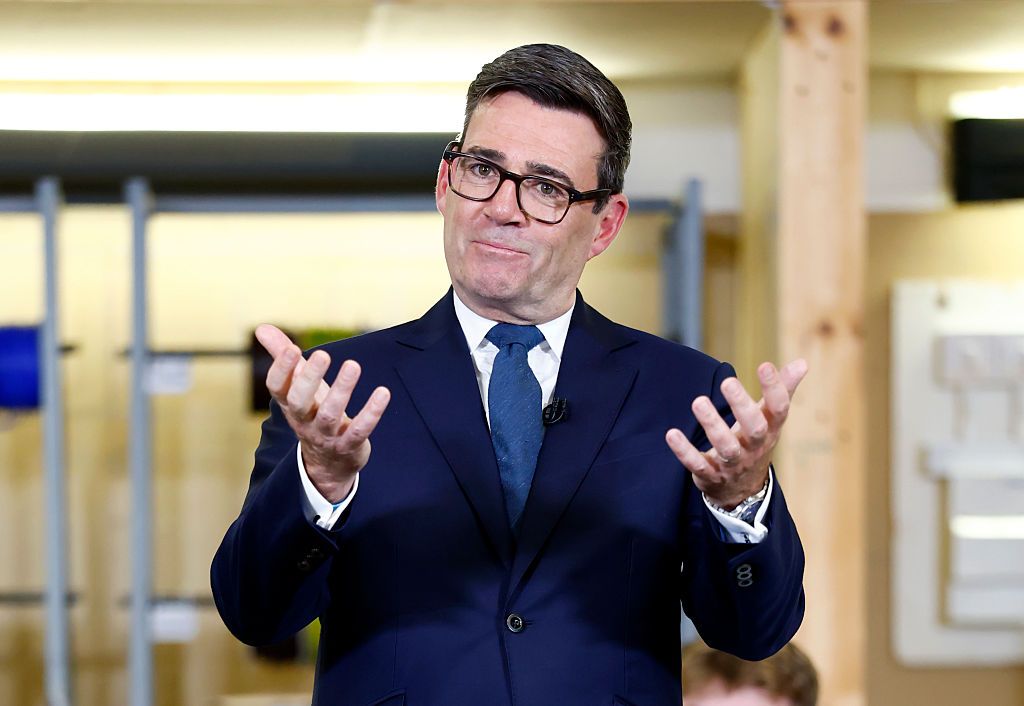
Andy Burnham was already notorious before he became Prime Minister for flip-flopping, but what was less obvious until recently was how much that flip-flopping is caused by his habit of shooting from the hip initially. He says something on the spur of the moment, then finds himself having to row back because it turns out that once you’re in Downing Street, everyone pays attention to your every word. He spent the end of this week insisting that he was absolutely clear on Scottish independence, having been anything but earlier in the autumn. Kemi Badenoch has made a number of jokes at his expense about his aides having to run after him with a ‘dustpan and brush’ after he claimed he had been told Russia did interfere in the Brexit referendum, and about whether he ever grows tired of ‘putting his foot in his mouth’. The Tory leader is clearly keen to characterise Burnham as someone with dangerously loose lips.
But as a reaction against Keir Starmer, who wasn’t so much message disciplined as he was chronically constipated when it came to any kind of message, let alone decision-making, Andy Burnham the loose-lipped politician does make sense. On Week in Westminster, I interviewed Claire Ainsley, formerly the policy director for Starmer, and she seemed pretty enthusiastic that Burnham continue thinking out loud in public, not least because it gave voters a much greater sense that he really is a human politician.
It is also striking that many of Burnham’s current ministers think the same. They are less concerned with his emotional connection with voters than they are with the contrast between Starmer and Burnham on decision-making. Anyone who has worked with both men will say that it would take forever to get through to Starmer with a policy request, let alone hear anything back about whether they could go ahead. Jess Phillips made just that complaint about him in public after her resignation, pointing out in her letter to the Prime Minister that she had been repeatedly trying to push him to realise his own pledges on violence against women and girls. Now, Burnham will just agree with an MP in the middle of a Prime Minister’s Questions sessions that the NHS needs more funding for this, or that schools should be doing more of that, and, lo! the wheels of government have to start turning because the Prime Minister has spoken. There is no need for a lengthy ministerial write-round, no delay of months while everyone tries to work out whether the PM agrees with this idea, because the course has already been set. For those ministers, government is finally moving.
Boris Johnson was much more disciplined with his utterances than he liked to suggest: the last really loose-lipped prime minister was actually David Cameron, who frequently asked ministers and aides to keep him away from certain discussions because he was worried he might inadvertently blurt out their details in the Commons or at a public event. He would still make decisions on the hoof, though. Early on in his premiership, he announced – to the surprise of his own ministers – that he wanted to end tenancies for life in council housing. It probably would have spent years going around the houses if it had just been another item on the to-do list for his housing minister, and may have ended up in a civil service quagmire. But because Cameron had said that this was what he wanted, everyone just had to get on with it.
The problem is, of course, when Burnham really is just shooting from the hip rather than saying something that he actually thinks. The risks of this grow the further away we get from the Prime Minister’s own areas of expertise. What he says about social care and the NHS isn’t going to be an idle chinwag that he changes his mind on later. On foreign policy, though, Burnham is still feeling his way around. It just so happens that some of the areas of the greatest delicacy are also the issues that the newish Prime Minister really hasn’t made his mind up on yet. Which is why, for all the potential his loose lips have for connecting him with the electorate, they could also be the attribute that turns into his fatal flaw.




Comments