
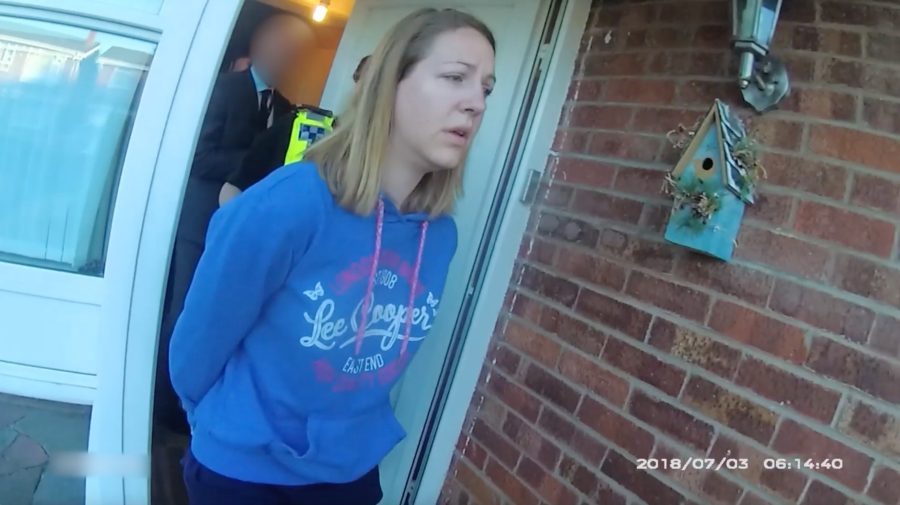
It’s unlikely the families of the babies Lucy Letby was convicted of murdering at the Countess of Chester Hospital will get any closure from today’s Thirlwall Inquiry report. Public inquiries generally don’t offer victims closure, even though many of them campaign for one to be set up in the hope of just that. They often lead to far less change than campaigners have asked for – and that is particularly so in the NHS. In this case, though, there is still a live debate about the convictions themselves, which means even less closure.
The inquiry finds serious dysfunction in the hospital that should have been prevented. Lady Justice Thirlwall said: ‘My report describes dysfunctional management and governance; a gulf between hospital leadership and clinicians; and failure to understand the fundamentals of safeguarding.’ But she also described an ‘inexcusable’ failure to follow up the conclusions of other inquiries over the past 30 years. Why should her inquiry end up with any different results?
In anticipation of this failure, Thirlwall tried to work out who would be responsible for implementing her recommendations. She writes in her report that the Department of Health and Social Care, alongside NHS England, ‘were unable to provide detail on how this will work in practice’, adding ‘this is very disappointing’.
It’s almost certainly going to make no difference at all to the way the NHS functions
There might be some moves to implement the more eye-catching recommendations, including 24-hour baby monitors on all cots so that parents can watch their children remotely and have the confidence that they are safe in hospital (what a terrible thing to have to offer confidence on). But the dysfunction point, along with heavy criticism of the way managers who have manifestly not done their job are still able to move into different posts without much accountability, is almost certainly going to make no difference at all to the way the NHS functions, either at individual ward level or across the whole organisation.
One of the many depressing pieces of evidence submitted to Thirlwall came from Sir Robert Francis KC, who carried out the inquiry into the scandal at Stafford Hospital. In his oral evidence, he said: ‘Frankly if you go to patient safety conferences, as I do from time to time, everyone is saying the same thing, often in different words, but it amounts to the same thing and what worries me and puzzles me to this day is that when they leave those conferences and go back to wherever they come from in those places where that’s not the culture, nothing seems to change it.’
That’s the problem: the culture. It’s hard enough to implement recommendations that require legislative or structural change, but at least you can produce evidence that you’ve either done it or you haven’t. In this report, and every NHS scandal that has had its own inquiry in the past 30 years, culture is at least as much a problem as the absence of monitors here, or proper paperwork there. And even those who say the right things about culture seem incapable, or unwilling, to pursue the necessary change that match those words. Another report won’t change this, and it won’t help the grief of those families who at least hope that no-one else will have to endure what they have.






Comments