Culture

Culture

The good, the bad and the ugly in books, exhibitions, cinema, TV, dance, music, podcasts and theatre.

Not even a genius could make Much Ado About Nothing funny

Theatre

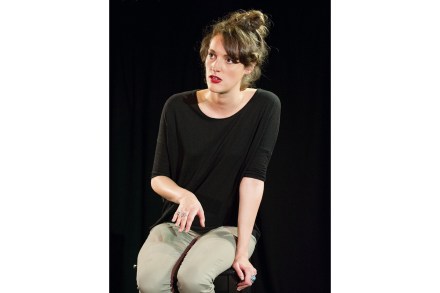
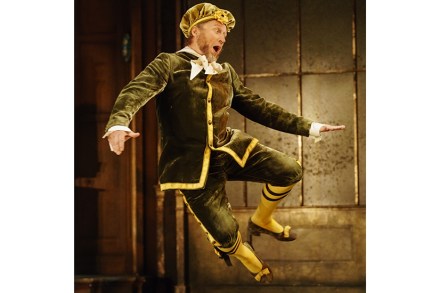
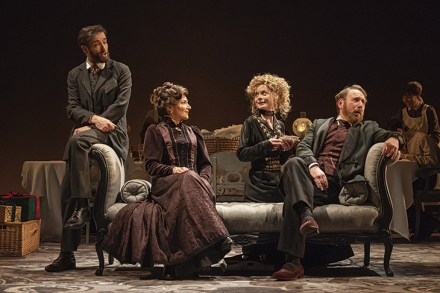
The RSC’s 2014 version of Much Ado is breathtaking to look at. Sets, lighting and costumes are exquisitely done, even if the location is not established with absolute clarity. The date is Christmas 1918 and we’re in a stately home that has been converted into a billet, or a hospital, for returning soldiers. The prickly Beatrice (Michelle Terry) seems to be an unemployed aristocrat working as a volunteer nurse. She fusses around the ward making discreet enquiries about an old flame, Benedick, whose memory she can’t shake off. Enter Benedick played by Edward Bennett and the fun starts. These two absolutely get inside the skins of their characters. Terry’s portrait of spiky seductiveness is riveting to watch and Bennett has an amazing range of effects at his disposal.

Chaotic, if good-natured, muddle: Hytner’s Midsummer Night’s Dream reviewed

Theatre

Nicholas Hytner’s A Midsummer Night’s Dream opens in a world of puritanical austerity. The cast wear sombre black costumes and Oliver Chris, with menacing swagger, brings a note of palpable sadism to the role of Theseus. Then things relax as the ‘mechanicals’ in modern boiler suits prepare to rehearse the play. Hammed Animashaun (Bottom) dominates this little scene with his impish charm and unpredictability. He’s a high-calibre talent of whom more will be heard. After this solid opening, disaster strikes. The forest sequences, already devilishly overcomplicated, are presented on double beds which move restlessly all over the shop and make the story almost impossible to follow. And Hytner has flipped the chief roles.

Paapa Essiedu is a dazzling, all-encompassing prince: RSC’s Hamlet reviewed

Theatre

The Beeb has released Simon Godwin’s Hamlet staged by the RSC in 2016. The director makes one major change and leaves it at that. Elsinore is transposed to a present-day African republic where members of the ruling clan are jockeying for power after the dictator’s death. This chimes with our understanding of geopolitics and lends simplicity and coherence to everything else. African flavours dominate the costumes, the furnishings and the music. The casting makes sense too. Most of the company are black and the characters are played by actors of the right sex. It’s rare to see Shakespeare’s gender choices followed faithfully. The superstitious element is strongly emphasised.

The Madness of George III is much easier to like than King Lear

Theatre

The longest interval in theatre history continues. Last week the National Theatre livestreamed a 2018 version of The Madness of George III produced by Nottingham Playhouse with Mark Gatiss in the title role. The script, written by Alan Bennett as a response to King Lear, is much easier to like than the original. An engaging family comedy, with a sad bit in the middle, it benefits from a wonderfully happy ending. The good king is cured, the bad doctors are vanquished, order is restored. A real crowd-pleaser. Bennett’s research gives it the feeling of a documentary drama as he examines the difficulties faced by monarchs who wielded real political power. Family feuds spilled over into public affairs, and if the king happened to run an empire the consequences could be global.

As a lyricist, Ian Dury had few equals in the 20th century

Theatre

The National Theatre’s programme of livestreamed shows continues with the Donmar’s 2014 production of Coriolanus starring Tom Hiddleston. The play is not a favourite. The story concerns a victorious Roman general who accepts the role of consul but when his political career falters he takes revenge by befriending his defeated enemy, Aufidius, and marching on his own city. There’s too much bitterness and aggression here, and no romantic sentiment at all. The only significant male/female relationship is between the great conqueror and his preening, pushy mother, Volumnia, who boasts about her son’s triumphs as if they were scouting badges or gold stars won for laying out the nature table. Coriolanus is an unsatisfactory tragic hero.

So good and so raw that avoiding it might be the wisest course: Sea Wall reviewed

Theatre

Sea Wall, by Simon Stephens, is a half-hour monologue about grief performed by Andrew Scott. The YouTube clip has been viewed more than 250,000 times. The habitual quirks and irritants of Stephens’s writing are all here: the inept jokes, the laddish swearing, the fascination with 1970s pop, the preference for males over females and the improbable back stories of the characters. The narrator is an Irish cameraman who earns money photographing ‘cushions and digital alarm clocks’ for shopping catalogues. He tells us a bit about his wife and daughter (‘she was a Caesarean’), but he’s far more interested in his father-in-law, Arthur, a scuba-diving maths teacher who retired from the British army with the rank of lieutenant-colonel.

Like a project the BBC might have considered 30 years ago and turned down: The Understudy reviewed

Theatre

Hats off to the Lawrence Batley Theatre for producing a brand-new full-length show on-line. Stephen Fry, with avuncular fruitiness, narrates a dramatisation of David Nicholls’s novel The Understudy, published in 2005. It’s a back-stage comedy about a newly written sex romp inspired by the life of Lord Byron.The show, predictably enough, is entitled, Mad, Bad And Dangerous To Know. Here’s an excerpt. Byron is lying athwart his naked Italian mistress when the Muse summons him to draft a sonnet. ‘I must write here,’ he declares, ‘between a pair of pert peaches nestled.’ This doesn’t quite catch the tone of period drama in its present form.

The best Macbeths to watch online

Theatre

The world’s greatest playwright ought to be dynamite at the movies. But it’s notoriously hard to turn a profit from a Shakespearean adaptation because film-goers want to be entertained, not anointed with the chrism of high art. Macbeth is one of the texts that frequently attracts directors. Justin Kurzel’s 2015 version (Amazon Prime) didn’t triumph at the box office despite two fetching performances from Bamburgh Castle in Northumberland and the snow-wreathed mountains of Skye. The trailer is a marvel. Two exhilarating minutes of virile swordplay, ravishing scenery and dramatic cathedral interiors. The film itself is a cold, muddy slog. Michael Fassbender plays the thane as a gruff Celtic robo-hunk married to a skinny, nun-like beauty, Marion Cotillard.

The National Theatre’s live-streaming policy is bizarre

Theatre

The National’s bizarre livestreaming service continues. On 7 May, for one week only, it released a modern-dress version of Antony and Cleopatra set in a series of strategy rooms, conference centres and five-star hotel suites. The lovestruck Roman was played by a louche, gruff, brooding Ralph Fiennes. Why is this man so watchable? He lacks the least mark of distinction. Face, height, physique and vocal ability are all in the middling range. In real life he could easily have assumed the role of the research assistant’s deputy. Perhaps it’s the Reggie Perrin ordinariness that makes his presence bewitching. Shakespeare was on unusually patchy form when he assembled this huge, rambling history play.

How Tom Stoppard foretold what we’re living through

Theatre

A TV play by Tom Stoppard, A Separate Peace, was broadcast live on Zoom last Saturday. I watched as my screen divided itself into four cubes in which appeared the actors, performing from home. The play was written in 1964 and it’s well suited to the split-split screen format because no physical contact occurs between the characters. Director Sam Yates added some rudimentary music and a bit of wobbly background scenery. Mr Brown (David Morrissey) is a mysterious Englishman who asks to be admitted to a private hospital in the middle of the night. Though he has no symptoms he’s given a bed, and he pays his bills in cash. ‘There’s nothing wrong with you,’ complain the medics. ‘That’s why I’m here,’ he says.

Worth watching for the comments thread alone: NT’s Twelfth Night livestream reviewed

Theatre

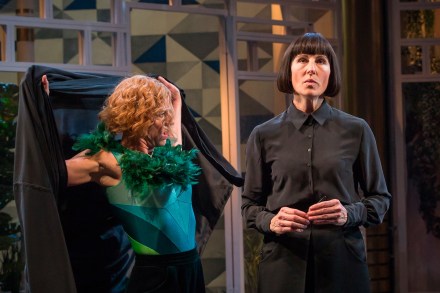
‘Enjoy world-class theatre online for free,’ announces the National Theatre. Every Thursday at 7 p.m. a play from the archive is livestreamed. I watched Twelfth Night, from 2017, starring Tamsin Greig as a female Malvolio. What a handsome, absorbing and brilliantly staged production this is. Greig’s comically petulant Malvolia won the plaudits, rightly, while the underrated Tim McMullan turned Sir Toby into a wry, wobbly, loveable drunkard, like a rock star enjoying a month on the lash. Having seen the original, I preferred the online experience, not least because of the noisy comments thread beside the screen. ‘How do you get Russian subtitles?’ ‘When’s the interval?’ ‘Why a female Malvolio?’ ‘Watching from Brussels.

The best theatre of the 21st century

Theatre

Not looking great, is it? Until we all get jabbed, theatres may have to stay closed. And even the optimists say a reliable vaccine is unlikely to arrive before Christmas. As the darkness persists, here’s a round-up of my leading experiences over nearly two decades as a reviewer. There’s been a surge of output. More theatres have opened, especially on the London fringe, and several have created annexes for experimental work. Musicals have proliferated. The rise of the box-set has been excellent for the West End. Global hits such as Game of Thrones have created a host of British stars with enough clout to sell out a three-month run in London. Shakespeare hasn’t fared so well.

Strangely absorbing: the first lockdown dramas reviewed

Theatre

High Tide got there first. The East Anglian theatre company has produced a series of lockdown mini-dramas, Love in the Time of Corona, made up of five filmed reflections on self-isolation. ‘Rainbows’ by Morgan Lloyd Malcolm is narrated by a woman on the edge teaching her kids to decorate the windows with coloured paints. ‘Child Two is crying and Child One is giving me the finger.’ Outside, as she takes a photograph, she suffers an anxiety attack. ‘The gurgling panic in the base of my gut, the pain in my chest. Not virus, all fear.’ She decides to flee. But will her children survive without her? Convincingly performed by Katie Lyons, this is a simple, well-made tale with a dilemma, a turning point and a resolution.

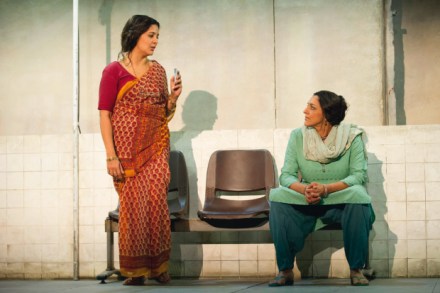
Absorbing and meticulously researched play about Partition: Drawing the Line reviewed

Theatre

Theatres have taken to the internet like never before. Recorded performances are being made available over the web, many for free. Getting Better Slowly is about a dancer, Adam Pownall, who spent two years fighting Guillain-Barré syndrome. This lucid and enjoyable show (recorded at Lincoln Drill Hall) now looks horribly topical. A young artist, paralysed by a mysterious disease, refuses to surrender and eventually reclaims his vigour and his ability to communicate. That could stand for the profession as a whole. Hampstead Theatre offers a slate of three recorded plays. (Wild and Wonderland were reviewed in The Spectator on 30 June 2016 and 12 July 2014 respectively).

A mesmerising piece of theatre: On Blueberry Hill reviewed

Theatre

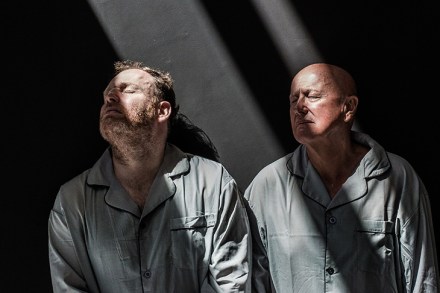
On Blueberry Hill sounds like a musical but it’s a sombre prison drama set in Ireland. Two bunkbeds. Above, an older man, Christy. Below, his younger companion, PJ. They take turns to talk, and gradually they reveal how their lives are interwoven. These are men of unusual intelligence and articulacy, and both are so profoundly in love with life’s simplest joys that their incarceration seems barely credible. Each might be a professor of literature or philosophy. During his boyhood, PJ tells us, he once worked as a golf caddy for a movie actor who shot a perfect round. It made him more happy than anything he had ever done. He tipped PJ ten shillings (50p), which was such a vast sum that his mother thought he’d stolen it.

Corpse! really is as good as everyone says it is

Theatre

Here’s the problem. Much communication is done online, especially by youngsters, and much drama focuses on communication. So how do theatre-makers represent emails and telephonic chitchat in ways that are stimulating and realistic? The usual solution is to mount blank screens around the stage and to beam the comms on to the boards while the characters crouch over their devices, tapping away. Realistic, yes. Hardly stimulating. When play-goers have seen this once — and most of us have seen it repeatedly — they crave a new approach. Roxana Silbert’s production of Al Blyth’s spy drama The Haystack projects the text messages just like everyone else. And the show relies too heavily on photographic inserts.

Unimpressive: The Prince of Egypt reviewed

Theatre

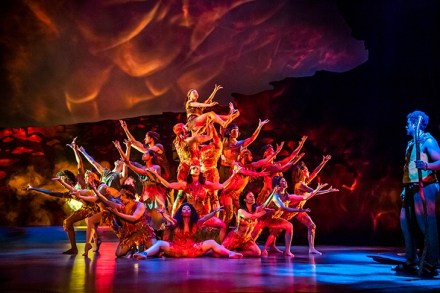
The Prince of Egypt is a musical adapted from a 1998 Dreamworks cartoon based on the Book of Exodus. So the original writer is God. The show opens with a troupe of fit young athletes working on Pharaoh’s latest tomb. And they look like the best-fed slaves in history. A meat-rich diet and round-the-clock access to a gym and a sauna must have been written into their contracts. The tanned abs of the male slaves ripple and gleam. The lithe females are bendier than hosepipes. Presumably these cartwheeling ballerinas are able to limber up in an air-conditioned dance studio before each shift. The only drawback is lugging blocks of stone up and down half-finished pyramids but these exertions barely interrupt their main task: singing and dancing about their pitiful lot.

Comedy gold: The Upstart Crow at the Gielgud Theatre reviewed

Theatre

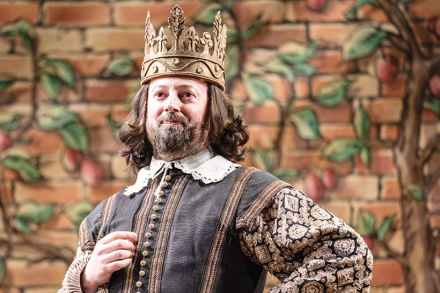
A Moorish princess shipwrecked on the English coast disguises herself as a boy to protect her virtue. Arriving in London, she’s hired by William Shakespeare as an assistant to his maidservant Kate, who instantly falls in love with the exotic cross-dressing newcomer. This absurdity, familiar to fans of Twelfth Night, is the opening move in Ben Elton’s exquisite Shakespearean remix, The Upstart Crow. It’s 1604 and the Bard is in poor creative form. ‘I have banged out a few clunkers of late,’ he admits, referring to Measure for Measure and All’s Well That Ends Well. ‘Should have been All’s Well That Ends Crap,’ suggests a lackey.

Why foreign-language series will always have the edge over American ones

Theatre

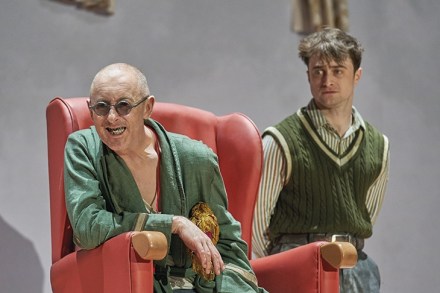
An office worker stands on the ledge of an open window about to leap. Two colleagues enter, ignoring him completely. They sit at symmetrical desks and read reports about the man’s background while he clings to the window frame, poised between life and death. This is the opening of Samuel Beckett’s Rough for Theatre II, starring Daniel Radcliffe and Alan Cumming. Stewart Laing’s beautiful design places the window centre-stage with the man standing in isolation between his two colleagues, like Christ and the thieves at Calvary. Beckett would have approved. For the first ten minutes of this bizarre play, the Old Vic audience sat in polite silence tittering only at expletives like ‘cunt’, ‘bugger’ and ‘dogshit’.

This is how theatre should work post-Brexit: Blood Wedding reviewed

Theatre

Blood Wedding, by the Spanish dramatist Federico Garcia Lorca, is one of those heavyweight tragedies that risks looking a bit ridiculous when you take it out of its period setting. With rival families, murdered patriarchs and Albanian-style blood feuds — not to mention a talking moon — modern adaptations often come across as implausibly melodramatic. Hats off, then, to Barney Norris for his decision to strip back much of the excess drama for his West Country rewrite of Blood Wedding. Norris stays loyal to the play’s central arc — a frenzied bride torn between her husband-to-be and her bad-boy ex-boyfriend — but decides to dispense with much of the baggage (not to mention half of the characters). It’s a bold move, but one that pays dividends.

A brilliant, unrevivable undertaking: Tom Stoppard’s Leopoldstadt reviewed

Theatre

History will record Leopoldstadt as Tom Stoppard’s Schindler’s List. His brilliant tragic-comic play opens in the Jewish quarter of Vienna in 1899. We meet a family of intellectuals and businessmen who are celebrating their very first Christmas. The eldest son, Hermann, has married a Catholic and become ‘Christianised’ in order to smooth his path through Austrian society. ‘The Jews know a bargain when they see it.’ The family are amusingly puzzled by the distinction between ‘papist’ and ‘Protestant’ and they’re also keen to honour their ancient traditions. This generates plenty of foreskin gags. (‘Are we on or off with the circumcision?

A terrific two-hander that belongs at the National: RSC’s Kunene and the King reviewed

Theatre

The Gift is three plays in one. It opens in a blindingly white Victorian parlour where a posh lady, Sarah, is teaching her clumsy maid to serve tea correctly. Both characters are black. Sarah’s prosperous husband, also black, arrives home and the scene continues as the gauche skivvy (Donna Berlin, brilliant) makes more and more hilarious blunders. What is this play? Perhaps a neglected Victorian comedy revived with colour-blind casting. In fact, the script is inspired by a historical character, Sarah Forbes Bonetta, a Yoruba princess born in Nigeria in the 19th century, who was adopted by Queen Victoria and raised as an English gentlewoman.

Strong performances in a slightly wonky production: Uncle Vanya reviewed

Theatre

Uncle Vanya opens with a puzzle. Is the action set in the early 20th century or right now? The furnishings might be modern purchases or inherited antiques, and the costumes are also styled ambiguously. It soon becomes clear from Conor McPherson’s script, which uses colloquialisms like ‘wanging on’, that this is a contemporary version. It’s always a risk to update Chekhov and the director Ian Rickson pulls it off. Never once did I wonder why these chattering idlers didn’t have broadband or mobile phones. But the casting is awry. Vanya is a middle-aged Hamlet, a thinker, an observer, whose dreams are smashed to pieces in the course of the action.

Sweeping, sod-you comedy – irresistible: Billionaire Boy reviewed

Theatre

Falling In Love Again features two of the 20th century’s best-known sex athletes. Ron Elisha’s drama covers a long drunken night spent by Marlene Dietrich and Edward VIII at Fort Belvedere, near Windsor, on the eve of Edward’s abdication in December 1936. It sounds like a contrived premise for a play but Elisha, who researches his material thoroughly, says this encounter actually took place. Marlene (played by Ramona von Pusch as an enigmatic adventuress in green lipstick) claims to have fled the Savoy where Rudolf Hess is bombarding her with flowers in the hope of luring her home to make films for the Third Reich. Marlene refuses because she can’t stand Hitler.

People expecting punishment won’t be disappointed: Almeida’s Duchess of Malfi reviewed

Theatre

The Duchess of Malfi is one of those classics that everyone knows by name but not many have witnessed on stage. So a production is likely to attract theatre-goers who feel they ‘ought to’ see it rather than ‘want to’. This may have affected the Almeida’s version which is opaque and almost impossible to follow. Yet audience members who are expecting punishment rather than entertainment will not be disappointed. The play by John Webster was first presented in London in 1613 (or possibly a year later), and it relies on events that occurred in Italy more than a century earlier between 1508 and 1513. So even the original London audience would have had to work hard to follow the unfamiliar plot which traces the elopement of an Italian duchess with her steward.

Redneck twaddle: Young Vic’s Fairview reviewed

Theatre

Fairview by Jackie Sibblies Drury won last year’s Pulitzer Prize. It deserves additional awards for promoting racial disharmony and entrenching false, divisive and outdated stereotypes. The title is a pun. ‘Fair’ means ‘white’ and ‘view’ means ‘world outlook’ or ‘prejudice’. Really it ought to be called Honky Bias. The script declares its fascination with antique hatreds in its opening line which is a stage direction: ‘Lights up on a negro.’ No one talks like that any more. I attended the December press night where the play began as a moderately amusing TV-level comedy about a rich black family preparing for a birthday. This opening scene was followed by 30 minutes of confusing absurdity.

Full of fascinating data and excellent comedy: Messiah at Stratford Circus reviewed

Theatre

I’ve joined the Black Panthers. At least I think I have. I took part in an induction ceremony at the start of Messiah at Stratford Circus. ‘Stand up,’ said the actor Shaq B. Grant to the predominantly white crowd. ‘Raise your right fist and repeat after me: “I am a revolutionary.”’ Everyone obeyed and chanted his mantra, some with more sincerity than others. Then the show began. The subject is a notorious police raid on a Panther hideout in Chicago in 1969 which resulted in the death of Fred Hampton, a 21-year-old activist nicknamed ‘the Black Messiah’. The police alleged that the Panthers opened fire first. The Panthers claimed that Hampton sustained survivable wounds during the raid and was later executed by unnamed police officers.

A flimsy tale of self-pity and thwarted ambition: Hunger at the Arcola reviewed

Theatre

Oh my God. The Nazis have invaded the Arcola Theatre. Norwegian novelist Knut Hamsen won the Nobel Prize in 1920 and later became such an ardent fan of Hitler that he sent his Nobel gong to Goebbels as a token of his admiration. The Arcola admits these demerits in the programme notes. What it overlooks is the intriguing fact that some commentators credit Hamsen with inventing the stream of consciousness technique developed by James Joyce in Ulysses. His breakthrough novel, Hunger, published in 1890, recounts his experiences as a penniless scribbler seeking work in the Norwegian capital. The protagonist in Fay Lomas’s engaging production is an archetype whom any professional writer will recognise: the unpublished hack who thinks he’s a genius.

Smart, funny and beautifully imagined: RSC’s The Boy in the Dress reviewed

Theatre

David Walliams is one of the biggest-selling children’s authors in the world (having shifted some 25 million copies in more than 50 languages). And he’s now become the first children’s novelist since Roald Dahl to have their book turned into a full-scale RSC musical extravaganza. As fun as these big musicals might be, they aren’t something the RSC takes lightly. Not only has the head honcho, Gregory Doran, decided to direct The Boy in the Dress himself, he’s also hired some serious talent. Robbie Williams — probably not seen in Stratford-upon-Avon since Take That were an up-and-coming boy band — has co-written the songs. Mark Ravenhill, the 1990s playwright best known for his tales of jaded shaggers, adapts the text. That’s quite the team.