Culture

Culture

The good, the bad and the ugly in books, exhibitions, cinema, TV, dance, music, podcasts and theatre.

Brideshead revisited

Theatre

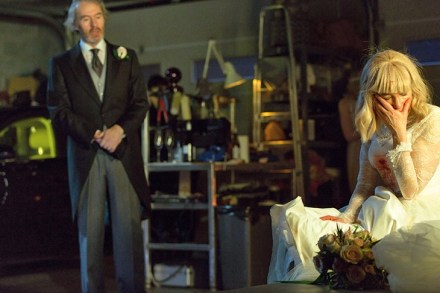
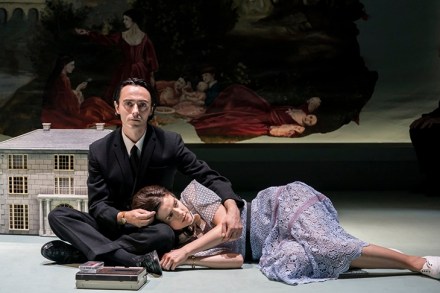
Nicholas Hytner’s new show, Alys, Always, is based on a Harriet Lane novel that carries a strong echo of Brideshead. A well-educated journalist, Frances, becomes entangled with the wealthy Kyte family (the closeness to ‘Flyte’ is doubtless intentional), and she befriends the silly daughter, Polly, before setting her sights on the enigmatic father, Laurence, a famous scribbler who never gives interviews. This slow-moving tale is intercut with scenes from Frances’s day job at a failing newspaper where the staff keep getting the boot. But Frances, mystifyingly, retains her post. How come? Floppiness is her most conspicuous quality.

Rooting for crime

Theatre

Jesus Hopped the ‘A’ Train by Stephen Adly Guirgis deserves its classic status. This wordy and highly cerebral play pulls off an extraordinary feat by leading the spectator inside the mind of a psychopath. The setting is Rikers Island, where an old lag, Lucius, befriends a younger detainee, Angel, who hopes to be acquitted of killing a pastor whom he shot in the buttocks. (The bullet-in-the-bottom detail is typical of Adly Guirgis’s macabre frivolity.) Lucius is a chain-smoking fitness freak who keeps himself in trim by jogging on the spot and performing bursts of press-ups in his cell. We first meet him as the victim of petty bullying by a sardonic prison guard and we aren’t told why he’s in custody.

This will hurt

Theatre

When reviewers call a work ‘important’ they mean ‘boring’ and ‘earnest’. And in those terms Shipwreck is one of the most ‘important’ shows I’ve ever seen. It’s not a play but a series of monologues and conversations spoken by a group of American liberals stuck overnight in a rural farmhouse. ‘It’s a red zone,’ they shudder when they learn that they’re in a Republican county. They pass the night carping loftily about the faults of Trump’s campaign and of his presidency between the inauguration and his dismissal of James Comey on 9 May 2017.

Blurred vision

Theatre

All About Eve is Cinderella steeped in acid rather than sugar. Eve, or Cinders, is a wannabe star who uses a powerful theatre critic (the Buttons character) to help her win fame by overcoming two Ugly Sisters represented by a movie goddess, Margo Channing, and her film-director boyfriend. This fairytale was filmed in 1950 with Bette Davis as Margo and it remains a widely loved classic. Ivo van Hove’s version is torn between the 1950s and the present day. Result: a mystery. Margo is clearly being stalked by Eve but instead of referring the poor girl to a psychiatrist, she hires her as an understudy. Somewhat rash! Margo seems oddly dependent on her looks for work. She never considers directing or producing her own scripts, and she regards television as a loser’s graveyard.

Age concern | 14 February 2019

Theatre

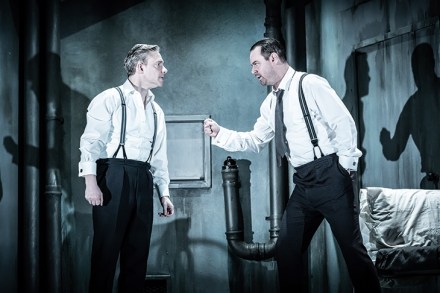
The Dumb Waiter is a one-act play from 1957 that retains an extraordinary hold over the minds of theatre-goers. It’s set in the basement of a Birmingham restaurant where two Cockney hitmen are preparing to execute an unknown victim. A dumb waiter, or shelf on pulleys, descends from above containing requests for two-course meals. Liver and onions are on the menu. Demands for cups of tea and sago pudding are sent down. The nervous thugs start to panic as they struggle to fulfil the instructions arriving from on high. It’s an absurd situation underpinned by an authentic sense of menace and violence. These are not just clownish villains but real criminals trained to kill. The play is usually done for laughs but it can be performed as a macabre thriller.

Love, sex, sponges and disability

Theatre

Hampstead has become quite a hit-factory since Ed Hall took over. His foreign policy is admirably simple. He scours New York for popular shows and spirits them over to London. His latest effort, Cost of Living, has attracted the film-star talent of Adrian Lester, who plays Eddie, a loquacious white trucker from Utah. (His ethnicity is made clear in the dialogue and the relevant lines have been left unchanged.) Earnest Eddie tells us about himself in a 15-minute monologue at the top of the show. Rather a clunky device. He’s a bookish teetotaller with a strong work ethic who appreciates the landscape of Utah, enjoys listening to Erik Satie’s over-played Gymnopédies, and spends his evenings and weekends caring for his -crippled ex-wife who lost both her legs in an accident.

You’ve been scammed

Theatre

The NT’s new play is an update of Pamela, a sexploitation novel by Samuel Richardson. It opens with Stephen Dillane and Cate Blanchett stranded in a concrete garage dressed as French maids. On one side, a black Audi saloon. Mid-stage, colourful blinking lights. At the edges, four other actors lurking. The main characters have no names so let’s call them Stephen and Cate. Who are they? Adulterous workmates, or a divorcing couple, or a male boss and his abused underling? The script reveals nothing about their characters, their backgrounds, their location or their intentions, and the audience’s natural reaction to this indifference is further indifference.

Best in show | 24 January 2019

Theatre

The cast of Party Time includes John Simm, Celia Imrie, Ron Cook, Gary Kemp and other celebrities. They play a crew of posh thickos at a champagne party who chat away about private members’ clubs and adulterous affairs. In the background we hear of a ‘round-up’ involving the arrest and perhaps the murder of the government’s political foes. This is a short play with little spectacle, movement or psychological depth. Once the party-goers have been introduced, the script glazes over entirely. The actors form a line at the front of the stage, like glammed-up waxworks, and take turns at injecting their speeches with irony and humour in the hope of prompting laughs from their fans in the stalls. It’s more a talent competition than a play.

The end of the beginning | 17 January 2019

Theatre

One masterpiece, one dud, and one interesting rediscovery. That’s Pinter Five. Victoria Station is a hilarious sketch which might have been turned into TV gold by the Pythons or the Two Ronnies. A radio controller needs a cabbie to collect a fare from Victoria Station, but the only driver available is a charming lunatic whose car is idling near a ‘dark park’. The cabbie already has a passenger on board, who may be a murder victim, and although he claims not to know Victoria Station he insists that he’s the best man for the job. This dotty piece of verbal slapstick feels a bit dated because cab firms no longer rely on radios.

Thinking outside the box | 10 January 2019

Theatre

Sweat, set in the Pennsylvanian rust belt, looks at a blue-collar community threatened by a factory closure. The script uses the flashback device. Scene One informs us that two lads were found guilty of doing a Bad Thing eight years ago. What Bad Thing? The author won’t tell us because the play needs suspense but the revelation is delayed so long that our patience is tested to the limit. The flaccid writing doesn’t help. Scene Two lasts 30 minutes and introduces us to the main characters, who visit the same bar every evening to get hammered and scream at each other. The only dramatic point in this lengthy scene is the revelation that two lovers had a big row about a fish tank.

All in the mind | 3 January 2019

Theatre

The Tell-Tale Heart is based on a teeny-weeny short story by Edgar Allan Poe. The full text appears in the programme notes. Here’s the gist. A madman kills his landlord and is haunted by a ghostly heartbeat that prompts him to confess his crime. Anthony Neilson’s adaptation turns both characters into women and gives away the ending in the opening scene. An English writer lodging with a young Irish landlady is accused of murdering her by a detective. At a stroke, all uncertainty is effaced. The only remaining mystery is why Neilson can’t understand his chosen genre. He tries to interest us in the causes of the murder, and we watch the developing relationship between landlady and lodger.

Brothers grim | 13 December 2018

Theatre

Sam Shepard was perhaps the gloomiest playwright ever to spill his guts into a typewriter. The popularity of his work must owe itself to some deep grudge nursed by America’s elite against the redneck states. True West is a standard Shepard ordeal: a pair of damaged, inadequate, bitter, loveless white males are cudgelling each other to pieces in a dingy Californian hellhole. For good measure he adds a dollop of bad plotting and improbable detail. We meet two thick angry brothers, Austin and Lee, living together in the house of their absent mom. Austin is busy writing a screenplay and Lee wants to borrow Austin’s car to go on a burglary spree. Austin hands over the keys because he needs a bit of privacy for a meeting with a film producer in the kitchen. Come off it.

Taking the Michael | 6 December 2018

Theatre

One of the biggest stars of the 1970s was the professional lard-bucket Mick McManus, who plied his trade as an all-in wrestler. The sport was televised to millions. The parents of the playwright Michael McManus must have calculated that by giving their child the same name as ‘The Dulwich Destroyer’ they would subtly galvanise his intellectual ambitions. Their ploy paid off. The young Michael McManus, lumbered with the identity of a potato-shaped pugilist, seems to have toiled night and day to distinguish himself from his pot-bellied namesake. He succeeded in establishing his intellectual credentials by working as a political diarist, a ministerial adviser, and by writing well-received biographies of Jo Grimond and Ted Heath.

Partners in crime | 29 November 2018

Theatre

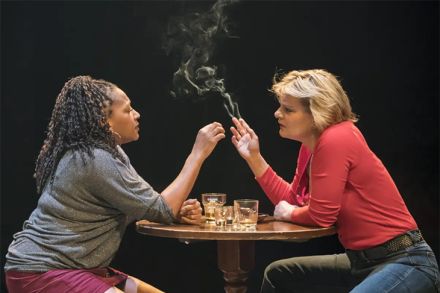
I know nothing about Patricia Highsmith. The acclaimed American author wrote the kind of Sunday-night crime thrillers that put me to sleep. Her best-known creation, the suave psychopath Thomas Ripley, has spawned a number of films that I’ve carefully avoided. But ignorance is an ideal starting point for Switzerland, by Joanna Murray-Smith, a brilliantly nasty comedy that features Highsmith in 1995 when she was past her artistic best. What a piece of work. A foul-mouthed, booze-soaked, chain-smoking misanthrope squatting in a glass-fronted hermitage in the mountains with nothing but a typewriter, a whisky bottle and an Alpine panorama for company. (Actually, it sounds quite tempting, put like that.

A triumph for crony casting

Theatre

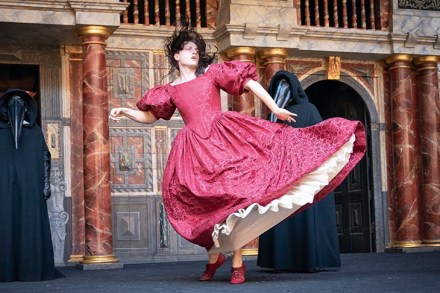
Michelle Terry, chatelaine of the Globe, wants to put an end to penis-led Shakespeare by casting women in roles intended for men. To showcase her war on male cronyism she presents a version of Macbeth starring Paul Ready as the king. She plays the queen. In real life the two are married. This must be rather galling for the actresses who auditioned for the lead role only to find that Ms Terry’s pro-woman policy had collapsed before the demands of her lord and master. But their on-stage partnership is astonishingly powerful. Set in the Sam Wanamaker theatre, a gilded little playhouse with uncomfortably cramped seats, this candlelit Gothic thriller has a palpable sense of horror and menace. Behind every flickering shadow lurks a traitor with a dripping knife.

This will end badly | 15 November 2018

Theatre

Pinter Three appeals to opposite poles of the play-going spectrum. The birdbrains like me will enjoy the music-hall sketches while the goatee-strokers will have fun pretending that Pinter’s deadly earnest memory plays are worth seeing. Watching the first piece, Landscape, is like receiving a jigsaw puzzle in instalments. Two characters, Duff and Beth, speak to us without acknowledging each other. Maybe they’re married. Maybe they aren’t. Duff, played by Keith Allen, is a barking, aggressive know-all who works as a chauffeur. Tamsin Greig’s Beth is a prattling Irish scullery maid who witters on about ‘having a baby’ with a lover who may be Duff, or an unseen chap named Sykes, or someone else.

Teenage kicks | 8 November 2018

Theatre

Lauren Gunderson’s play I and You opens in the scruffy bedroom of 17-year-old Caroline. Lonely, beautiful and furious, she’s unable to participate in school life owing to a chronic liver problem. Into her hideaway barges Anthony, a handsome geek, who wants her to help with a Walt Whitman project. Caroline tries to chase him off but resourceful Anthony charms her into accepting his presence. What follows is a hilarious and beautifully observed study of modern teenage romance. Parents will recognise details like this: Caroline offers her guest a Coke but instead of asking him to fetch it from the kitchen she sends the request to Mom by text. Five minutes pass. ‘Where’s that Coke?’ huffs Caroline. ‘I ordered it, like, a month ago.

A Bridge too far

Theatre

In the year since it opened, the Bridge has given us the following: a harmless Karl Marx comedy by Richard Bean; a modern-dress Julius Caesar with Ben Whishaw playing Brutus as a frowning existentialist; a dreary rustic soap opera written by newcomer Barney Norris; and an enjoyable NHS romp by Alan Bennett. Not quite the string of triumphs everyone had expected from Nicholas Hytner who used to produce two dozen shows a year at the National but now manages one every three months at his bankside garret. Time on his hands. But not enough to script-edit the efforts of fashionable wags like Martin McDonagh whose silly, mean-spirited skit about Hans Christian Andersen is a humiliating low point in the Bridge’s short history. The setting is Copenhagen.

Baby love | 25 October 2018

Theatre

Stories by Nina Raine is a bun-in-the-oven comedy with a complex back narrative. Anna, in her mid-thirties, had a boyfriend 12 years younger than her but the relationship died just as Anna was ready to sprog. Aged 38, and desperately broody, she needs to get preggers pronto. We join her on a Sperm Quest. Though Anna could easily arrange a casual bareback fling, she insists on divulging her goal to her prospective lovers before they drop their Y-fronts and deliver the oats. The action opens as a family drama with Anna’s Dad (Stephen Boxer) pottering around the kitchen, drink in hand, making sarky comments about Anna’s sex life while she sits at a laptop scrolling through mugshots of potential dads. Her brother (Brian Vernal) tosses in comic asides of his own.

This is a man’s world

Theatre

Sir David Hare’s weird new play sets out to chronicle the history of the Labour movement from 1996 to the present day. But it makes no mention of Corbyn, Momentum, the anti-Semitism row or rumours of a breakaway party. The drama is located in the dead-safe Miliband era and it opens with talk of a leadership election. The two best candidates, Pauline and Jack, are old lovers from university. Pauline is a doctor who entered politics when budget cuts threatened the hospital where her mother was being treated for cancer. Jack is a colourless Blairite greaser, a sort of Andy Burnham without the mascara, who is still besotted with Pauline despite being newly married to Jessica.

Second thoughts | 11 October 2018

Theatre

Pinter Two, the second leg of the Pinter season, offers us a pair of one-act comedies. The Lover is a surreal pastiche of married life. A suburban housewife has a paramour who visits her daily while her husband is at work. The husband knows of his rival and discusses his wife’s infidelity as if it were a normal aspect of marriage. He toddles off to the office and a little later the lover arrives: it’s the husband. They begin a game of role play. The wife is a whore and the husband is her trick. This neat device dramatises the theory that marriage is prostitution in disguise. Director Jamie Lloyd presents the show as a paranormal absurdity. Garish pink dominates the couple’s weird, rectilinear home. Pink walls, pink doors, pink shelves, pink everything.

God and monsters

Theatre

The drop-curtain resembles a granite slab on which the genius’s name has been carved for all time. The festival of Pinter at the Harold Pinter Theatre feels like the inauguration of a godhead. And it’s not easy to separate the work from the reverence that surrounds it. Pinter One consists of sketches and playlets written in the period after 1980 when the author abandoned his anarchic underclass comedies and set about analysing power and its abuses. But his originality deserted him and he began to write like a student troll with a sadistic streak. In Press Conference a newly appointed minister discusses murdering dissidents’ children by snapping their necks. In Precisely, two boozy establishment figures chat about bumping off 20 million citizens.

It gets my vote

Theatre

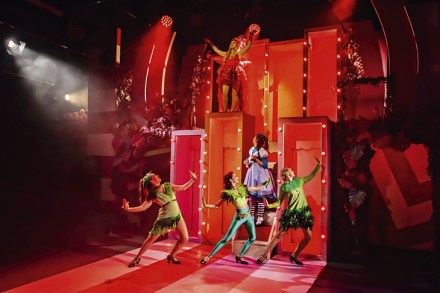
Sylvia, the Old Vic’s musical about the Pankhurst clan, has had a troubled nativity. Illness struck the cast during rehearsals. Press night was postponed by a week. On the evening of the delayed performance, the show was cancelled just before curtain-up. We were told that a ‘concert version’ would be presented with understudies filling certain roles and with scripts on stage to prompt imperfect memories. I saw no scripts. And the absence of key performers made no discernible difference. This looked to me like the A-team. The director, Kate Prince, has a terrific show on her hands and although the introductory run has ended, the material can only get stronger as she continues to refine and improve it.

Public enemy

Theatre

Arinzé Kene’s play Misty is a collection of rap numbers and skits about a fare dodger, Lucas, from Hackney. Lucas (played by Kene) gets into a scuffle on a bus and is later arrested for entering London Zoo without a ticket. That’s the entire narrative. Obviously, Kene can’t create an evening’s entertainment from such meagre pickings, so he turns his tribulations as a dramatist into the show’s second storyline. Playwrights moaning about writing plays is a theme of scant interest to audiences, but Kene enlists our sympathy by examining his quest to write a drama that satisfies both black people and the playgoing bourgeoisie.

Always look on the dark side of life

Theatre

Hampstead’s boss Ed Hall was so impressed by Stephen Karam’s play The Humans that he wanted to direct it himself. Instead, thanks to a stunning series of accidents, he was able to bring the original Tony award-winning production from Broadway to London. And here it is, directed by Joe Mantello. It’s a family drama, which opens with Dad and Mom, in their sixties, arriving for Thanksgiving at a dingy New York apartment occupied by their daughter Brigid and her fiancé Richard. All the characters are heavily scarred by life. Richard, aged 38, hasn’t yet completed his sociology degree because he suffers from severe depression (possibly triggered by his subject choice, although the writer isn’t cynical enough to make such a cheap crack).

Less is Moor

Theatre

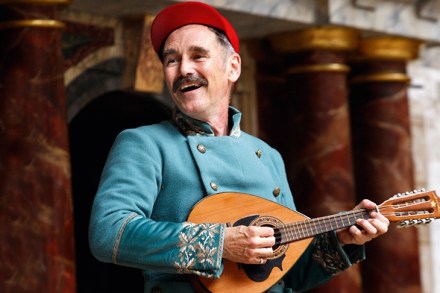
It’s intelligent, enjoyable, beautiful to look at and funny in unexpected places, yet Othello at the Globe didn’t quite meet my sky-high expectations. The star should be the Moor but André Holland, from Alabama, can’t rival the magnetism of Mark Rylance (Iago). Holland’s diction is a strain for British ears. We’re used to hearing consonants bashed out — rata-tat-tat — like a rifle range, but his looser southern accent made some of his lines indistinct. Stately Jessica Warbeck lacks Desdemona’s impulsive streak and she plays her as a mature and self-possessed recipient of several Businesswoman of the Year awards.

Posh people move house

Theatre

Non-stop chatterbox and mystifyingly revered fabricator of sub-Chekovian paddywhackery, Brian Friel has received another production at the Donmar. His play Aristocrats cadges shamelessly from Three Sisters and The Cherry Orchard. The setting is a crumbling mansion in Donegal occupied by four adult members of the O’Donnell clan (three girls, one boy), who idle around the place waiting for Dad to clock out so they can get their mitts on the bricks. Lindsey Turner’s production is curiously stripped of ornament. The characters are assembled on a lime-green patio, suggestive of mown grass, which is surmounted by a white frame with the dimensions of the goalposts at Wembley.

Mind your language | 16 August 2018

Theatre

David Greig has written the international festival’s flagship drama, Midsummer. This farcical romance is performed as a party piece by four actors supported by a plinky-plonky band playing satirical ballads. We meet two boozy drifters, Bob and Helena, who enjoy a night of rampant sex aftera chance encounter in an Edinburgh pub. Will their affair live or die? Well, since the show starts with two older actors reminiscing about the characters’ past we knowin advance how it all ends. An odd way to kill suspense. The lovers have little in common apart from alcoholism and the madcap plot sends them hurtling through a set of mishaps and scrapes as their romance develops. They get tied up in a bondage club.

Edinburgh round-up | 9 August 2018

Theatre

Trump Lear is a chaotically enjoyable one-man show with a complicated premise. David Carl, an American satirist, has arrived on stage to perform King Lear when Donald Trump’s voice interrupts him from the wings. The President threatens to kill him unless he delivers an accessible version of the Shakespeare classic ‘that isn’t boring’. With improvised puppets, Carl rattles through the play while Trump interrupts and offers directorial notes. Something weird happens. A curious mutual admiration springs up between the artist and his patron. Despite its messy presentation, the show works because Carl is a superb impressionist and his wide-ranging gags hit the mark more often than not.