Culture

Culture

The good, the bad and the ugly in books, exhibitions, cinema, TV, dance, music, podcasts and theatre.

Glib and snarky: Andrew Lloyd Webber’s Cinderella, at Gillian Lynne Theatre, reviewed

Theatre

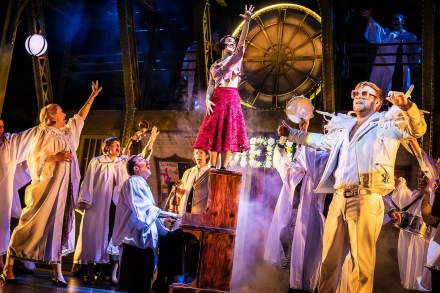
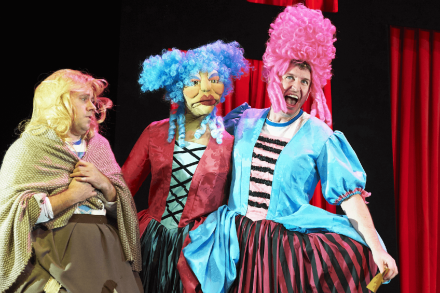
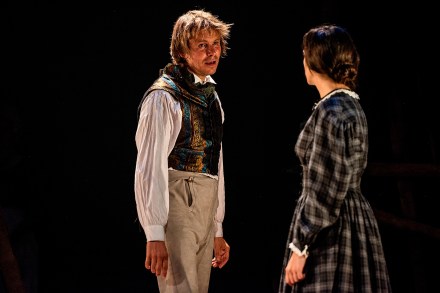
It’s a rum beast the new Andrew Lloyd Webber musical. Cinderella is set in Belleville, a European city of 18th-century vintage, whose inhabitants are fixated with the body beautiful. Cinderella, a pasty Goth, rejects this ethos and vandalises a statue that commemorates a handsome prince who recently died in battle. Cinders is punished by being chased into a forest and tied to a tree but she’s rescued by her best friend, Prince Sebastian, who will inherit the throne as soon as he marries. Sebastian and Cinders are pals whose friendship is destined to blossom into romance. They can’t see this. We can. And that’s the story. Oscar-winner Emerald Fennell has created a heap of trashy, unsympathetic characters.

Captures the rapturous gaiety of the original: Globe’s Twelfth Night reviewed

Theatre

The new Lily Allen vehicle opens in a spruced-up terrace in the East End. Allen plays a self-satisfied yuppie, Jenny, whose cynical husband has invited two ghastly friends over for a bitchy booze-up. At first sight this looks like a Hampstead comedy from the 1970s but it’s a horror story, and it has a huge black hole at its core. A classic horror yarn should be driven by a single, powerful premise. In Ira Levin’s Deathtrap, a failing playwright has to bump off a talented rival to restore his fortunes. In Psycho, a bland motel is terrorised by a deranged and violent loner. Even Shakespeare dipped into the horror genre. In Hamlet, a vacillating prince is ordered to commit murder by his father’s ghost.

Homeric levels of misery: Paradise, at the Olivier Theatre, reviewed

Theatre

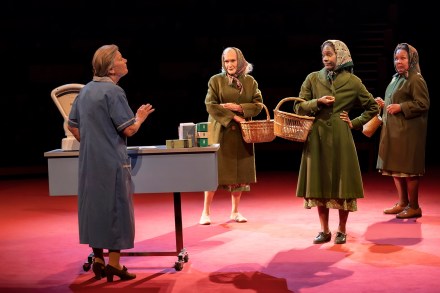
The National Theatre has given Sophocles’s Philoctetes a makeover and a new title, Paradise. This must be ironic because the location is hell on earth. The action starts in a dirt circle sprawling with smashed military gear where a group of plump female vagrants are waking up in a clutch of filthy old tents. They’re living on a Caribbean island which also houses a prison for migrants. In a nearby cave dwells an exiled Homeric archer, Philoctetes, who survives by eating squirrels which he kills with his handmade bow. A committed anti-vegan, Philoctetes shuns the plentiful rice, garlic and mangos that grow naturally in the tropics. Enter two British soldiers in contemporary battle fatigues, who want to track Philoctetes down. The Brits are called Odysseus and Neoptolemus.

Sinatra, Bacon and a YouTube star: Edinburgh Fringe Festival round-up

Theatre

Sinatra: Raw (Pleasance, until 15 August) takes us inside the mind of the 20th century’s greatest crooner. The performer, Richard Shelton, catches Sinatra in confessional mode in the 1970s as he looks back on his chequered career. In the early days, a promoter suggested the stage name ‘Frankie Satin’ but his tough-minded mother, Dolly, vetoed the idea. The show’s best sections investigate the harrowing details of his tangled and doomed romance with Ava Gardener. Fame and wealth never sweetened Sinatra’s prickly character. ‘Drink is my worst enemy,’ he quips, necking whisky from a tumbler. ‘But, like the Bible says, you’ve got to love your enemies.

Ian McKellen is riveting: Hamlet, at Theatre Royal Windsor, reviewed

Theatre

Ian McKellen in his early eighties plays the Dane in his mid-twenties. A production with such a strange innovation should be conventional in all other details so that the virtues and demerits of the experiment can be judged in the right context. But Sean Mathias’s show adds extra puzzles. Elsinore is a modern palace ruled by Claudius, in a charcoal suit, and Gertrude in a chic emerald dress, pinched at the waist. Nice togs. But the audience knows how a constitutional monarchy works and that a rightful heir succeeds automatically and peacefully. So why are these murderous nutcases roaming the corridors plotting to slit each other’s throats? That contradiction goes unexplained.

One for hardcore Tennessee Williams fans only: The Two Character Play reviewed

Theatre

It can be difficult to remember that Tennessee Williams, the great songster of the Deep South during the 1950s, was still churning out plays when he died in 1983. In the 1960s he was past his peak and he began to experiment with form, perhaps hoping to compete with fashionable youngsters like Tom Stoppard and Harold Pinter. Hampstead Theatre staged the world première of his absurdist melodrama The Two Character Play in 1967. And now, a mere 54 years later (an interlude that hints at its merits as a crowd-pleaser), the show has returned to its cradle. Sam Yates directs. This is an obscure and sometimes baffling script that features some excellent innovations and ideas.

What a comic treat: The Game of Love and Chance at the Arcola reviewed

Theatre

Lady Sylvia is a gorgeous aristocrat whose hand is sought by the charming Dorante whom she has never met. To avoid the stiff formalities of courtship, Lady Sylvia swaps places with her maid and observes Dorante from the safety of pretended servitude. But instead of falling for Dorante, she becomes enamoured of his manservant. However, there’s another wrinkle coming in Marivaux’s classic comedy. Deronte’s manservant, unbeknown to Lady Sylvia, is actually Dorante himself, who has pulled an identical switcheroo with his valet. The story is so hopelessly contrived that its sheer artificiality becomes part of the joke. This production of The Game of Love and Chance, directed by Jack Gamble, captures the fun-loving spirit of the original.

A shrill, ugly, tasteless muddle: Romeo & Juliet reviewed

Theatre

What shall we destroy next? Romeo & Juliet seems a promising target and the Globe has set out to vandalise Shakespeare’s great romance with a scruffy, rowdy, poorly acted and often incomprehensible modern-dress production. It starts with two lads having a swordfight using curtain poles. Enter the Prince who fires a gun and halts the action. Then the preaching starts. ‘Rather than trying to understand the nature of the violence, the Prince threatens the community,’ says an actor. These intrusions continue. ‘Patriarchy,’ says someone else, ‘is a system in which men hold power.’ The slogan appears on a screen as well.

This play is a wonder: Bach & Sons at the Bridge Theatre reviewed

Theatre

Bach & Sons opens with the great composer tinkling away on a harpsichord while a toddler screeches his head off in the nursery. The script becomes a broader portrait of a richly creative and competitive family where everyone is bright, loud, witty, inventive, good-natured and affectionate. Bach teaches the elements of composition to his gifted sons. ‘Rules provoke expression. They challenge your ingenuity.’ And the audience is unobtrusively schooled in the elements of counterpoint by four actors singing ‘Frère Jacques’. Bach considers Carl’s work good but workmanlike. Wilhelm is better, a wayward, inspired and anarchic talent. When Carl hears this verdict he falls into a jealous rage but it doesn’t last.

Enjoyable in spite of the National’s best efforts: Under Milk Wood reviewed

Theatre

Before the National Theatre produced Dylan Thomas’s Under Milk Wood they had to make a decision. How could they stuff this dazzling, rapturous comic tone-poem with misery and pain? The policy at the NT is that ticket holders must endure a play rather than enjoy it. They had four options. Racism, homophobia, misogyny and mental illness are the sources of woe most favoured by modern theatre-makers. The NT duly ticked box four, mental breakdown, and hired a writer, Siân Owen, to supply the necessary dollops of torment by penning a one-act melodrama as a preamble to the script itself. The setting is an old folks’ home which looks like a branch of Wetherspoons or an activity centre for pensioners.
This interactive Doctor Who show is as bombastic, fey and tedious as the TV series

Theatre

Death of a Black Man is a little-known script from the 1970s written by Alfred Fagon who suffered a fatal heart attack in 1986, aged 49. It’s an intriguing but sloppily written play set in 1973 about a pair of black London teenagers who are hustling for cash in the music business and the furniture trade. Shakie has lucked his way into a Chelsea flat where he makes money flogging African chairs to gullible Americans. His best friend, Stumpie, needs a loan to bring a band of African drummers to the UK. Meanwhile Shakie’s ex-girlfriend, Jackie, has returned from Jamaica to sponge off him and enjoy the high life. Scriptwriting blunders abound. Fagon uses soliloquys to reveal motivation. ‘I wonder who owns this flat,’ says Jackie to herself.

Godot Is a Woman will have you laughing all evening and arguing all night

Theatre

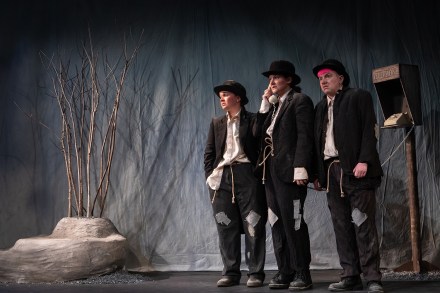
Godot Is a Woman opens with three tramps standing on a bare stage beneath a solitary upright. This isn’t Samuel Beckett’s famous drama about a pair of vagrants, Vladimir and Estragon, who wait in vain for a mysterious visitor. This is a spoof in which a trio of actors (two female, one non-binary) seek a licence to perform the script that Beckett insisted must be played by male actors only. The upright prop is a telephone box and the thesps are trying to get through to the Beckett estate. They’re answered by a robotic female voice. ‘You are 9,124th in the call queue.’ A burst of inane lift music fills the air and the actors pass the time by performing a comic dance routine that lasts 15 minutes.

Two hours of kitsch tomfoolery: Amélie at the Criterion reviewed

Theatre

The latest movie to turn into a musical is Amélie, from 2001, about a Parisian do-gooder or ‘godmother of the unloved’. Some rate Amélie as the worst film ever made in France. Some consider it the worst film ever made. Our heroine is a 20-year-old waitress, a sort of proto-Greta, who plays truant from her restaurant job and wanders around Paris doing nice things to random strangers. Her inspiration is a box hidden by a child in her apartment 40 years earlier which she wants to restore to its original owner. Or, as the clunky narrator puts it, ‘Why is she holding that box like her future is inside it?’ Amélie’s odyssey brings her into contact with all kinds of misfits, pests and layabouts who belong in a magic realist novel.

A Shakespeare play at the Globe whose best features have nothing to do with Shakespeare

Theatre

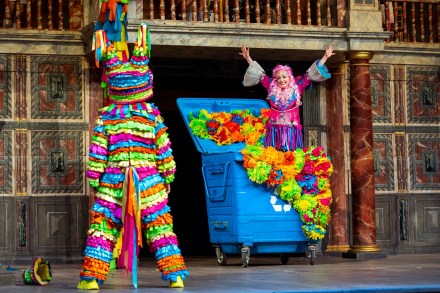
Back to the Globe after more than a year. The theatre has zealously maintained its pre--Covid staffing levels. On press night, there were eight sentries patrolling the forecourt where just 42 masked spectators watched a revival of Sean Holmes’s A Midsummer Night’s Dream. The Globe describes his show as ‘raucous’. The action is set in a forest near Athens during the classical era but the text uses 16th-century English. So it seems crazy to add a third time zone but most directors do so unquestioningly. This modernised production features an array of multicoloured stylings inspired by funfairs and Caribbean carnivals. The palette is a mad rainbow of acid pinks, savage yellows, eye-stabbing greens and brutal scarlets.

A brilliant, tense, ragged slice of drama: Waiting for Lefty reviewed

Theatre

A Russian Doll is a monologue about Putin’s campaign to swing the Brexit vote in his favour. It stars Rachel Redford whose Borat accent becomes grating after a little. She plays Masha, a computer wizard and language expert, who works for a firm of hackers appointed to spread fake news ahead of the referendum. Masha uses two techniques. She poses as a British Facebook subscriber and drops scary comments on to her timeline. ‘If we don’t leave the EU, Muslim extremists will flood the country.’ Her other ploy is to share a quiz about bikinis with her female correspondents. If the offer is taken up, the bots can harvest data from the correspondents and from their followers too. These methods seem rather time-consuming and haphazard.

A last hurrah for the Zoom play

Theatre

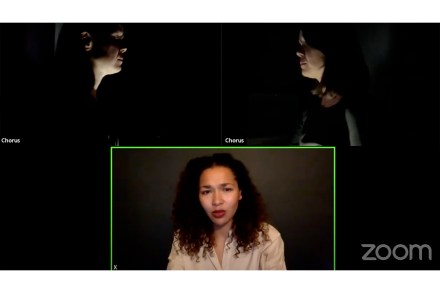
Lockdown is about to end but some theatres are gripped by cabin fever and want to explore the two new formats created by the pandemic. One is the Zoom play with multiple actors, the other is the sequence of filmed soliloquys linked by a theme or storyline. Tim Crouch has directed a Zoom version of B.S. Johnson’s satire House Mother Normal, which is set in an old folks’ home in the 1960s. The inmates are detained in a communal ward run by a sadistic nurse, the ‘house mother’, who enforces a programme of singalongs and party games. The house mother carries a weapon and feels free to beat anyone who defies her authority. That sounds peculiar but in the mid-20th century it was common for medical staff to lord it over their patients like public school prefects.

Clever, funny and fearless: Good Girl at Soho Theatre online reviewed

Theatre

A new work by Alan Bennett features in Still Life, a medley of five ‘untold stories’ from Nottingham Playhouse. The dramas were filmed during lockdown. Before the Bennett première, there’s a monologue by a wittering granny complaining about the price of cereal in a deserted food bank. Then, a banality-crammed slice of jabber between two van drivers eating lunch on a flight of stairs. This is followed by a ten-minute soliloquy from a precocious schoolgirl whose insights include, ‘my books are very heavy’ and ‘England is not part of Scotland’. A fourth cascade of tosh is parroted by a dim cab driver who trundles around the city bantering aimlessly with an eminently forgettable passenger.

Do theatres actually read scripts before agreeing to stage them?

Theatre

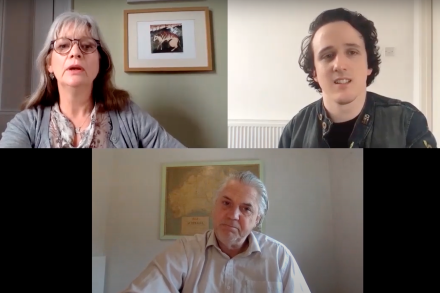
Money is a new internet play about financial corruption starring Mel Giedroyc. She appears on-screen for less time than it takes to eat a Malteser. Giedroyc plays the boss of a palm-oil firm that wipes out orangutan habitats in Asia and wants to launder its reputation by donating cash to a London charity. A million quid is on the table. The charity staff meet via Zoom to discuss the gift. But first they brief each other about their latest activities which, predictably enough, consist of stoking grievances and spreading self-pity. Their charitable aims include ‘tackling local loneliness’, and ‘breaking down barriers based on age, race and gender’. The meeting then moves to the big question: should they accept cash from a firm that kills cuddly animals?

Xenophobic twaddle: Bush Theatre’s 2036 reviewed

Theatre

The Bush Theatre’s new strand, 2036, opens with a monologue, Pawn, which takes its name from the most downtrodden piece on the chessboard. The speaker, Jordan, is an amiable dimwit of mixed Trinidadian and South African heritage whose mother explains his background to him like a condescending anthropologist: ‘Trinidad and South Africa are countries with cultures too rich for most people to understand.’ Jordan describes his life in London which consists exclusively of battling oppression. He buys fried chicken from Yusef, a Turkish food-seller, and he learns a greeting in Turkish that Yusef recognises. So Yusef starts to slip him extra portions as a perk. A white teenager hears of this practice and orders Yusef to suspend the freebies to Jordan.

Why do theatres think audiences want Covid-related drama?

Theatre

Hats off to the Orange Tree Theatre in Richmond. They’ve discovered a new form of racism. Some people say we have enough ethnic division already but in south-west London they’re gagging for more apparently. A new play, Prodigal, examines the prejudice endured by a Ugandan chap whose mother moved to London when he was a child and whose younger siblings are British. Family tensions depressed him. ‘You all made me feel ugly,’ he moans. The shifty whinger has returned home after his mother’s death in order to cheat his family out of an insurance pay-off. It’s remarkable to see a drama that reinforces a damaging stereotype but the author, Kalungi Ssebandeke, is content to put a bungling African crook on stage.

This comedy duo should be on Netflix: General Secretary reviewed

Theatre

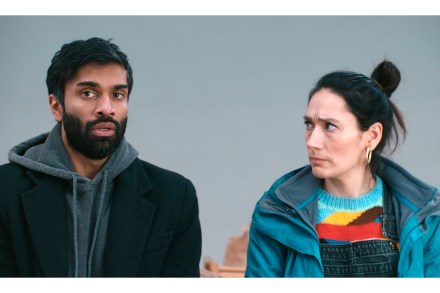
General Secretary is a new drama with a dull title and an off-putting poster. A pair of angry women in sombre clothing glare into the middle distance. But the satirical premise is intriguing. What if two young females with no experience took over the world? Georgie and Cassie are working from home when they receive a mysterious message from the United Nations. A pushy German blonde appears on their screens and makes an announcement: ‘You vill now be presiding over ze vorld.’ That’s it. And so they take control from their kitchen. The first surprise is that the newly empowered sisters don’t set about exposing the faults of male-dominated governments. Instead they panic and fret like a couple of giddy airheads.

A fantastic online show of Euripides’s take on Helen of Troy

Theatre

Everyone knows Helen of Troy. The feckless sex popsicle betrayed her husband, Menelaus, and ran off with the dashing Paris, which triggered the ten-year Trojan war. The Greeks were victorious but after sacking the city they went straight home again. So what was the point? Euripides’s play Helen takes a radically different approach in this Zoom production by the Centre for Hellenic Studies at Harvard. The script is crammed with enough twists and turns to make an entire Net-flix series but the running time is barely 60 minutes. Euripides opens with a narrative bombshell by revealing that Helen was absent from Troy throughout the conflict. The gods had spirited her to Egypt where she enjoyed the protection of a local warlord who declined to seduce her.

If you want a play that brings girls into science, commission a man: Jina and the STEM Sisters reviewed

Theatre

Jina and the STEM Sisters is a blatant act of propaganda. And its intentions are excellent. This is a musical puppet show that sets out to encourage girls of eight and older to take up careers in science where women remain under-represented. The heroine, Jina, is a schoolgirl who embarks on a hike through a dark forest haunted by ghosts and demons. It’s not clear to the viewer why she’s there or where she’s going. And she hasn’t a clue either. Perhaps the forest represents the world of intellectual repression she inhabits. ‘I ask a lot of questions,’ Jina tells us. ‘They say, “too many questions”.’ That’s an odd start. Do we live in a society that wags its finger at curious children?

Promising material squandered: BKLYN – The Musical reviewed

Theatre

BKLYN — The Musical gives itself a headache for no reason. What does ‘BKLYN’ mean? Perhaps it’s a random jumble of letters caused by a muffin landing on the keyboard. A punter who sees the title once and later looks it up online is unlikely to recall the precise order of the letters, and his search will probably fail. And he’ll have trouble discussing the show with his friends because he won’t know how ‘BKLYN’ is pronounced. It turns out that the show’s heroine is called Brooklyn, and the writers decided to capitalise her name and extract three of its letters. Sensible theatre-makers don’t create problems like this for themselves.

There’s the kernel of a good show in this copycat Hamilton: Treason the Musical reviewed

Theatre

Copycat Hamiltons are everywhere. Lin-Manuel Miranda led the way by turning an unexamined corner of history into a smash-hit show. The latest antique subject to become a musical is the Gunpowder Plot of 1605. The script, by Ricky Allan and Kieran Lynn, ought to include those words in the title because they give vital data about the location, the historical period and some elements of the story. It’s a priceless asset. But they’ve tossed it aside and plumped instead for the vague, unsuggestive ‘Treason’. The best-known figure in the conspiracy, Guy Fawkes, gets a mention — as ‘Gwee-dough Forks’ — but doesn’t feature as a character. Another puzzling decision.

Grotesquely plodding: Late Night Staring At High Res Pixels reviewed

Theatre

The Finborough’s new show is a love story with the male partner absent. Two women, one Irish and one American, explain their feelings for a London businessman, aged 45, who seems to be connected with the fashion trade. The women, known as ‘I’ and ‘A’, have different functions. ‘I’ is a young Irish model and ‘A’ is the absent man’s co-worker. Both are besotted with him for obscure reasons. We know nothing about him except that he visits east London every Sunday to devour his parents’ roast dinner. ‘A’ attends these meals but ‘I’ is excluded so she texts him snaps of her boobs instead. The women aren’t remotely troubled by his cold, exploitative attitude.

Unhappy blend of melodrama and allegory: Southwark Playhouse’s The Sorcerer’s Apprentice reviewed

Theatre

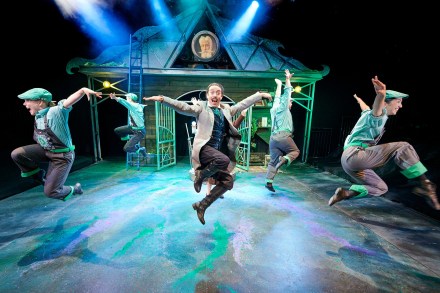
The Sorcerer’s Apprentice is a musical fantasy set in a Nordic town near the Arctic circle. Johan is a magician whose healing powers have won him the respect of his neighbours. But his rebellious daughter, Eva, has been expelled from school for scrawling ‘down with the patriarchy’ on a mirror. She’s also suspected of trying to sabotage a local factory that refines energy from the Northern Lights. The wicked factory owner, Fabian, is an emotional cripple who lives with his sick mother and rejects claims that the aurora is fading because too much energy has been extracted from it. If he continues to run the factory at full tilt, he may harm the atmosphere and destroy the town.

Even Adrian Lester’s sweetness, grace and nobility can’t rescue Almeida’s Hymn

Theatre

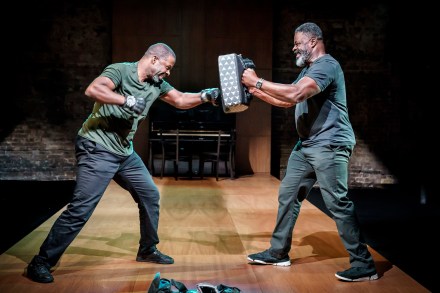
The Almeida is fighting back against lockdown with a sprawling family drama about two long-lost siblings. Adrian Lester plays Gilbert Jones, a successful entrepreneur, who runs a clothing business and a stationery shop in London. At his dad’s funeral he meets his half-brother, Benny (Danny Sapani), who was brought up in care but is now married with kids. The two bros become pals. They meet for salads at coffee shops where they swap news about each other’s families. They visit the gym and do stretching exercises while discussing their diets and their problems finding spaces to park. Benny, who appears to be a fitness coach, takes charge of these low-energy workouts. He holds up a scarlet cushion and Gilbert punches it feebly.

This fabulous play is like a Chekhov classic: The One Day in the Year reviewed

Theatre

The One Day In the Year is an Australian drama about the annual commemoration of the Gallipoli campaign in 1915. It was written in 1958 but it could have been dashed off last week. What makes it thrillingly topical is that the personality of Churchill and the truth about Britain’s colonial past are central to the story. The main character, Alf, is a veteran of the second world war who works as a lift operator. He detests the new Australia and he calls the younger generation a ‘stink lot of imitation Yanks’. For him, Churchill is the greatest Englishman in history. But his rebellious son, Hughie, describes Britain’s wartime prime minister as ‘a big bloated bloodsucker’.