Culture

Culture

The good, the bad and the ugly in books, exhibitions, cinema, TV, dance, music, podcasts and theatre.

Are events in Last Tango in Halifax too bad to be true? 

Television

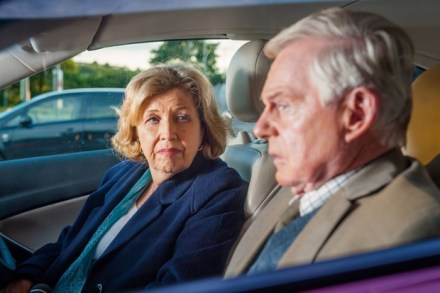
Does love run out when life runs out? Or does it intensify, touching and changing all around it? Two series now on our screens make a strong case for the latter —  one is about love striking in old age, the other about young lovers struck by Aids. Both pack a wallop. Since its Bafta-winning first series last year, Last Tango in Halifax (BBC1, Tuesdays) — about a widower and widow, Alan and Celia (wonderfully played by Derek Jacobi and Anne Reid), who reignite their teenage romance by getting engaged in their seventies — has been lauded for its celebration of love among the over-35s. But pensioner passion is not the only surprise this show offers — indeed, as the weeks go by, you realise that’s the least surprising thing about it.

Gary Bell is the real rudest man in Britain – and he’s on your side

Television

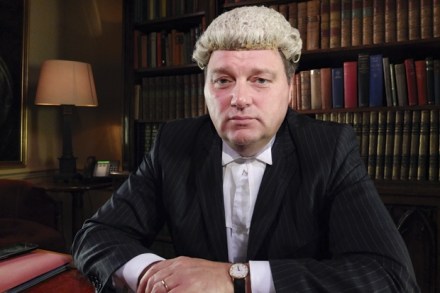
Gary Bell is the rudest man in Britain. I have known the bastard for years and no one —move over, lightweight Starkey — comes even close to matching his bluntness, his tastelessness, his heroic urge to offend at all costs regardless of how much collateral damage he causes his friends, his family or indeed his own reputation and career as a brilliant QC. But Gary has a dark secret: underneath that elephantine carapace of intellectual arrogance, gratuitous cruelty, and room-clearing crassness beats a heart so warm and tender it makes Princess Diana look like Hannibal Lecter. If a mate were in serious trouble, Gary would be the first to rush to the rescue. Well, wobble to the rescue because, as Gary would be the first to acknowledge, he is exceedingly fat.

Why doesn’t Doctor Who travel far from Britain? 

Television

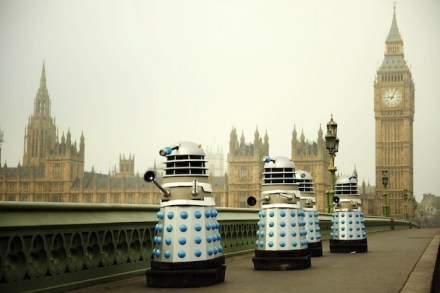
If I could go back in time, I’d watch Doctor Who from the very first episode. I wasn’t born in Britain, and with the 50th anniversary of the series hurtling towards us like an Earth-bound Tardis, I’m wondering if I might understand this cultural touchstone better if I’d grown up in the country, along with the show. But Doctor Who neophytes are in luck, because there’s a tiny loop in the time-space continuum whereby we can quickly catch up on Time Lord lore. To celebrate the 50th, the BBC has commissioned a host of programmes, many setting out to explain Doctor Who’s place as a British icon. This week there’s An Adventure in Space and Time (BBC2, Thursday) and The Ultimate Guide to Doctor Who (BBC3, Monday). Whoosh! Off we go then.

James Delingpole: Is the fight against environmentalism the new Cold War?

Television

Gosh it isn’t half irksome when someone who went to the same school as you but is considerably younger than you ends up doing dramatically better than you. But hats off to Dominic Sandbrook: his new series Cold War Britain (BBC2, Tuesday) is an absolute delight. Sandbrook has that rare gift of making things you thought you knew pretty well already seem startling and fresh. Take Churchill’s Fulton, Missouri speech. ‘Ah,’ I said expertly to the Fawn, a good five minutes before the programme reproduced the famous recording, ‘From Stettin in the Baltic...’ But what Sandbrook does is both put it in context and give it a human dimension that brings the whole business alive.

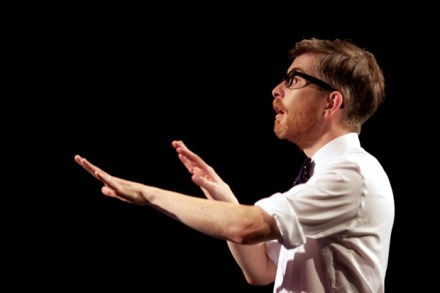
Come to the Spectator office, Gareth Malone, and hear our ‘Carmina Burana’

Television

They’re now televising proceedings from the Court of Appeal. Great. As if I didn’t have enough to do already, keeping tabs on Strictly Come Dancing and EastEnders, I now have to monitor what’s happening within the hallowed judicial temples of the land. The broadcasting of court cases has been much debated, with people fussing about whether it will influence the meting out of Justice, and the implications for Law and Order once these are exercised in front of the cameras, and other high-minded issues. My own worry is about my job scope. Everything is televised these days, which means everything can be reviewed.

James Delingpole: All students need a ‘sense of entitlement’ — ask my fundie friend Rupert 

Television

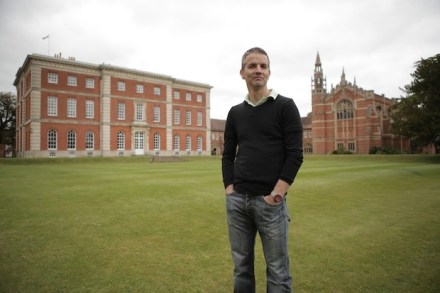
‘Life is what happens to you while you’re busy making other plans,’ said John Lennon. Quite apposite from a man who — presumably — meant to spend a ripe old age staging increasingly embarrassing art happenings with Yoko Ono, rather than be shot dead by a nutcase. It also applies to the two things that most grabbed me on TV this week: A Very English Education (BBC2, Sunday) and the Red Wedding episode of Game of Thrones (available via Blinkbox). The first, a follow up to Public School — the BBC’s 1979 fly-on-the-wall series about Radley — sought to find out what had become of its various stars. One of them, Rupert Gather, is now a very successful fund manager. Rupert is an old friend from way back.

Will the women of The X Factor stop perving?

Television

Will the women on ITV’s The X Factor (Saturday) stop perving? I suppose there are two ways to tackle the issue of gender equality — one is to dictate that nobody mention sexuality at all; the other is to make females slobber over the males the way men purportedly slobber over women all the time. The women judges of The X Factor are lurching towards the latter. ‘I’ve got my eye on you,’ Sharon Osbourne winked at a contestant, Nicholas McDonald. He is 15. She made him repeat the words ‘nearly sixteen’, because he pronounced it ‘sex-teen’. Young Nicholas is being sexualised before our eyes.

James Delingpole: The Wrong Mans leaves me gasping with exhilaration and glee

Television

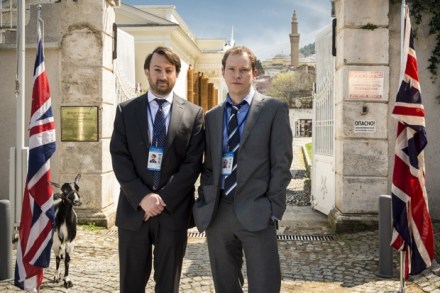
Among the criticisms rightly levelled at the BBC are that its commissioning editors are overcautious, unimaginative, unadventurous and over-reliant on star names and proven formulae. So I really didn’t have much hope for The Wrong Mans (BBC2, Tuesday), the latest vehicle for the painfully ubiquitous James Corden. Since Gavin & Stacey — which I know we’re all supposed to have cherished beyond measure — Corden has become as inescapable a part of the BBC furniture as David Jason was in the Eighties, or Robson & Jerome were in the Nineties. If Corden had pitched a script based on the Albanian telephone directory, I’m sure the BBC would have commissioned it like a shot.

Introducing the celebs of Victorian reality TV

Television

Did Dr Jekyll turn into Jack the Ripper? Besides becoming evil Mr Hyde, did Robert L. Stevenson’s fictional creation morph into the serial killer who terrified Whitechapel? In a way, he did. A stage version of Stevenson’s novel was playing in the West End at the time of the East End murders. On stage, the actor who played both Jekyll and Hyde performed the switcheroo to such effect that women in the audience fainted. At the same time, the bodies of dead prostitutes — their internal organs expertly removed — caused many to surmise: a doctor did it. That good/bad doctor who was scaring everybody! A newspaper declared: ‘Mr Hyde is at large in Whitechapel.’ Some even pointed fingers at the actor, Richard Mansfield.

‘Atlantis’ shows our civilisation is doomed

Television

This week saw the final episode of possibly the greatest television series ever. Breaking Bad wasn’t made by the BBC, of course. Nor, so far as I know, did it make any attempt to buy the broadcast rights. That’s because, obviously, the Beeb has far more important, special things to spend your compulsory licence fee on, in keeping with the Reithian tradition. Stuff like Atlantis (BBC1, Saturday). Atlantis was designed to fill the Saturday evening family entertainment slot that has previously been occupied by Merlin. And I do mean ‘designed’. It’s so crudely manufactured it makes One Direction look like Led Zeppelin.

Can you trade love for wealth? The economics of Breaking Bad

Television

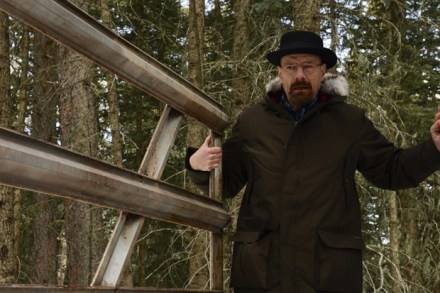
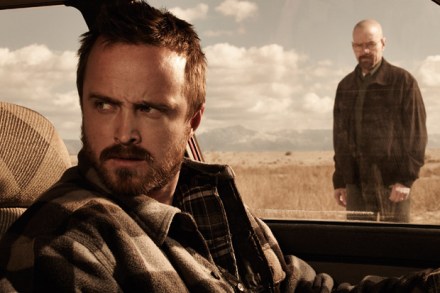
It has been the social-science equivalent to the Large Hadron Collider, the most expensive and most awe-inspiring experiment of our time. Like Cern’s particle collider, it started in 2008 and this week, just six months after the Geneva researchers confirmed that they had found the Higgs Boson, it, too, has reached a conclusion. Walter White (above), hero of Vince Gilligan’s Breaking Bad, is...(spoiler averted). When Breaking Bad hit our screens, it dumbfounded viewers and critics alike with the sheer complexity of its narrative and aesthetics. The reviews were mixed and its future uncertain. The social experiment that the series set out to explore was strikingly simple: take an ordinary, law-abiding citizen and have him dabble in crime.

Downton Abbey is now a weird parallel universe of the royal family. Except with less action

Television

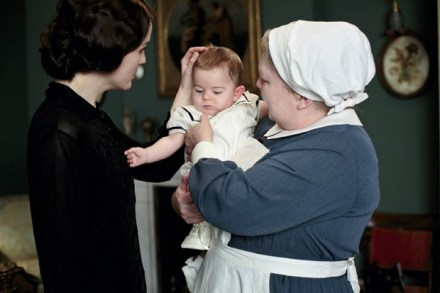
Are you following the world’s most watched aristocratic family? If you recall, they recently took into their ranks a member of the middle classes. The family, headed by a matriarch, is as dysfunctional as any other. But they do live in a palatial home and have a coterie of servants. Their sense of fashion is unerring. There are worries about the future and about inheritance. A boy, George, has been born. Downton Abbey — now a global phenomenon — caters to our insatiable curiosity about the royal family. The more we see of Queen Elizabeth, Charles, William and Kate at processions, and so forth, the more it leaves us wanting. How do these blue bloods actually live? Downton takes us there.

James Delingpole: As a Brummie, I am aggrieved with Peaky Blinders

Television

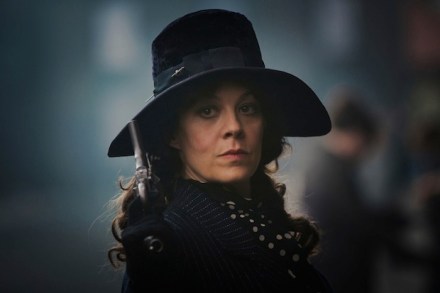
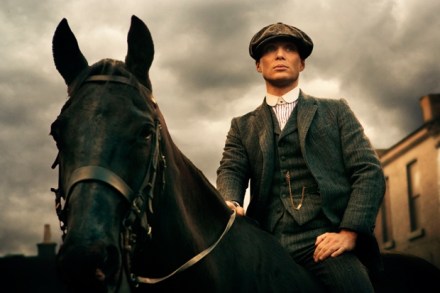
You wait a whole lifetime for a lavishly shot, starrily cast, mega-budget gangster drama set in Birmingham to come along. Then when it does, it’s absolute rubbish. Well, I’m sorry but it is and as a Brummie — near enough: I grew up in a village called Alvechurch, just outside, and I come from a long line of Midlands industrialists — I feel particularly aggrieved by the entirely unjustified acclaim being heaped on the dismal Peaky Blinders (Thursday, BBC2). Let’s start with the accents. Some sound like a mélange of Liverpool and generic northern; others sound Irish, even when spoken by characters who aren’t supposed to be Irish. The series is set in Small Heath in 1919. Times have changed a bit since then, I’m sure, but Brummagem accents?

The Wipers Times – 100 years on, this newspaper still lives

Television

Funny what rises from the rubble. In 1916 British army officer Captain Fred Roberts was searching the bombed-out remains of Ypres. Among the ruins was a printing press. Soon words and sentences were flying from the old machine — cheeky, irreverent, bold. It was brazen of Roberts to start a satirical newspaper right on the front line, whose writers would be his men, soldiers who could not pronounce the name of the Belgian town they were in. (They called it ‘Wipers’.) Thus The Wipers Times was born. ‘Has your boy a mechanical turn of mind?’ ran a front-page headline of an early issue. ‘Then buy him a Flammenwerfer.

After watching Bad Education, Big School is as embarrassing as watching your dad trying to DJ

Television

You know you’re getting old when TV starts getting nostalgic about eras during which you were already feeling old and nostalgic. Take Pogs, the subject of one of those ‘Whatever happened to them, eh?’ moments in Badults (BBC3, Tuesday), an amiable sitcom about twentysomething flatmates. Pogs were these collectable discs originally made from fruit-juice bottle caps (passion fruit, orange and guava) that were a massive fad in the mid-Nineties. Tragically, though, the reason I know this is not that I played with them myself but that my stepson Jim the Rat did. How depressing is that? What it means is that even the generation below me, Jim’s, is already beginning to feel sufficiently past it to start lamenting its lost youth.

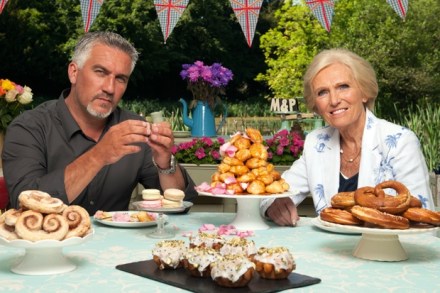
The sight of a rose-and-pistachio cake with lychee flavouring, strewn with petals, makes Clarissa Tan’s heart lift

Television

I’m not crazy about cookery shows. I suspect they indicate how little we are cooking, rather than how much. We’re fascinated with celebrity chefs because we think they’ve mastered something exotic and foreign to us — no surprise their shows are often slotted next to travel programmes. Looking at Jamie Oliver potter about his kitchen, we smugly feel we’ve given some time to cooking, though in reality we’ve done no such thing. On the whole, I think you are better off making yourself some buttered toast than spending an hour watching Anthony Bourdain experiment with spring rolls in Hanoi. The Great British Bake Off (BBC2, Tuesdays) is different.

Time out

Television

Will my friend, the writer and historian Tom Holland, get his head chopped off for the things he is saying on Islam: The Untold Story (Channel 4)? My guess is not. If I’d said them, I’m sure I would have done because I have the kind of manner which makes people want to punch my lights out even if all I’ve said is that their mum makes a really lovely apple crumble and by the way is it OK if I help with the dishes? Holland, on the other hand, has such a fey, wispy, slightly geeky, quintessential English niceness about him that I’ll bet if he stood outside the Kaaba and declaimed to the crowds through a megaphone, ‘I say, you chaps. You do realise that your religion is a frightful farrago of nonsense?

Breaking Bad is so harrowing that for a while James Delingpole couldn’t watch it

Television

One of Boy’s more annoying teenage rules of thumb is that, if Dad likes it, it must be crap. This applies of course not just to all those classic albums I consider an essential part of his education from Led Zep III to After the Goldrush, but to books, films and TV shows as well. In our precious final years together before he leaves home to work his way up the Greenpeace hierarchy, I’d been quite looking forward to snatching a few father/son bonding moments as we settled down in front of, say, Ghosts of Mars, High Plains Drifter, Das Boot, The Sopranos or, as a special treat, the entire series of Band of Brothers back to back. But I’m beginning to fear that it ain’t going to happen. ‘Dad,’ he said to me the other day.

Big School left me po-faced

Television

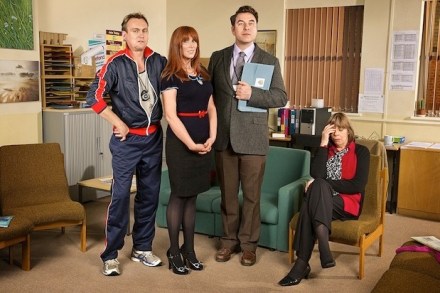
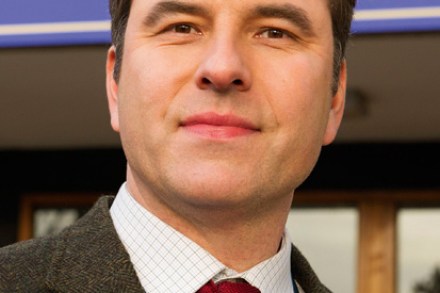
How did our comedies become so sad? BBC1’s new sitcom Big School (Fridays) opened with a scene that would probably tickle the ribs of many, but I, in my usual humourless way, found it depressing. Chemistry teacher Mr Church, played by David Walliams, hoped to excite his morbidly uninterested pupils about the effects of dunking a bottle of cold liquid nitrogen in warm water by using hundreds of table-tennis balls to dramatise the resultant explosion. But the bell rang, and his students filed out of class radiating boredom and contempt, leaving Mr Church gazing forlornly at a thousand ping-ponging shells.

Is David Starkey God?

Television

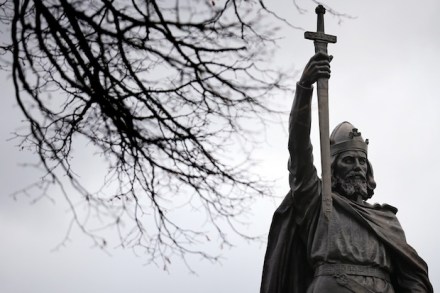
‘Somerset. Winter 877,’ said the subtitles below an arty, BBC-nature-doc style close-up of a coot paddling amid the reeds on the eerie black waters of the Somerset levels. ‘Yes!’ I went, mentally punching the air. ‘I’m in safe hands here, I can tell. Bet they’re going to get all the costume details totally right. There might even be battle scenes. Not crap three-men-with-shields-filmed-over-and-over-again-from-different-angles-with-a-shaky-camera like in the bad old days. But totally convincing CGI-enhanced ones. The Battle of Ashdown, done even more realistically than it was in 871. Yay!’ Then it got even better.

Clarissa Tan experiences the greatest show on earth, and laughs

Television

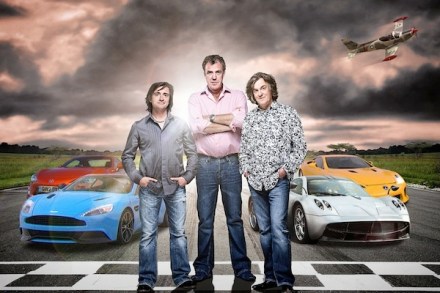
I watched Top Gear (BBC2, Sunday) for the first time in my life last week (the rock under which I’ve been living is pretty large, practically a boulder). I thought I’d better plug this knowledge gap before it got too embarrassing, seeing that Top Gear is the greatest show on earth, the travelling Big Top de nos jours, a daredevil combo of acrobatic stunts, mechanical wizardry and freakery. Fakery too, apparently, as it’s emerged that in a recent episode scenes that looked spontaneous were actually staged. These involved flashes of watery chaos, upturned tables and angry diners shaking their fists as an amphibious vehicle hastily built and even more hastily driven by Jeremy Clarkson & co. blasted past a bucolic restaurant by the River Avon, spraying all and sundry.

What was the point of Burton and Taylor?

Television

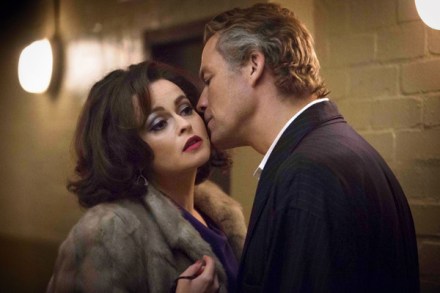
Watching Burton and Taylor (BBC4, Monday) I felt a bit like I do when I go to the theatre — or, more often, when friends have kindly taken me to the theatre. ‘Are you enjoying it?’ someone will ask. ‘Oh, yes. Very much,’ I’ll lie. For the truth is, no matter how well done it all is, I’d still so much rather be doing other things. Catching up with the latest episode of the infinitely more gripping The Returned (Channel 4, Sunday), for example. At the end I found myself wondering ‘Why?’ Not just ‘Why didn’t I switch off earlier?’ and ‘Why couldn’t I maybe have chosen to review that David Starkey series on royalty and music instead?

If you’re craving some Kiwi bush angst, Top of the Lake fits the bill

Television

I sincerely hope you’re not watching television. With the glorious summer sun we’re having, you should be having picnics and swims, not sitting in front of a screen. So this is my recommended viewing for the week: nothing. Get out. Still, if you must look for something, why not look for shows about looking? There are quite a few of them about. In the new sitcom Family Tree (Tuesdays, BBC2), Eeyore-faced Chris O’Dowd plays Tom Chadwick, a recently cuckolded, jobless single who’s inherited an old photo of someone he believes to be his great-grandfather. Tom embarks on a search to know more about his ancestors, discovering ever more exotic and esoteric branches of his genealogy.

Brainwashed from birth: the cult of the BBC

Television

Last week I was on holiday with my family on the Algarve. The good news was that, thanks to the BBC’s widespread availability in Portugal, we didn’t miss out on Murray at Wimbledon. The bad news was that, for the same reason, we couldn’t escape The Apprentice. But this isn’t an anti-Apprentice column. It’s an anti-BBC column prompted in part by something annoying somebody said to me on Twitter the other day. I’d written, not for the first time, that I considered the BBC ‘a total waste of money’. And the tweeter replied primly, ‘The BBC is a total waste of money or actually you quite like Today, Proms, Glasto, wildlife docs. Can’t have it both ways.’ No, actually, you can.

TV review: Get out of my way, Tessa Jowell. Women are not all touchy-feely

Television

Luther is back, in Luther, and so is Donny Osmond, of Donny & Marie fame. Could there be two more differing cultural symbols of manhood? My feeling is no. Luther (Tuesdays, BBC1) fills our screens with sick foreboding. We are as victims pinned to the sofa, eyeballing the characters’ every action with terror as they move about menacingly in our living-rooms. It’s a cop show where the cops are not so much bent as twisted, their souls writhing to unarticulated inner torments, chief among them that of its anti-hero DCI John Luther (Idris Elba).

TV review: Russell Brand socks it to the gods and goddesses of daytime TV

Television

This week I witnessed the bloody, brutal death of mainstream television. It will, I think, go down in media history as one of those ‘Where were you when JFK was shot?’ moments. The victims were the presenters of a US breakfast television show called Morning Joe; the executioner was Russell Brand. Russell Brand? No, it’s OK, I’m quite with you: on a bad day he can be the most annoying person on earth, with his swarthy, beardie, slimy, wheedling faux-grandiloquence and even more faux-intellect and that little-puppy-dog-lost way he has of looking you straight in the eye and impudently demanding your forgiveness for having just shagged both your wife and your daughter ‘because, hey, it could have been worse — at least I didn’t do grandma too’.

Television review: Channel 4’s mating season

Television

Channel 4 is deep into its summer of love. It’s having a Mating Season and — unusually for the network — it’s not all about sex. Instead, it’s about those fluttery butterflies that occur before the birds and the bees come in, when two people meet for the first time and get to know each other. Not mating then, but dating, which is scarier. When you watch Dates, it seems scarier still. The drama series is about ‘the social minefield’ of modern dating, and what a minefield it is. Ex-escorts, closet gay bankers, Cantonese lesbians — there’s the lot. The first episode, about two very different people on a blind date, was quite intriguing. But I got sidetracked. The female character, Mia, looked disconcertingly like Samantha Cameron.

Television review: The Returned is the finest, purest heroin

Television

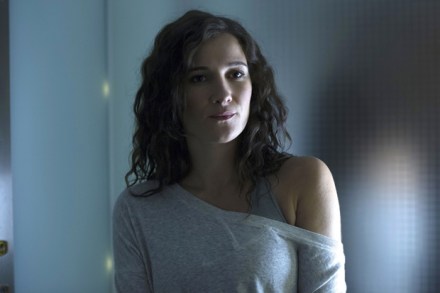
With the possible exception of Game of Thrones, The Returned (Channel 4, Sunday) is the best series you will see on TV all year. I caught some early previews about a month ago when I was on The Review Show (BBC4). Normally the reviewers don’t agree on much but on this we were unanimous: we all felt like newly made addicts who’d been introduced to the finest, purest heroin — only to be suddenly denied our next fix. When was the rest of the series going to be broadcast? When? WHEN? Well, now, finally it has made it on to Channel 4 and I hope you’ll all be as hooked as I am. It has been variously billed as a zombie thriller and a successor to Twin Peaks, but neither does justice to its intelligence, subtlety and eerie beauty.

Sex! Soap! Starkey! The Tudor invasion of British television

Television

The Tudors have invaded television. Everywhere you look, it’s Henry VIII this, Henry VII that, Anne Boleyn this, Anne of Cleves that. On BBC2 is the continuing drama series The Tudors, whose Henry VIII looks like the lead singer in a boy band who’s stumbled on to the wrong film set. At any moment, you expect him to announce the execution of Anne Boleyn with those jabbing-the-air hand gestures that boy-band members use to semaphore emotion. Lushly soap operatic, The Tudors depicts the royal court not so much as a place of high political intrigue but as a hearth for dynastic family troubles where improbably good-looking people have lots of sex.