Culture

Culture

The good, the bad and the ugly in books, exhibitions, cinema, TV, dance, music, podcasts and theatre.

Without a strong woman in charge, bees are doomed — just like us

Television

God bless the BBC. And I’m not being entirely sarcastic here. There are some things the BBC does very well and one of them, sadly, was The Review Show, its monthly critical round-up of theatre, film, books and new art exhibitions, that it has now, in its wisdom, decided to scrap. Presumably, the decision was made because the ratings had plummeted — a fact perhaps not unconnected with the programme’s move from BBC2 to the ghetto of BBC4. Yes, being highbrow and involving critics who talked in long sentences, it definitely counted as minority viewing.

Gas gangrene, shell shock and flinty women: BBC One’s new Sunday night offering is no soother

Television

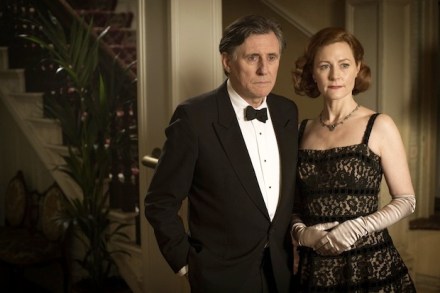
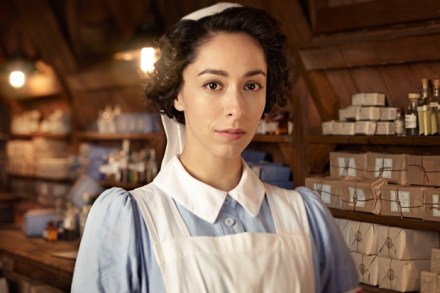
Sunday nights. What are they for? Eggs. Tea. Toast. Nerves about the week ahead. Something comforting on TV.  But comfort comes in many forms. For some, it’s twee life at Downton Abbey. For others, it’s the thrill of Homeland. With the BBC’s latest Sunday-night offering, comfort takes on a new guise: one that includes gas gangrene, shell shock, flinty women and war-damaged men. It won’t rock you to sleep. The Crimson Field, BBC1’s latest six-part drama, took us to the support system that existed behind the front line during the first world war. It’s 1915, and young women from Britain’s upper and middle classes have been drafted in as VADs — Voluntary Aid Detachments — to nurse casualties from the trenches.

The EU is worse than you thought

Television

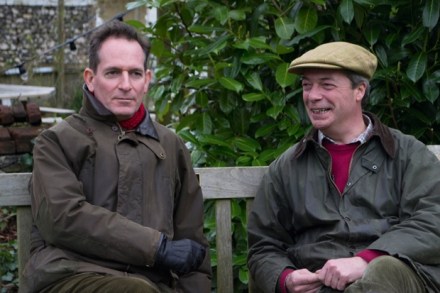
For me, by far the most surprising revelation in Martin Durkin’s documentary Nigel Farage: Who Are You? (Channel 4, Monday) was just how astonishingly vast, unwieldy, authoritarian, interfering, undemocratic, sclerotic, and sinister the European Union actually is. As a Eurosceptic, I suppose I ought to have known this already. But the secret of the European Union, as one of Durkin’s talking heads noted, is the way it uses boredom as a weapon. Even those of us predisposed towards thinking ill of the EU are unwilling to apprise ourselves of the full, tedious details because our brains would explode at the sheer, grinding dullness of it all.

Game of Thrones tells the story of Britain better than most histories

Television

A young pretender raises an army to take the throne. Having recently learnt of his father’s beheading, the adolescent — dashing and charismatic and descended from the old kings of the north — vows to avenge him. Despite his youth, he has already won in the field and commands the loyalty of many of the leading families of the realm; he is supported in this war by his mother, who has spirited away her two younger boys to safety. Pitted against them is the Queen, proud and strong-willed, and more of a man than anyone around her, battling for the inheritance of her sadistic young son. This is the premise behind the HBO television show Game of Thrones, the fourth series of which begins on 7 April. Based on the George R.R.

Eton vs snobbery

Television

One of the stranger things about Eton is its near-total lack of class snobbery. Yes, all right, you still get the occasional away match where their supporters will chant at the opposition ‘You’ll be working for our Dads’ but that’s just badinage, not animus. I doubt it was always thus. Probably there was a time when every Etonian was acutely aware of which of his housemates was in line for a dukedom and which a mere baronetcy. But, as far as I can tell from my own experiences as an Eton parent, those days are gone. Today Eton is quite ruthlessly meritocratic and if you’re good enough you’re good enough, regardless of whether your Dad owns a Chinese takeaway in Leigh-on-Sea or he’s a jumped-up blogger from Brum.

If BBC3 was allowed to keep its hits, perhaps it wouldn’t be getting booted online

Television

So BBC3 will be online-only from next autumn. If the Beeb had presented this news as the channel being the first one to take the daring step of migrating to the internet, instead of it being booted out to save the likes of BBC4, perhaps BBC3 fans would be feeling less aggrieved. After all, as companies like Netflix demonstrate, the future of TV is probably on the web. Linear channels are just so, well, linear and old-fashioned. The Beeb says the move is part of its cost-cutting, and will result in £30 million more for BBC1 (presumably enough to replenish Sherlock’s coat supply). I had hoped that, as a consequence, our licence fees would also be cut, but apparently not. Instead, the BBC is now proposing that its fee be pegged to inflation.

Is True Detective worth sticking with? The jury’s out

Television

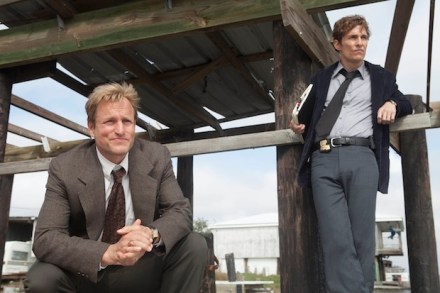
I’ve got this brilliant idea for a major new cop series. It’s called Chalk and Cheese and, though you won’t have guessed this from the title, it’s about these detective partners who couldn’t be more different. Why, they’re like two incredibly dissimilar things, one, maybe an edible, milk-based product, the other some manner of mineral that you use to write with. Chocolate and Graphite: that’s another possible title, then. So, anyway, what I thought is that one of the characters would be a normal, sensible family-man type. And the other, by way of humorous and dramatic contrast, would be completely out there.

A quietly stunning quest for Bonnie Prince Charlie

Television

What if Bonnie Prince Charlie, as he swept down from Scotland towards London to lay claim to the throne, hadn’t lost his nerve at Derbyshire but had instead pressed on — and won? What would Britain be like today? In the year that the Scots vote on whether to stay in the UK, the art world has discovered a painting from that other time when the union was in jeopardy. It’s a marvellous portrait of Charles, painted in Holyrood Palace by the famous Scottish artist Allan Ramsay, when both men were at the peak of their ambition. The only known portrait of Bonnie Prince Charlie from this heroic phase of his life, it dates from around 1745, when he led the Jacobite rebellion. The discovery was made by the art detective Bendor Grosvenor, of Fake or Fortune fame.

The TV shows my children allow me to watch at half-term

Television

Half-term again, so naturally all my TV viewing plans have gone out of the window. In some households — my bearded Victorian brother Dick’s, for example — parents still cleave to the old-fashioned values whereby a sofa-blocking child in front of the TV is instantly ejected should its father or mother wish to watch something else. But I’d never dream of doing it to ours. When they’re teenagers and when they’re away so much of the time at boarding school, you’re pathetically grateful for whatever crumbs of companionship they are prepared to offer you.

So long, Scandinavia. Bonjour, Benelux! 

Television

So long, Scandinavia. Bonjour, Benelux! BBC4, your subtitle-friendly channel, has filled the hole left by Nordic-noir The Bridge with Belgian crime drama Salamander (Saturday). At first, I thought this might involve a series of murder mysteries set in Flemish country houses, all solved by a dapper English detective called Horace Parrot. Not to be. Salamander is a 12-parter that kicks off with a break-in at the very heart of evil, a private bank in Brussels. The robbery eventually lands incorruptible police investigator Paul Gerardi (Filip Peeters) in the midst of a dangerous conspiracy, as he is chased by all manner of crooks keen to protect secrets they’d kept in their safe-deposit boxes. Salamander, like its amphibian namesake, is a creation at once sleek and slow-moving.

How did Colonel Gaddafi get away with such evil for so long?

Television

What a vile piece of work Colonel Gaddafi was. For some of you, perhaps, this will be a statement of the glaringly obvious. But I suspect there will be many others for whom, like me, this week’s Storyville documentary on the barbarity of his regime — Mad Dog: Gaddafi’s Secret World (BBC4, Monday) — was something of a revelation. Sure, we’d all heard about the funny stuff: the time John Simpson went to see him and he farted noisily (Gaddafi, not Simpson) through the interview; the ridiculous outfits; the bullet-proof Bedouin-style tent that he insisted on bringing on his last world tour, complete with live camels to graze decoratively outside.

Jeremy Paxman’s Great War is great. But is 2,500 hours of WW1 programming too much?

Television

Why are we so fascinated by the first world war? As its 100th anniversary approaches, we’re already mired in arguments about whether for Britain it was a ‘just war’ or a ‘pointless sacrifice’ of millions of lives. I don’t see why it has to be one or the other. Surely this huge and horrific event held elements of both, and more. If ever there was a time when glory ran alongside absurdity, when courage marched lockstep with catastrophe, this was it. We’re looking back at the Great War as if it were a mental exercise — should it or shouldn’t it have happened? But maybe our fascination is emotional as well as intellectual.

The Three Musketeers is a triumph – because, like Game of Thrones, no one is safe

Television

‘Pshaw!’ That was my first reaction to news of the BBC’s new ten-part Sunday night adaptation of The Three Musketeers. After all, wasn’t it about a fortnight ago I was in the Gaumont in Redditch watching the classic 1973 movie version that had just come out with Michael York (and Oliver Reed and Roy Kinnear...)? And wasn’t it roughly the day before yesterday that I remember tut-tutting and refusing point-blank to go to see the 1993 Hollywood bratpack travesty with those upstarts Charlie Sheen and Kiefer Sutherland? This is what happens when you get old: time compresses; there’s nothing new under the sun; everything people younger than you do seems somehow to be a damned impertinence.

After Sherlock, TV will never be the same again

Television

You know the holiday season is over when, instead of being torn between The X Factor and Strictly Come Dancing on a Saturday night, you have to choose between The Voice and Splash!. The good news for The Voice is that pint-sized superstar Kylie Minogue has joined its judging panel. In the season opener, competition hopeful Leo Ihenacho (formerly of the band The Streets) picked Kylie to be his mentor, as he used to fantasise about her when he was a boy. The premise of The Voice is that the judges, who have their backs turned to the stage, aren’t influenced by the aspirants’ looks, age or dress. In return, contestants seem to choose as their coach the judge they think is most, well, hot. Anyway, I’m afraid the amateur-diving platform Splash!

Is Sherlock starting to suffer from ADD?

Television

Sherlock’s not dead. A good thing, since on New Year’s Day BBC1 launched its third series of Sherlock, and it’d be inconvenient if the three episodes didn’t have Sherlock. Last season, Benedict Cumberbatch’s Holmes stood on a building rooftop, dramatic coat flapping, a tweedy caped crusader. Then he jumped to his death. Only he didn’t. He’s still alive. The Cumberbatch comeback! Hooray. Of course, the detective had some explaining to do. Not only to sidekick John Watson (Martin Freeman) — who grew a moustache as part of the grieving process — but also to the many Sherlock fans who’d taken to the internet in the past two years to post their survival theories.

Jeremy Clarkson brings Yuletide joy to the Delingpole household

Television

So I’m looking at the seasonal TV schedules trying to find something — anything — to watch. Britain and the Sea? Probably very well done, but David Dimbleby is such a dangerously feline, OE-manqué, Flashmanesque, living-embodiment-of-the-BBC closet pinko that reviewing it would feel wrong, somehow, like chipping into a fund to buy Chris Huhne an eighth home. The Doctor Who Christmas Special? But it always makes me want to kill myself. I hate the idea that a Dalek garlanded in tinsel might burst into the Cratchit household with a fat goose dangling from its exterminator gun while the White Witch’s frozen heart melts and all the crippled children are released from the snowy mountain — or whatever mawkish crap they’ve got planned for us this year.

Is this the real First Lady of ‘Borgen’?

Television

I meet Birgitte Hjort Sorensen in a plain office near the Donmar Warehouse in the West End. She’s warm, sharp and engaging, and her fast-flowing English is adorned with the odd Eurotrash platitude. Her American twang owes itself to the global language school of television. ‘I watched a lot of American and English TV growing up. We have it subtitled, not dubbed. Denmark is such a small country and nobody’s going to speak Danish outside of Denmark.We kind of have to learn.’ She’s about to appear as Virgilia in Coriolanus at the Donmar. How does she find playing the wife of a tyrannical anti-hero? ‘Interesting in that she doesn’t talk a lot compared to some of the other characters, who talk quite a lot.

Are events in Last Tango in Halifax too bad to be true? 

Television

Does love run out when life runs out? Or does it intensify, touching and changing all around it? Two series now on our screens make a strong case for the latter —  one is about love striking in old age, the other about young lovers struck by Aids. Both pack a wallop. Since its Bafta-winning first series last year, Last Tango in Halifax (BBC1, Tuesdays) — about a widower and widow, Alan and Celia (wonderfully played by Derek Jacobi and Anne Reid), who reignite their teenage romance by getting engaged in their seventies — has been lauded for its celebration of love among the over-35s. But pensioner passion is not the only surprise this show offers — indeed, as the weeks go by, you realise that’s the least surprising thing about it.

Gary Bell is the real rudest man in Britain – and he’s on your side

Television

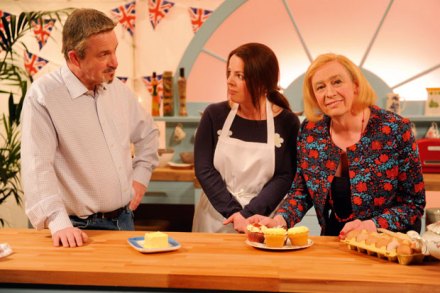
Gary Bell is the rudest man in Britain. I have known the bastard for years and no one —move over, lightweight Starkey — comes even close to matching his bluntness, his tastelessness, his heroic urge to offend at all costs regardless of how much collateral damage he causes his friends, his family or indeed his own reputation and career as a brilliant QC. But Gary has a dark secret: underneath that elephantine carapace of intellectual arrogance, gratuitous cruelty, and room-clearing crassness beats a heart so warm and tender it makes Princess Diana look like Hannibal Lecter. If a mate were in serious trouble, Gary would be the first to rush to the rescue. Well, wobble to the rescue because, as Gary would be the first to acknowledge, he is exceedingly fat.

Why doesn’t Doctor Who travel far from Britain? 

Television

If I could go back in time, I’d watch Doctor Who from the very first episode. I wasn’t born in Britain, and with the 50th anniversary of the series hurtling towards us like an Earth-bound Tardis, I’m wondering if I might understand this cultural touchstone better if I’d grown up in the country, along with the show. But Doctor Who neophytes are in luck, because there’s a tiny loop in the time-space continuum whereby we can quickly catch up on Time Lord lore. To celebrate the 50th, the BBC has commissioned a host of programmes, many setting out to explain Doctor Who’s place as a British icon. This week there’s An Adventure in Space and Time (BBC2, Thursday) and The Ultimate Guide to Doctor Who (BBC3, Monday). Whoosh! Off we go then.

James Delingpole: Is the fight against environmentalism the new Cold War?

Television

Gosh it isn’t half irksome when someone who went to the same school as you but is considerably younger than you ends up doing dramatically better than you. But hats off to Dominic Sandbrook: his new series Cold War Britain (BBC2, Tuesday) is an absolute delight. Sandbrook has that rare gift of making things you thought you knew pretty well already seem startling and fresh. Take Churchill’s Fulton, Missouri speech. ‘Ah,’ I said expertly to the Fawn, a good five minutes before the programme reproduced the famous recording, ‘From Stettin in the Baltic...’ But what Sandbrook does is both put it in context and give it a human dimension that brings the whole business alive.

Come to the Spectator office, Gareth Malone, and hear our ‘Carmina Burana’

Television

They’re now televising proceedings from the Court of Appeal. Great. As if I didn’t have enough to do already, keeping tabs on Strictly Come Dancing and EastEnders, I now have to monitor what’s happening within the hallowed judicial temples of the land. The broadcasting of court cases has been much debated, with people fussing about whether it will influence the meting out of Justice, and the implications for Law and Order once these are exercised in front of the cameras, and other high-minded issues. My own worry is about my job scope. Everything is televised these days, which means everything can be reviewed.

James Delingpole: All students need a ‘sense of entitlement’ — ask my fundie friend Rupert 

Television

‘Life is what happens to you while you’re busy making other plans,’ said John Lennon. Quite apposite from a man who — presumably — meant to spend a ripe old age staging increasingly embarrassing art happenings with Yoko Ono, rather than be shot dead by a nutcase. It also applies to the two things that most grabbed me on TV this week: A Very English Education (BBC2, Sunday) and the Red Wedding episode of Game of Thrones (available via Blinkbox). The first, a follow up to Public School — the BBC’s 1979 fly-on-the-wall series about Radley — sought to find out what had become of its various stars. One of them, Rupert Gather, is now a very successful fund manager. Rupert is an old friend from way back.

Will the women of The X Factor stop perving?

Television

Will the women on ITV’s The X Factor (Saturday) stop perving? I suppose there are two ways to tackle the issue of gender equality — one is to dictate that nobody mention sexuality at all; the other is to make females slobber over the males the way men purportedly slobber over women all the time. The women judges of The X Factor are lurching towards the latter. ‘I’ve got my eye on you,’ Sharon Osbourne winked at a contestant, Nicholas McDonald. He is 15. She made him repeat the words ‘nearly sixteen’, because he pronounced it ‘sex-teen’. Young Nicholas is being sexualised before our eyes.

James Delingpole: The Wrong Mans leaves me gasping with exhilaration and glee

Television

Among the criticisms rightly levelled at the BBC are that its commissioning editors are overcautious, unimaginative, unadventurous and over-reliant on star names and proven formulae. So I really didn’t have much hope for The Wrong Mans (BBC2, Tuesday), the latest vehicle for the painfully ubiquitous James Corden. Since Gavin & Stacey — which I know we’re all supposed to have cherished beyond measure — Corden has become as inescapable a part of the BBC furniture as David Jason was in the Eighties, or Robson & Jerome were in the Nineties. If Corden had pitched a script based on the Albanian telephone directory, I’m sure the BBC would have commissioned it like a shot.

Introducing the celebs of Victorian reality TV

Television

Did Dr Jekyll turn into Jack the Ripper? Besides becoming evil Mr Hyde, did Robert L. Stevenson’s fictional creation morph into the serial killer who terrified Whitechapel? In a way, he did. A stage version of Stevenson’s novel was playing in the West End at the time of the East End murders. On stage, the actor who played both Jekyll and Hyde performed the switcheroo to such effect that women in the audience fainted. At the same time, the bodies of dead prostitutes — their internal organs expertly removed — caused many to surmise: a doctor did it. That good/bad doctor who was scaring everybody! A newspaper declared: ‘Mr Hyde is at large in Whitechapel.’ Some even pointed fingers at the actor, Richard Mansfield.

‘Atlantis’ shows our civilisation is doomed

Television

This week saw the final episode of possibly the greatest television series ever. Breaking Bad wasn’t made by the BBC, of course. Nor, so far as I know, did it make any attempt to buy the broadcast rights. That’s because, obviously, the Beeb has far more important, special things to spend your compulsory licence fee on, in keeping with the Reithian tradition. Stuff like Atlantis (BBC1, Saturday). Atlantis was designed to fill the Saturday evening family entertainment slot that has previously been occupied by Merlin. And I do mean ‘designed’. It’s so crudely manufactured it makes One Direction look like Led Zeppelin.

Can you trade love for wealth? The economics of Breaking Bad

Television

It has been the social-science equivalent to the Large Hadron Collider, the most expensive and most awe-inspiring experiment of our time. Like Cern’s particle collider, it started in 2008 and this week, just six months after the Geneva researchers confirmed that they had found the Higgs Boson, it, too, has reached a conclusion. Walter White (above), hero of Vince Gilligan’s Breaking Bad, is...(spoiler averted). When Breaking Bad hit our screens, it dumbfounded viewers and critics alike with the sheer complexity of its narrative and aesthetics. The reviews were mixed and its future uncertain. The social experiment that the series set out to explore was strikingly simple: take an ordinary, law-abiding citizen and have him dabble in crime.