Culture

Culture

The good, the bad and the ugly in books, exhibitions, cinema, TV, dance, music, podcasts and theatre.

Bankers: I like them — somebody has to

Television

I like bankers. They’re an honest lot. All of us like money, but only they are upfront about it. I once witnessed a conversation between three financiers that started with them comparing their cars, then their houses, then their helicopters. None of the shilly-shallying you find at a society cocktail party, where people slyly suss out your income on the basis of your profession, your postcode, your accent and the school you went to — these bankers went straight to unvarnished one-upmanship. Such frankness can be refreshing. I like bankers because, these days, somebody has to. The second episode of Bankers (Wednesday), the BBC2 three-part documentary that’s just ended, started off in such a mean-spirited way I actually felt sorry for financial traders.

Lost in space | 21 March 2013

Television

On 28 January 1986 the Challenger space shuttle exploded shortly after launch, killing all seven crew. What made it worse was that one of the victims, Christa McAuliffe, was a teacher, so of course all the children in her class were watching it live on TV. I remember it well. For the first few seconds after the shuttle blew up, you weren’t quite sure whether or not what you’d just seen was meant to happen: perhaps all those swirls of white vapour were jettisoned boosters or something. Then, you heard the gasps and groans from the crowds standing at the launch site and finally you knew. Up until 9/11 I think it was the most shocking event most of us had ever witnessed on TV. What I hadn’t been properly aware of, till The Challenger (BBC2, Monday), was the back story.

The future of arts broadcasting

Television

Under the stewardship of John Reith, the BBC was godlier than it is today. In fact, when Broadcasting House was first opened in central London, Director General Reith made sure to dedicate the whole thing to Him up there. An inscription was chiselled into the wall of the building’s foyer, which began: ‘To Almighty God, this shrine of the arts, music and literature is dedicated by the first Governors in the year of our Lord 1931’. The words that followed included ‘decency’, ‘peace’ and ‘good harvest’. It’s not really the sort of epigraph that Auntie would put her name to now. But, reading that inscription again, it’s not so much the G-word that stands out as the A-, M- and L-words: arts, music and literature.

Mimics, pagans and pilgrims on TV

Television

What would you do if you had a quite extraordinary talent in impersonating everyone, from Al Pacino to Barack Obama to just any random Irish bloke? In TV land, you are probably rather baffled by it all, and unsure what to do about it as you languish in an unfulfilling half-life, until a Series of Events comes along to show you what a gift you have. This is what happens to The Mimic’s Martin Hurdle, whom we first encounter in his car stuck in traffic, entertaining himself by putting on the voice of Terry Wogan, true to it in texture and timbre, if not in spirit (‘It’s mornings like this, that I wish I was back in Phuket, bouncing a ladyboy on each knee!’).

Bluestone 42: Dad’s Army it isn’t

Television

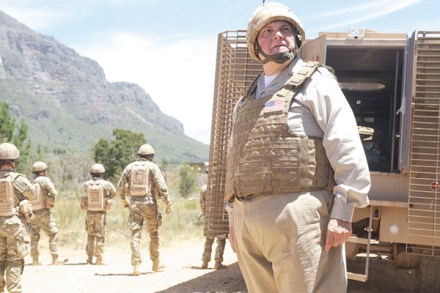
The thing that always used to bother me about M*A*S*H as a child was the lack of combat. You’d see the realistic film of choppers at the beginning and, obviously, the plotline would quite often include casualties coming in from recent scenes of action. But the exciting stuff always seemed to happen offstage, a bit like in Shakespeare where some character strides on and tells you what a terrible battle there’s just been and you’re going, ‘Wait a second. Did we just skip past the most exciting bit?’ This clearly isn’t going to be a problem, though, with BBC3’s new sitcom about a bomb disposal unit in Afghanistan, Bluestone 42 (Tuesday).

ITV’s Food Glorious Food is under the curse of Simon Cowell

Television

I sometimes worry that ITV — the middle child — doesn’t get enough of my attention and so this week I have decided to redress the balance: I devoted myself to episode one of Food Glorious Food (Wednesday, ITV). It’s a nine-part quest, hosted by Carol Vorderman, which aims to discover ‘Britain’s best-loved recipe’. O jubilate deo! This is how it goes: treasured family recipes are cooked up at regional events and tasted by one of four judges who choose a favourite and submit it to be tasted by the other three. The judges are Loyd Grossman (smooth), Anne Harrison (stern), Stacie Stewart (bubbly) or Tom Parker Bowles (apologetic).

New word order | 21 February 2013

Television

‘Don’t be evil.’ Google’s unofficial motto. ‘Evil men don’t get up in the morning saying, “I’m going to do evil.” They say, “I’m going to make the world a better place.”’ Christopher Booker. Meanwhile — while you were distracted by other things like tax bills and school fees and somehow scraping by — Google and Amazon and Apple took over the world. This, of course, is what novels by the likes of William Gibson, films such as Blade Runner and comic strips like Judge Dredd have been telling us for some time: that one day, the world will be ruled not by governments but by giant corporations.

Schoenberg in shorts

Television

For anyone who missed The Sound and the Fury (Tuesday, BBC4) here is a reason — one of many — to catch it on your iPlayer: footage of a fierce, frowning and elderly Stravinsky, sitting in the empty stalls of the Théâtre des Champs Elysées and recalling the ‘near-riot’ which greeted the first performance of The Rite of Spring in 1913. ‘It was full — ’ (he gestured crossly around him) ‘ — of very noisy public. Very ’ostile public. I went up — when I heard all this noise — and I said, “Go to hell! Excuse me, Messieurs et Dames, and goodbye!

Old school joy

Television

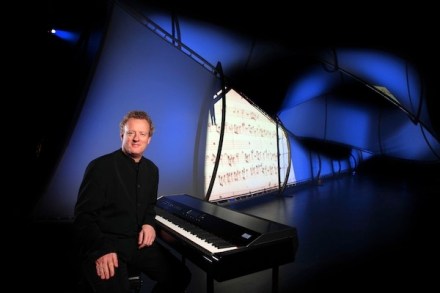
Let’s not beat about the bush: Howard Goodall’s Story of Music (BBC2, Saturday) is landmark television, a documentary series that deserves to rank with such unimpeachable classics as Kenneth Clark’s Civilisation and which, if you haven’t seen it yet, you absolutely must for it will answer so many of the questions that have been bugging you all your life. Questions like: ‘Bach — was he really as good as I think he was?’ ‘So what did music sound like in Roman times?’ and ‘Where did Lurpak butter get its name?’ Of course that last one is a fake question. I’d hazard a fortune you’ve never once asked it — but the answer’s interesting all the same.

Ordinary people | 31 January 2013

Television

There was little reason to be curious about David or Jackie Siegel at the beginning of Queen of Versailles (Monday, BBC4): he is the King of Timeshare and she is his Beauty Queen; they are building a palace in Florida, and modelling it on Versailles; it will be the biggest private home in America, when it is finished, and the Siegels will squeeze into it with their colossal fortune, their fleet of staff, their eight children and their bouquet of powder-puff dogs. ‘My husband deserves this house,’ says Jackie. ‘It’ll be like a lifetime achievement.’ There didn’t seem a whole lot more to find out. But then, after 30 minutes of screen time, came the crash: September 2008.

The hard sell

Television

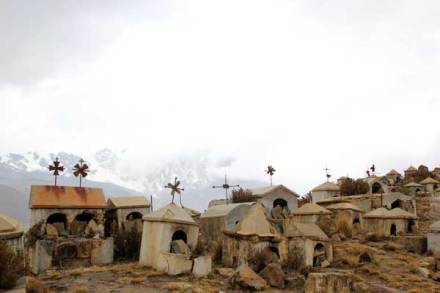
`The older I get, the less tolerant I become of being treated by television like a child with Attention Deficit Hyperactivity Disorder. No offence meant to Dr Jago Cooper but, if I’m going to consider spending a valuable hour of my fast-diminishing lifespan watching a documentary about Lost Kingdoms of South America, the very last thing that’s going to persuade me is being importuned in the manner of those men with microphones at street markets trying to persuade me to buy an amazing labour-saving device I never knew I needed, the Radish-o-Chop.

Wodehouse to the rescue

Television

I knew this would happen: I’ve been watching season five of Mad Men on DVD and it’s spoiled me for normal telly. If you notice increased levels of toxicity — dissatisfaction and disgruntlement — in the following grumblings, then Mad Men is the reason.  Nothing pleases me so much, you see, and I am likely to remain crabby and sniffy until the effects of that 13-episode pleasure-binge wear off. Where to go from Madison Avenue in 1966? Which to choose of these bracing alternatives: the cuckoo-land of Mr Selfridge (Sunday, ITV), the dismal wastes of Utopia (Wednesday, Channel 4) or the company of those dashing, anxious, well-dressed Spies of Warsaw (Wednesday, BBC4)?

Death watch | 10 January 2013

Television

Some people say TV is a bad thing for families but I say don’t knock it. It was thanks to TV this school holidays that I almost got vaguely, slightly, accepted by Boy. Fathers of young teenage males will know exactly what I’m on about here. There comes a point — quite often bang on your son’s 13th birthday — when he suddenly decides that you’re the lamest, dumbest, uncoolest Dad in the entire history of fatherhood. And you spend many anxious months wondering how on earth you’re ever going to win him back. Well, in my case TV has been the answer.

What the doctor ordered

Television

I don’t know whose idea it was to put New Year at the beginning of January, but it seems like an odd one. Why not begin each new year on, let’s say, the first of April or May? It might bring at least a dash of new dawn-ishness — a flicker of sunlight, scampering clouds, hello birds and a hey nonny no — to New Year’s Day. There’s no spring in the step of 1 January. She has neither the time nor the inclination for good cheer. She is as tired, headachey and whey-faced as if she had stayed up half the night dancing to ‘Yes Sir, I Can Boogie’ with 31 December and had woken to find him — Oh God! Not again! — snoring in her bed.

On the bias

Television

It must be ten years now since I risked life and limb to brave the Cresta Run, go fox hunting and be driven round a racetrack by Lord Brocket in a Ferrari for a Channel 4 documentary on the British Upper Class. In the heady few minutes following its first transmission I thought it would mark the beginning of a glorious TV career. But TV never happened for me and oftentimes since I’ve wondered why. The short and obvious answer is that I’m crap — which may be true, but that never stopped a thousand and one other TV C-listers you could name. What I think it really boils down to is something far more insidious and pernicious: the institutional bias right across the board against almost anyone of a vaguely right-wing persuasion.

Food, glorious food

Television

Despite a wet summer, the recent crop of food programmes has been prodigious: six episodes of Nigellissima, eight of Nigel Slater’s Dish Of The Day, six of Lorraine Pascale’s Fast, Fresh and Easy Food, 40 of Jamie’s 15-Minute Meals and 25 of Hugh’s Three Good Things — truly a basket of plenty. Two cooking competitions (The Great British Bake Off and Masterchef: The Professionals) have dished up a total of 34 episodes; Heston Blumenthal has hand-reared seven bloated and inedible turkeys (Heston’s Fantastical Food), and Yotam Ottolenghi (Ottolenghi’s Mediterranean Feast) has concocted, in the kitchens of Morocco, Istanbul, Tunisia and Israel, four unexpectedly delicious treats.

I love Michel Roux Jr

Television

For the past month I have been glued to the BBC’s Why Poverty? season — ‘part of an unprecedented collaboration between public service media in which 37 EBU members have been dedicating multiplatform programming on the theme of poverty’. No, I jest. What I’ve actually been watching is MasterChef. Served with a MasterChef reduction, a smear of MasterChef purée, MasterChef shavings, MasterChef pickles and MasterChef tapenade and pommes, style Masterchef. With more MasterChef for pud, obviously. Does this make me a bad person? Well, possibly. But it also makes me a normal person.

Fame and fortune

Television

Having planned to devote every one of this week’s 800 words to Sir David Attenborough’s 60 Years in the Wild (Friday, BBC2), I was distracted by fame, fortune and the politics of influence: Give Us the Money (Sunday, BBC4) and Park Avenue: Money, Power and the American Dream (Tuesday, BBC4). Both these programmes I watched with interest but absolutely no enjoyment whatsoever; their combined effect was a feeling of overall grubbiness, as if I had sat too close to a wrestling match on a wet afternoon in a swamp. ‘Give us the money!’ was the instruction given by Bob Geldof to the public at Live Aid in 1985. The public reached into their pockets and did as he asked, and a new kind of charity was born.

Top of their game

Television

God, I’m jealous of Michael Gove. Not for being a cabinet minister in the same coalition as Nick Clegg and Vince Cable, obviously, but for being outed as a queer in the new series of Harry & Paul (BBC2, Sunday). Now that’s what I call fame. Harry & Paul has had mixed reviews. Some of the sketches — the ‘I’m a cop’ one; the US car salesmen — simply aren’t funny. But so what? Even at its best The Fast Show, arguably the funniest-ever broken-sketch comedy series, contained some sketches that weren’t funny. It goes with the territory. Unfunny sketches are the equivalent of the ‘darlings’ that William Faulkner advised authors they should kill.

Time trials

Television

It’s amazing what can be squeezed into an hour of The Hour (Wednesday, BBC2): smutty photos, gang violence, bent coppers, illegal gambling, fascism, racism, a political cover-up, a media exposé, leaked documents, seduction, abuse, neglect, the corrupting temptations of celebrity, the corrupting temptations of complicated dessert recipes, a dog in space, the threat to the nation of nuclear war, the threat to the BBC of commercial television and the threat to an English bluestocking of a sexy, bare-legged French girl with a carving knife, a wedding ring and a gamine haircut. The poor old kitchen sink, left out like Cinderella, must have had a dull time sitting at home by itself.

Zombie hell

Television

Derren Brown is a great big cheating liar. Or so my old mucker Rod Liddle reckoned last week in his Spectator blog. Derren Brown’s Apocalypse was ‘clearly, demonstrably, faked’, declared Rod. Well, I guess that settles it then. Or does it? First some background for those of you who missed it. (Though my advice for those of you who did is: stop reading now and watch both episodes immediately on Channel 4’s 4oD catch-up site.) Derren Brown’s Apocalypse (Channel 4, last Friday) was — or, pace Rod, purported to be — an extraordinarily bold TV experiment.

The American way | 1 November 2012

Television

To the Americas this week, and first to the land of the free and the home of the brave: Gay to Straight (Monday, BBC3) examined the practice of ‘gay conversion therapy’; Unreported World (Friday, Channel 4) investigated the political power of unregulated talk radio; and Inventing the Indians (Sunday, BBC4) explored the appropriation of the Native American Indian by American popular culture. Gay to Straight was presented by someone called Stacey Dooley (no, me neither) on a channel called BBC3 (yes, but not very often). Dooley is a sympathetic, friendly, kindhearted soul, and even the most reticent of teenage boys would be willing to tell her his secrets.

BBC goes for it

Television

Which is the worse crime, would you say: eavesdropping on celebrities’ answerphones? Or hosting and covering up for a ruthless predatory paedophile ring — led by your biggest, most heavily promoted star — over a period of four decades? Mm, me too. In fact, I’d say the Savile affair is as close as we’ll ever get to proving that God really hates the BBC. I mean, the timing is far too perfect to be coincidental, isn’t it? First we get Leveson — essentially a stitch-up by the BBC and the Guardian to entrench the power of the bien-pensant establishment, increase regulation and destroy the free market (especially Rupert Murdoch). Then, just when the tofu-eating turbine-huggers think they’ve won — zing!

Falling about and apart

Television

One of the many pleasures of television is that it allows us to forget our manners: we can treat it with an impolite offhandedness that would not be considered sociable — or sensible — in the run of everyday life. This isn’t a vicarious enjoyment of bad behaviour that we see on screen, but an actual enjoyment in loosening our own collars: when I watch television I can be fickle (a one-night stand with Downton Abbey), greedy (a Simpsons triple-bill), blunt (‘That sweater is repulsive’), or lazy (Nigel Slater’s Dish of the Day instead of the real thing) without guilt or consequence.

All-pervading PC

Television

Do not read this review if you haven’t seen the first series of Homeland. Because I’m a lazy bastard I have recently taken to farming out my TV criticism responsibilities to Twitter. The other day, for example, I Tweeted the vexed question: ‘Should I get Homeland series one box set — or is it meh?’ ‘Meh’, by the way — for those of you unfamiliar with modern yoofspeak — is the current fashionable term for ‘bland’, ‘so-so’, ‘so what?’, ‘neither here nor there’, ‘can’t be bothered’. Well, I say ‘fashionable’, though in fact it has been around since at least 1992 when Lisa first deployed it on an episode of The Simpsons.

Spy class

Television

Hunted (Thursday, BBC1) made a terrific start, but whether the first episode has set the standard for the next seven is another matter — a thriller, after all, has a duty to overwhelm, seduce and deceive with its opening gambit. This series was not conceived by fluke: anyone with half an eye on Bond, Bourne, Spooks or The Girl with the Dragon Tattoo can see its pedigree, but that is no bad thing, and if its look reminds us of last year’s Scandinavian hits then so much the better. The territory is familiar — international espionage — but we never tire of spies, and these are not the double ‘O’ kind (who save the world every week) but private intelligence ‘operatives’ (who choose which side to play for).

Artificial life

Television

I was that desperate for something to watch on TV the other night that I actually sat through half an episode of Outnumbered. This is the highly rated comedy series, now in its umpteenth season, in which children say implausibly clever, sassy things much to the bemusement of their hard-pressed parents. Why do I not share in the general adulation of this comedy? First, to misquote Homer Simpson, it isn’t funny because it isn’t true. I say this with confidence having personally bred and raised two of the most brilliant, witty and incisive children ever created. Maybe once or twice in their entire lives have they said anything as clever as the kind of one-liners those smartarse — and supposedly typical — brats on Outnumbered come up with every two seconds.

Acid reign

Television

You won’t believe me when I tell you this but I swear it’s the truth: until this week, I had never watched Downton Abbey(Sunday, ITV). Some old-fashioned notion about not respecting myself the morning after? A curious primness preventing me from just gritting my teeth and getting it over with? Yes to both — and yes to a touch of anti-bandwagon mulishness (which has, no doubt, kept me from so many of life’s little treats). My lack of experience might have counted against my enjoyment of Sunday night’s episode — the first of a third series — were it not for the skill of Julian Fellowes who, like the perfect host, makes it his business to welcome one and all to the party at whatever inconvenient time they might turn up expecting to be entertained.

Identity crisis | 13 September 2012

Television

The greatest moment in the history of television — and one which will surely remain unsurpassed for ever — was the final episode of The Sopranos. Part of its genius was to reward all of us who had stuck with it so loyally for the previous 85 episodes by allowing us to make up our own minds how it ended. Did Tony get wasted by those hitmen-like figures we saw entering the restaurant where he was having the rapprochement dinner with Carmela? Well, maybe. Or did the Feds finally get their wiretaps and informants properly organised and put Tony away for ever? Or did he — as I prefer not to stop believing — waste all the people who’d come to kill him and then get off, on a technicality, whatever charges the Feds threw at him.