Culture

Culture

The good, the bad and the ugly in books, exhibitions, cinema, TV, dance, music, podcasts and theatre.

That’s entertainment

Television

Comparisons may be odious but sometimes they are irresistible — and, frankly, more fool the BBC for screening Treasures of Ancient Rome on the same night as The Shock of the New (Monday, BBC4). Here is Alastair Sooke on the spread of the Roman Empire: ‘Rome’s generals romped around the Med, sacking cities willy-nilly...

Conduct becoming

Television

Every so often a programme appears which can be recommended even to people who hate television. Parade’s End (Friday, BBC1) is such a work. The awkward — one might think impossible — problem of shortening Ford Madox Ford’s 800-page masterpiece into five hours of television, without violating the spirit of the book or seeming to cram a quart into a pint pot, has been solved by getting Tom Stoppard to write the script. Stoppard’s less is not exactly more, but there is a certain liberation in being able to leave things out. Ford’s wit, penetration and eloquence are distilled into the five acts of a play, and some of his best lines echo all the clearer for being spoken in relative isolation.

Faustian pact

Television

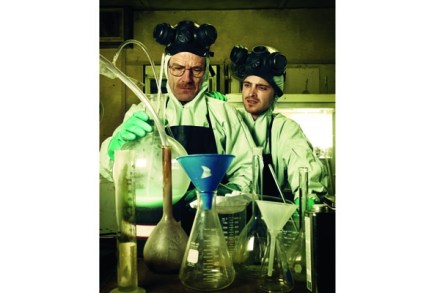
When my kids grow up, I want them to go to university and read chemistry. That way they will have the skills to manufacture high-class crystal meth (or similar), make lots and lots of money and keep their father in the style to which of late he has become unaccustomed. I got the idea for this, some of you will have guessed, from Breaking Bad — probably the most brilliant series to come out of the US (or anywhere else) since The Sopranos.

Please release me

Television

I am writing this at teatime on Sunday — day nine of the Olympics. So far: 34 medals, we’ve all gone completely bananas, and the Great British mood has improved by what commentators call 110 per cent. Andy Murray has just won gold, beating Roger Federer in straight sets, and by the time I finish writing he may have won another gold in the mixed doubles’ final. To write about this week’s television and not mention the Olympics would be peculiar, but to write about nothing but the Olympics would be foolish because what I write today will be old hat by the time you read it. Today the Games are the most important thing on television; by the end of the week they might not be — they might have turned from buttered crumpets to stale buns.

Danny’s super sop

Television

Almost the best thing about Danny Boyle’s Olympic Opening Ceremony was the running Twitter commentary. From Marcus Stead: ‘Ah, here we go, NHS worship. One of the most overrated things about Britain. Expensive, unreliable, regularly lets patients down.’ From Miss Annesley: ‘I think “Voldemort runs the NHS” is the moral of this story.’ And from Mr Ranty: ‘Stafford Hospital is second from the left, the one with 450 dead patients.’ Not getting into the spirit of things is something we British do well. It’s instilled in us from an early age — usually during our first visit to the pantomime where the nasty, scary bully man on stage insists we join in with cries of ‘Behind you!’ and ‘Oh, no you didn’t!

Trouble ahead

Television

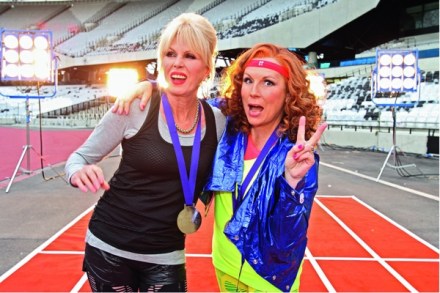
Must we? All of us? This is the perfect storm, the tempest, the ultimate crisis for non-sport fans. But TV, with all its kaleidoscopic variety, was invented for just such an eventuality, surely? And together with some assistance from our faithful old friends, the tinnies in the fridge, the next few weeks might pass quite pleasantly, no? Fssssst. Sip. Hmmm. See? Happily, in terms of drinking and smoking, Patsy and Edina in Absolutely Fabulous (BBC1, Monday) seemed to be in agreement about what we in the East End refer to as ‘The Limpics’.

Back to the future

Television

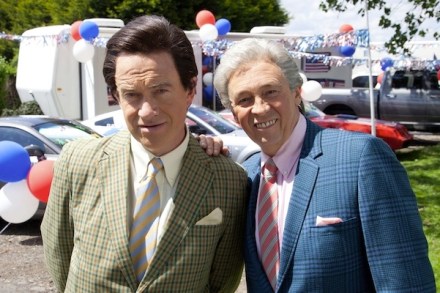
I wonder how the 2012 Olympics will look, when re-imagined by a BBC docu-drama 64 years hence. If it’s anything like next week’s charming but not exactly unclichéd account of the 1948 Men’s Double Scull — Bert & Dickie (BBC1, Wednesday 25 July) — something like this, I expect, with all sorts of imaginary obstacles thrown in the way to make our hero’s struggle more movie-friendly. Int. London Olympic Velodrome. 2012 Men’s Keirin final. An elderly man in brightly coloured skintight gear shuffles with the help of a Zimmer frame towards his shiny, high-tech bicycle. Jaunty Cockney: Bleedin’ ’eck. That old geezer looks like he’d be more comfortable on a penny farving. Cockney’s mate: You may larf.

Relaxing with the ignoble

Television

Unless I have slept through another of the year’s once-in-a-lifetime experiences — which is rather more likely than possible — the days since the Wimbledon final have passed without call for bunting, cheering, spangling or any other kind of cross-gartered preparedness. We seem to occupy a lacuna; to have swum into the eye of the 2012 Events’ Cyclone. Here we are invited, until the Games begin, to rest our flag-waving arms, uncross our patriotic fingers and reacquaint our senses with something other than Pride-and-Glory. With immaculate timing — while Centre Court was still being put to bed — Wallander returned to BBC1 (Sunday).

Not much cop

Television

Among the many reasons I shall miss Simon Hoggart’s presence as my Spectator co-TV critic is that I used to rely on him to take the heat off me. Since landing this gig all those years ago, I’ve always felt something of an imposter owing to my extreme reluctance to sit down and watch any more TV than I absolutely, strictly have to watch. Simon, on the other hand, was so conscientious he’d often review three or four programmes in a week. If this were the second world war, I’d be the equivalent of some Cairo desk wallah, while Simon would be a Soviet punishment battalion. But just because Simon’s gone doesn’t mean I’m going to change tack.

Power failure

Television

You wouldn’t necessarily use the word subtle to describe a programme in which a well-dressed, well-spoken woman describes a speech that’s been altered as ‘pencil-fucked, completely’ but Veep (Monday, Sky Atlantic) is subtle, sinuously subtle. In his way Armando Iannucci is as creative with the English language as James Joyce. He is proof that doing an English degree at Oxford is not necessarily, to adapt another of his phrases, ‘like using a croissant as a dildo — it doesn’t do the job and it leaves a lot of mess’. His neologism in The Thick of It — ‘omnishambles’ — is now as much a part of our political vocabulary as ‘white paper’ or ‘liar!

Hallucinogenic dream

Television

One of the great things about working in a collapsing industry is the cornucopia of possibilities that begins to open up of all the stuff you could do instead. In the past 18 months I have toyed with becoming: a speechwriter, a radio shock jock, a YouTube cult, a think tank senior visiting fellow, a TV star, a corporate communications director, an internet entrepreneur, a self-help book author, a Buteyko guru, a truck driver at an Australian mine, a gold bug, a fixer, an after-dinner speaker, a stand-up comic, an MEP. Some of it might actually happen. So I think I have a pretty good idea what David Bowie was going through in 1972 in the run-up to recording Ziggy Stardust — whose 40th anniversary was celebrated by Jarvis Cocker and friends in a BBC4 documentary this week (Friday).

Setting the tone

Television

The BBC has been heavily criticised for its coverage of the Jubilee flotilla, and the tone was incredibly annoying. All those smiley celebrities pretending to enjoy themselves! The tabloids, those for whom the Beeb can never do anything right, would have been just as mean if the treatment had been sombre and serious. ‘And we see a boat, followed by a barge, and next to that, another boat. And Her Majesty is waving, now to the crowds on the embankment, now to the next boat…’ The queue of vessels was a feeble idea, the rain made it worse and there was nothing anyone could have done. Bagehot himself would have been reduced to burbling about souvenir sick bags.

Royal watch

Television

This is the week we almost drowned in Jubilee programmes. Sadly, many of these were unavailable to reviewers, possibly because to criticise such a programme would itself amount to lèse-majesté, or perhaps they just hadn’t finished the edit. But I doubt we’ve missed much. This weekend BBC1 (Friday) was running A Jubilee Tribute to the Queen, presented by Prince Charles. Maybe he’s said that it’s all very well banging on about her sense of duty, but it didn’t do much for family life, and he still can’t get over how, after six months touring the Commonwealth, she famously didn’t kiss her little boy but shook his hand. I doubt it.

Frontier dreams

Television

When I was growing up, the Dallas theme tune was like a call to prayer. As the Copland-esque trumpets rang out, we ran to the television set. A hushed silence descended as cattle stampeded beneath the snazzy gold title credits. To watch the glamorous travails of the Ewing family from a sofa somewhere near Coventry in the 1980s was to experience the very promise of the age. Escapism, certainly. But Dallas was also about dreams. Frontier dreams. That there was a place on earth where oil men in Stetsons plotted each other’s downfall while slurping bourbon was too fabulous. That these men were married to women with shoulder pads bigger than Darth Vader’s was beyond inspiring if you were a kid growing up not in Midland, Texas, but in The Midlands, UK.

Failing Britain

Television

For my holiday reading in Australia I chose Max Hastings’s brilliant but exceedingly depressing Finest Years: Churchill as Warlord 1940–45. Once you’ve read it, it’s impossible to take any pleasure from second world war history ever again. Basically, runs Hastings’s persuasively argued thesis, we were rubbish at pretty much everything. Our generals were useless, our citizen soldiers lacked dash and folded at the first opportunity, our tanks were ill-protected and undergunned. Apart, maybe, from Bletchley, we contributed nothing major whatsoever to the Allied war effort: the Soviets doing all the killing and dying for us and the Yanks providing all the materiel.

Fond farewell | 19 May 2012

Television

Now and again a sitcom gag lodges in the public mind. In 1974, Ronnie Barker, in Porridge, was reminiscing about Top of the Pops and its all-girl dance troupe, Pan’s People. ‘There’s one special one — Beautiful Babs,’ he says. Beat. ‘Dunno what her name is.’ Her name was Babs Lord. She attracted the attention of a young actor called Robert Powell, then in a long-forgotten thriller called Doomwatch, so he met up with her in the celebrated and notorious BBC Club at Television Centre; after 36 years they are still married. She also became an explorer, described as the only housewife to have visited both the North and South Poles, which is an impressive feat, though a patronising title, since it sounds as if someone felt they needed tidying.

Opportunity knocks | 12 May 2012

Television

I should have thought about this more carefully — the timing of it, I mean. This is Crucible time, and in the normal scheme of things I would be watching almost nothing but snooker. Yes, dear readers, I am that sad and pathetic thing known as a snooker addict, and a red-button one at that. But I eschew the green baize and march purposefully into the world of television previews — and what a challenging world it is. Not, I suppose, as challenging as the task that faces The Town Taking on China (BBC2, Tuesday), one of those programmes that reassuringly does exactly what it says on the tin.

Talking head

Television

‘There’s no point in being a liberal if you’re just a furry little herbivore on the edges of British politics,’ declared Paddy Ashdown on Sunday on Private Passions (Radio 3). It was a revealing comment. The programme went out last weekend after the LibDem’s disastrous results in the local elections, but it would have been recorded much earlier. Ashdown was meant to be talking about his favourite music, and why he had chosen it, but he could not resist telling us what he thought of the Con-Lib Coalition. ‘This [being in government] is not going to deliver a dividend for the LibDems until a little before the next [general] election,’ he said. Might he not have avoided the topic, knowing that he was not yet sure what would happen on 3 May?

Toad revisited

Television

I am writing shortly before this week’s vote for Mayor of London, which makes it a good time to ask whether Boris is Mr Toad. Hidden away on Sunday night, after the wondrously acted but terminally bleak Vera (Brenda Blethyn can convey more with her squeaky mou noise than some actors manage with ‘God for Harry, England and St George!’), was Perspectives: the Wind in the Willows (ITV1). It was one of those perfectly judged programmes which makes you glad that television exists. Gryff Rhys Jones, who played Mr Toad at the National, was an admirable guide, like those custodians in stately homes who adore the place and want you to share their delight. He took the view that we all have our inner Toad: selfish, pleased with ourselves, yearning for a life of pleasure.

Under pressure | 28 April 2012

Television

Rest easy on your deckchair, Delingpole, for I come in peace. Your column is safe — from me, at least — because this week I have made an unpleasant discovery: your job is really hard, and I don’t know how to do it. It’s not the watching that’s so hellish, it’s deciding what to watch. It took me two days just to plough through the listings, for Pete’s sake, with a sense of panic rising in my bosom. What sort of locum would I be if I missed the week’s televisual pearl? What if the hours, days and nights I spent in front of the box were wasted on the wrong programmes? The responsibility that comes with this position is fearsome and, what’s worse, unending.

The American way | 21 April 2012

Television

I spent the last week in America, and my hosts had 900-plus channels listed on cable, though some required payment, others were in Spanish, and many featured what can only be called niche programming, such as lacrosse from the high school. My hostess liked Chopped!, which is their version of MasterChef — less hectic though with more repulsive food. But I liked the commercials, which I watched carefully since — even though our advertising industry regards itself as the world’s most influential — American styles will soon cross the Atlantic. One problem advertisers face is how to plug something that nobody hopes they’ll need to buy. Man is driving along an empty road in the far west. Steam starts to come out of the engine.

My way

Television

By the time you read this it’s quite likely I shall be in mid-air on my long journey to Australia. I’m off on a month-long speaking tour to promote Killing the Earth to Save It (the Oz version of Watermelons) and I figured my flight might work out cheaper if I arranged to be travelling on Friday the 13th. Should my plane blow up or the door come off at 30,000 feet causing me to be sucked out of the aircraft or I succumb to deep-vein thrombosis you’ll know I made the wrong call. This will be the longest stretch without a Delingpole Spectator TV column since I took over Nigella Lawson’s slot at the end of August 1995.

Repeat proscription

Television

If only there was an alternative ending to the Titanic story. We could use a change. ‘Phew, we almost hit that iceberg!’ Or, ‘Thank goodness the White Star Line made sure there were ample lifeboats for everyone on board!’ Or even, ‘So it’s true — this ship really is unsinkable, and tomorrow night we will be safe and well in a rat-infested tenement on the Lower East side shared with seven other families!’ But of course it’s not a story, it’s a myth. You might as well have a happy ending to Oedipus Rex. And in the same way we can see it again and again. In Julian Fellowes’s version alone (ITV, Sunday) we get it four times. It’s about man’s hubris in the face of nature. It’s about class.

Male order | 31 March 2012

Television

I suspect that, when men and women watch Mad Men, they see very different things. Women probably see a witty indictment of male patriarchy. I, on the other hand, see Heaven on Earth. Everything shown on Mad Men is what male dinosaurs like me expect from western civilisation: liquid lunches, beautiful secretaries, exquisite suits and witty conversation. Alas, all of this is absent from the 21st-century workplace. Nowadays, downing half the contents of a bottle of Canadian Club whiskey in the middle of a business meeting can be a sackable offence. Mad Men returned to our screens on Tuesday night (Sky Atlantic) with a two-hour special. For those who care about plot, it’s now 1966 and the Sterling, Cooper, Draper and Pryce ad agency is still in business.

Of God and men

Television

Two documentaries this week made us ponder what our country, with its 1 per cent of the world’s population, exists for. How God Made the English (BBC2, Saturday) had the historian Diarmaid MacCulloch musing about the way we have believed for a thousand years that we were God’s chosen people, having taken that baton from the Israelites — thanks to the Venerable Bede. I am not sure that he made the case. Most nations have believed at one time or another that God was their principal cheerleader. When the Israelites were in the smiting business, anyone they successfully smote, such as the poor wretches who lived in Jericho, were simply in God’s bad books. When they themselves were taken into slavery, it was because they had disobeyed orders.

Downton on sea

Television

If Titanic hadn’t actually sunk on its maiden voyage not even Jeffrey Archer would have dared invent such a hammily extravagant plot. The passenger list — Benjamin Guggenheim, John Jacob Astor IV (Macy’s owner), Isidor Straus, the silent film actress Dorothy Gibson, inventor of the New Journalism W.T. Stead, and sundry English toffs — was just too implausibly rich and diverse. The sudden social levelling induced by disaster too neat and melodramatic. The background details — the band playing on, the lifeboat shortage, the men’s Birkenhead drill stoicism as their female loved ones and children clambered into the lifeboats (or not) — were too upsetting, maddening and moving. And the deus ex machina — an iceberg, for God’s sake?

Friends reunited | 10 March 2012

Television

Paula Milne’s drama serial White Heat (BBC2, Thursday) starts in 1965 which to some of us might seem like yesterday, but is equidistant between the end of the first world war and now. So to most people it’s ancient history. Various students in London are looking for accommodation, which is strange since Churchill died in January, around the start of their second term. Doesn’t matter. You take your historical milestones where you find them. The students are selected by their young landlord Jack, a reach-me-down leftie whose father is a wealthy Tory MP. Jack wants them to be part of a socialist commune reflecting all demographics — white, black, gay, working class, and so forth. Jack has the odious arrogance of many public school lefties.

Kindred spirits

Television

There’s a game you have to play at the BBC and Jeremy Paxman plays it very well — which is why he is currently still the most famous Old Malvernian after C.S. Lewis whereas I’m way down the list at maybe fourth, fifth or sixth. The rules are very simple: no matter how great your sympathies secretly might be towards the British Empire, Tory values, climate-change scepticism, Israel, the idea of national sovereignty, Margaret Thatcher or any other manifestation of what the BBC would consider WrongThink, you must suppress, suppress, suppress, using the mental equivalent of that spiked metal ring the late Victorians devised to discourage young men from masturbating. With Paxo, this self-administered therapy has been extremely effective over the years.

All eyes on Melvyn’s hair

Television

An American reporter once said to me that all television in his country was fundamentally about race, and all TV in this country was about class. There was some truth there, I thought, if exaggerated. Then in one week along comes a new Melvyn Bragg series about class and another attempt to revive Upstairs, Downstairs, whose original ended on ITV some 37 years ago. Melvyn Bragg on Class and Culture began at BBC2’s prime time on Friday. There are problems with documentaries about class. In this case, one difficulty is Melvyn’s hypnotic hair. When he’s indoors, it is thick and lustrous, as if a King Charles spaniel had settled on his head. Out of doors, in the wind, it looks like a haystack in a hurricane, or a game of pick-up-sticks gone lethally wrong.