Culture

Culture

The good, the bad and the ugly in books, exhibitions, cinema, TV, dance, music, podcasts and theatre.

James Delingpole falls in love with Grayson Perry – and almost comes round to Chris Huhne

Television

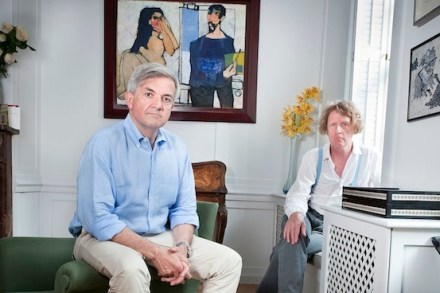
I love Grayson Perry. You might almost call him the anti-Russell Brand: a genuinely talented artist who also has some very interesting stuff to say — as he’s demonstrating yet again in his highly entertaining new series Who Are You? (C4, Wednesdays). It ought to be ghastly and it ought to be pretentious: a trendy ceramicist known at least as much for his transvestism as for his wackily decorated, hugely fashionable pots meets up with people from diverse backgrounds so that he can explore the theme of identity and then exhibit creations inspired by them at the National Portrait Gallery.

Hooray for Homeland – Carrie’s back blasting America’s enemies to pieces with drones

Television

One of the more welcome and surprising things about television at the moment is that Homeland (Channel 4, Sunday) is good again. As I’m not the only person to have pointed out, the first series was great. After that, though, the show suffered badly from the diminishing returns which so often afflict a deserved American hit that’s obliged for financial reasons to just keep on going — usually by serving up increasingly minor variations on a theme. (Exhibit A: Lost; exhibit B: most of mid-period 24.) Fortunately now that Damian Lewis’s Brody is dead, Homeland no longer has to think up any more ways to make us wonder which side he’s on. Instead, to the obvious relief of all concerned, it can start again with a different story.

Fellow saddoes rejoice: BBC4 has made a comedy-drama about metal detecting

Television

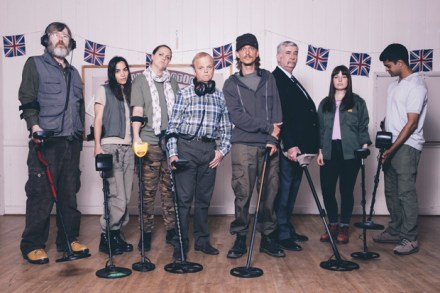
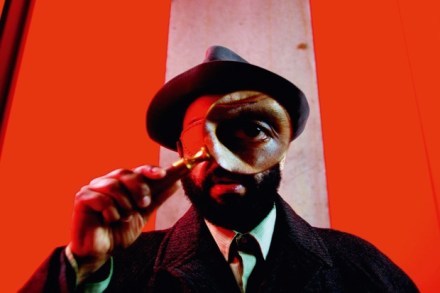
Detectorists (BBC4) is a sad git’s niche comedy that would never have been commissioned if it hadn’t been written and directed by Mackenzie Crook (who sort of counts as a Hollywood star, now, because after making his name in The Office he went on to appear in the Pirates of the Caribbean series). But I’m glad it was because I’m one of the sad gits it’s targeting: desperate blokes who spend their every spare weekend at this time of year scouring ploughed fields for non-existent treasure. We’re a fairly eclectic bunch, we detectorists.

We’re great and baboons are losers: this week’s lesson from Brian Cox

Television

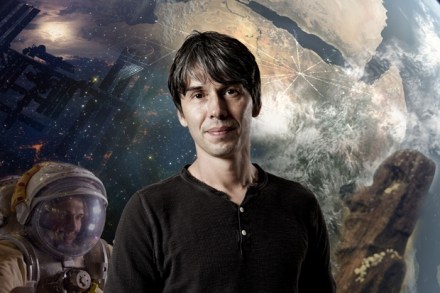
Anybody feeling a bit depressed about the shortcomings of humanity could do worse than watch Brian Cox’s new series Human Universe (BBC2, Tuesday) — which, judging from the first episode, is all about how great we are. Early on, Cox was shown hanging out, Attenborough-like, with some gelada baboons in the highlands of Ethiopia. They may share a common ancestor with us; by primate standards, they may have unusually complicated social structures and communication skills. Yet, as Cox rather gleefully pointed out, ‘They’re nowhere near as sophisticated as us.’ No wonder that while these losers are picking fleas off each other in a remote corner of Africa, we’ve not only ‘colonised every corner of the earth’, but can also live in space.

Could the Kenyan mall atrocities happen here?

Television

So you’ve just popped down to the supermarket for the weekly shop, toddlers in tow, when the grenades start to fly, the air lights up with tracer bullets and you realise to your horror that unless you find a suitable hiding place in a matter of seconds these are the last moments you’ll spend with your kids on earth. This was the awful crisis that faced Amber Prior and her children, who were among the numerous innocents caught up in the al-Shabaab suicide attack on the Westgate shopping mall in Nairobi, Kenya, last year. Their tale was told in the BBC2 documentary Terror at the Mall, and I make no apologies for reviewing it late because it is surely one of the most gripping and important pieces of television any of us are likely to see this year.

Marriage and foreplay Sharia-style

Television

Needless to say, it’s not uncommon to hear single British women in their thirties and forties saying that all the good men are married. But in The Men with Many Wives (Channel 4, Wednesday) this came with a twist: it turned out to be precisely the reason why you should marry them too. Polygamy may be illegal in Britain, but it’s permitted under the Sharia law that many Muslims here apparently live by — and, as several of the programme’s participants told us, there’s no better guide to whether a man is husband material than the fact that he’s a husband already. Take Nabilah, who came to Britain from Malaysia to do a PhD in engineering at Cambridge. By then she was divorced and wanted someone with a proven track record of staying with his spouse.

I love that people assume I’m gay

Television

At a birthday dinner over the weekend I was introduced to this delightful party girl of a certain age whose diet for the evening consisted of chips and Grey Goose vodka on the rocks with lime. She launched straight into the praises of this marvellous gay couple she knew in the area who were mad keen on hunting, kept getting injured but didn’t care, and who she was sure I’d get on with like a house on fire. They did indeed sound like my kind of people. But it was only later, after my new friend had had a few more and she had expressed surprise at the existence of my wife across the table, that she fessed up. ‘I had no idea you weren’t gay. Those clothes. Your manner. That gaunt look...’ I didn’t mind, obviously.

Now for the really tricky question: can Only Connect survive BBC2?

Television

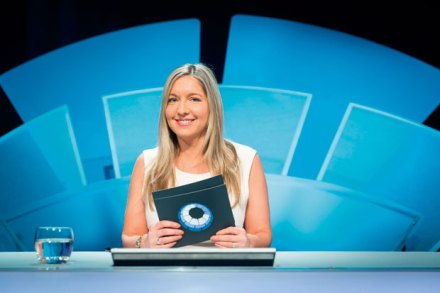
For some of us, the biggest TV question of recent weeks hasn’t been how Newsnight is doing without Jeremy Paxman, British drama’s fightback against American competition or even the treatment of Diana Beard by the editors of The Great British Bake Off. Far more important is whether a small BBC4 quiz show can survive a move to BBC2 with its heroic defiance of almost all television fashions intact. Since 2008, Only Connect has been the obvious place to head after University Challenge on a Monday night. Host Victoria Coren Mitchell achieves a neat balance between mild self-satire and an unashamed pride in the show’s cleverness. (More oddly, she also pretends to be a fearful boozehound.

We need more opinionated English eccentrics making documentaries like, ahem, me…

Television

Is it just me or are almost all TV documentaries completely unwatchable these days? I remember when I first started this job I’d review one almost every fortnight. Always there’d be something worth watching: on the horrors of the Pacific or the Eastern Front, say; or castles; or Churchill; or medieval sword techniques. But now it’s all crap like The Hidden World of Georgian Needlecraft or In The Footsteps of Twelve Forgotten South American Civilisations Which All Look The Same or A Brooding, Long-Haired Scottish Geographer Shouts From Inside A Volcano Why Climate Change Is Worse Than Ever. The presenters have got more annoying too. I mean, I’m not saying some of the old ones weren’t infuriating with their hand-waving and tics and mannerisms and wheezings.

BBC2’s Hotel India: slums? What slums?

Television

Viewers who like their TV journalism hard-hitting should probably avoid Hotel India, a new BBC2 series about the Taj Mahal Palace in Mumbai. The tone of Wednesday’s episode was set immediately when the narrator introduced us to ‘one of the oldest and grandest hotels in the world’, where ‘no detail is too small or demand too great’, and there’s ‘an army of staff dedicated to flawless service’. To prove it, head of housekeeping Indrani then strode fearsomely down a corridor like a more elegant version of Hattie Jacques’s matron in the Carry On films.

Eye-gouging within the first half-hour: the edgy new rules of TV drama

Television

Where is Jessica Hyde? If those words mean nothing to you then I have some excellent news. If not, then you’ll already be aware that I have failed you totally. And not for the first time, either. I was about a series (sorry, ‘season’) late to Game of Thrones; not much quicker into Breaking Bad; and now here I am again belatedly drawing your attention to something we all really should have seen last year if we were to consider ourselves even halfway in the loop... Anyway, for what it’s worth, the show is Utopia (Channel 4, Tuesdays) and I can’t remember when I last saw a British drama series open so strongly.

Scoops, snark and jihad – this is Vice News’s war

Television

War can reshape the medium of television. The First Gulf War was a landmark moment in broadcasting: CNN had reporters in Baghdad when the first bombs fell, no one else did, America was riveted and the concept of 24-hour news (accompanied by thousands of graphics) suddenly took off. And now, just as a third conflict kicks off in Iraq, we have a new television insurgent: Vice News, which is shaking up war reporting with its extraordinary coverage of the jihadis tearing up Syria and Iraq. The idea of watching television made by a magazine seems bizarre — or, at least, it did this time last month. Vice started life as a provocative publication. It was dubbed the ‘hipster’s bible’, but underneath all the snark, Vice had big plans.

Gomorrah is gangsters without glamour – but it’s still not as scary as Dance Moms

Television

Gomorrah (Sky Atlantic, Monday), the new, must-see Mafioso series, started promisingly. We met two hoods — one young, shaven-headed, good-looking; one weary, brow-beaten, middle-aged — filling up at a petrol station in Naples, an unfamiliar (to me anyway) setting that looks promisingly like a cross between Vegas and downtown Gaza. Clearly they were up to no good. Meanwhile, in a decrepit apartment block, an elderly mamma was preparing her beloved, twentysomething son a rather delicious-looking pasta dinner. She chastised him for smoking at the dinner table. The son tried explaining, to no avail, that this was an E-cigarette, not a real one. Mamma wasn’t having it. She said grace and her nicely brought up if wayward boy crossed himself piously.

Barbie dolls? This girl aims for the head

Television

Channel 4’s Kids and Guns (Thursday) began with an American TV advert in which a young boy’s eyes shone with gratitude when his parents gave him a large gun, proudly marketed as ‘My First Rifle’. And just in case that seemed a bit macho, the ad also pointed out that My First Rifle is available in pink. Next, we met the real-life Gia, who at the age of nine already has quite an arsenal — thanks to her dad Spyder, a firm believer in the old Texan motto that ‘If you know how many guns you have, you don’t have enough’. ‘Wouldn’t it be more usual to buy her Barbie dolls?’ asked what couldn’t help but sound like a rather prissy British off-screen voice.

In which James Delingpole gets down with the kids, finds they’re sex-obsessed…

Television

If there’s one thing everyone knows about BBC comedy it’s that it’s going downhill. According to Danny Cohen, now Director of BBC Television, it’s too white and middle class; according to producer John ‘Blackadder’ Lloyd, it’s run by idiots like the bureaucrats in the BBC satire W1A who don’t understand what comedy is; according to the gag-inducingly PC Dara O’Briain, it’s too gag-inducingly PC (he means the quota system they’re trying to introduce whereby every comedy panel show must have a token female); according to John Cleese, it’s never been the same since John Cleese left; etc. Probably they’re all right.

The quest for the perfect guitar riff is a noble one – if not quite the key to unlocking the mysteries of the universe

Television

A few weeks ago, my eight-year-old son, who’s taken up the guitar, announced that he’d learned something new. He then played a sequence of chords — approximately, Duh-duh-duuh, Duh-duh-da-duuh — that I’ve been hearing from all guitarists since I was about eight myself. ‘It’s called “Smoke on the Water”,’ he informed me, unnecessarily. Of course, any sign that the world hasn’t changed as much as we thought is always welcome to the middle-aged man. Yet when I showed him Deep Purple performing the whole track on YouTube, he was both slightly bored and rather mystified. Not only had he no idea that ‘Smoke on the Water’ came with a song attached, but he couldn’t understand why it needed one.

Your starter for ten: why do we Brits so love University Challenge?

Television

‘Fingers on buzzers!’ says Jeremy Paxman on University Challenge. But technically this is inaccurate. Only one of the teams actually has buzzers. The other side has push-button bells, instead. I’ve been watching the programme religiously for God knows how many years without ever consciously noticing this. But, once you’ve been told, it’s obvious — in much the same way it’s obvious that the way you tell Thompson and Thomson apart is that one has an upturned moustache and the other doesn’t. Which, come to think of it, would be quite a good University Challenge question. Apparently, one of its main criteria is that every question must have ‘inherent interest’. That is, it must make you genuinely keen to know the answer.

The Honourable Woman could have done with some help from an overpaid executive in a suit

Television

BBC2’s The Honourable Woman (Thursday) began with a rather portentous voice-over bringing us the unsurprising news that ‘We all have secrets. We all tell lies just to keep them from each other and ...pause to indicate psychological profundity ...from ourselves.’ Luckily for the viewer, this was accompanied by the sight of man in a restaurant being stabbed to death by a waiter in front of his young son and daughter. As it turned out, this would set the tone for much of what followed — an hour of drama that combined memorable set-pieces with slightly too transparent an insistence on its own significance.

Looking for a Game of Thrones substitute? Vikings is the closest you’ll get – but it ain’t close

Television

Did you know that the 8th-century Kingdom of Northumbria was the epicentre of an international exotic reptile trade? I only discovered this myself from watching episode six of Vikings (History Channel, Tuesday) and being introduced to the snake-pit maintained by King Aelle. What particularly impressed me were not just the variety of pythons and boas at the bottom of the pit but also their excellent state of health.

The girl who had sex with dolphins

Television

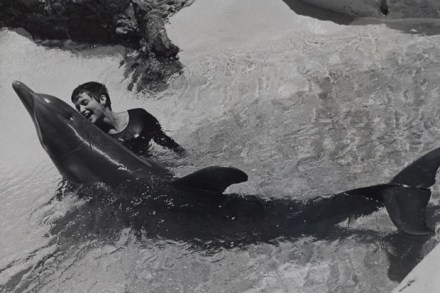
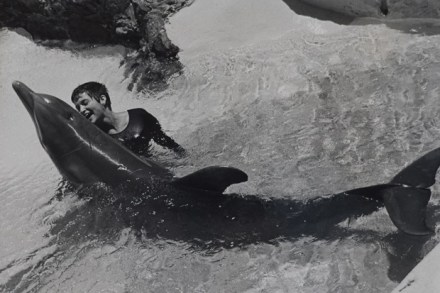
BBC4’s The Girl Who Talked to Dolphins (Tuesday) began with the overstated-sounding claim that it would be tackling ‘perhaps the most remarkable period in the history of animal science’. In fact, though, the longer the programme went on, the more convincing this claim felt — even if the word ‘period’ should possibly have been replaced with ‘episode’, and ‘remarkable’ with ‘bonkers’. At times, the story seemed almost too neat a microcosm of the 1960s, as well meant if not necessarily practical ideas about transforming life on earth — and beyond — gave way to something much darker. At others, it brought to mind that hippie Californian scientist in The Fast Show.

We need something less evil than Britain’s Got Talent. How about public executions?

Television

You know what the world needs most right now? What it needs is five good-looking-ish, talented-ish blokes dressed in a mélange of artfully deconstructed dove-grey suits singing one of the songs out of Les Misérables, like a boy band but one that does numbers from musicals rather than original compositions, oh, and preferably with the kind of crap name that you can imagine being brainstormed by one of the teams on The Apprentice... Well, if that’s what you’ve been thinking these past few weeks, lucky you!

Is BBC1’s Quirke bravely unhurried – or too slow?

Television

The work of John Banville — Booker-winning novelist and impeccably high-minded literary critic — might seem an unlikely source for a primetime crime series. But since 2006, under the telling pseudonym of Benjamin Black, he’s also published a series of Celtic-noir novels set in 1950s Dublin about a pathologist-sleuth known, even to his intimates, only as Quirke. To the understandable annoyance of full-time crime writers, Banville describes these books as ‘a kind of relaxation’, banging them out at a brisk 2,000 words a day compared with the Flaubertian 200 he manages for his more serious fiction. Yet, if this led any viewers to hope for an action-packed thrill-fest from Quirke (BBC1, Sundays), they’ll have been disappointed.

The rights and wrongs of box-set viewing

Television

Admit it. Say it! ‘My name is Blah and I am a boxaholic.’ Life on hold, marriage in bits, job swinging from a rusty nail, the box-set fanatic grabs every available minute to feed an addiction. I mean, you can’t leave, can’t breathe until you find out whether Jesse and Walter make it up before someone else gets killed in Breaking Bad, or how on earth Jack can keep his daughter safe in 24. Box sets are not movies. They have a different time scale. What can you say in two hours that can’t be said better in 400? Relationships change, grow, collapse, move on. Fear is faster, immediate, for ever present. Plots range from incredible to intimate with the same intensity.

Harry and Paul’s Story of the Twos is just too funny for its own good

Television

On Harry and Paul’s Story of the Twos (BBC 2, Sunday), there was a particularly cruel sketch in which Paul Whitehouse gave Harry Enfield a Paxman-style grilling as to whether he felt bitter that his comedy series had never won a Bafta award whereas its big rival The Fast Show (featuring, inter alia, one Paul Whitehouse) had won lots and lots and lots. The more Enfield tried to deny that it had bothered him, the more Whitehouse pressed him to admit that it had. But the real victim of the joke, as it would turn out this week, was not Enfield but The Fast Show. Its first episode in years — revived as part of BBC2’s 50th anniversary celebrations — was so embarrassingly bad that it made you wonder why any awards committee might ever have considered it worthy of notice.

So Dylan Thomas was a drunk: does this TV drama have anything else to say?

Television

According to its executive producer Griff Rhys Jones, A Poet in New York (BBC2, Sunday) sought to rescue Dylan Thomas from the ‘forces of sanctity and hagiography that now hover over his shade’. Instead, we’d be reminded that he was ‘a hollering bohemian roustabout’ — which is presumably Griff’s longhand for ‘a drunk’. By that measure, the programme was a triumphant success, even if fewer people may have been startled by the revelation of Thomas’s booziness than Griff seems to think. As a piece of television, though, it suffered badly from the decision to concentrate on Thomas’s alcohol-laden final days in New York, which inevitably led to a lack of dramatic variety.

Thank God for the Game of Thrones imp – and the heaving breasts

Television

Which character are you in Game of Thrones? For me it’s got to be the imp, Tyrion Lannister. As Ed West suggested in his erudite Speccie article a few weeks ago, Tyrion is about the only character with a vaguely sympathetic 21st-century mindset as opposed to a ruthlessly pragmatic medieval one. Persecuted since childhood because he’s a dwarf, he understands — as his fellow members of the ruling class generally do not — what it is to be marginalised, downtrodden and thus empathetic. And the other reason to identify with him is that he’s not going to die. I say this without any knowledge of what happens in George R.R. Martin’s books. It just strikes me that Thrones without the Imp would be like Hamlet without the Dane.

Jack Bauer hits, er, West Ealing

Television

Whatever worries Kiefer Sutherland may have had about reprising the role of Jack Bauer in 24: Live Another Day (Sky1, Wednesday), learning his lines for episode one won’t have been one of them. After a four-year break, the show returned with its trusty digital clock standing at 11.00 a.m. — and, as ever, the events took place in real time. Yet it wasn’t until around 11.43 that Jack spoke his first words. Not that, after four years of being hunted by the authorities for saving the world in too maverick a way for those pen-pushers in Washington, he was having an uneventful day.

Generation War does something very un-German – bottles it

Television

I was so looking forward to Generation War (BBC2, Saturday) — a three-part drama series covering the second world war from the perspective of five young men and women on the German side. Any nation capable of producing the ME-109, the 88mm gun and the Tiger tank, not to mention Das Boot, really ought to have no problem making one of the most authentic, searingly honest war dramas ever to hit our screens... How wrong I was. Consider a scene from this week’s opening episode involving Friedhelm — bookish, bolshie, anti-war younger brother of the more pugnacious and efficient Leutnant Wilhelm Winter.

Estate agents: we were right about the bastards all along

Television

Television executives must be longing to make a programme about estate agents that casts the agents in a good light. There would be a national outrage, and in these Twittering, Facebooking times nothing is more appealing to a producer than a bulging digital postbag. Under Offer: Estate Agents on the Job (BBC2, Wednesday) is, sad to say, not that series. The factual six-parter goes behind the scenes with agents around the country, only to show us that we were right about the bastards all along. Everyone we met was a pastiche of an archetype. There was Lewis Rossiter, in Exeter, a young man whose drinking banter and easy way with aphorism suggested that the BBC had cultivated him from David Brent’s rib.