Culture

Culture

The good, the bad and the ugly in books, exhibitions, cinema, TV, dance, music, podcasts and theatre.

Are you being funny?

Television

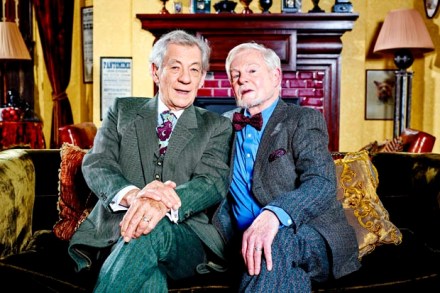
Monday saw the return of possibly the weirdest TV series in living memory. Imagine a parallel universe in which Are You Being Served? had starred Laurence Olivier, John Gielgud and Janet Suzman, and you might get some idea of what ITV’s Vicious is like. Alternatively, I suppose, you could just watch the thing and realise that no, you’re not drunk — you really are seeing Derek Jacobi, Ian McKellen and Frances de la Tour acting their socks off in a sitcom that would have been considered rather creaky in 1975. Jacobi and McKellen play Stuart and Freddie: a pair of gay actors who’ve been living together for decades despite the fact that their main mode of communication is to trade personal insults while the studio audience laughs dutifully.

Living history

Television

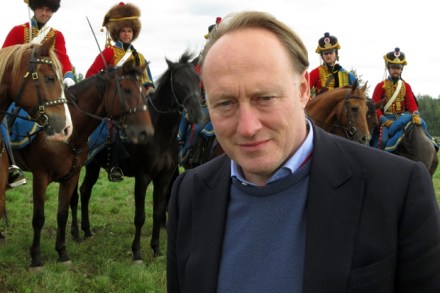
It has been a while since the BBC really pushed the boat out on the epic history documentary front. Perhaps to make amends it is treating us to possibly the most historian-studded, blue-screen-special-effects-enhanced, rare-documentastic, no-hyperbole-knowingly-under-employed series ever shown on television. Armada: 12 Days to Save England (Sundays, BBC2). Having clearly spent a lot of money here, the BBC is taking no chances with its demographic spread. For the laydeez, in the Ross Poldark role it has Dan Snow, captured somewhat gratuitously piloting his handsome yacht into the choppy waters of the English Channel. (Just like in 1588! Sort of.

Strange ways

Television

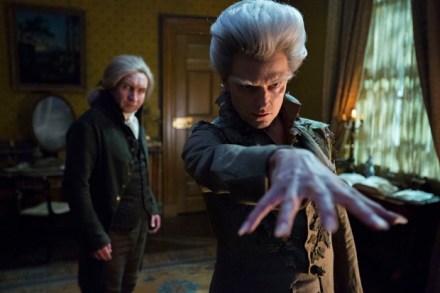
BBC One’s 2015 choice of Sunday-night drama series is beginning to resemble the career of the kind of Hollywood actor who alternates between reliable crowd-pleasers and more eccentric personal projects. The year started with the return of the much-loved Last Tango in Halifax, followed by the distinctly peculiar A Casual Vacancy. Now, after the mainstream triumph of Poldark, we get Jonathan Strange & Mr Norrell — which, whatever else you might think about it, definitely can’t be accused of feeling like drama by committee.

The lying game | 14 May 2015

Television

My favourite scene in the first episode of the new series of Benefits Street (Mondays, Channel 4) — now relocated to a housing estate in the north-east, but otherwise pretty much unchanged — was the one where the street’s resident stoner and low-level crim Maxwell has to attend a court summons. Really, if the whole thing had been scripted and faked by the film-makers (as I’m sure it wasn’t: no need), it couldn’t have worked out better. With just 15 minutes to go before Maxwell’s court hearing seven miles away, his brother turns up to give him a lift on his motorbike. But there’s one small problem. Maxwell’s brother is still under the influence of the vast quantities of diazepam he’s carrying with him in his bag.

Not much cop | 7 May 2015

Television

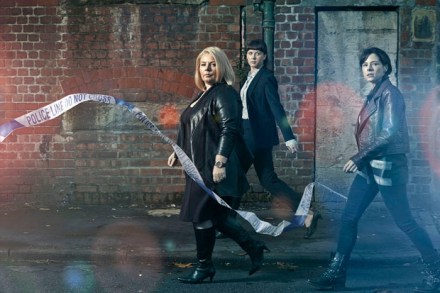
With Clocking Off, Shameless and State of Play among his credits, Paul Abbott is undoubtedly one of the most respected TV writers in Britain. Not even his biggest fans, though, could argue that he’s one of the subtlest. On the whole, whatever his characters are thinking, they’ll also be saying — and generally in a way that proves what no-nonsense salt-of-the-earth types they are. Nor do his dramas ever suffer from a shortage of incident, much of it pitched somewhere between the bracing and the lurid. It’s an approach that Abbott evidently felt no need to change now that he’s writing a cop series. No Offence (Channel 4, Tuesday) began with DC Dinah Kowalska coming back in a taxi from a disappointing evening out with her boyfriend, who was on crutches.

Aussie rules | 30 April 2015

Television

Some years ago I paid a visit to the site of the Gallipoli landings because I was mildly obsessed with the Peter Weir movie and wanted to gauge for myself how horrible it must have been. En route I met up with a young Australian who was training to be an actor (in my false memory it was the unknown Russell Crowe) and together we clambered up the near-cliff-like slopes in the blazing sun, imagining the Turks sniping and rolling grenades at us from the trenches on top. That anyone could have survived at all, we agreed, was a miracle.

Target practice

Television

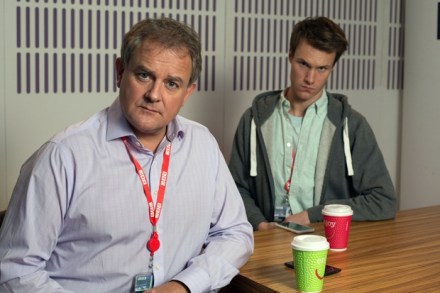
Ever since the days of Tony Hancock, many of the best British sitcoms — from Dad’s Army to Fawlty Towers, Rising Damp to The Royle Family — have featured a middle-aged man convinced that he’s the only sane person left in an increasingly mad world. The frankly subversive twist in W1A (BBC2, Thursday) is that the middle-aged man in question might well be right. As the BBC’s Head of Values, Ian Fletcher (Hugh Bonneville) is surrounded by any number of jargon-spouting younger colleagues whose apparent aim is not to let anybody realise how stupid they are — or at least it would be if they realised it themselves.

Deadly, not dull

Television

Blimey, there has been so much good stuff to watch on telly of late: the Grand National, the Boat Race and the Masters; The Island with Bear Grylls; the final of University Challenge (bravura performance from Caius’s Loveday, though how the winning Cambridge team’s hearts must have sunk when they realised that the public intellectual chosen to present this year’s prize was that literary equivalent of a Dalí melting clock poster on a pretentious fifth former’s bedroom wall — Will Self); and, of course, the first episode of the new season’s Game of Thrones (Sky Atlantic, Monday). I’m assuming you’re all on board with Thrones, now, and that it doesn’t need any introduction.

Comics’ trip

Television

Who says British television lacks imagination? You might have thought, for example, that every possible combination of comedian and travel programme had been exhausted long ago. After all, it’s now 26 years since Michael Palin set the trend by following in Phileas Fogg’s footsteps (sort of). In more recent times, we’ve had Stephen Fry going round America in a London taxi, Billy Connolly going round Australia on a Harley-Davidson trike and — perhaps drawing the short straw — Ade Edmondson going round Britain in a caravan. There’s also been Paul Merton in India, Sue Perkins in China, Sean Lock and Jon Richardson in the Deep South and... well, you get the idea.

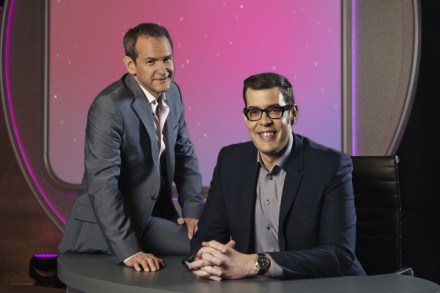
Why James Delingpole is addicted to Pointless

Television

Ever since Boy got back from school my work schedule has fallen to pieces. Every few minutes, just when I’ve got my concentration back after the last interruption, Boy will burst into the office and say, ‘Dad, Dad. How good are you on obscure New Zealanders?’ Or, ‘Quick, Dad, it’s your subject: reptiles!’ Or, ‘Dad, this is ridiculous. Only four people recognised Johnny Marr.’ And so on and on it goes. If I were a stricter parent or a more self-disciplined worker, I wouldn’t let this happen. Problem is, the programme we’re talking about here is Pointless (BBC1, Mondays) and I’m afraid I’m just as addicted as Boy is.

Channel 4’s The Coalition reviewed: heroically free of cynicism

Television

In a late schedule change, Channel 4’s Coalition was shifted from Thursday to Saturday to make room for Jeremy Paxman interviewing the party leaders. With most dramas, that would mean I’d have to issue the sternest of spoiler alerts for anybody reading before the programme goes out. In this case, though, you know the story already — because Coalition was a dramatisation of what happened in Westminster in the days after the last general election. Fortunately, one of the programme’s many qualities was its Day of the Jackal ability to keep us gripped even though we were always aware of the outcome — largely by reminding us that the characters weren’t.

Raised by Wolves review: council-estate life but not as you know it

Television

Journalist, novelist, broadcaster and figurehead of British feminism Caitlin Moran, who writes most of the Times and even had her Twitter feed included on a list of A-Level set texts, is now bidding to break into the sitcom business. Can one woman shoulder this ever-increasing multimedia load, along with the fawning tide of adulation that follows her everywhere? Wisely, she enlisted the help of her sister Caroline to create Raised By Wolves (Channel 4, Monday), a wily reimagining of their home-schooled childhood (alongside six siblings) on a Wolverhampton council estate. After a 2013 pilot, it’s back for a six-part series, with the hyperactive, motormouthed Germaine (the fictionalised Caitlin) played by Helen Monks and her caustic, intellectual sister Aretha by Alexa Davies.

Poldark review: drama by committee

Television

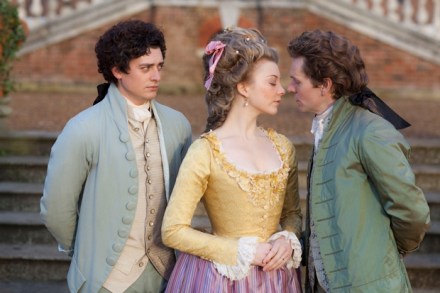
By my calculations, the remake of Poldark (BBC1, Sunday) is the first time BBC drama has returned to Cornwall since that famously mumbling Jamaica Inn — which may explain why even the lowliest yokel here tends to project from the diaphragm. Leading both the cast and the diaphragm-projection is Aidan Turner as Ross Poldark, initially seen as a British Redcoat in a wood rather unconvincingly captioned ‘Virginia, America, 1781’. The short scene that followed efficiently established that he had a rackety past and some politically radical ideas, before the American rebels attacked, leaving several extras dead.

The Great European Disaster on BBC4 reviewed: propaganda worthy of Leni Riefenstahl

Television

My favourite bit of The Great European Disaster (BBC4, Sunday) was the lingering shot that showed golden heads of corn stirring gently in the breeze. It was captioned ‘Europe’. I cannot even begin to describe what a powerful effect this had on my subconscious. It was worthy of Leni Riefenstahl. Indeed, when I experimentally turned off the colour, it was Leni Riefenstahl. ‘Bloody hell!’ I thought to myself. ‘Suddenly it all makes sense.’ But my journey of discovery and enlightenment was only just beginning. I haven’t yet told you what the Ukrainian peasant said.

Critical on Sky1 reviewed: a new medical drama where everyone radiates an unusual degree of competence and concern

Television

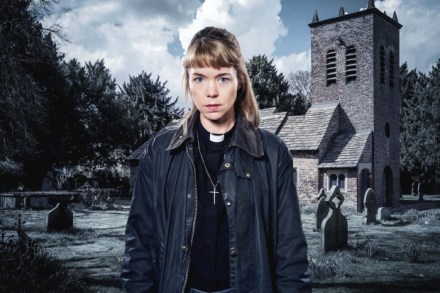
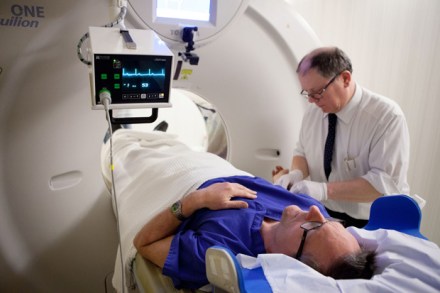
Sky1’s new hospital drama Critical (Tuesday) can’t be accused of making a timid start. Within seconds, an urgent request had come over the loudspeaker system for ‘the trauma corps’ to head to the emergency department, causing the main members of the cast to sprint down various corridors at impressive speed. Meanwhile, a patient was briskly wheeled to the same department from a helicopter on the roof, pausing only to cough up blood all over the lift. Moments after that, the trauma corps were already exchanging the kind of rapid-fire medical speak — ‘Dullness to percussion on the left side!’— that most viewers mightn’t entirely comprehend but that clearly translates as variations on the phrase, ‘Uh-oh’.

UKIP: The First 100 Days, Channel 4, review: a sad, predictable, desperate hatchet job

Television

Just three months into Ukip’s shock victory as the party of government and already Nigel Farage’s mob are starting to show their true colours: morris dancing has been made compulsory for every able-bodied male between the age of 30 and 85; in ruthlessly enforced union flag street parties, brown-skinned people are made to show their loyalty by eating red-, white- and blue-coloured Battenberg cakes until they explode. And what is that acrid smell of burnt fur now polluting Britain’s hitherto gloriously carbon-free air? Why it is all the kittens that Nigel Farage and his evil henchmen are tossing on to beacons from John O’Groats to Land’s End in order to demonstrate that Ukip are the masters now.

Better Call Saul review: the box set equivalent of a (very) well-made play

Television

I lost count long ago of the number of dinner parties and pub conversations where I’ve had to utter the humiliating words, ‘Actually I haven’t seen Breaking Bad.’ The social isolation became even more shaming when my 81-year-old mother rang to ask me if I’d heard of the show and to explain how much she loved it. (‘But isn’t it very violent, Mum?’ I said. ‘Yes,’ she replied.) All of which means that I can approach Better Call Saul (Netflix) with what I like to think of as stern critical neutrality — rather than, say, ignorance.

Arabian Motorcycle Adventures review: enthralling and constantly surprising

Television

There were great numbers of young men who had never been in a war and were consequently far from unwilling to join in this one.(Thucydides, 5th century BC) I love that quote, inscribed on the walls of the Imperial War Museum, because it tells you so much both about the reason wars happen and about the nature of men. Most of us go through a phase where we think it would be terribly exciting to ‘see the elephant’. And for a lucky few, it’s everything they hoped it would be and more. One of those lucky few is an extraordinarily jammy sod called Matthew VanDyke. By rights this young American filmmaker from Baltimore ought to be dead a thousand times over.

Could it be that Wolf Hall is actually the teeniest bit dull?

Television

In January 1958, the British government began working on the significantly titled Operation Hope Not: its plans for what to do when Winston Churchill died. The plans, it turned out, wouldn’t be needed until January 1965 — but the intervening seven years were obviously well spent, because, as Churchill: A Nation’s Farewell (BBC1, Wednesday) made resoundingly clear, the farewell in question was a triumph. London came to a standstill and Big Ben fell silent as huge crowds watched the procession of the coffin from Westminster to the spectacular state funeral in St Paul’s — and its boat journey along the Thames afterwards. For the 50th anniversary, Jeremy Paxman talked us through the day with the aid of some of those who took part.

Broadchurch, review: ‘unwatchable’

Television

Probably the two greatest advances in western culture in my lifetime have been the Sopranos-style epic serial drama and the advent of TV on demand and/or the DVD box set. I don’t think I’m saying anything weird or contentious — or indeed original — here. For example, I’m writing these words at the end of a week with the Fawn in the Canaries, a holiday which I just know wouldn’t have been half as pleasurable if we hadn’t been able to retire to our room every evening after another hard day’s beach work to the solace of two more episodes of the Nordic miseryfest that is The Bridge.

Channel 4’s Cyberbully: an unashamedly old-fashioned drama in being both well made and moral

Television

Channel 4’s Cyberbully (Thursday), written by Ben Chanan and David Lobatto, turned out to be a brilliantly gripping drama, even if the average middle-aged viewer might have found the early scenes as baffling as Finnegans Wake. Teenage Casey Jacobs (Maisie Williams) was alone in her bedroom, although not in the way we used to be: with an LP playing and the latest NME to hand. Instead, she was skyping her friend Megan (‘Hey, bitch,’ they greeted each other cheerfully), while also tweeting, texting, instagramming and wondering who’d hacked into her Spotify playlist and replaced all the good stuff with dreary old Led Zeppelin. But then she saw a tweet from her ex-boyfriend Nathan: ‘I’m not surprised Casey Jacobs is on anti-depressants.

It’s because Corden is such a dick that The Wrong Mans was so blindingly brilliant

Television

God, it must be awful to have been at school with James Corden. As he sat fatly at the back of the class farting and flicking bogies and distracting the teacher with his relentless smartarsery, you’ll have consoled yourself with the happy thought that at least this repellent, maddeningly irritating waster was never going to make anything of his life... Then, years later, you’ll have opened the papers to read rave reviews of his hit sitcom Gavin & Stacey. A fluke, you’ll have thought, till you saw the similarly impressive notices of his West End triumph One Man, Two Guvnors. And any schadenfreude you might have experienced over the recent panning of his dismal Christmas appearance in Esio Trot will have been cruelly dissipated by the news of his £1.

BBC1’s Esio Trot: like Fawlty Towers played at quarter speed

Television

As a New Year’s Day treat for all the family, Esio Trot (BBC1) seemed to be taking no chances. It was based on a book by Roald Dahl, had a script by Richard Curtis and his Vicar of Dibley co-writer Paul Mayhew-Archer, and starred Judi Dench and Dustin Hoffman. So. The appeal of the original story to Richard Curtis isn’t difficult to fathom. Not only is it one of Dahl’s late works with, according to his biographer Jeremy Treglown, ‘a new kindly tone’, but it also features a male protagonist who’s both lovelorn and tongue-tied. From the balcony of his London flat, Mr Hoppy (Hoffman) could gaze down on the unexpectedly vivid décolletage displayed by Dame Judi as the widowed Mrs Silver on the balcony below. He could chat with her every day.

How to win MasterChef – and why salmon is the fish of the devil

Television

If ever my near-neighbour William Sitwell is killed in a bizarre shooting accident and I end up taking his place as one of the guest critics on MasterChef: the Professionals (not likely, I admit, but you never know), here are some tips for competitors who wish to avoid a stinking review. 1. Don’t serve me salmon. Salmon is the fish of the devil, which is why Satan coloured it that particularly vile shade of pink. It is evil because it is almost certainly farmed and therefore pumped full of antibiotics to destroy all the parasites with which it would otherwise be pullulating. If it’s not farmed, well, it still tastes of salmon, doesn’t it? 2. Don’t serve me anything cooked sous-vide. Yeah, maybe to you chefs it looks all cutting-edge and technical.

BBC1’s Remember Me: the curious case of the killer Yorkshire taps

Television

BBC1’s authentically spooky three-part ghost story Remember Me hasn’t yet revealed what’s really going on in that gloomy Yorkshire town. Nonetheless, the second episode did clear up one mystery. We now know how Michael Palin managed to find room in his schedule for what the advance publicity described as his first leading dramatic TV role since 1991’s G.B.H. — by leaving most of the work to the other actors. His name may have appeared first in Sunday’s opening credits, but the man himself didn’t show up until the 54th minute of 58.

Don’t sneer at I’m a Celebrity. The show is teaching us to become model citizens

Television

One of the great benefits of having teenage children is that they force you out of your fuddy-duddy comfort zone. There was no way, for example, that the Fawn and I were ever going voluntarily to watch I’m a Celebrity... Get Me Out of Here! because we’re snobby old farts who only like history documentaries and University Challenge. But Girl decreed otherwise. That’s why, unlike many of you, but like most of the nation, I am now able to comment knowledgably on how well Michael Buerk is doing, who Tinchy Stryder is, why it was a sensible idea to choose world superbike champion Carl Fogarty to undertake the first bushtucker trial, and why Melanie Sykes is currently Britain’s favourite Milf. You think you don’t need to know this trivia?

Jaw-dropping confessions of a very un-PC Plod

Television

There can’t have been many people who watched Confessions of a Copper (Channel 4, Wednesday) with a growing sense of pride. Among those who did, though, will presumably have been the creators of Life on Mars and Ashes to Ashes — because, in its frequently hair-raising way, the programme confirmed how well they did their research into old-school policing. Of the seven ex-officers interviewed, the most old-school of the lot was probably Ken German (sample quote: ‘We all have a view on political correctness: it’s bollocks’), who began by explaining in full the admission procedure that he’d gone through to join the force — he was told to bend over and asked if he was homosexual. And with that, said Ken, ‘I found myself at training school.

We know that war is hell. But it doesn’t ever make us stop doing it

Television

There’s a plausible theory — recently rehearsed in the BBC’s excellent two-part documentary The Lion’s Last Roar? — that our war in Afghanistan was largely the creation of the Army, which sorely needed a renewed sense of military purpose after the debacle in Iraq. As a taxpayer, this appals me. As the parent of a boy approaching conscription age it horrifies me. But as an Englishman, it doesn’t half make me proud that we’ll still do anything — up to and including embroiling ourselves in a futile conflict — rather than admit we’re finished as a fighting nation.

James Walton uncovers the sound of Nashville – money

Television

Twenty minutes into BBC4’s The Heart of Country (Friday), there was a clip of Chet Atkins, country music’s star producer of the 1960s, being asked to define ‘the Nashville sound’. Atkins reached into his pocket, pulled out some coins and rattled them in his hands. ‘That’s the Nashville sound,’ he said with a slightly rueful smile. ‘Money.’ By this stage, mind you, the revelation of Nashville’s commercialism didn’t come as an enormous surprise. After all, WSM, the radio station that started the whole thing with its live shows from the Grand Ole Opry, was the broadcasting arm of the National Life and Accident Insurance Company.