Culture

Culture

The good, the bad and the ugly in books, exhibitions, cinema, TV, dance, music, podcasts and theatre.

Radio 4’s Lord Lucan series is rescued by a brilliant narrator

Radio

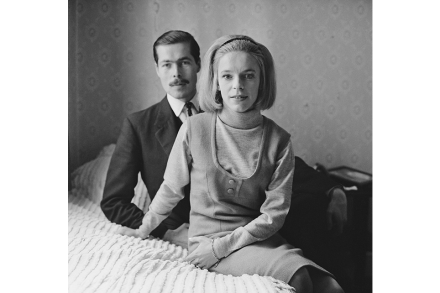
It was 50 years ago this week, on 7 November 1974, that Lord Lucan fled what was destined to become the most talked about crime scene of the 20th century. A coroner’s inquest jury named him as the killer of Sandra Rivett, his children’s nanny, but his disappearance ensured that he was never convicted of the crime – or of the attempted murder of his wife, Veronica. Stripping away the sensationalism of the story needn’t render it boring Understandably, given the mystery that still envelops his precise actions and whereabouts, Radio 4 has chosen to mark the anniversary with a soft question rather than to provide answers. Soft, but also ironic: what is it about this case that continues to obsess us?

Mandy Rice-Davies saw the Profumo affair as an adventure, not a scandal

Radio

In the decades since the Profumo scandal gripped a nation, Mandy Rice-Davies has been fixed in the public imagination largely in the form of one verbal comeback and a photo. The comeback – ‘Well he would, wouldn’t he?’ – came after being told by a barrister in court that Lord Astor had denied sleeping with her. The photo was of an 18-year-old Rice-Davies, sleekly cat-eyed and beehive-haired, in the back seat of a car with her friend Christine Keeler, who had triggered a public frenzy by sleeping with the war minister John Profumo at the same time as a Soviet naval attaché, Yevgeny Ivanov.

This UFO testimony had me hooked

Radio

In October 1964, a young man was driving to a dance in Hamburg, Pennsylvania, when his radio began to pick up a strange frequency. At first he thought it was just tuning in to a local channel, but then voices came through discussing some kind of nuclear war – and issuing bomb reports. Recalling the incident decades later, the driver described the simultaneous appearance of a star overhead followed by the sudden realisation that he could see through the floor of his car. ‘I hadn’t done any dope, I wasn’t doing any beer,’ he adds so casually that you feel inclined to believe him. And yet his body felt like jelly.

The fascinating mechanics of striking a deal

Radio

If you wish to know how to become a master negotiator, a formidable body of books will now offer to train you in that art, but I’m not entirely sure it can be taught. The greatest natural asset, I suppose, is the ability to enjoy the game: the performative mulling, tough-talking, buttering-up, pitching of curve balls and – when absolutely necessary – flamboyant execution of a real or bluff exit. Yet even for those of us who are clumsy and reluctant hagglers, the mechanics of striking a deal can be fascinating. This is the stuff of the Dealcraft podcast, hosted by Jim Sebenius, a professor of the Harvard Business School, and himself a high-flying negotiator.

How Berlin nearly broke Bowie

Radio

This week’s Archive on 4 is a treat for David Bowie fans. Francis Whately, the producer behind several of the BBC’s Bowie films, including The Last Five Years, has patched together old recordings and new interviews with Bowie’s lovers and friends to examine his life in West Berlin between 1976 and 1978. It was a fraught, make-or-break time. Out of pocket, addicted and depressed, Bowie had grown ‘very, very worried’ for his life. It isn’t entirely clear why he chose Berlin as a place for recovery, other than that it was unstarry, cheap and a good distance from LA, where his troubles had spiralled. Unfortunately, it was also ‘the smack capital of Europe’, and Bowie was about to move in with Iggy Pop.

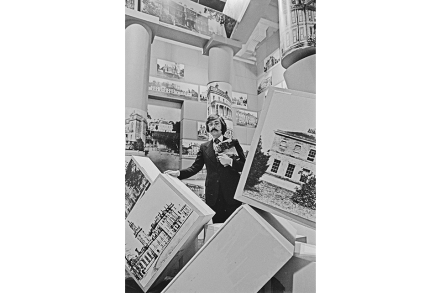
Glamour or guilt? The perils of marketing the British country house

Radio

The most angst-ridden sub-category of the very rich – admittedly a lucky bunch to start with – must surely contain those who have inherited a British country house, along with the exhortation to keep it up. Imagine the anxiety of knowing that one is custodian of a large, crumbling pile of distinguished architecture, stuffed with meaningful antiquities and perpetually besieged by damp, dry rot and taxes. For those of us who are already reliably paralysed by small-scale admin, it would be enough to drive you to drink or worse. In contrast, the landed gentry who survive best in this modern terrain must be energetic, ruthless and ingenious; in all probability possessing similar characteristics to those which propelled their ancestors to social prominence in the first place.

A familiar OE-led balls-up: Rory Stewart’s The Long History of Ignorance reviewed

Radio

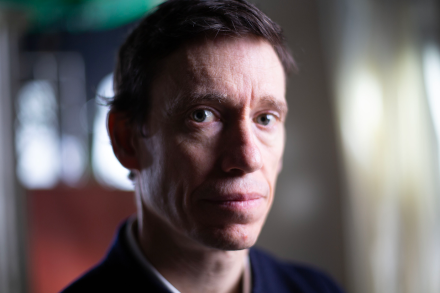
In my next life I intend to have my brain removed in order to become a telly executive. You know: ‘where ignorance is bliss/ ’Tis folly to be wise’ (Thomas Gray, OE). Such ignorance is a state which, happily enough, Rory Stewart, OE and a fully tooled-up Mob from rent-a-thinker (what one of those executives, without a hint of irony or faint praise, once called ‘television intellectuals’) are just now kicking around in the hope that they may rehabilitate it and release it from its sty of obloquy. Rory is a very keen type – what used to be called an all-rounder – and, despite his protestations otherwise, he is untouched by the piggiest ignorance, and addresses his audience and contributors with the zeal of a scoutmaster.

A fiery examination of the damage wrought by internet culture

Radio

Historically, when a woman was giving birth, she was attended by the women she trusted most, including her child’s prospective godmother. The word ‘gossip’ derives from the Old English ‘god-sibb’, meaning godparent, but came to refer to what went on around the childbed. As Erica Jong later put it: ‘Gossip is the opiate of the oppressed.’ Gossip has since moved online – see Mumsnet and the network of Facebook pages called ‘Are we dating the same guy?’. Women use the latter to post warnings to alert others to serial cheaters – and worse. Perhaps inevitably, it has become the focus of several lawsuits brought by men who have been publicly maligned. Is it possible to keep the old ‘whisper network’ alive without being sued in the process?

We’ve been doing a monstrous disservice to goldfish

Radio

As everyone knows, Londoners don’t talk to strangers. And heaven forbid that anyone should make eye contact on the Tube. But despite having lived in the city for decades now, I’ve never really found this to be true. My average day out and about is punctuated by pleasant little conversations with strangers. Now and then, without too much effort, I’ve hit chat jackpot and got an entire life story out of a fellow bus passenger in seven stops. It seems that for many years we have been doing a monstrous disservice to goldfish Still, old myths die hard, and Radio 4 is promoting the new series of Alexei Sayle’s Strangers on a Train by saying that the host’s mission is to ‘break the golden rule of travelling by train and actually talk to his fellow passengers’.

Do men and women need different podcasts?

Radio

Do men and women need different podcasts? The notion goes against the unisex, every-sex, what-is-sex-anyway culture we have come to inhabit. Yet this week we find, on the BBC no less, a podcast dedicated to men’s problems and one satirising women’s problems. Some would say the pushback has begun. Geoff Norcott’s Working Men’s Club is a recorded stand-up comedy act performed to a studio audience in Leeds. Norcott describes it as a place ‘to discuss proper bloke stuff’, by which he means beer, sport and masturbation (cue laughter), but much more than that, men’s physical, mental and emotional health (initial silence). He jibes at the male habit of squashing feelings and ignoring signs to visit the doctor.

How we became addicted to vaping

Radio

For those of us with a poor grasp of time, who can still recall when a night at the pub could be sharply revisited by a Proustian wave of stale smoke arising from yesterday’s clothes, it can almost feel as if vaping crept up on us out of nowhere. One moment, it seemed, all the authorities had firmly agreed that Nick O’Teen was a creepy pusher hooking innocent kids on gaspers, and were pledging to legislate and tax cigarettes into oblivion; the next, great hordes of schoolchildren were apparently free to suck constantly on little vials of liquid nicotine with sugar-rush names such as Cherry Fizzle and Blue Razz Lemonade. What happened?

Rushdie on how the best magical realism transcends fantasy

Radio

Ask the man in the street to quote a line from one of Salman Rushdie’s novels, and he might struggle. Ask him whether he’s heard the phrase, ‘Naughty but nice’, specifically in the context of cream cakes, and you will probably make his day. It was Salman Rushdie who came up with that slogan in his early career as an adman. Remember the ‘irresistibubble’ tag for Aero chocolate bars? He was responsible for that, too. ‘I feel at bottom that I’m still that boy from Bombay and everything else has been piled on top of that’ If there’s any embarrassment on Rushdie’s part (and why should there be?) that some of his best-known words are from the sides of buses, it was undetectable as he sat down with John Wilson on This Cultural Life last week.

Under the Taliban, Afghan light entertainment accrued unusual weight

Radio

For a television talent show, Afghan Star had unusually high stakes. When it first hit Afghanistan’s screens in 2005, four years after the fall of the Taliban, it represented the triumph of music over those who had attempted to smother it. Even from the show’s somewhat chaotic inception, it galvanised a nation, sending supporters out on to the streets to canvas for their favourite performers. When the Taliban first swept into town, people were overjoyed: they were seen as ‘angels of peace’ The first winner, Shakib Hamdard, certainly deserved some luck: he had lost his father to a suicide bomb and his brother to a rocket attack, and was driving a taxi around Kabul to support his mother and sister.

The jaw-dropping story of the British Museum thefts

Radio

It’s August 2023 when news breaks that artefacts have gone missing, presumed stolen, from the British Museum. I’m about an hour into investigating the story for a feature when a suspect is named in the press. I know him. He’s the curator I was seated next to at a British Museum dinner nine months earlier. Listening this week to three preview episodes of Thief at the British Museum, an electrifying nine-part series on Radio 4, I kick myself for the second time for spending most of that evening talking to the professor on my left. What can I remember of the man on my right? He was quiet. Ruddy-faced. Nothing else remarkable springs to mind. What can I remember of the man? He was quiet. Ruddy-faced.

A gripping podcast about America’s obsession with guns

Radio

The love affair between so many Americans and their guns – long a source of international fascination – appears to be getting more painfully intense. The greater the publicity over gun crime, the more Americans think they’d better acquire a firearm to keep themselves safe. There are now roughly 400 million guns in the US – but most citizens feel more unsafe than ever, and with some justification. Last year featured both the highest level of gun ownership in US history and the highest recorded number of mass shootings. This really is one to listen to in bed, in the pitch dark – even better, pretend you’re in a couchette ‘How did we get here, and how do we get ourselves out?

How to live off the land for a year

Radio

Could you live off the land for a year without buying a single thing to eat? This was the challenge a retired journalist set himself on Radio 4 this week. Max Cotton lives on a five-acre smallholding near Glastonbury in Somerset with his wife Maxine, two pigs, two dozen hens and a Jersey-Friesian cross named Brenda. He also has six adult sons who, as far as this project is concerned, ‘prefer to pontificate than help very much.’ Cotton’s hopes for peas by April were even less realistic than I thought Cotton conceded at the outset that he would allow himself to purchase salt as a necessity.

I’m ashamed that I used to think ABBA wasn’t cool 

Radio

One of the joys of listening to archive BBC interviews with pop stars is the chance to hear long-discarded hipster jargon served up in its original setting. Near the beginning of Radio 2’s ABBA at the BBC, marking 50 years since the group won Eurovision with ‘Waterloo’, a prime example was unearthed from the immediate aftermath of their success. ‘If you were one of the 500 million Eurovision viewers, you may be wondering which was more important in getting the song through to number one,’ said the host. ‘Was it the music or the way-out gear?’ I think we can safely conclude that it was the music, although the sight of Anni-Frid Lyngstad and Agnetha Faltskog in spangled velvet can’t have hurt.

Don’t tell them but the French didn’t in fact invent etiquette

Radio

When dining in France, it is considered rude to finish the bread before the main course has been served, and ruder still to slice the bread with a knife, lest the crumbs land in a lady’s décolletage. In China, you should never place your chopsticks upright in a bowl of rice, and in Bangladesh you may eat with your fingers, but should avoid getting sauce above the knuckles. If you are guilty of any of the above, may I direct you, politely, to a new documentary on the World Service. The programme takes aim at many outdated traditions (including those that resign women to the kitchen), but the conversation is far more informative than censorious and more eye-opening than dour.

How depressing when people over-identify with their ethnicity

Radio

I am a Jew. I live in a council estate in London where considerably more than half of my neighbours are Muslims. These people aren’t my friends, but we get along fine: I pick up their parcels; we coordinate complaints to the council about the strange, blue-tinged fluid that sometimes drips from everyone’s ceilings, as if someone in the penthouse had decided to fill their flat with jelly. Elsewhere, our distant cousins are doing terrible things to each other. It’s increasingly hard to imagine a world in which these distant cousins can live together, intermingled but mostly minding their own business – but that’s exactly what we do every day in London. Over the past six months I’ve started feeling extremely grateful for that.

The BBC seems to have come around to catcalling – in the Caribbean

Radio

Where in the world is it best to be a woman? You might think that’s a tricky question to answer, given the number of factors that go into the mix, but a new BBC podcast has pledged to find out. The format of the show is that on any given topic – body image, say, or fair pay – two women will speak from two countries that ‘are getting things right’. The one that proves more convincing could win ‘a place in our female fantasyland’, the composite, woman-friendly utopia that the programme is building as its ultimate goal. Although the word ‘wellbeing’ was flourished in the pitch, the hosts Sophia Smith Galer and Scaachi Koul assure us that they are sceptical of the wellness industry ‘so you won’t be getting any horse yoga or vaginal steaming here’.

Why are there so few decent poetry podcasts?

Radio

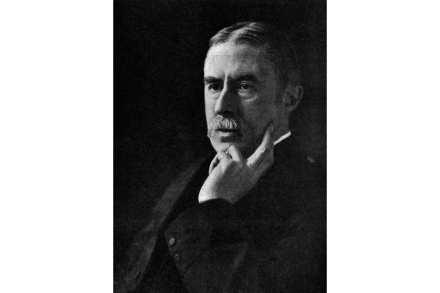
The late John Berryman described A.E. Housman as ‘a detestable and miserable man. Arrogant, unspeakably lonely, cruel, and so on, but an absolutely marvellous minor poet… and a great scholar’. The Times obituarist went further, declaring Housman to have been, on occasion, ‘so unapproachable as to diffuse a frost’. That such a man could be so moved by a cherry tree in spring and by the dales of Shropshire in autumn says something about the separability of art and life. The greatest contradiction for Frank Skinner, whose poetry podcast has returned for a ninth series, lies between Housman’s work as a Cambridge classicist and his verse.

How did the internet become so horrific?

Radio

I can dimly remember the internet getting going, gradually staking its claims on our attention with hardly anyone except tech nerds – and famously David Bowie – realising what was going on. In our defence it was the 1990s and we had a lot else to think about: Britpop, The End of History, lads’ mags, guacamole, supermodels, Tony Blair, Monica Lewinsky, etc. But here we all are now, in a world where I can do my banking from bed, America is fragmenting like papier-mâché in the rain, and primary school children can get porn on their smartphones. Can anyone recall the incremental steps that brought us here?

Ought we not have some shrine to the pips?

Radio

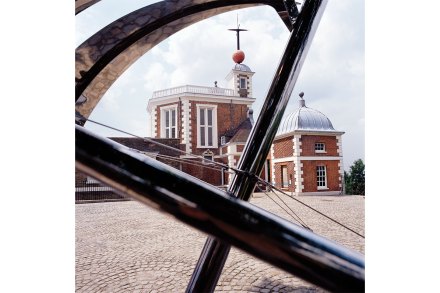
Next week marks the centenary of the pips. On Monday at 9 p.m. a documentary will be broadcast on Radio 4 debating whether the six little tones which ring in each hour ought to be axed as obsolete or preserved for tradition’s sake. Some contributors will speak of them as annoyances – ‘the cockroaches of broadcasting’ is a memorable phrase – and others will ask what could possibly replace them. By the end of the programme, whatever your view, you will have the pips lodged firmly between your teeth. If we so worship the pips, ought we not to have some worthy shrine to their existence as well? The first pips, which represent the Greenwich Time Signal, were transmitted at 9.30 p.m. on 5 February 1924.

The Queen’s Reading Room needs more Queen

Radio

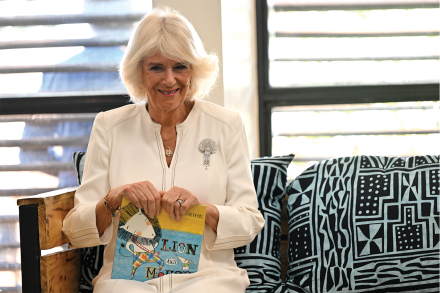
In the dog days of winter, when venturing out under darkened, sleety skies is to be avoided if at all possible, an online book club often seems the most appealing kind there is. Here in the UK, on territory in which the daytime TV hosts Richard and Judy once held undisputed reign, a bookish royal has entered the fray: Queen Camilla, whose ‘reading room’ and associated charity was launched on Instagram during the pandemic, and has now branched into podcasts.

Fascinating: Radio 4’s Empire of Tea reviewed

Radio

I can scarcely remember a time before tea: I started drinking it at around four, at home in Belfast, as a reward after school. Before long I was as fiercely protective of my right to a brew as the workers of British Leyland’s Birmingham car plant, who were famously spurred to strike action in 1981 when the management proposed cutting tea breaks by 11 minutes. Decades on, my passion is undiminished. There is no problem to which tea is not at least a partial solution: it restores flagging spirits, calms the over-excited, warms in winter and refreshes in summer.

Can Italy reverse its falling birth rate? 

Radio

Anne McElvoy is on the road again, exploring the state of modern Europe. Following her Radio 4 programme, The Reinvention of Germany in April, the Politico journalist has travelled to Padua, in northern Italy, where reactions to the rise of the right-wing populist Giorgia Meloni appear to vary. Is the 46-year-old PM a breath of fresh air – the best chance Italy has for a future – or a hypocritical dyed-in-the-wool traditionalist? The reinvention (or rather restoration) of Italy is very much Meloni’s goal. Clinging to the familiar principles of faith, flag and family, she has eschewed measures that would allow those born in Italy to define themselves as Italian, ostensibly believing that to be Italian is to have Italian blood.

Joni Mitchell, in her own words

Radio

There’s always been something at once girlish and steely about Joni Mitchell, the stellar Canadian whom Rolling Stone called ‘one of the greatest songwriters ever’. As Radio 4’s Verbatim programme in honour of her 80th birthday reminds us, a stubborn hopefulness has carried her through turbulent times. Perhaps growing up in Saskatchewan, where winter temperatures drop to –30°C, put an early stiffener in her soul. When she contracted polio, aged nine, her mother braved the hospital ward in a mask to bring her bedridden daughter a small Christmas tree, but little Joni made a promise to the tree that she would walk sufficiently well again to be allowed back home for Christmas. This she managed. Before hitting ten, she took up smoking.

I’m not convinced Thomas Heatherwick is the best person to be discussing boring buildings

Radio

Architects are often snobby about – and no doubt jealous of – the designer Thomas Heatherwick, who isn’t an actual architect yet still manages to wangle important building commissions. And he knows this. In his documentary for BBC Radio 4, Building Soul, where he examines what he calls the ‘blandemic’ in today’s architecture, he asks to interview fellow Spectator writer Jonathan Meades, who responds: ‘The last person who should be doing a series on urbanism is a designer.’ Heatherwick wears this as a badge of honour. Indeed, qualifying as an architect is no guarantee of quality – check out the past nominations for the Carbuncle Cup, the now defunct prize for the ugliest building in Britain.

A Radio 3 doc that contains some of the best insults I’ve ever heard

Radio

A recent Sunday Feature on Radio 3 contained some of the best insults I have ever heard. Contributors to the programme on the early music revolution were discussing the backlash they experienced in the 1970s while reviving period-style instruments and techniques. Soprano Dame Emma Kirkby remembered one critic complaining that listening to her performance was ‘as about as interesting as eating an entire meal of plain yoghurt’. Another critic, writing in Gramophone, pronounced the strings of the new ensembles ‘as beautiful as period dentistry’. Those strings were mostly made of animal guts. There was, as one of the musicians interviewed recalled, ‘a DIY atmosphere’ to the movement, which developed alongside a spate of others in 1973.