Culture

Culture

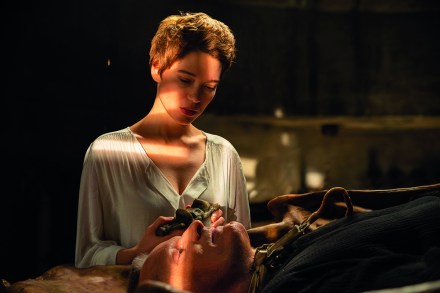
Crimes of the Future is David Cronenberg at his best

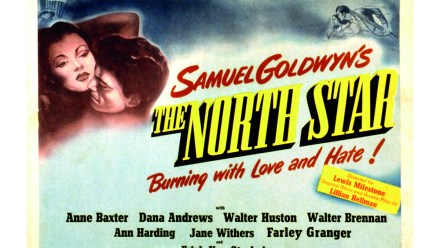
Canada’s all-time greatest writer-director has come a long way since his film Videodrome proclaimed “Long live the New Flesh” nearly forty years ago. Because his films are often horrifying, many mistake David Cronenberg for a purveyor of horror films, and to be sure he singlehandedly invented the now-fashionable “body horror” genre. But only a few of his films are horror movies per se, and they are way in the past. The subsequent fifteen aren’t so much scary as disturbing: think the experimental gynecological implements in Dead Ringers. And a couple are unapologetically transgressive: think the death-by-car-accident fetishists in his 1996 adaptation of J.G. Ballard’s Crash.
cronenberg

Reclaiming the free and capable man

About two weeks after I graduated college, I realized I was pretty much useless. I was in North Carolina for a friend’s wedding, getting ready with the rest of the groomsmen, and I was having a hell of a time ironing my dress shirt. The shirt itself had an ungainly shape that I struggled to map onto the board, and each stroke of the iron seemed to create new creases. My mother handled the laundry at home, and in college I rarely had to dress formally. When I did, I’d transfer my shirts directly from dryer to closet, and that was usually good enough. Finally, I gave up and asked my friend John for help. John, a confident, capable guy who always made me feel inadequate, agreed.

jefferson education

How secular humanism is ruining drag

The fanfare over “drag queen story hour” has resurfaced again, this time with New York City mayor Eric Adams throwing his support behind the controversial new trend. “Drag storytellers, and the libraries and schools that support them, are advancing a love of diversity, personal expression, and literacy that is core to what our city embraces,” Adams said. In a metaphysically challenged age such as our own, it can be difficult to recognize the implications of drag, which traces its roots to the phenomenon of the eunuch — the sexual outsider, whose proclivities lie outside the boundaries of the “normal.

Does ‘BDE’ mean masculinity isn’t ‘toxic’ anymore?

There’s an expression that’s been mainstream for a couple years now that most people refer to in its abbreviated and more G-rated form as “BDE.” (I am too proper to write it out, but you can be enlightened by HuffPost here.) The term, denoting the magnetism of the manly, “strong silent type,” has apparently been around since at least 2020. But it’s been trending over the last month as Kari Lake, the Republican Arizona gubernatorial candidate, and Kim Kardashian, the reality star who recently beat Hillary Clinton at a legal knowledge trivia game (it’s not her fault; the laws don’t apply to her) both used it.

‘Oxford or Cambridge?’: the vacation edition

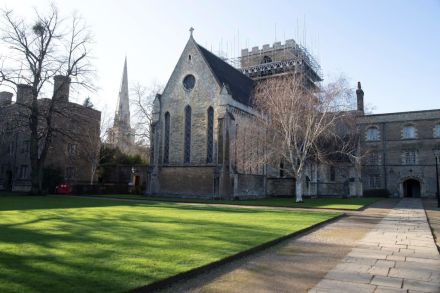
"Oxford or Cambridge?" No, it isn’t just shorthand for which of Britain’s most famous universities you attended — or were rejected from. It’s also a question about your taste in weekend vacation spots. Oxford is an urban, bustling city, full of multiculturalism, wide-eyed gangs of tourists and a literary heritage that’s long since tipped over into cliché. Think Alice in Wonderland, C.S. Lewis, J.R.R. Tolkien, even — God help us — Harry Potter, claimed for posterity because of its use of Christ Church as a filming location. But its Eastern cousin — decidedly not Cambridge, Massachusetts — is a very different proposition.

Biden’s unforgivable student loan authoritarianism

The frame for virtually any discussion of American politics at the moment advanced by the hair-on-fire segment of our media elite is that democracy itself is under attack. We are surrounded, according to the likes of CNN's Brian Stelter (peace be upon him), by those who would tear down the foundations upon which the government and ordered law of the United States of America stands, in a frontal illiberal assault on the institutions that keep us free. Fear the QAnon Shaman and his Viking hat! We all remember how close he came to ruling us all astride the floor of Congress.

student

The lost boys of Covid

Millions of American children are about to enter their fourth year of Covid-impacted schooling. In vast swaths of the United States, a child now entering second grade has never had anything resembling a normal school experience. No child entering kindergarten has a memory of life before the pandemic. A rising junior in high school has never had a normal high school experience. Over two years into the pandemic, we know that the effects of “long Covid” are basically nonexistent in kids. Following the release of a study published in the Lancet, Alasdair Munro, a pediatric infectious disease specialist in the United Kingdom, tweeted, “A new, large study on long covid in children using Danish registry data has some very reassuring findings.

school

Universal school choice would transform real estate

A new Arizona law which funds all the state’s K-12th grade children to attend a school of their family’s choosing, public or private, has been widely hailed as a landmark education reform, although evidence suggests the benefits will go far beyond academics. Studies by the Manhattan Institute, New Jersey’s E3, and Connecticut’s Yankee Institute all show that subsidizing students to use alternative placements would save any state millions each year. But perhaps the most unexpected promise of universal school choice is the impact it would have on area real estate markets, simultaneously lowering the cost of what families must pay for a desirable home, improving the value of distressed areas, and equalizing the quality of life between rich and poor communities.

Vintage motorcycles and human nature in Ohio

Each July, the American Motorcyclist Association — the policy advocacy organization for motorcycle riders — holds Vintage Motorcycle Days, a weekend-long celebration of old bikes. My father and I attend in whichever years the work and family commitments of summer allow for a momentary escape. Vintage Days is indeed an escape from all of these things, and in many ways, from the normalcy of polite society. This is because the AMA, an organization which normally stresses safe and courteous riding, allows Vintage Days attendees to cut loose. The event is held at Mid-Ohio Sports Car Course, a race track with a large campus that allows for a swap meet, seminars, campgrounds, bike shows and all disciplines of dirt and road racing. Those are only the organized activities, however.

vintage days ohio motorcycles

I regret my promiscuity

Upon opening Louise Perry’s new book, The Case Against the Sexual Revolution: A New Guide to Sex in the 21st Century, I’m moved to tears by the dedication: For the women who learned it the hard way Unlike many other people who have read and reviewed Perry’s work, reading her book wouldn’t be some academic exercise in contemplating how liberal feminism has let women down. It wouldn’t be evaluating what those poor sluts over there have endured in the wake of the sexual revolution. Reading her book was personal. I’m one of those sluts. I’m a case study for her thesis. A cautionary tale. I knew this book was going to be difficult. And it made me realize it’s time to finish this essay — one I’ve been trying to write for four years.

slut promiscuity regret

Are genital checks inevitable?

Eighty-year-old Julie Jaman has been banned from her local YMCA swimming pool in Port Townsend, Washington, where she’s been a member for thirty-five years. Why? She “discriminated against” and “harassed” a transgender employee who was in the locker room by asking “Clementine Adams” “if he had a penis” and demanding he leave the ladies’ room. The disturbing incident has sparked a controversy and way more uproar than should ever exist over something so bizarre and perverse, leading one to wonder: are genital checks inevitable? Jaman recounted to the media: “I heard a man’s voice, very distinctive. I saw a man in a woman’s bathing suit where two toilets are and there were two little girls standing there taking down their suits to use the toilet.

genital checks

Them dog days

I grew up in a northeastern state, and when I moved to Washington, there were plenty of culture shocks I had to get used to. The Metro seemed like a revelation, a magical train that whisked you under the White House and the National Mall (this was back when DC public transportation actually worked). Less appealing were the crime notices slapped about my neighborhood: I saw one once — I'm not making this up — that reported a real-life nunchuck attack. But the biggest shock of all was, and still is, the heat. Where I grew up, a 100-degree day was an event. That's all the more so because my parents didn't have so much as a window air conditioner until I was around ten years old. In the frozen reaches of Up North, this was a perfectly normal way to live.

Four vectors of danger for America and the West

Fifty years ago, everything seemed to be breaking down, kind of like it is now. In fact, it can feel like the 1970s redux. Searing issues of war, ecology, race, and “malaise” have never really disappeared. A silent majority, political schism, limits to growth, and price inflation — all are here. Yet there are new uncertainties too. Even to optimists, debt-induced fragility clouds the economic horizon. Investor Charles Munger notes that bitcoin actively undermines the Federal Reserve System; any gain comes from trading, not from creating products, crops or rents. As fantastic as non-binary sexuality, cryptocurrency points to additional contemporary follies.

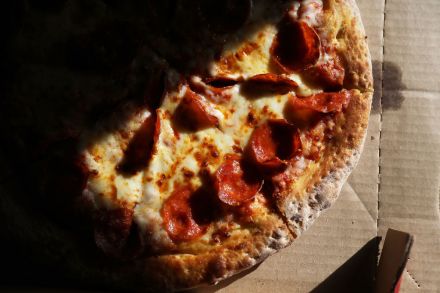
Is Papa John’s no longer God’s pizza?

Cockburn saw Papa John last week at CPAC — and he had some strong words about his old stomping grounds. John Schnatter, founder of Papa John’s Pizza, was ousted from his company in 2018 after saying the N-word on a conference call. Cockburn thinks he had it coming. Schnatter, who ate 800 pizzas from the chain over the last eighteen months, claims the company is now “down with Little Caesar’s,” among the gravest insults you can level in the pizza business. The Pizza Papa made it clear that he knows why the company is losing its way: "We built the whole company on conservative values. Conservative ideology has two of the most critical attributes: truth and God." Without truth and God, he said, the pizza had gotten worse.

papa john

A driver’s license, if you can keep it

I remember still the foreboding language and tone when I was learning to drive in New Jersey over a decade ago. First, you needed to earn your permit. Never forget that driving is a privilege, not a right (which only works if driving is an option, not effectively a requirement, though drivers ed isn’t in charge of land use). After your permit, you start with your probationary license. And in a twist that somehow passes civil liberties muster, you’re not even allowed to appeal a ticket issued to you during your probationary period. You feel a bit under suspicion until you finally get that license. Yet for all that, it’s still, basically, a lot of bureaucracy and paper-pushing.

Demi Lovato’s pronoun-based self-deception

Recently, Demi Lovato has been feeling more feminine. The singer and actress a few days ago told “Spout Podcast” host Tamara Dhiaan that when it comes to pronouns, she’s “adopted she/her again.” Lovato, who came out as nonbinary in 2021, explained her decision: “I’m such a fluid person.” “Fluid” would be one word to describe Lovato, whose Instagram profile since April has read “They/them/she/her.” Cue the confusion from even woke media, though podcaster Dhiaan followed up the interview with this very helpful clarifying tweet: “For the record: Demi Lovato did NOT say she is abandoning they/them as her pronouns, she simply said she is adding she/her.” The Washington Post also chimed in to help make sense of this very important celebrity announcement.

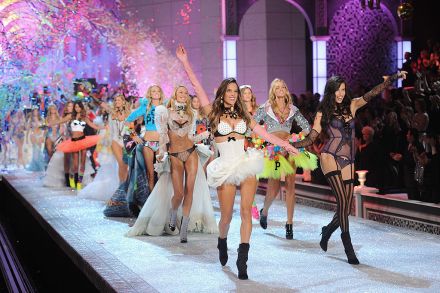
Don’t blame Victoria’s Secret

Victoria’s Secret: Angels and Demons is the latest in a spate of streaming service exposés that seek to deconstruct the image-obsessed culture of the 2000s and 2010s. Netflix’s documentary about Abercrombie & Fitch taught us that the retailer was racist, fatphobic and potentially brimming with predatory closeted homosexuals. Hulu’s three-part documentary series about Victoria’s Secret teaches us that the company was sexist, fatphobic and potentially linked to pedophilic sex trafficking. Both take issue with the billionaire Les Wexner, who these days is more famous for his association with Jeffrey Epstein than his role in defining mall culture. (His retail conglomerate was also behind The Limited, Lane Bryant, Bath & Body Works and several other retail staples.

Victoria's Secret

Why I joined the college exodus

In the spring of 2020, the pandemic catalyzed a startling personal revelation. As a begrudging student of Zoom University, I came to the realization that a college degree might not be worth it. Pre-pandemic Rikki was a dutiful, head-down student at New York University with a 4.0 GPA and her eyes set on law school. But when the world locked down in the middle of my sophomore year and my university still demanded full tuition for virtual classes, I began questioning everything. Although they certainly made a valiant effort at remote teaching, most of my professors proved too technologically inept to coerce twenty-five despondent teens to attend 8 a.m. Zoom lectures about medieval feudalism.

The school choice moment is now

There’s been a lot of professed outrage lately over woke school boards. According to Republican candidates for office, they're infiltrating children’s curricula with critical race theory, recruiting drag queens to read at story hour for pre-schoolers, and engaging in other forms of — shall we say — “incompetence.” But the real heroes pushing back against left-wing ideologies in government schools are the parents, when it ought to be lawmakers. Outspoken parents in New Jersey made headlines when they protested their school district removing holiday names from the school calendar. Voters in San Francisco — yes! — recalled school board members who thought renaming schools “with a connection to colonialism” was more important than educating kids.

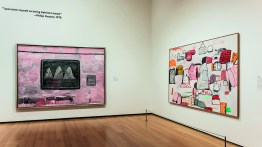
Philip Guston in the padded room

It was once a cliché of modern art that its principal aims included shocking its audience. Aesthetic aggression was the correlative of class warfare. It’s no accident, as the Marxists say, that avant-garde comes from the military lexicon. In painting, Gustave Courbet’s 1866 “L’origine du monde,” a rudely realistic, closely cropped view of an anonymous woman’s nude genitals, is often hailed as an early shot across the bow. Five years later, the artist would lead the Paris Commune in toppling over the Napoleonic Vendôme Column. For pugnacious creatives like Courbet and his descendants, consciousness-raising was always going to be a little bit uncomfortable. One can imagine how easily this gets out of hand.

guston

Sinking into the pixels

More than two decades into internet ubiquity, we’re finally seeing the rise of a generation raised by screens as much as by their parents and peers. Smartphones and social media may not have reared their ugly heads completely until the 2010s, but even in the lead-up to the millennium, computers and the “World Wide Web” were a frequent topic of pop cultural conversation. Within those conversations was always an enormous amount of anxiety. Chatroom “stranger danger” and scammers posing as Nigerian princes seem quaint now compared to the overflowing sewers on display daily in the most craven corners of the web. Digital anxiety is done.

world's fair
arcade fire

Arcade Fire: the last of the art-rockers?

After I saw the Canadian band Arcade Fire on tour in London in late 2010, I began my review of the gig by quoting Psalm 98: “Make a joyful noise unto the Lord, all the earth: make a loud noise, and rejoice, and sing praise.” My abiding memory of the evening was that it was fun. Despite the apparent solemnity of many of the act’s songs — several of which had been taken from their debut album, Funeral, and revolved around death and despair — the concert had a celebratory and upbeat aspect. It concluded (as virtually all of their shows had done) with a euphoric singalong of what has become their signature song, the cathartic “Wake Up.” A decade later, matters have changed. The world is in a considerably more anxious state than it was.

Durham

The underrated Kenny Dorham

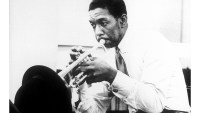
Kenny Dorham was one of the jazz greats. The closest player in modern times to his intimate sound is probably Roy Hargrove, who, like Dorham, hailed from the Lone Star State. But despite all the accolades from the jazz cognoscenti, there is something plaintive about his career, down to the liner notes for his own albums. Indeed, right from the first sentence. Take the 1956 album Kenny Dorham and the Jazz Prophets on the ABC-Paramount label: “Kenny Dorham is one of those artists who have not as yet been accorded their deserved share of recognition.

ornament

SoHo’s downtown drawings

Pity the poor Drawing Center. Founded in 1977 — or, rather, “born into the petri dish of the SoHo art scene in the 1960s and 1970s” — the Center was the pet project of Martha Beck, a former curator at the Museum of Modern Art. She felt that the medium of drawing, being underserved by the arts establishment, needed its own specialized venue. Over the years, this downtown gallery has proved its mettle, mounting a variety of historical and contemporary exhibitions, as well as making a point of reaching out to working artists, some of whom later went on to greater recognition. But that petri dish? It’s changed mightily since the heyday of industrial lofts rented on the cheap.

passion

Christ stopped at Oberammergau

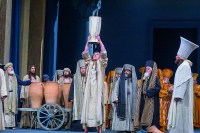
Getting there was penitential. The coach from my home in Bad Ischl, Austria, to Salzburg stopped a hundred times, to let on women in dirndls carrying shopping baskets. The train to Munich was subject to delays, messing up subsequent connections. The S-Bahn linking Ostbahnhof with a place called Pasing suffered a derailment, so I had to struggle backwards to the Hauptbahnhof, only to discover my alternative train to Murnau was canceled, then reinstated on a distant platform, resulting in mass confusion. (The Germans are bewildered very easily when things stop going to plan.) At Murnau there was a long wait for the two-carriage shunter service to Unterammergau, outside Oberammergau, where it was by now pitch dark and pouring with rain.

mayan

My encounters with the Mayans

I met a traveler from an antique land...” Visiting the Mayan ruins in Yucatán, it’s hard not to think of Shelley’s immortal “Ozymandias.” Proud though it once was, little remains of that extraordinary civilization. I began my encounter with the Maya at Chichen Itza. Gazing up at the spectacular faceted pyramid which dominates the complex, I tried to imagine myself back a thousand years, negotiating the precipitous staircase that leads straight up the sheer face to the chamber at the top. I wondered at the ballpark, as big as a football field, and the domed observatory and labyrinthine temples and studied the intricate carvings which scrolled across walls and pillars and stelae.

corn

The little joys of growing corn in Connecticut

They were neighbors and friends. Harold Loeb, an economist, writer and heir to the Guggenheim and Loeb fortunes, and his wife Vera lived down the Saugatuck River from us on Snake Drive, at the end of Buttonball Lane. Harold was better known as having been betrayed by Ernest Hemingway in Paris in the 1930s — Robert Cohn in The Sun Also Rises was modeled after him. Harold got even in The Way It Was, published in 1959. He asked my father to sketch him for the book’s back cover. Among other things they had in common a gift for gardening. My father, known for his charcoal sketches of celebrated locals of Weston, Connecticut, planted a large, Walden-inspired plot surrounded by a white picket fence, where weeds were allowed as long as they didn’t interfere with the crops.

reykjavik

Thai-celand: how southeast Asian cuisine took over Reykjavik

Last October I flew to Reykjavik for a spa weekend among the volcanic lagoons. It sounded blissful, but the reality was strange and, in some ways, downright alarming. This was back when people still cared about Covid, and no one seemed to care more about Covid than the Icelanders (even though the data suggested that barely anyone there had the virus). You might imagine their reaction when someone collapsed on an incoming plane. That someone was me. I didn’t have Covid and had multiple PCR tests to prove it. What I had was a bout of vertigo so bad that I initially thought the plane was crashing. I managed to tell the Icelandic stewards, “I’m fine, really, it’s just vertigo.” One of them said to the other, “We’ll give her the injection, pull her pants down.