Culture

Culture

New York City wants to rename monkeypox because racism

Color Cockburn shocked that the medical establishment is once again enforcing political correctness. The New York City Department of Health and Mental Hygiene recently issued a letter begging the World Health Organization to rename the highly contagious monkeypox virus. Why? They were concerned the word “monkeypox” was offensive to minorities. Cockburn — and Twitter for that matter — know this is a misalignment of priorities. Some names are purely innocent and playing PC police is not the job of the NYC Department of Health. Also why is it that New York authorities hear “monkeypox” and immediately think about black and brown people? Physician, heal thyself! And how far are we supposed to take this?

Leave Chris Pratt alone!

Hollywood star Chris Pratt is having an incredible few months. Pratt's new show The Terminal List is the top streamed television series on Amazon Prime, the latest Jurassic World movie just surpassed $900 million at the box office and filming recently wrapped on the third and final installment of Guardians of the Galaxy. His wife, Katherine Schwarzenegger, just welcomed the couple's second baby, and next year, Pratt will provide the voice for popular animated characters Mario and Garfield in their respective movies. Pratt's rise is especially remarkable because less than two years ago the online mob officially deigned him "The Worst Chris" after a series of media attacks about his alleged political and religious views.

Chris Pratt (Getty Images)

Why can’t a woman be a man?

Sex and gender were supposed to be allies in the identitarian march of the feminist left. But gender, it appears, keeps butting up against the reality of sex. "I will say this and everyone's gonna hate me,” singer Macy Gray recently told Piers Morgan, “but as a woman, just because you go change your (body) parts, doesn't make you a woman, sorry.” (She subsequently apologized for her comments.) Bette Midler also elicited censure for her recent tweet: "WOMEN OF THE WORLD! We are being stripped of our rights over our bodies, our lives and even of our name!" (She later qualified that her comments were not intended to be “transphobic.”) Women, generations of feminists have been telling us, are supposed to be powerful. They’re supposed to be capable.

Whatever happened to the good old American trolley?

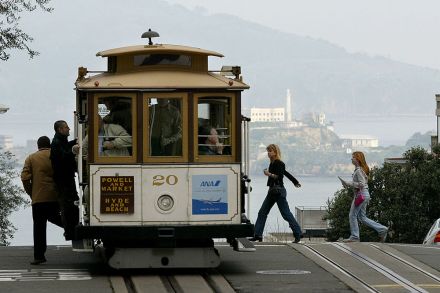
A few weeks ago, my wife and I took a day trip to Maryland, where we visited the National Capital Trolley Museum. It’s an unassuming building with an ornamented facade — a little like a Main Street building in a rural small town — and the gift shop, exhibits and ticket prices are all modest. There’s an interactive electricity exhibit for kids (and adults like me), where you can power a tiny trolley in a diorama of an old streetcar-suburb scene. One of the windows in a house even lights up. It’s simple and fun, a small, lean museum run by a dedicated group of people. An older man who worked there explained the old DC trolley map to me, recalling all the different lines he used to ride as a kid. That’s something you can’t get from a book.

The Ivy League scolds come for Amy Wax

I have always admired the tag corruptio optima pessima: the corruption of the best is the worst. Take the Ivy League. These super-rich, super-prestigious institutions are so wealthy and so beguiling because, once upon a time, they represented and — more to the point — successfully transmitted to their students the prime civilizational values of our culture. We’re told, and I have no reason to disbelieve it, that the light we see from distant stars is very old and, in some cases, is light from stars that were long ago extinguished. It is same with the Ivy League and their near competitors. Today, they are utterly bankrupt — not financially, of course. No, in a good old greedy capitalist sense, they are filthy, stinking rich.

amy wax

Charlie Rose, comeback king

For some of us, Charlie Rose serves the same function as Proust’s madeleine. His eponymous public television interview program, which began airing in 1991, was a fixture of the pre-millennium media landscape, a halcyon age in which newspapers carried the news, Amazon was a mere purveyor of books, and “woke” referred to a state of wakefulness rather than political correctness. Such nostalgia augurs well for the carefully managed reemergence of the disgraced broadcaster, who has ended his exile with new conversations thrown up on his website, charlierose.com. But we’re getting ahead of ourselves. Five years ago, Rose — by then, also the co-host of CBS This Morning — first became the subject of sexual misconduct allegations.

Slowly roasting in heatwave Britain

Manchester, England Making plans for a European city break this summer? Seeking somewhere with centuries of history and culture, fine wine and, above all, sweltering temperatures? There’ll always be Rome, Barcelona, Athens — but chances are you haven’t considered Manchester, the northern English industrial powerhouse that inspired Karl Marx to write The Communist Manifesto and gave the world the Smiths, Joy Division and Oasis (you know, the ones who wrote “Wonderwall”).

heatwave britain

Judge swats down Amber Heard’s demand for a mistrial

While Cockburn already covered the Johnny Depp-Amber Heard verdict a month ago (live from the courthouse!), he notes that Ms. Heard hasn’t moved on. She's since resurfaced, with her lawyers attempting to throw out the ruling against her or declare a mistrial on the basis of a single juror, Juror Fifteen, supposedly being fraudulent. On Wednesday, Judge Penney Azcarate issued her decision: no. Azcarate wrote: Juror Fifteen was vetted by the Court on the record and met the statutory requirements for service. Fifteen was vetted by the Court on the record and met the statutory requirements for service. The parties also questioned the jury panel for a full day and informed the Court that the jury panel was acceptable.

johnny depp amber heard

The sad demise of American car culture

Today’s youth get a bad rap for being boring: they don’t join clubs, volunteer, pursue hobbies, or invent anything. Their sartorial style is a sad mishmash of tired trends, their movies unimaginative remakes (there are nine Spider-Man movies now), and their music is largely stoned hip-hop artists talk-singing to the same hypnotic beat. There are many forces at work in the dulling of the current generation, but one of the simplest reasons youngins may not feel inclined to go anywhere or do anything is because getting there is such an exercise in meh. When was the last time you sat in the driver’s seat of a new car, gripped the steering wheel and felt one iota of excitement?

car
military

No one wants to join the military anymore

Last week marked the 246th birthday of the United States. This year also marks, according to Lieutenant General Thomas Spoehr of the Heritage Foundation, when we “question the sustainability of the all-volunteer force.” As reported in late June by NBC, all branches of the military are falling short of their 2022 recruiting goals. The Army, for instance, has met only 40 percent of its enlisted recruitment target for the fiscal year, which for the military services ends on September 30. Those in the Pentagon tasked with attracting candidates have listed reasons they are struggling to meet their mission: lack of eligibility, Covid restrictions putting a damper on outreach, competition from a robust civilian employment market, and a lack of a desire to serve.

Bad-faith readings are damaging our discourse

The Eragon fantasy series I enjoyed as a child isn’t very good, but one aspect of its magic system is pretty interesting. Wizards use magic by speaking in an enchanted language, but the literal meaning of the words trumps the magician’s intent. A single word mispronounced during the blessing of an infant turns the child into a “shield against misfortune” rather than one “shielded against misfortune.” The child grows up to lead a hellish life, haunted by an irresistible compulsion to take the suffering of others upon herself. This is the stuff of fantasy precisely because it’s not how language actually works. People get tongue-tied. They use terms that have different meanings in different contexts. They open their word-hoards and pull out the wrong ones. It happens.

Bogotá in full bloom

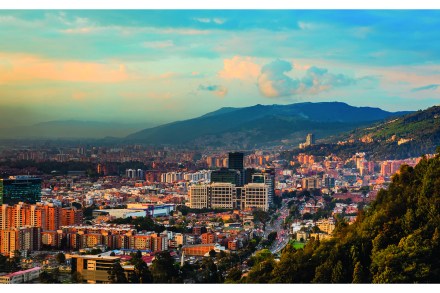
Everyone comes to Bogotá looking for something. It’s always been that way. A thousand years ago, indigenous traders traveled to the markets in the Bogotá savanna to barter with the Muisca and exchange gold, emeralds, salt and cotton. The Spaniards arrived five centuries later in search of the treasures of conquest and the mythical city of gold that now lends its name to the international airport: El Dorado. The great revolutionary Simón Bolívar came in search of the capital of his South America republic Gran Colombia and to liberate the continent from Spanish rule. I didn’t know what I was looking for when I first arrived in Bogotá.

Bogotá

The pride of Paducah

Twice daily, a small jet plane leaves Chicago O’Hare, flies just west of the confluence of the Tennessee and Ohio rivers and touches down at Barkley Regional Airport. Passengers are escorted across the tarmac into the tiny two-gate terminal and mill about while they wait for the exceedingly slow baggage claim. If you’re lucky, the kindly older woman at the rental car desk upgrades your SUV to a pick-up truck. Step outside for a smoke while you wait, and the local policeman offers you a chat rather than a hassle. Eventually, your patience is rewarded, your bags are loaded up and you get to head out and explore the largest city in the Jackson Purchase region.

Paducah

The scoop on homemade ice cream

"Gelati, sorbetti e granite,” it said on the cover. We were in a little bookshop off the Piazza Duomo in Verona. Days of consuming Italian gelato in the hot afternoons had worked so wonderfully upon our imaginations that here we were purchasing a recipe book in a language we didn’t even understand, trying to capture a little of the magical glitter of the Italian summer before it slipped through our fingers. I still have the book — and I still don’t understand enough Italian to follow a recipe. But the pictures convey some of the original magic. Gelato al limone peers creamily out of a yellow bowl, garnished with bristling strips of lemon peel. Gelato allo Champagne is pink and melting, snuggled up to a strawberry. Sorbetto d’arancia is spooned into a hollowed-out orange.

ice cream

The one-note wonder

Art museums normally organize career surveys or thematic exhibitions, but this spring the Museum of Modern Art has departed from this practice to focus on a single work. Matisse: The Red Studio examines the pivotal painting of the same name that Henri Matisse (1869-1954) created in 1911. Exhibitions are normally years in the making, so while this one was in the works long before the Covid-induced lockdown, it offers a model for institutions struggling in the wake of the pandemic. Rather than expending scarce resources on an expensive blockbuster loan show, do a deep dive into something in your own collection. And what a dive this is.

matisse
f'mores

Introducing f’mores

Don’t mess with s’mores, s.v.p... unless it’s for f’mores. They are my Gallic version of the gooey, sinfully rich and highly caloric, all-American dessert that the Girl Scouts invented in the 1920s. Graham crackers are sandwiched together with marshmallows roasted over campfire embers, and chocolate. S’mores are in our genes. I have three half-French grandchildren. Two summers ago, when California closed its schools, Covid sent the family fleeing Los Angeles to Antibes for two years. French schools reopened after six months of Zoom learning while California gave way to the powerful teachers’ unions and remained closed until this past spring. Before leaving, the family came to us.

cezanne

Playing the long game

Back in the fall of 1995, on the centennial of Paul Cezanne’s breakout late-career exhibition at Ambroise Vollard’s avant-garde art gallery, a retrospective opened at the Grand Palais in Paris, titled simply “Cézanne.” That show traveled to the Tate in London in 1996 and then to the Philadelphia Museum of Art. Now, more than a quarter century later, another retrospective with a similarly spartan title has opened in the Windy City: a joint venture between the Art Institute of Chicago and Tate Modern.

Schächter

A concert begun in darkness

It was all glitter at Blues Alley in Washington, DC when the trumpeter Terence Blanchard, who is the composer of a widely hailed opera called Fire Shut Up in My Bones that was recently performed at the Met, appeared in March with his E-Collective band as well as the Turtle Island Quartet to play several sets. Blanchard wore iridescent tennis shoes and played a miked trumpet with extra reverb that almost looked as though it was glowing in the dark. Periodically, he would tap his right foot onto an electronic device on the floor that manipulated his tones to extend them into the ether. Indeed, his audacious high notes lingered on long after he had stopped blowing. The collective is Blanchard’s foray into the world of deep funk. It definitely makes an impact.

Soylent

How green is your Soylent?

In 1966, when Harry Harrison penned his dystopian thriller Make Room! Make Room!, which began life as a serial in Impulse magazine, he predicted that by 1999, there would be more than 7 billion people on earth, and a robust 35 million in New York City alone. The 1973 film adaptation of Harrison’s novel, Soylent Green, altered several aspects of Harrison’s novel, including the year in which the thriller is set: 2022. Now that we’re there (and decades past 1999), it’s worth asking: did Soylent Green director Richard Fleischer and his writer, Stanley R. Greenberg, get things right?

northman

Why did no one see The Northman?

The American director Robert Eggers has had an auspicious early career. His first two movies were smash hits in the arthouse world: 2015’s The Witch, which launched the career of Anya Taylor-Joy, and 2019’s The Lighthouse, which starred Robert Pattinson and Willem Dafoe. Both films were produced on small budgets by indie powerhouse A24, and both have already achieved a kind of cult status among horror buffs and cinephiles alike. So when news broke that New Regency was offering the auteur director a budget of around $70 million for his third film — a Viking revenge epic starring Alexander Skarsgård, Taylor-Joy, Ethan Hawke and Nicole Kidman — movie geeks went wild. Just not quite wild enough to buy actual tickets, apparently.

Macbeth

Macbeth on Broadway: a Very Modern Scottish play

The new Macbeth on Broadway starring Daniel Craig ends up about where you’d expect: a Macbond unhinged and raving about Birnam Wood come to Dunsinane, splattering the castle walls with the gore of his enemies and pummeling Macduff mercilessly until the showstopping reveal that the latter was “of no woman born” but, in fact, “from his mother’s womb/ untimely ripped.” Omit the full-cast kumbaya circle at the end (a too-sweet cherry atop a bloody sundae), and the denouement essentially gives you Shakespearean drama at its most unimaginative — as a Hollywood action blockbuster. This isn’t to say that Shakespeare cries out for bold reimagining. Nor is there anything wrong with giving people what they came to see. It is Daniel Craig, after all.

Middle Ages

The culture war over the Middle Ages

There is a war afoot, here in late civilization, over the meaning and legacy of the Middle Ages. Two distinct fronts have emerged from either side of our political spectrum. On the left, in the academy, medievalism is being diversified out of existence, its defining Western characteristics relegating it to a smaller place in a global mosaic. On the right, a certain breed of new conservative is reclaiming the Middle Ages as a keystone period in which order and reason ruled, instead of the swivel-headed “scientism” of pure observation brought on by the Enlightenment. The ground upon which this battle is joined is the traditional Anglosphere understanding of the medieval period, roughly the fifth to fifteenth centuries ad, a period most commonly thought of as the “Dark Ages.

Celebrating the Fourth in free Florida

For the first time in my adult life, I left Washington, DC for the Fourth of July holiday. Apparently this is a very popular move: locals usually prefer to escape the concrete jungle in favor of sunny shores, winding rivers, or, well, anywhere but here. Not me. Party hopping around the nation's capital before settling in at a secret spot away from all of the tourists to watch fireworks on the National Mall makes this one of my favorite days of the year. However, driven by both a desire to visit family and check out what everyone was raving about in our July magazine, this year I hopped on a southbound plane to the Sunshine State. The weekend took me from Tampa to Sarasota to Naples, experiencing all of the weird and wonderful that Florida has to offer.

nancy pelosi breasts

Nancy Pelosi’s Italian job

The price of gasoline in California is averaging at over $6 a gallon. Inflation is 8.6 percent. The nation is reeling after yet another mass shooting, and the Democratic base is furious at their party for being caught flat-footed by the Supreme Court on abortion. How are our nation’s leaders responding? Well, Nancy Pelosi and her ample bosom are taking a waterfront stroll at a private beach club in Italy. The Speaker of the House looked well below her eighty-two years as she showcased her tanned figure in a turquoise-patterned bathing suit. Pelosi and her beau Paul are taking a break from, respectively, suspect stock trading and drink driving at the highly exclusive Alpemare Beach Club near Florence, owned by Italian opera star Andrea Bocelli.

Michael Gerson’s descent into liberalism

Not all pro-lifers are happy with the Supreme Court’s overturning of Roe v. Wade. In a column at the Washington Post, former George W. Bush speechwriter Michael Gerson acknowledges that Roe was “poorly argued,” but says he is “more comfortable with the gradualism” recommended by Chief Justice John Roberts. Gerson ends even more soberly: “The abortion debate — with all its tragic complexities — has been returned to the realm of democracy. And there is little evidence our democracy is prepared for it.” Why? Because the “GOP has become captive to an ideology of power.” Anyone who has been following Gerson over the years will not be surprised by these comments.

The right to keep and bear fireworks

The political arena is hotter than ever with fights raging over rights and freedoms and all that good American stuff. But one topic missing from these debates only gets the attention it deserves for about a week every year each July: the right to keep and bear fireworks. It's a right heavily restricted in sixteen states and straight-up illegal in Massachusetts. Yes, Massachusetts, home of the Boston Tea Party, that act of defiance that sparked our patriotic tradition of blowing things up. In the Pennsylvania Wilds — the romantic name a tourism agency gave to the hick region of the state where I reside — things go boom year-round.

This great ungovernable country

Back in 2020, the oozing governor of California, Gavin Newsom, took it upon himself to all but cancel the Fourth of July. Newsom issued a statement encouraging towns and cities across his state to shut down any fireworks shows they might have planned, so as to prevent people from congregating and spreading Covid. The reliably meddlesome Los Angeles County then went a step further, banning displays of fireworks altogether. The people of LA considered this. They stroked their chins. And they said, "You know what? I don't think this is for me." The night of the Fourth, Angelenos sent up so many fireworks that the next day a local authority had to issue an air quality warning.

The urban elite thinks they’re a victim class

I’m Facebook friends with a woman who has been in Democratic Party politics since we attended high school together. Since then, she’s worked for power politicians, (unsuccessfully) run for office, and played a central role in the public takedown of an elected official. She has a degree from an Ivy League institution, as does her husband, who works in finance. Hers is the quintessential lifestyle of the urban elites. And boy, do I mean elite. There are vacations to Italy and the UK, foodstagramming at prominent eateries and bars in major cities, shows on Broadway, and weekend excursions to country estates. There’s the constant churn of attendance at upper-crust city events at beautiful historic locations. And that’s just since the economy started tanking earlier this year.