Culture

Culture

Hungry like the rabbit

In the darkest hour, there emerged a new light. It was 1940 when the double-barreled shotgun of the world first took aim at a little hole called home. At first, it seemed as if the hole’s inhabitant would be taken in by the old carrot trick. At least he would be careful enough not to stick his neck out. With an unblemished, white-gloved, four fingered hand, he feels around his immediate borders and takes the carrot. Of course, it’s a trap to draw him out. Did he know that all along? He would soon enough. The next time, it’s not a carrot but the hard steel of a gun aiming straight down his burrow. He flicks the barrels with his finger — plink, plink, plink — just to be sure. He tosses back the half-eaten carrot and pats the gun, but it is too late.

looney tunes

Charles Brown’s Christmas

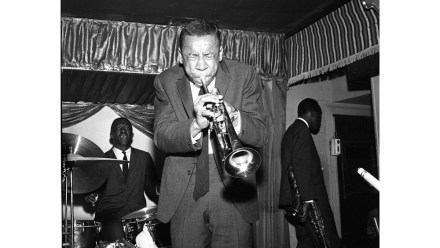
When a young singer and pianist named Charles Brown was hired in 1944 to play at Ivie’s Chicken Shack, the legendary jazz singer Ivie Anderson’s nightclub in Los Angeles, he was instructed to play ‘nothing degrading like the blues’. It wasn’t an admonition that he heeded very long. The blues didn’t degrade him. He elevated them. After Brown died in 1999, Bonnie Raitt, who toured with him starting in 1987, deemed him ‘the most extraordinary piano player I’ve ever heard’, noting that he ‘led the West Coast blues explosion’. Indeed he did.

charles brown
christmas past

It’s good for your elf

Ever since I found out Santa Claus wasn’t real a year ago, the idea of him began to give me the creeps. Who is this immortal jolly elf, and what does his business of breaking and entering once a year even have to do with Jesus’s birthday, or even St Nicholas? Christmas is a season of traditions, both personal and religious. Each year, its celebrants decorate their gingerbread houses, wrap their presents, decorate their fir trees, drink their eggnog and see Santa Claus at the mall. Some people even go to church.

Pawn show

I’m thrilled to tell you that my latest novel has been optioned by Netflix. Grand Prix Grandpa is the inspirational story of an ordinary journalist in his mid-fifties who reboots his life by becoming a world motor-racing champion. It’s tough at first driving round racetracks at 230 mph when your eyesight is going and your reflexes aren’t what they were. But with a little practice and a lot of determination, Grand Prix Grandpa — whose name is James, by the way — becomes F1 champion, then triumphs heroically over the resulting problems: semi-naked women hurling themselves at him; having so much money he doesn’t know what to do with it; the loneliness of tax exile in Monaco, etc. No, not really.

The great lost Beatles album

The Beatles never had a proper Christmas number one, only seasonal number ones with unseasonal bangers: ‘I Want To Hold Your Hand’, ‘I Feel Fine’, ‘We Can Work It Out’/‘Day Tripper’ (1963-65) and ‘Hello Goodbye’ (1967). Though they never made a traditional Christmas record, the Fabs loved Yule — and you know you should be glad. Between 1963 and 1969, they recorded an album-worth of charming Christmas nonsense. Welcome to the semi-secret hinterland between the legal and bootleg worlds: the Beatles’ Fan Club Christmas flexi discs. The flexis have only had one official release since their private circulation to the ravenous Brit-Beatle fan club.

beatles

Mostly ghostly: Henry James haunts Bly Manor

Halloween wasn’t quite the same this year: no trick-or-treating or bobbing for apples, no packed parties, not even a socially distanced haunted house. As a lover of all things horror, I had to rely on television to put the spooky in the season. Netflix’s new series The Haunting of Bly Manor is the sister show to last year’s wildly popular The Haunting of Hill House, created by Doctor Sleep’s Mike Flanagan. (Flanagan is also behind Hush, one of the smartest horror movies I’ve seen in a few years and definitely worth watching.

bly manor

Night at the museum

In the summer of 1961, Clyfford Still packed his family into a car and began driving south from New York City in search of a new home. In the Forties, Still had shocked audiences with monumental canvases covered in stormy walls of thick, dark, pigment: some of the first totally abstract paintings shown in New York. Subsequently Still had risen with the Abstract Expressionists to unprecedented heights of institutional and commercial success. But despite wielding profound influence as a founding dean of this New York School, torch-bearing wasn’t really Still’s thing.

baltimore

Look east, old man

A deadly viral pandemic, viciously infectious, inflicting rapid death without fear or favor: gosh, where on earth did the makers of To the Lake get that idea? Not from the Chinese coronavirus, obviously. For one thing, this Russian series was made last year, when COVID-19 was still but an evil glint in Anthony Fauci’s eye. And for another, look around: do you see people dropping dead in the streets, as they should be, if this thing were living up to its inflated reputation as our Spanish flu? All that aside, the timing could scarcely be more perfect for this hugely exciting, gripping and involving series about a disparate group of family and friends struggling to survive in lawless, brutal, post-outbreak Russia.

to the lake

Is Billie Eilish really in shock over James Bond?

Billie Eilish, who recently won five Grammys, is also singing the theme song for the new Bond film. ‘James Bond is the coolest film franchise ever to exist,’ she said. ‘I’m still in shock.’ My husband tells me that the symptoms of shock include pale, clammy skin and bluish fingernails. Since Miss Eilish’s fingernails were painted green at January’s Grammy ceremony, it was not easy to tell. But a life-threatening drop in blood pressure was clearly not present. The phrase in shock is now used where we used to say shocked, or even overjoyed. Perhaps people have been watching too many medical dramas on Netflix. Shock, from the French choque, began as the word for a collision of armies.

in shock

Escape vehicle

One of the more unusual works in the family art collection is a concept drawing of an automobile from 1937. The car, identified by the angular writing on its nose, is the LaSalle. To call this a drawing of just a car does a disservice to the concept behind it. With its shimmering grilles and Futurist forms, the vehicle might as well be an open-cockpit fighter plane about to strafe a runway. Automobile enthusiasts, as I recently learned, consider the drawing to present one of the first known examples of a ‘ripple-disk single-bar flipper hubcap’. Clearly, here is a machine meant to do more than just deliver you from point A to point B.

car

Culture and anarchy

Paul Signac’s portrait of Félix Fénéon is a striking and historically important painting. But is it a good one? Its subject didn’t think so. Signac profiles Fénéon against a swirl of complementary colors and kaleidoscopic shapes, as if anticipating an acid-trip scene from a Roger Corman movie. This radioactively abstract background was bold stuff for Paris in 1890, when the picture was made, but contemporary critics disapproved, one finding the work ‘cold and dry’, another calling it ‘neither decorative nor comprehensible in terms of feeling’. Fénéon himself was similarly vexed by the final result, though he held onto the portrait throughout his life out of loyalty to his painter friend.

Féneon anarchy

The Disneyfication of the moral universe

‘I’m sitting here struggling for words and my friend nailed it: “She was our Princess Leia.”’ With those words, Dr Esther Choo, Yale Medical School graduate, holder of an Ivy League English diploma and possessor of 168,000 Twitter followers, memorialized the life of Supreme Court Justice Ruth Bader Ginsburg. A century ago, a citizen of Justice Ginsburg’s stature might have inspired references to the Bible, classical history or the great figures of America’s founding. But in the year 2020, a lifetime of achievement brings no greater honor than to be compared with a Disney-owned property whose action figure you can buy for $10.99.

disneyfication

The sorry history of London’s Hoover Building

In the early Thirties, when impoverished Americans were cramming into shanty towns called ‘Hoovervilles’, another Hoover created an industrial building of rare magnificence in west London. Driving into London from Heathrow airport, we see acres of nondescript suburbs. The Hoover Building at Perivale, about five miles from the West End, still astounds. Set back from the road in well-manicured gardens, this art deco masterpiece rises in brilliant white (due to the use of a cement called Snowcrete), its façade laced with angular green trim and sunburst decoration. The Hoover Building was the British factory of the Hoover Company, the Ohio-based vacuum-cleaner manufacturer.

hoover

Back to my Toots

Pop music is tribalist by nature and divisive by desire. It was always the Beatles or the Stones, mods or rockers, burn the Beatles’ records or ‘hang the DJ’ and, most important of all, Bob Marley or Big Youth? (The answer is Big Youth.) Only one man transcended this nonsense: Frederick Nathaniel ‘Toots’ Hibbert. Anyone who has heard Toots but doesn’t dig his mighty soul skank should be cast into the wilderness for 40 days and 40 nights of good, hard thinking. Toots died on September 11 in his native Jamaica. He was 77, allegedly the victim of complications from COVID-19. The man may have gone, but his vibrations will live on as long as mankind has ears to listen and feet to dance.

toots

Booker prized

Dr John called James Booker ‘the best black, gay, one-eyed pianist New Orleans has ever produced’. Booker died in 1983, aged 43, ruined by drugs, drink and madness, and attended by legends of delinquency lurid even for a New Orleans piano ‘professor’. Though he had appeared on plenty of other people’s records and stages, Booker had recorded only three studio albums in his lifetime. Classified, recorded in October 1982 and now re-released on vinyl, was the last of them. It might not be the best of them, but it shows why Booker was one of the greats. The studio was booked for three days, but Booker had a breakdown the week before and couldn’t get a good take down in the first two days.

booker

Sensei it again

Almost the best thing about Cobra Kai is the response, somewhere between bemused and appalled, it has generated among woke millennials and Gen Z-ers. One reviewer noted with concern that neither of the two featured karate schools is run by someone of Japanese ethnicity. Another squirmed at two middle-aged men’s almost Trump-level inappropriateness, when while discussing the qualities of a mutual old flame they referred to their inamorata’s ‘tightness’. Yes. It’s one of the reasons we Eighties dinosaurs love it so. Cobra Kai is our safe space. It’s our Helm’s Deep of unreconstructed sexism in an otherwise Orcish horde-overrun Middle Earth of gender fluidity, #MeToo and micro-aggressions.

cobra kai

Monumental Mahler

A kind of gigantism took hold of the European mind in the years before World War One. It shaped everything, from empires to poetry. In the confidence of new technology and new ideas, things could be attempted on a larger scale than ever before. The mental power of the age could be measured in the sheer size of the things it produced. This might be ‘Jacky’ Fisher’s Dreadnought of 1906, which set off a European arms race in huge battleships, or a great construction — the Victoria memorial in front of Buckingham Palace is nothing to the one built in Kolkata.

mahler
dolly parton

Morals and mortality

There is a moment in the first episode of Dolly Parton’s America when you think the sainted songstress may have made the worst mistake of her career. ‘Do you think of yourself as a feminist?’ asks host Jad Abumrad. ‘No, I do not,’ Dolly says. There is a pause as wide as the gap between those who have four-year degrees and those who don’t. After Dolly says she thinks feminism means hating men, Abumrad cuts to an interview with feminist, Heartland author and Dolly superfan Sarah Smarsh. They grasp for a reason why Dolly would think so non- progressively. The interview starts to feel like a wake.

Still painting after all these years

On March 14, 1847, Eugène Delacroix made a trip to the studio of his colleague and countryman Camille Corot. Later that day, Delacroix recorded in his journal a feeling of newfound appreciation for the painter’s landscapes: ‘Corot is a true artist. One has to see a painter in his own place to get an idea of his worth.’ The Corot paintings that Delacroix had recently viewed at the Paris Salon seemed to hold new meaning after his seeing the site of their creation. As to exactly what had changed, or what he saw that changed it, Delacroix does not — perhaps could not — tell us. Few modern painters can claim as close a kinship to the spirit of Corot as Paul Resika.

resika

The perception of doors

The architectural historian Andrew Alpern has for decades done the dirty work when it comes to pre-war New York apartments. Others have presented glossy coffee-table books full of newly commissioned professional photographs. Alpern has focused on the practical details of apartment design, especially floor plans, which tell us so much about how people actually live in their apartments, or at least were originally meant to. His Apartments for the Affluent (1975), Historic Manhattan Apartment Houses (1996) and New York Apartment Houses of Rosario Candela and James Carpenter (2002) are essential compendia; anyone with an interest in New York residential architecture, especially of the magnificent variety, must have them. The more industrious uptown real estate agents also find them useful.

doors

The art of the presidency

The Obamas loved Hamilton. It was the biggest show to hit Broadway since Cats or Rent, with ticket prices reaching four digits. Michelle, who urgently needs to read Buddenbrooks or visit the Sistine Chapel, called Lin-Manuel Miranda’s musical the ‘best piece of art in any form that I have ever seen in my life’. Hamilton was present at the dawn and eclipse of the Obama years. Miranda first publicly shared material from the musical at the White House’s inaugural Spoken Word evening in 2009. Seven years later, Lin-Manuel joined Barack for a cringe-inducing freestyle rap in the Rose Garden.

art presidency

Out of Nam’s way

When I was a teenager whiling away the endless hours with VHS video rentals, Vietnam movies were pretty much the only game in town. I must have watched The Deerhunter a dozen times, and the scene in the rat-infested river cage well over a hundred times. Even now, I can’t watch it without being surprised at how De Niro manages to pull off that extraordinary escape stunt. My, how I covet those tiger-stripe Special Forces camouflage fatigues. The problem is, The Deerhunter has loads of boring non-war stuff either side of the good bits. That’s why I much prefer Platoon — controversial choice, Oliver Stone being a pinko — all of which takes place in-country.

nam

The eyes have it

Art historians do not generally become household names, as Kenneth Clark did later in life after embracing television, most famously with Civilisation (1969). They can, however, acquire legendary or semilegendary status within the profession and among amateurs. One such was Leo Steinberg (1920-2011), who taught for many years at the City University of New York and the University of Pennsylvania. Academic art historians are expected to ‘publish or perish’: college texts, monographic studies on individual artists, or down-the-rabbit-hole treatises on arcana that seem to require more pages of footnotes than text. Steinberg mainly wrote for professional journals. He also lectured widely, testing ideas that later might make their way into print.

steinberg

We’re not going to take it — again

The everyday experience of 2020 includes televised demagogy and a national media making pure spectacle out of domestic terrorism and race riots. The less we believe what we see, the stranger the sights become. These experiences are also the story of Network, the 1976 Paddy Chayefsky/Sidney Lumet hit which won four Oscars out of its 10 nominations. We must ask ourselves why are we living out the 1970s again and, indeed, enacting its satire in deadly earnest. Marx said history repeats itself, first as tragedy, then as farce, but what did he know of Hollywood? A remake is the safest bet. We, however, have reversed Marx’s sequence.

network

Liberty and death: Jacob Lawrence’s struggle for freedom

Few artworks could be more responsive to the current upheaval than Jacob Lawrence’s 1954-56 series ‘Struggle...From the History of the American People’. Painted during the dawn of the Civil Rights movement, the cycle of 30 panels tells a history of the American Founding through punchy modernist vignettes, engaging with timely and timeless topics such as brutality, race, memory, justice and our shared national heritage. At the Metropolitan Museum of Art, 24 of the original panels have been reunited for the most complete exhibition of the series since its original showing more than six decades ago. The exhibition will travel to Birmingham, Seattle and Washington, DC from New York.

jacob lawrence

Office romance: I’m loving The Bureau

One of the many things I love about the horribly addictive French spy series The Bureau is that it never attempts to improve you with pious little homilies about how foreigners are just the same as us, with values just as worthy as our own, so they should be treated with the same amount of respect, for are we not all children of God? If The Bureau — about the DGSE, France’s equivalent of the CIA — had been made in the US, there would be a specially created nice, upstanding, Americanized Muslim character like the agent in The Looming Tower or the implausible black Muslim character in Jack Ryan.

bureau

Human after all

As the weird world of lockdown winds down, we might pause to consider what we’ve learned. I am hardly alone in my heightened hankering to unravel, synthesize, undo and discard. In this mission a voice from the past is helping me piece things together anew as the strange tyranny begins to dissolve. It began when Google started throwing videos of the Smiths in my daily cyberpath, prompting a non-essential trip down Memory Lane. Back in the day, I was, as David Cameron used to boast, a ‘huge fan’ of the Smiths. Precisely, I was a fan of Johnny Marr’s guitar literacy and the persona of Morrissey, the enchanting singer who had jettisoned his given names.

morrissey

Guerra goes to war

Every civilization needs its barbarians. Lazy, filthy, dumb and dangerous, the barbarian, real or imagined, is the eternal grindstone on which the civilized sharpen their prejudices. They are, as the Greek Alexandrian poet Constantine Cavafy wrote, ‘a solution of a sort’ — but to what? In Cavafy’s poem ‘Waiting for the Barbarians’ (1898), an unnamed city is gripped by cultural torpor and political sloth. The gridlocked citizens, weakened by indolence and luxury, dream of a bloody release from their troubles. Disaster, a visit from the barbarians, becomes their last hope for rebirth. You don’t need to be a specialist to see the parallels between the poem and the illicit undercurrents of politics in the 2010s.

barbarians guerra

Meet the Mozarts

It’s 1771, you’re in Milan, and your 14-year-old genius son has just premiered his new opera. How do you reward him? What would be a fun family excursion in an era before multiplexes or theme parks? Leopold Mozart knew just the ticket. ‘I saw four rascals hanged here on the Piazza del Duomo,’ wrote young Wolfgang back to his sister Maria Anna (‘Nannerl’), excitedly. ‘They hang them just as they do in Lyons.’ He was already something of a connoisseur of public executions. The Mozarts had spent four weeks in Lyons in 1766, and, as the music historian Stanley Sadie points out, Leopold had clearly taken his son (10) and daughter (15) along to a hanging ‘for a jolly treat one free afternoon’.

mozart