Culture

Culture

We are all still prisoners of the Sixties

In her 1970 essay “On the Morning After the Sixties,” author Joan Didion recalled a Berkeley autumn weekend seventeen years earlier when she was reading Lionel Trilling in a fraternity house instead of going to the football game, a collegiate occasion fixed in the memory of an earlier era, “so exotic as to be almost czarist.” It suggested “the extent to which the narrative on which many of us grew up no longer applies,” Didion observed in her crisp, distinctive tone. Before the Sixties, youthful elites were close enough to their patrimony to respect its intellect, energy, values and travail. Liberal guilt, such as it was, rarely went further left than Rockefeller Republican.

The trans debate shows we’re all supremacists

Why did Lia Thomas bother changing his name? According to the gender-studies mavens, it wasn’t strictly necessary. A trans woman doesn’t need a vaginoplasty or breast implants. He doesn’t even need to wear dresses. He doesn’t have to date men, or watch Downton Abbey or merge into traffic without checking his blind spots. Those are all socially constructed ideas of femininity. Trans women don’t have to conform to these sexist, patriarchal norms. Womanhood is a state of mind. The question, of course, is: what kind of state? The LGBT lobby refuses to answer that question. The official line is that anyone who identifies as a woman is a woman. If Hugh Jackman came out today and said, “Oi, mate, I’m a sheila,” a sheila he’d be. Fair dinkum.

Holbein at the Morgan

There’s a moment in portraiture when people started having a mind of their own. All of a sudden you see it in the faces: the eyes, the brow, the lip. We are no longer looking at a figure for all time — or even a sitter in a moment in time — but at something more like “me time.” The focus is not on outward appearances but inward looking. These people are lost in thought. That’s just where Hans Holbein the Younger, the great portraitist of the early sixteenth century, found them. The German artist, born into a family of painters around 1497, could conjure the smallest details at his fingertips. He quickly became the most sought-after portraitist in Europe and, by 1536, the court painter of Henry VIII (at a time when Henry himself was courting).

Holbein
Jackson

Michael Jackson on Broadway

Michael Jackson has a claim to being the most famous man in history. He is certainly the most widely seen and heard. His career straddled five decades and the heydays of radio and television. His Thriller is the best-selling album of all time. He went from playing nightclubs and The Ed Sullivan Show with the Jackson 5 to solo tours that each attracted more than four million fans. For musical celebrity, there is no comparison. The Beatles? MJ owned them, literally: he bought their entire catalogue in 1985. Elvis Presley? Lisa Marie was the King of Rock and Roll’s only daughter, but it took marrying the King of Pop to make her a star.

Belfast

Troubles in paradise

As Van Morrison’s lovely, Oscar-nominated “Down to Joy” plays over the opening credits of Belfast, I immediately accepted that I was being primed for the tears that would surely be flowing in an hour and a half. It’s obvious from the outset that Belfast, Kenneth Branagh’s touching Troubles-set coming-of-age story, is pure Oscar-bait, a film engineered to produce both weepy breakdowns and awards. The ingredients are all there. It documents a historical sectarian conflict, one pitting Protestants against Catholics. A beautiful young family, struggling financially, must navigate the chaos that has descended upon them.

keaton

Buster’s land stand

When Shakespeare wrote that “some men are born great, some achieve greatness and some have greatness thrust upon them,” the Bard could not have been thinking of Buster Keaton, who was born nearly three centuries after his death. Yet the idea expressed in that famous line from Twelfth Night — that some men guide their fate while others are controlled by it — carries a curious resonance for fans of the legendary silent performer known for his notably impassive, even indifferent comic persona in masterpieces including The Navigator (1924) and The General (1926). If ever there was a man on whom life, if not greatness, was thrust, it was the one they called the “Great Stone Face.

Twitter suspends the Babylon Bee for telling the truth

Admiral Rachel Levine, who currently serves as assistant secretary for health in the Biden administration, is not a woman. This is simply a statement of fact. Rachel Levine is also not a powerless, marginalized individual. Yet Twitter as a company seems to believe that pointing out both of these truths is worth suspending accounts over. The conservative satire website Babylon Bee recently found their account locked over a tweet they recently sent naming Rachel Levine their “Man of the Year.” The joke was in response to USA Today naming Levine its Woman of the Year despite Levine not being a woman. By writing this piece and tweeting it out, I and perhaps the Spectator could also find their Twitter accounts suspended.

When victimhood is a game, everyone loses

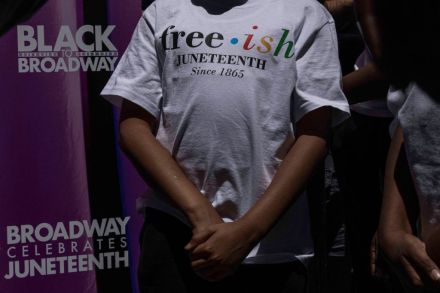
Black History Month is now over, and we’ve moved on to Women’s History Month. In April, we’ll get the best of both worlds, with Black Women’s History Month. May will be Jewish-American Heritage Month, and then in June the nation will enjoy a blowout celebration of LGBT Pride Month, if the normalization (and commercialization) of the cause in recent years is any indication. The point of all of this is to serve as an annual national re-ratification of diversity, inclusivity and equity as America’s preeminent causes (and doctrines, as Spectator World editor Matt Purple has so perceptively assessed).

Pop culture is making millennials miserable

When I went to the mall last week, I noticed all the women in their late teens and early twenties were wearing the same thing: long-sleeved tees with little prints, high-waisted jeans and canvas sneakers. It was a little surreal, because that’s how the girls in my preschool used to dress. Apparently, college students have collectively decided to dress like toddlers from the late Nineties. According to pop-culture experts, many of my fellow millennials are feeling a little disoriented, too. We’re undergoing what they call a “vibe shift.” And sadly most of us aren’t going to make it. As Allison P.

self millennials

Sibelius speaks

When it comes to music in the classical era, central Europe — or, to put it is where most of the action has taken place. Haydn, Mozart, Beethoven, Schubert and Brahms are, in a sense, the Big Five, commanding the limelight, with the likes of Mendelssohn and Mahler bringing up the rear. But if geography has somehow played a key role in the development of modern classical music, then another region has been gradually nudging its way into view. Names from northern Europe such as Kalevi Aho, Leif Segerstam, Per Nørgård and Vagn Holmboe must figure prominently in any tally of leading composers who have expanded the boundaries of musical expression.Take Holmboe’s brilliantly imaginative Concerto No. 11 for trumpet and orchestra.

Sibelius
Carnegie

Carnegie plus one

"A cable channel... but for classical music! It could be called ‘The Carnegie Hall Channel.’” I was on a beam reach to Eatons Neck about a quarter-century ago when a young man named Lawrence Perelman made this blustery pronouncement. We were Bill Buckley’s guests for an overnight sail across Long Island Sound. My first thought was: good luck with that. My second thought was no one wants to watch classical music on television. PBS’s Great Performances? More like lesser performances. With pixels the size of Cheez-Its and tin-can soundtracks, the experience was nothing like the real thing. But Perelman, an impresario who became an advisor to classical artists and institutions, as well as a friend, kept waving his baton long after we returned to Stamford.

Boston

Going Greco-Roman in Boston

In a way it felt like a walk around campus on graduation day: one last stroll through the Museum of Fine Arts, Boston before the mayor’s medically nonsensical, legally dubious, morally atrocious mandates force museums, restaurants, gyms and more to oblige entrants to prove that they’re vaccinated against Covid-19. I could comply, but I will not. “There’s nothing more American than coming together to ensure we’re taking care of each other,” said our unctuous new mayor in her typical passive-aggressive fashion. Perhaps, but there’s nothing less American than commanding such sentiments from City Hall and punishing us who see through the ruses of power. The commencement, then, was that of a new relationship between your reporter and his adopted city’s art holdings.

company

Swing for me

Lots of folks go to swingers’ parties; fewer go by accident. I achieved this distinction, once — and in my defense, I will plead only that my ignorance of the situation was so extreme, my credulity so extensive, that it took my asking one couple, in complete earnest, the most hilarious and incidentally incisive questions a person in my situation could ask — “How did you two meet?” and “How do you know the host?” — in order to set the record straight. To the first, the one said that the other’s husband had introduced them. The answer to the second was the old chestnut about “college roommates,” et voilà! At parties nowadays, I just ask people what they do for work.

hand of god

Naples and nurture

The climactic scene in the Italian director Paolo Sorrentino’s latest film, The Hand of God, finds the teenaged Sorrentino stand-in, Fabietto, being verbally attacked by an aging director named Capuano, the seaside at their backs. At this point in the film, the young Fabietto (Filippo Scotti), a sullen mama’s boy searching for meaning, has suffered an immense tragedy and is looking for answers. Enter the wise man. The scene, like many in The Hand of God, is on the nose and borders on the melodramatic, but when Capuano (Ciro Capano) yells “how does this city not inspire you?” at Fabietto, he reveals the film’s emotional core. The Hand of God, like Sorrentino’s previous work, is highly stylized and aesthetically beautiful — a true visual feast.

Macbeth

Witches brew

Since its initial publication in the legendary 1623 First Folio, Shakespeare’s Macbeth — one of the Bard’s late tragedies, and among his greatest — has been reimagined in countless ways. By the late seventeenth century, it had already been updated by Sir William Davenant to meet changing tastes. It was supposedly restored (though still thoroughly altered) by David Garrick in the eighteenth; and it was further “cleaned up” by Thomas Bowdler (which gave us the term ‘bowdlerized’) for his Family Shakespeare collection in the nineteenth century, an era that also brought us Verdi’s enthralling operatic version.

Sam Brinton and the dorkification of kink

Remember when gay people were cool? Libertines and romantics, reviled, spat-upon, defiant and irreverent? Gay life could be sexy and thrilling, tragic and shameful. If the homosexual offered nothing else, he carried an arsenal of bawdy tales that left any housewife glued and dithering at a cocktail party. Judge his life as you may, but never call it ordinary. The mystique is gone. That dusky boundary between the dark and dirty and the workaday has evaporated. Assimilation has meant the faces of gay are either vapid, Instagram-famous semen receptacles, complete goobers or repulsive shrills. And they’ve dragged the rest of us, by association, into their orbit of cringe. The Forces of Biden particularly love the latter two.

sam brinton

Eric Adams and the new Democratic censors

Eric Adams had no idea what drill rap was until just last week when his son introduced him to it. Now he’s convinced it’s the reason for rising rates of lethal firearm crimes in New York City. As crime spirals to new highs in urban areas nationwide, Democratic mayors, who have controlled these cities for decades, are looking for any excuse that doesn’t implicate their policies or those of their predecessors. That’s why Mayor Adams has turned his attention to the presence of an aggressive form of hip-hop on YouTube. Adams threatened to pull social media companies into the principal’s office and “sit down with them and state that, ‘you have a civic and corporate responsibility.

eric adams censors

Black History Month and the usable past

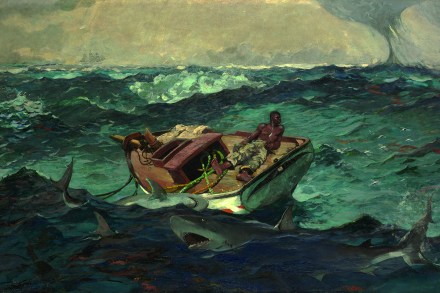
This is Black History Month when we are invited to think through a certain spectrum of the people who came before us. As it happens, I am very much interested in black history. I wrote a book about it, 1620: A Critical Response to the 1619 Project, and several books about diversity, and I have been working for several years on a nearly completed documentary about the early days of black theater and film. But, lacking any black ancestors, I must make do with my own sketchy line of progenitors. When I was growing up in the Fifties and Sixties, my father attempted to find his great-grandfather — GGF in anthropological parlance. GGF had an air of mystery since all anyone knew about him was his last name and GGM’s inveterate reply when asked about him: “He was lost at sea.

black history month

It’s not Joe Rogan who needs to apologize

We are spending too much time talking about Joe Rogan, and Joe Rogan is spending too much time apologizing. “Whenever you're in a situation where you have to say, ‘I'm not racist,’ you fucked up,” Rogan apologized on February 5. “And I clearly have fucked up.” Rogan was addressing a montage that is circulating on social media, showing him saying the N-word on multiple episodes of his podcast, The Joe Rogan Experience. When Joe describes the montage as “the most regretful and shameful thing that I've ever had to talk about publicly,” I believe him. And I don’t think Joe made a mistake apologizing. That was Joe expressing his authentic self.

joe rogan

Biden’s food policies have nothing to do with hunger

No one starves in America. The public schools feed poor children breakfast, lunch and occasionally dinner. Church food banks, private charities and municipal programs are everywhere. Eating soundly is not always exciting, crunchy, convenient or microwave-ready, but getting adequate calories is not the nation’s problem. Buying clean, washed lettuce, firm potatoes or a sweet pineapple during a February snowstorm is a small industrial miracle. In 1900 Americans spent about 40 percent of their income on food, and today about 10 percent. The standard claim that 20 million adults live in households that do not get enough to eat rings false. Americans are the people of plenty and commodities surpluses. They have low-cost, safe, tasty food galore.

Time for the baby boomers to grow up already

It was a nice neighborhood until those people moved in. Now you can’t even swim in the pool. By four in the afternoon, they’re all sitting around drinking Corona, smoking pot, and blasting their awful music. Oh, and the language! I used to love swimming in that pool when I was little. Now, I’m not sure I want my kids anywhere near it. Seriously, the retirement park has gone to the birds since all the boomers moved in. When my grandparents died, my mom and dad inherited their double-wide in this park near Sarasota. From what I remember growing up, it was a lot like the retirement park in Seinfeld, only with old WASPs instead of old Jews. There wasn’t as much shouting. Everything else was the same though. There were lots of pastel sweaters and Bermuda shorts.

boomers

The hippies have become the cops

You either die a rebel or live long enough to see yourself turn into a snowflake. The generation of free love and free expression have gradually transformed into the baton-wielders. I’m referring to Neil Young’s demand that Spotify either pull his entire catalog or do away with Joe Rogan’s podcast. Spotify reportedly paid $100 million to acquire Rogan’s podcast in 2020. You'd imagine their contract includes legal bulwarks against such demands. Young is reportedly upset with Covid “misinformation” (the media’s new favorite vague term) and is no longer willing to abide by a streaming service that plays host to Rogan. It took Spotify about three seconds to make their decision: Neil Young is no longer on their platform.

neil young

Playboy’s #MeToo problem isn’t Hugh Hefner — it’s porn

Playboy founder Hugh Hefner, who died in 2017 at the age of ninety-one, is facing renewed allegations of sexual misconduct thanks to the new A&E documentary Secrets of Playboy. Former Playmates said they were subjected to cult-like conditions at the Playboy Mansion. Hefner reportedly plied them with drugs and alcohol to get them to participate in wild sexual activities, and threatened them with revenge porn if they ever tried to leave the mansion. "I watched him, I watched his game. And I watched a lot of girls go through [the Playboy Mansion] gates looking farm-fresh, and leaving looking tired and haggard," former Hef girlfriend Sondra Theodore told the New York Post.  How anyone could be surprised by this is beyond me.

playboy hugh hefner

Hogarth framed

Visiting public art galleries has become a dangerous undertaking — at least if one wishes not to be accosted by ludicrously woke signage and unnecessary trigger warnings. In the past, one might have, justifiably, seen warnings before entering a room exhibiting, say, the garish and pornographic sculptures and photos of Jeff Koons going hard at it with Hungarian-Italian “actress” and part-time politician Ilona Staller, aka Cicciolina. Today, such warnings are found outside galleries exhibiting not such ephemera but the greatest works in the Western canon. Last autumn’s Titian show at the Isabella Stewart Gardner Museum in Boston warned visitors before entering that “Titian: Women, Myth and Power explores themes of sexual assault and violence.

Hogarth

John Wayne behind the blue line

Stars don’t sell movies anymore. They’re even becoming hard to distinguish. Which Chris is in Guardians of the Galaxy and which one plays Captain America? Is Emma Stone in Harry Potter or Cruella? Interchangeable entertainers are nothing new, and I’m sure moviegoers in the 1940s got the Roberts Walker, Taylor, Young and Montgomery mixed up, but those names still sold the movie. Why would anyone pay money to see something called The Clock in 1945 unless it starred Robert Walker and Judy Garland? Could a movie really be that good unless it had Bette Davis or Marlon Brando, Eddie Murphy, Bruce Willis or even Adam Sandler?

Wayne

Serve and volley

Richard Williams, the mercurial father of the tennis superstars Venus and Serena, is the subject of the wonderful new biopic King Richard, starring Will Smith in an Oscar-worthy performance. Williams is a fascinating figure who, as longtime tennis fans know, planned out the careers of his daughters before they were even born, telling anyone who’d listen that the Compton-bred girls were destined for superstardom. It was a preposterous statement, all the more so since it was made by a man who knew next to nothing about tennis. Yet as we now know, Williams’s vision became reality.

Richard

Nanny bait

Was Mrs. Doubtfire a children’s movie? You might think so after seeing the new musical version, which opened at the Stephen Sondheim Theatre in early December. The 1993 Robin Williams classic hails from that glorious era of made-to-end-up-on-TV blockbusters at the end of the twentieth century — the movies that so many millennials first came to know piecemeal, catching a scene or two with dad while mom clucked disappointment from the other room. In films like these, each scene is designed to stand on its own, which may explain why the creators of the Doubtfire musical thought they could drop so many of them, barely laundered, right onto the stage.

doubtfire