Culture

Culture

The good, the bad and the ugly in books, exhibitions, cinema, TV, dance, music, podcasts and theatre.

The Arts Council’s awful vision for the future of opera 

Opera

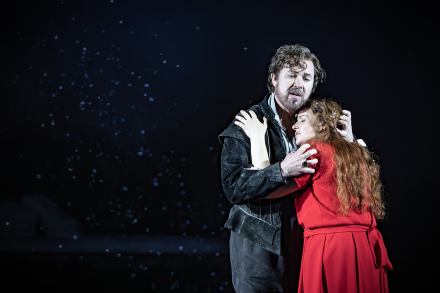
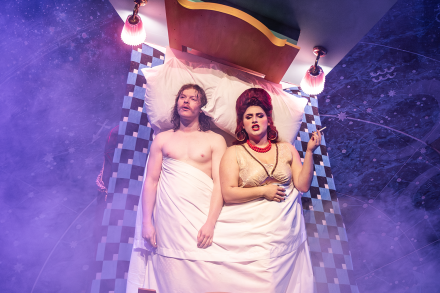
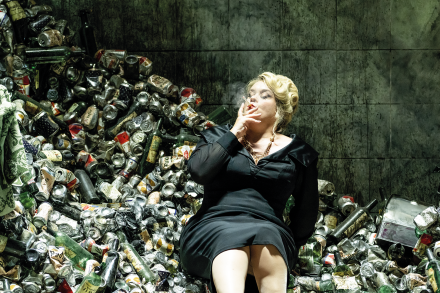
English National Opera’s first production created in Manchester is Angel’s Bone, a one-act opera by Du Yun and the librettist Royce Vavrek. It was premièred in 2016 in New York and subsequently won the Pulitzer Prize, but we shouldn’t hold that against it. Musically, at least, it’s certainly more interesting than recent US imports like Jeanine Tesori’s Blue – worthy, sub-minimalist Yankslop addressing the fashionable issues of the day. (It’s funny how the classical music world imagines that the way to reach British audiences in 2026 is to programme stuff that was relevant to Americans in 2016.) It was a pretty horrible experience nonetheless. Daytime TV-fixated suburbanites Mr and Mrs X.E.

The artistic collapse of Welsh National Opera

Opera

On the first night of Welsh National Opera’s new Flying Dutchman, the company’s co-directors walked on stage to salute their departing music director Tomas Hanus. There were cheers, of course; Hanus has been a courageous MD and his Wagner was thrilling. But no one has been appointed to succeed him, and that morning WNO had announced a 2026-27 season that amounts to a near-total artistic collapse, with just two full-scale operas. A major international company has been reduced to a community arts provider, and a Pollyanna press release announcing ‘a powerful statement of renewal’ did nothing to quell the feeling that the lights are going out on Cardiff Bay. It’s not just Cardiff, either.

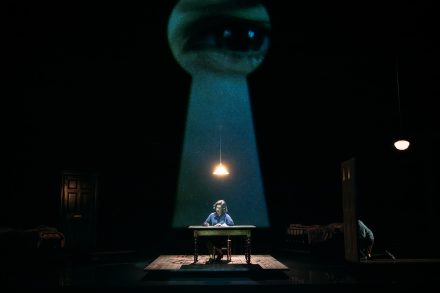
An outstanding Turn of the Screw

Opera

Never let it be said that The Spectator fails to follow up an arts story. Long-term readers will recall that in the edition of 6 March 1711 Joseph Addison investigated the supply of live sparrows for the first production of Handel’s Rinaldo. ‘What, are they to be roasted?’ he asked, reasonably enough. No, they were ‘to enter towards the end of the first Act and to fly about the Stage’. Still, you need to keep an eye on these theatrical types and although there was certainly birdsong in the latest revival of Rinaldo – the end-of-term opera at the Royal Academy of Music – I can report it was recorded. No sparrows were cooked in the making of this opera. Mind you, Handel purists took a bit of a battering.

Royal Opera’s Siegfried is magnificent

Opera

Covent Garden’s new Ring cycle has reached Siegfried, and once again, you can only marvel at Wagner’s Shakespeare-like ability to anticipate modern preoccupations. Want to talk about the manosphere? Well, here’s opera’s most profound study of the playful, disruptive, world-making energy of the adolescent male psyche. The least interesting thing that you can say about Siegfried is that he’s an impulsive oaf. Well, duh. Have you never met (or if you’re really unfortunate, been) a teenage boy? Wagner could hardly make it more clear. Siegfried’s upbringing has been toxic. He has been isolated from humanity, and his only inkling of love has been brutally transactional.

An opera that will actually make you laugh

Opera

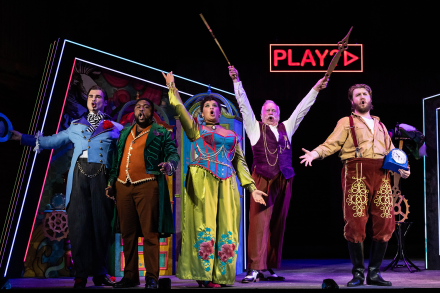
‘What we want is proper comedy!’ bellows the male chorus in the opening seconds of Prokofiev’s L’amour des trois oranges – in this case, a bevy of Monty Python bruisers in nylon frocks. The audience stirs. We’re being invaded by outsize schoolkids and what looks like a Scandinavian Eurovision entry, pushing through the stalls to the roars and whoops of a more-than-up-for-it student crowd. The previous night, I’d had four hours of manicured Handel and now a solo trombone was blowing raspberries in my face. ‘Stuff your tragedy! Take us out of ourselves!’ Yes, please! Do that. After prolonged exposure to da capo arias, a blast of raucous, multicoloured nonsense felt like shock therapy.

In defence of Katie Mitchell

Opera

Janacek’s The Makropulos Case is a weird and very wonderful opera, but its basic plot isn’t hard to follow. Still, it seems to send directors into a tailspin. One recent production (since revised) had a cast member break character and pull out a flipchart to recap the story so far. Katie Mitchell’s new staging for the Royal Opera takes the more familiar route of updating the action to the present, and it’s always fascinating to see what opera directors think we’ll find relatable. Luxury hotels, recreational heroin use, Tinder hookups with locally sourced hotties: no, me neither. How the other half live, eh? In short, it’s a bit like Mitchell’s 2022 re-imagining of Handel’s Theodora.

Fails to ignite: Royal Opera’s Tales of Hoffmann reviewed

Opera

I couldn’t love anyone who didn’t love Offenbach’s The Tales of Hoffmann. Everything – everything – is stacked against this opera. Offenbach left the score unfinished when he died, tormented with gout and pilloried by bores, at the age of 61. Some of its best-loved numbers were upcycled from his earlier hits, and at least one isn’t by him at all. Yet somehow, it lives. More than that, it soars: a tale of disillusion that glows with wonder and hope; a hymn to the sweetness of life and the miracle of art, held together against all logic by the sheer charisma of a composer who shot for the moon and fell among the stars. ‘Opéra fantastique’ was Offenbach’s own description, and he’s not wrong. I’m not saying that Michieletto doesn’t care about this opera.

A cracking little 1967 opera that we ought to see more often

Opera

Ravel’s L’heure espagnole is set in a clockmaker’s shop and the first thing you hear is ticking and chiming. It’s not just a sound effect; with Ravel, it never is. He was an inventor’s son, half-Swiss, half-Basque, and timepieces, toys and Dresden figurines were in his soul. For Ravel, they seem to have possessed souls in their own right. ‘Does it not occur to people that one may be artificial by nature?’ he remarked, and few artists have shown such tenderness towards these small, lovingly made things that strive so tirelessly, and so hopelessly, to be alive. So that was something to think about, as Alexandra Cravero conducted the opening bars of this new production from Scottish Opera.

A Magic Flute that will make you weep

Opera

English Touring Opera has begun its autumn season and the miracle isn’t so much that they’re touring at all these days, but that they do it so well. Two generations back, this was the natural condition of opera in the UK: not Netrebko at Covent Garden, but agile, medium-scale companies playing at the Wolverhampton Grand or the Sheffield Lyceum alongside the panto and the 1950s equivalent of Friends: The Musical and An Evening with Sandi Toksvig. Don’t believe it? It’s all in Alexandra Wilson’s new book Someone Else’s Music, which is out now, and which all British opera buffs should read because it’ll make their jaws drop.

Handel was derided in his own time – particularly by us, for which belated apologies

Opera

Here’s a patriotic thought for you: baroque opera, as we now know it, was made in Britain. Sure, there are your Vivaldis and Cavallis; there’s always someone (usually French) trying to make Rameau stick and a few years back Opera North – bless them – even tried to exhume an opera by Reinhard Keiser. But realistically, if you’re going to see a pre-Mozart opera from a major company anywhere in the world, and it’s not by Monteverdi, it’s overwhelmingly likely to be by Purcell or Handel. And Handel wrote practically all of his surviving operas in London, for British audiences and British taste. So it’s only right that UK opera companies should go big on the old Saxon, and in truth they don’t need much encouragement.

Northern Ireland Opera have a hit: Follies reviewed

Opera

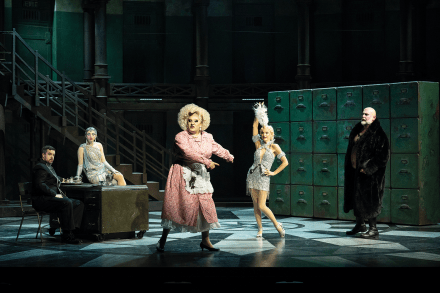
Never judge a musical by its score alone. Even more than with opera, the music is only ever half the story and if you judge a classic show from the cast recording, you might get a shock when you see it staged. Leonard Bernstein’s Candide is generally reckoned to be one of the fizziest, funniest Broadway scores ever composed. But in the theatre, the storyline is so intractable that the combined efforts of Richard Wilbur, Lillian Hellman, Stephen Sondheim and even (it’s said) Dorothy Parker haven’t succeeded in establishing a definitive, stageable version.  No such problem with Sondheim’s own Follies: you’d be hard put to find a smarter piece of stagecraft. But even there, what you hear is not at all what you get.

Anna Netrebko’s still got it

Opera

In the opera world, you’re never far from a Tosca and last week we had two of them, both brand new. That’s healthy: any opera company with a functioning survival instinct is wise to maintain a stock of solid, revivable Puccini favourites. Critics yawn, academics snipe, but Puccini prevails because the simple fact is that Tosca is a straight-up banger. I took a Tosca virgin to the first night in Cardiff. She hadn’t read a synopsis or done any of those homeworky things that novice opera-goers are told they should do, but which they really, really shouldn’t need to. ‘This is bloody marvellous, isn’t it?’ was her reaction after Act Two. Welsh National Opera has acquired the American Psycho-ish updating that Edward Dick originally directed in 2018 for Opera North.

A Brigadoon better than most of us ever hoped to see

Opera

The village of Brigadoon rises from the Scotch mists once every 100 years, and revivals of Lerner and Loewe’s musical are only slightly more frequent. The last major London production closed in 1989; and if you know Brigadoon at all it’s probably through the lush 1954 movie. The new staging at Regent’s Park takes a very different approach. The songs, the basic story and the heather (lots of it, pink and looking only slightly artificial) are all still there, but the director Rona Munro has rewritten the book, backdating the action to the second world war and turning Lerner and Loewe’s American tourists into a pair of shot-down bomber pilots. The music swings, the park supplies the scenery and the downpour only added to the fun It's a bold stroke, and it pays off.

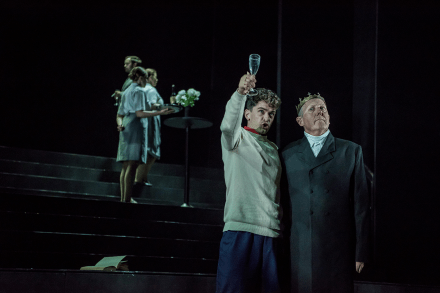
Brilliant rewrite of Shakey: Hamlet, at Buxton Opera House, reviewed

Opera

‘There is good music, bad music, and music by Ambroise Thomas,’ said Emmanuel Chabrier, but then, Chabrier said a lot of things. I adore Chabrier – who couldn’t love the man who wrote España and turned Tristan und Isolde into a jaunty quadrille? – but it doesn’t do to take him too literally. Thomas ended his career as a notoriously crusty director of the Paris Conservatoire, and when the French musical establishment puts you on a pedestal younger composers invariably start hurling the merde. Scraps of Thomas’s music survive in all sorts of odd corners (a snippet from his opera Mignon crops up in The Life and Death of Colonel Blimp). I’ve always found it rather appealing.

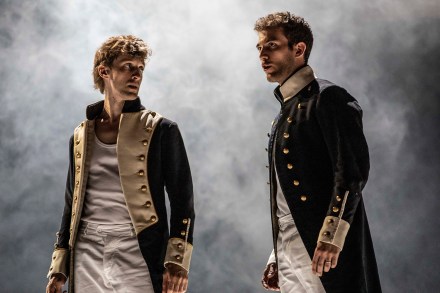
A startling inversion of the original opera: The Story of Billy Budd, Sailor in Aix en Provence reviewed

Opera

On the continent this summer, new operas from two of Britain’s most important composers. Oliver Leith likes guns, animals and dissolving sickly sweet sounds in acid baths of microtonality. In one recent orchestral work, the conductor becomes a pistol-wielding madman; his next, Garland, a vast pageant premiering on 18 September at Bold Tendencies, Peckham, sees a horse become a musician. He’s 35 and already has a school. Listen out for it – in the London new-music scene you can’t move for Leithians. The telltale sign is the sound of twisting metal: shiny pitches that warp and bend until brittle. He’s English but in an outsidery way – jokey, gentle, sad, eccentric. The opposite of arch, insidery Benjamin Britten.

A contradictory staging, but the music floods the ear with splendour: Semele at the Royal opera reviewed

Opera

The past is a foreign country: they do things differently there – and opera directors really, really wish they didn’t. The problem is particularly acute if, like the Royal Opera’s Oliver Mears, you believe in staging Handel’s concert works as if they were operas. Broadly speaking, Handel’s oratorios affirm the moral and political consensus of Hanoverian England – Protestantism, marriage, loyalty to Church and Crown. All deeply uncool now, of course, so when Mears staged Jephtha in 2023 he duly inverted its central premise. The good guys became the bad guys. Unfortunately, Handel missed that production meeting and the result was as incoherent as it was dour. Semele is a slightly different case. Handel is trying something altogether friskier – disarmingly so, at times.

Brave and beautiful: Longborough’s Pelléas et Mélisande reviewed

Opera

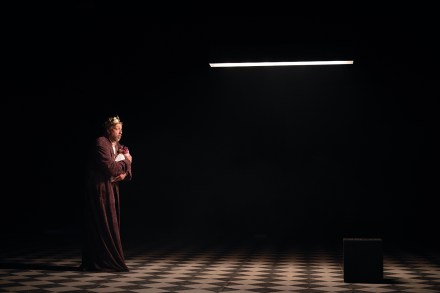
King Arkel, in Debussy’s Pelléas et Mélisande, is almost blind, and he rules over a kingdom of darkness. Debussy’s score is so luminous that it’s easy to forget just how dark it supposedly is, this mythical realm of Allemonde – even despite the libretto’s references to gloomy caves, shadowy castles and forests that block out the sunlight. Many productions take their visual cues from the music rather than the words, providing endless opportunity for shimmering effects and the subtle play of light and shade. Jenny Ogilvie’s staging for Longborough Festival Opera doesn’t just embrace the darkness; it goes all in. Shadows texture the huge, brutalist wall of Arkel’s castle and occasionally – briefly – it’s pierced by shafts of sunlight.

I’ve rarely seen a happier audience: Grange Festival’s Die Fledermaus reviewed

Opera

‘So suburban!’ That’s Prince Orlofsky’s catchphrase in the Grange Festival’s new production of Die Fledermaus, and he gets a lot of wear out of it. You couldn’t really describe the Grange Festival as suburban – it’s hard to imagine a corner of the Home Counties that’s more remote from urban civilisation. No, if the vibe at Garsington is plutocratic, and West Horsley is pure Stockbroker Belt, the Grange Festival is definitely county, in a comfy, faded, Aga-and-chintz sort of way. The picnic takes precedence over the opera, and you’ll see evening wear that was new around the time that Alan Coren retired from Punch. Anyway, this lively Die Fledermaus knows its public and wants them to enjoy themselves.

Summer opera festivals have gone Wagner mad

Opera

Another week, another Wagner production at a summer opera festival. This never used to happen. When John Christie launched Glyndebourne in the 1930s, he hoped to stage the Ring. So he gathered a team of refugee musicians from Germany, who quickly assured him that it was impossible and he should stick to Mozart. The man who changed all that was Martin Graham, the plimsoll-wearing founder of Longborough Festival Opera, who died in April at the age of 83. Graham was irrepressible; a self-taught enthusiast. With no one around to tell him it couldn’t be done, he pushed ahead regardless, staging the Ring cycle twice in as many decades. And now look.

Thrilling: Garsington’s Queen of Spades reviewed

Opera

Tchaikovsky’s The Queen of Spades is one of those operas that under-promises on paper but over-delivers on stage. It’s hard to summarise the plot in a way that makes it sound theatrical, even if you’ve read Pushkin’s novella, and I’ve never found a recording that really hits the spot. And yet, time and again, in the theatre: wham! It goes up like a petrol bomb. With a good production and performers, Tchaikovsky hurls you out at the far end feeling almost hungover – head swimming, and wondering where those three hours went. The cast and staging at Garsington are very, very good.

Sincere, serious and beautiful: Glyndebourne’s Parsifal reviewed

Opera

‘Here time becomes space,’ says Gurnemanz in Act One of Parsifal, and true enough, the end of the new Glyndebourne Parsifal is in its beginning. We don’t know that, at first: the sickbed image that’s glimpsed during the prelude doesn’t resolve itself until the opera’s closing scenes. In between, characters appear on stage in multiple forms, at different ages – past and future selves attendant on the present, whatever ‘present’ means in Monsalvat. Wagner, after all, makes it clear enough that time in the Grail Domain moves in mysterious ways, and his whole musical strategy reinforces that truth.

Our half-time scorecard on the Royal Opera’s Ring cycle

Opera

With Die Walküre, the central themes of Barrie Kosky’s Ring cycle for the Royal Opera are starting to emerge, and one of them seems to be wood. Not trees, so much; at least not as a symbol of life. After the rapid assembly of a world from theatrical nothingness (a bare stage), Hunding’s forest hall is simply a wall of blackened planks, with no World Ash Tree in sight. Then you notice the protruding hilt of the sword Nothung: no, that is the World Ash Tree, and Hunding has recycled it into building material. We knew he was a wrong ’un, but really: this is Sycamore Gap-level wickedness. Various ex-trees recur in Rufus Didwiszus’s designs. The huge, maimed log from Das Rheingold reappears during Siegmund and Hunding’s duel, spewing blood as the betrayed hero falls and dies.

Inspired: Scottish Opera’s Merry Widow reviewed

Opera

The Merry Widow was born in Vienna but she made her fortune in the West End and on Broadway. The original 1905 Viennese production was a shoestring affair. It was the English-language revivals in London and New York that made the Widow a global smash, and that happened only after extensive rewriting, done with Lehar’s wholehearted endorsement. Hanna Glawari (deemed unpronounceable) was renamed Sonia Sadoya, Zeta became Baron Popoff and the comedian George Graves inserted a humorous monologue about a chicken called Hetty. You probably had to be there. Anyway, the point is that operetta is protean. Rewrites, updates and changes of setting are not only forgivable; they’re intrinsic to the genre.

Devastating: WNO’s Peter Grimes reviewed

Opera

Britten’s Peter Grimes turns 80 this June, and it’s still hard to credit it. The whole phenomenon, that is – the sudden emergence of the brilliant, all-too-facile 31-year-old Britten as a fully formed musical dramatist of unignorable force. W.H. Auden had urged him to risk everything – to step outside his admirers’ ‘warm nest of love’ – and in the first moments of Peter Grimes, Britten does precisely that. The folk-opera bustle of the opening tribunal scene dissolves into the desolate bird cry of the first Sea Interlude and straight away, you’re in the presence of something unimaginably vaster and more true. It pins you to your seat. That was certainly the impression I had from Tomas Hanus, conducting the orchestra and chorus of Welsh National Opera.

Spreads emotions like jam: Festen, at the Royal Opera House, reviewed

Opera

Mark-Anthony Turnage’s new opera Festen opened at Covent Garden earlier this month, and reader, I messed up. I broke my own golden rule with new operas: don’t do any homework, don’t try to memorise the plot, and whatever you do, don’t revisit the source material. The aim is to experience the new work on its own terms. That’s hard enough, given the PR onslaught that precedes any Royal Opera première – the way the classical establishment circles the wagons, and the unspoken consensus that certain living composers (including Adès, Benjamin and Turnage, though not Judith Weir, curiously) are simply too big to fail. But no: I rewatched Thomas Vinterberg’s 1998 Dogme movie, twice, and it was the wrong decision. Inevitably, and unfairly, you cross-reference.

Regents Opera’s Ring is a formidable achievement

Opera

I saw the world end in a Bethnal Green leisure centre. Regents Opera’s Ring cycle, which began in 2022 in Freemasons’ Hall in Covent Garden, has found its culmination and completion at York Hall, a rundown public bath better known for championship boxing. Tower Hamlets security staff scan you for concealed weapons on the way in, which is not exactly typical at the opera. Still, the Ring is not a typical opera – and isn’t art supposed to feel dangerous? But once you’re inside – and as long as you’re not seated within earshot of the bar staff, who clatter and chatter throughout – Caroline Staunton’s scaled down production transfers seamlessly; in fact, the sightlines are better.

A committed performance of Lerner and Weill’s flop: Opera North’s Love Life reviewed

Opera

Once upon a time on Broadway, Igor Stravinsky composed a ballet for Billy Rose’s revue Seven Lively Arts. After the first night, Rose felt that Stravinsky’s efforts might benefit from the attention of Robert Russell Bennett – the king of Broadway orchestrators, who’d collaborated with Cole Porter and the Gershwins. ‘YOUR MUSIC GREAT SUCCESS,’ he telegrammed to Stravinsky. ‘COULD BE SENSATIONAL SUCCESS IF YOU WOULD AUTHORISE ROBERT RUSSELL BENNETT RETOUCH ORCHESTRATION.’ Stravinsky wired straight back: ‘SATISFIED WITH GREAT SUCCESS.’ If you’re mad enough to revive Love Life, you have to commit. Opera North did There were moments in this revival of the Lerner and Weill flop Love Life when I wondered whether Weill, too, might have profited from a Bennett makeover.

Meet the king of comic opera 

Opera

John Savournin has been busy. That comes with the territory for a classical singer – things often get a little hectic as the music world barrels towards Christmas. But with Savournin, it’s sometimes hard to keep track of which theatre – which city – he’s in on any given night. ‘This week has been Pirates of Penzance rehearsals at English National Opera,’ he says: we’re a fortnight away from opening night, and he’s playing the Pirate King. ‘On Thursday I was bobbing up to the Lowry in Salford for Ruddigore with Opera North.’ He’s been swirling his cape as Sir Despard Murgatroyd since late October. ‘And yeah – whenever I can, I’ve been checking in on panto rehearsals.

A keeper: ENO’s new The Elixir of Love reviewed

Opera

There was some light booing on the first night of English National Opera’s The Elixir of Love, but it was the good kind – the friendly kind, aimed not at the baritone Dan D’Souza but his character, the caddish charmer Belcore. In other words, it was what opera snobs call ‘pantomime booing’, and which, as a peculiarly British phenomenon, they affect to deplore. If it happened in Munich or Milan they’d brandish it as evidence of an advanced opera-going culture – proof that an audience has been so completely transported by a performance that they’re reluctant to step out of its world. But any singer who’s remotely familiar with British theatrical traditions knows that it’s a compliment, and D’Souza beamed. It had been a thoroughly good-natured evening all round.