Culture

Culture

The good, the bad and the ugly in books, exhibitions, cinema, TV, dance, music, podcasts and theatre.

The dazzling, devious, doomed sound of James Booker

Music

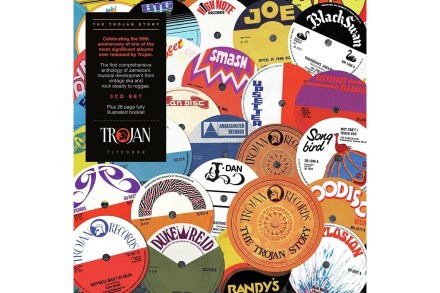
Dr John called James Booker ‘the best black, gay, one-eyed junkie piano genius New Orleans has ever produced’. Booker died in 1983 at 43, ruined by drugs, drink and madness. Though he appeared on plenty of other people’s records and stages — Dr John, Aretha Franklin, B.B. King — Booker recorded only three studio albums in his lifetime. Classified, recorded in October 1982 and now re-released on vinyl, was the last of them. It might not be the best of them, but it shows why Booker was one of the greats. The studio was booked for three days, but Booker had a breakdown the week before and couldn’t get a good take in the first two days. He revived on the third and recorded Classified in four hours.

Why did Balakirev’s beautiful, inventive works go out of fashion?

Classical

Anyone who invited the Russian composer Mily Balakirev to dinner had to be jolly careful about the fish they served. How had it died? Balakirev — mentor of Mussorgsky and Rimsky-Korsakov and regarded as the founder of the Russian nationalist school of music — would want to know. If the fish had perished on a hook, then he wouldn’t touch it. But if it had been clubbed on the head, fine. The many eccentricities of Balakirev (1837–1910) were regarded with amusement, horror and dismay by his contemporaries. Though, to be fair, the fish thing wasn’t a mad obsession of his own. Formerly an atheist, in his thirties he converted to an ultra-strict Russian Orthodox sect with firm views on the proper way to kill fish.

I don’t know when I’ve been more moved: Ora Singers at Tate Modern reviewed

Music

It’s the breath I miss most. The moment when a shuffling group of men and women in scruffy concert blacks breathe in as one and become an ensemble. Now that our breath is diseased, shrunk from, masked, now that performances are digitally distanced and filtered, smoothed and flattened out on screens, there’s something dangerously poignant about that physical swell of inhalation and exhalation that sets the air in motion at the front of a concert hall. Which is why, when I heard that 40 singers would be coming together in Tate Modern’s Turbine Hall to sing Thomas Tallis’s Spem in alium, I twitched with need to be there.

The sound of pop eating itself and throwing up: A.G. Cook’s Apple reviewed

The Listener

Grade: A The future, then. The sound of pop eating itself, throwing up into a bag and then getting a spoon and digging in. A mash-up of everything — largely very sickly EDM, but also trance, house, power ballads, industrial techno, soft rock, winsome acoustic guitar. Meticulous to the point of almost derangement, endlessly inventive both musically and rhythmically, full of arch puns. Such as the album’s title here — Apple. Mr Cook is the boss of the record label PC Music. Geddit? Sides splitting? That’s the other thing — the future also promises to be very irritating. What you cannot doubt is A.G.

More mimsy soft rock from Cat Stevens: Tea for the Tillerman 2 reviewed

The Listener

Grade: B– Time has been kind to Cat Stevens’s reputation — his estrangement from the music business and rad BAME credentials bestowing upon him an edginess which his mimsy fragile-voiced soft rock never really deserved. It’s the kind of retrospective benediction usually only death from some bad skag at the age of 27 can provide. Never mind anything else, I’d have barred him entry to the US just for calling an album Teaser and the Firecat. This one, meanwhile, is described as ‘his 1970 masterpiece’. Really? I don’t think so, although in its original incarnation it was pleasant enough on the ears, tinkling away on the turntable in the infant school staffroom. This is the album ‘reimagined’ by Yusuf.

I pounded my car horn like a Neapolitan cabbie: ENO’s drive-in Bohème reviewed

Opera

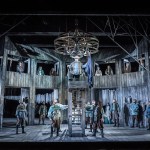
The email from English National Opera was blunt: ‘Your arrival time is 18.25. If you arrive outside your allocated time slot, you may not be allowed entry.’ Perhaps, to habitual London drivers — if such people exist — negotiating the residential streets of Muswell Hill during a Saturday rush hour is all good clean urban fun. I couldn’t say. I just know that by the time I’d been marshalled into a parking space at Alexandra Palace, my no-claims bonus miraculously still intact, I was in no mood for an evening of updated and interval-free Puccini. Three hours later I was pounding my car horn like a Neapolitan cabbie.

Affectionate and unthreatening, just like usual: Last Night of the Proms reviewed

Music

The Last Night of the Proms came and went, and it was pretty much as anyone might have predicted, if they’d given it a moment’s thought. A sprinkling of popular classics, a pair of unthreatening premières, the familiar landmarks tastefully and affectionately done, and some show tunes and arias, sung by the soprano Golda Schultz with a generosity and warmth that couldn’t have been more potent if she really had been singing to a packed and cheering Royal Albert Hall, rather than TV cameras and emptiness. It was recognisably a Last Night of the Proms: celebratory in that slipper-wearing BBC way, without ignoring the unavoidable truth that you can’t have audience participation without an audience. And after all that fuss, too.

Virtuosic but slight – always prog’s problem: The Pineapple Thief’s latest reviewed

The Listener

Grade: B– Of all the various subdivisions in that wheezing and crippled phenomenon that we call rock music, prog has fared better than most, spawning its own devilish offspring in math rock and post-rock. Why? Maybe we are more amenable to bombast and pretension these days. Or perhaps new studio technology lends itself to the genre — hell, you can hear prog time signatures in top ten hits. Maybe more to the point, prog offers a broader avenue than, say, heavy metal or punk. Prog is often what bands end up doing even if that’s not what they think they’re doing: Radiohead, Muse — even Arcade Fire or the National. This is the 14th album from Somerset band the Pineapple Thief (prog is very much a West Country thing).

Why orchestras are sounding better than ever under social-distancing

Music

Our college choirmaster had a trick that he liked to deploy when he sensed that we were phoning it in. He ordered us out of the choirstalls and positioned us at random all over the chapel. It was sadistic but effective. With nowhere to hide, there could be no quiet fudging of that awkward leap in ‘O Thou the Central Orb’, and no waiting until after a more confident neighbour had begun their note before scooping hastily (and hopefully unnoticeably) upwards to match their pitch. Every singer became a reluctant soloist. The result was usually either mutiny, or an immediate and dramatic improvement in tone, tuning and ensemble.

Couldn’t the BBC have filled at least some of the seats? First night of the Proms reviewed

Music

The Royal Albert Hall, as Douglas Adams never wrote, is big. Really big. You just won’t believe how vastly, hugely, mind-bogglingly big it is. Which is great if you want a colossal audience; less great as a venue for classical music. True, sound engineers have brought us a long way from the 19th century, when one critic (it might have been Bernard Shaw) described a Weber overture wafting around that cavernous acoustic like a feather caught in a draught. If you tune in to Radio 3 — which is how most listeners have always heard the Proms — it sounds fine. But it wouldn’t be anyone’s first choice of venue for a series of classical concerts unless, as mentioned, you’re expecting a vastly, hugely, mind-bogglingly big audience.

Spiky, sticky, silly: interviewing Van Morrison

Pop

Q: ‘How would you define transcendence?’ A: ‘Well, how would you define it?’ I interviewed Van Morrison last year. (I’m fine now, thanks.) While the exercise wasn’t quite the near-death experience of industry legend — he was polite and accommodating, if not always exactly forthcoming — it got sticky at times, as the above exchange illustrates. Let’s call it a solid 6.5 on the Lou Reed Scale. Morrison, who turns 75 on the last day of this month, was formed in an age when a people-pleasing public persona wasn’t essential for musical success.

Enter the parallel universe that is the Lucerne Festival

Music

There wasn’t going to be a Lucerne Festival this year. The annual month-long squillion-dollar international beano got cancelled, along with the rest of Europe’s musical life, round about the time that we were all starting to get bored of banana bread. Then suddenly, in late July, it was on again. The Swiss government authorised distanced and masked audiences of up to a thousand, and a series of nine concerts was rapidly improvised with locally available talent — which, when you have the determination, contacts and (crucially) bank balance of the Lucerne Festival, means people such as Cecilia Bartoli, Igor Levit and, for these opening concerts, Martha Argerich and Herbert Blomstedt, plus a scaled-down Lucerne Festival Orchestra.

It’s time to leave Chopin in peace

More from Books

There’s a scene early on in A Song to Remember — Charles Vidor’s clunky Technicolor film of 1945 — in which the young Frédéric Chopin (Cornel Wilde) provides background music for a banquet hosted by Count Wyszynska in his Warsaw palace, plates of rubbery pig and candy-coloured vegetables in heady supply. Chopin plays his own Fantaisie-Impromptu, five years or so before composing it, and then, having insulted the Russian governor of Poland (‘I do not play for tsarist butchers!’), he avoids arrest by hastily rowing to Paris, so it seems, dressed like a military cadet.

The joy of going to a real concert: OHP’s Heart of Delight reviewed

Classical

I went to a concert! Not a livestream or download: a real concert, with real musicians, a real conductor, a real audience, and the real sound of Waitrose cava bottles popping open in the late afternoon. In some ways, this open-air gala from Opera Holland Park made it feel as if the summer season were back on. There were floral-print dresses and canary-coloured chinos; I swear I even saw a tartan picnic rug. And here in a corner were the critics, released back into society for the first time since March. When the correspondent of the Mail on Sunday ostentatiously upgraded himself to a better seat mid-show, it was like we’d never been away. In truth, it only resembled normality if you ignored the total absence of Opera Holland Park’s huge tented theatre.

‘Where I grew up, classical music was diversity’: an interview with conductor Alpesh Chauhan

Arts feature

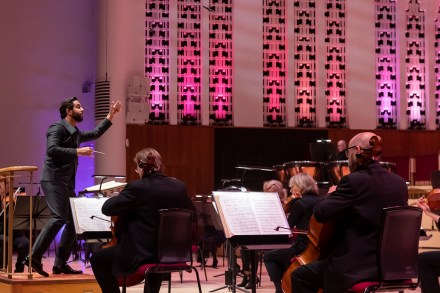
The first time Alpesh Chauhan conducted Birmingham Opera Company, he was surrounded by rats: six-foot tall rats, singing Shostakovich at the top of their voices. There were singing cops, too, and a marching band wearing bloodstained wedding dresses, and this was all happening in a derelict Edgbaston dance hall best known as a location for the 1980s Central TV drama Boon. Well, of course it was. BOC is the company that staged Mussorgsky in a circus tent and Stockhausen in an abandoned chemical warehouse; its whole point is to upend traditional assumptions about opera. The big difference in its production last year of Lady Macbeth of Mtsensk came from the orchestra.

There’s scarcely a dull track: Deep Purple’s Whoosh! reviewed

Pop

Grade: B+ Less deep purple than a pleasant mauve. Ageing headbangers will note a lack of the freneticism that distinguished Fireball and ‘Highway Star’. But by the same token they may be relieved that there are no six-minute drum solos, songs about the devil, or Jon Lord demonstrating that he can hammer the organ fairly quickly for an unimaginably long time. Instead you have extremely well played 1980s arena rawk — think Guns N’ Roses with a touch of prog thrown in. And decent tunes that do not outstay their welcome — Ian Gillan always was a catchy mofo, however ludicrously vaudevillian his vocals may be.

‘Cocaine addiction is time-consuming’: the rise and fall of Kevin Rowland and Dexys

Pop

When Dexys Midnight Runners reached No. 1 in the singles charts in spring 1980 with the song ‘Geno’, the band had to travel to London for their coronation appearance on Top of the Pops. For the first time they could afford the train fare. But Kevin Rowland — their singer, leader, creative director, boss, whatever you want to call him — insisted they continue to jump the barriers at Birmingham New Street. ‘I said, “Come on lads, we’re still going to bunk the trains.” And they went, “What?” “Come on, the inspector’s coming. We’ve got to get in the toilets.” And the drummer said, “Kev. We’re No. 1 in the charts and we’re bunking the trains…”. “GET IN!

Why imperfect operas like Don Carlo are more interesting than perfect ones

Opera

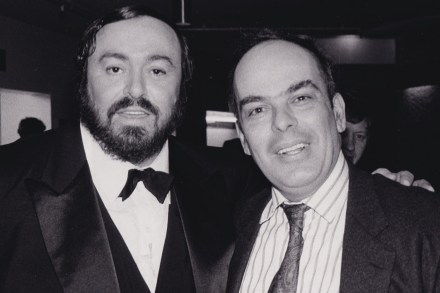
In the 62 years since I first heard and saw Don Carlo, in the famous and long-lasting production by Visconti at the Royal Opera, my feelings about it have grown ever stronger, both in passionate attachment and in critique. Imperfect operas, like other imperfect phenomena, can be more interesting than perfect ones, because they’re more thought-provoking, more enticing. The libretto, very freely based on Schiller’s play, was by two Frenchmen, and Verdi, eager to make a bigger splash than he had so far in Paris, made too much of one. The first performance, in 1867, ran so late that the members who lived outside central Paris missed their last trains, which were at 12.35 a.m. (Royal Opera and ENO: please take note).

Fine tunes and spacey, quiet grandeur: Taylor Swift’s Folklore reviewed

Pop

Grade: A- This is worrying — like listening to a speech by David Lammy and finding yourself, against your better nature, agreeing with it. If there’s one thing worse than your favourite artists making a duff album, it’s artists you can’t stand making a good one. I shall have to tell myself that this isn’t a Taylor Swift album at all, but really the work of The National — a fine band, whose Aaron Dessner is a co-writer on nine of these 16 tracks and producer on 11. That may explain the spacey, quiet grandeur of these songs, the background atmospherics, the gradual rise in many to a gentle anthem. This is Taylor Goes Indie.

Art tackles social distancing and, for once, actually wins: Philharmonia Sessions reviewed

Classical

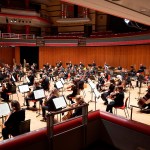
First there were the home recitals: musicians playing solo Bach in front of their bookshelves, wonkily captured on iPhones. Next came the Zoom ensembles, and near-infinite quantities of editing time and digital processing power achieved what, for a millennium up until March this year, could be produced instantaneously by putting some musicians in the same room. In June, we had live chamber music relays from empty concert halls. And now, after what might be the longest enforced break many orchestras will ever have taken, we have socially distanced online symphonic concerts: the latest, and let’s hope final, manifestation of this godawful New Normal (you’ll know we’re back to the Old Normal once critics start complaining about grey-haired audiences again).

The people who were idiots at gigs in early March are still idiots

Pop

Is the world ready for the return of live rock music? On the evidence of the first gig in London since lockdown, no. The people who were arseholes at gigs in early March are still arseholes at gigs, but there’s rather more than an obstructed sightline at stake now. Miles Kane was the guinea pig for the experiment, playing to 150 people who’d applied for tickets and who stood in a summer downpour watching him play acoustically. More on Kane later, but his presence was the least important thing here. The gig was the first in a series of small shows in Camden Market, and the organisers had taken care: masks were compulsory and the ground was marked with green dots to ensure everyone stood where they were supposed to.

The problem with livestreaming heavy metal? No moshpits

Pop

There was only so long anyone could put up with the live musical performances of the early days of lockdown: musicians in their living rooms, performing stripped-back versions of their songs in broadcasts that froze or stuttered. The time would come, inevitably, when everyone wanted more. Viewers would want something more closely approximating a full show; musicians would want to be paid. Laura Marling was early through the gates: last month, she promoted her latest album with two concerts at the Union Chapel in London, played to an empty hall but streamed for UK and US audiences.

Beethoven’s 32 piano sonatas were his musical laboratory – here are the best recordings

Classical

If you want to understand Beethoven, listen to his piano sonatas. Without them, you’ll never grasp how the same man could write the hummable, easy-listening Septet of 1799 and the scraped dissonances of the 1825 Grosse Fuge, which even today scares Classic FM listeners. It’s the 32 sonatas, not the nine symphonies or 16 string quartets, that join the dots. The symphonies are monuments rather than a guidebook. For example, the Second doesn’t warn you that the Eroica is about to explode in your face. The quartets, meanwhile, jump from the six of Opus 18, in which Beethoven essentially pours new wine into old bottles, to the three Razumovskys of Opus 59, by which time he has moved to another planet.

Ranges from the slight to the first-rate: Neil Young’s Homegrown reviewed

Pop

Grade: B+ Neil Young has been mining his own past very profitably for a long time now, disinterring a seemingly endless catalogue of stuff which, at the time it was recorded, failed to see the light of day. And people like me fork out each time. I remember looking forward to this album in 1975 — but just before the release date he shelved it in favour of Tonight’s the Night, easily the finest rock album of the 1970s (or, to my mind, since). This doesn’t come close but, as it’s from Young’s most rewarding period, it holds a certain interest. Five songs have been released elsewhere, including the lovely ‘Star of Bethlehem’ (on Young’s underrated American Stars ’n’ Bars).

Portrait of the Royal Liverpool Philharmonic – Britain’s oldest and ballsiest orchestra

Classical

Liverpool’s last ocean liner lies half a mile inland, on the crest of a hill. The Philharmonic Hall, home of the Royal Liverpool Philharmonic Orchestra, sits between two cathedrals on Hope Street, its towers jutting over the city like twin prows. It’s an unavoidable metaphor: when you enter the Hall on a concert night, the first thing you see is a bronze memorial to the musicians of the Titanic. Everything about the Hall — the grand staircase; the long curving corridors; the art deco auditorium that looks like something from Alexander Korda’s Things to Come — suggests that you’re about to steam off on some fantastic voyage. I’ve heard concerts all over the world, but when I dream about music, it’s always at the Liverpool Phil.

Britain’s choirs are facing oblivion

Music

Britain’s choirs are facing oblivion. Yet they’re also terrified of returning. One story explains why. Picture this innocent choral-society scene in Skagit County, Washington State, on the evening of 10 March. One-hundred-and-twenty singers, most of them elderly sopranos, gathered in the Presbyterian church to rehearse for two hours, their chairs 15cm apart. At half-time they took a break for shared snacks, and at the end the helpful ones stayed to stack the chairs. Fifty-two of those singers came down with Covid-19, supposedly through the release of aerosol droplets in the ether. Thus began the swirling of rumours across the world about the grave dangers of singing.

Dysfunctional music for dysfunctional people: The Public Image is Rotten reviewed

Pop

A star is born, but instead of emerging into the world beaming for the cameras, he spits and snarls and announces his intention to destroy the establishment via the medium of rock records. But who is it? Is it Bob Geldof or John Lydon? Citizens of Boomtown: The Story of the Boomtown Rats — another in the ongoing trend of the BBC screening films that are fundamentally ads for a band’s new album — made the case for Geldof, suggesting he and his bandmates singlehandedly dragged Ireland into the modern age (the Daily Telegraph’s chief rock critic popped up to say they were the first roar of the Celtic Tiger).

The festivalisation of TV

Arts feature

The Glastonbury festival has undergone a series of metamorphoses in the 31 years since I first attended as a 15-year-old fence hopper (as, indeed, have I, thank heavens). One of the most significant changes, to pillage Gil Scott-Heron’s famous prophecy, is that the evolution has been televised. Back in 1989, if your boots weren’t on the ground — often a quagmire, though not that year — you missed out on all the fun. This has not been the case for aeons. Television coverage of Glastonbury began on Channel 4 in 1994, switching to the BBC three years later.

Not nul points but it’s no Spinal Tap: Eurovision Song Contest – The Story of Fire Saga reviewed

Film

This comedy stars Will Ferrell and Rachel McAdams as an Icelandic duo whose biggest dream is to represent their country at Eurovision and win. An open target, you would think. Spoof heaven, you would think. But while this is sporadically funny and features some wonderfully good bad songs with those hooks that you can’t shake off — like kicks to the shin, they linger for ages — it is also over-long, drifts, and is ultimately too familiar, predictable and gooey. It’s not nul points. It’s not the Norway of cinema. Particularly as it also stars Pierce Brosnan attired in Icelandic knits and Dan Stevens as the super-camp, super-vain, leather-trousered Russian entry. But it lacks the necessary focus or smarts to keep the laughs coming and sustain its running time.