Culture

Culture

The good, the bad and the ugly in books, exhibitions, cinema, TV, dance, music, podcasts and theatre.

‘My voice is a curse’: Gary Numan interviewed

Music

Reading the opening chapter of Gary Numan’s recent autobiography, (R)evolution, I start to get the odd feeling that I could just as well be reading about my own early life. Like Numan, I grew up near Heathrow and found the aircraft that flew over our house beautiful and magical. My parents were working class and worked hard and supported me all the way. Like Numan, I wanted to be a pilot, and a rock star. And like him, I never quite fitted in. Perhaps I could have formed a seminal band, become a pilot in my spare time and moved to LA. But then I don’t have that voice, or that talent. Never mind. I am chatting to him by Zoom. He’s in his LA home and eagerly awaiting the release of his 18th solo studio album, Intruder.

The Byrds without the drugs: Teenage Fanclub’s Endless Arcade reviewed

The Listener

Grade: B– Advancing age has smoothed the edges of Bellshill’s finest lads, once — back in the early 1990s — arguably Britain’s best band. This is like being embalmed for ever in suffocating pleasantness. You doze off during ‘Warm Embrace’ and wake, perhaps hours later, to the same gentle, winsome, minor-key harmonies chugging by at a medium pace, the guitars strummed with deadening accuracy. Is it the same song? Have I died? The Fannies have been heading this way for a while and the departure of one of their better songwriters, Gerard Love (who jacked it in two years ago), has hastened their hitherto gentle descent towards the earnestly soporific, the slightly cloying.

The sermons poked out of the songs like busted bed springs: Van Morrison livestream reviewed

Pop

Over the decades, Van Morrison’s role within the tower of song has shifted from chief visionary officer to head of complaints. It’s not a promotion. The title track of his new album, Latest Record Project, Volume 1, is a rebuke to those who insist on living in an artist’s past rather than his present. A laudable sentiment, perhaps, but one less easy to put into practice when Morrison’s present consists of 28 tracks which hone an already ornery world view to a paranoic peak. When he isn’t griping about his divorce he’s peddling half-baked conspiracy theories, sneering at internet users and ‘media junk’, and bitching about modern music, crooked politicians and false prophets.

For fans of neglected, niche and uncool music, lockdown has been a blessing

Classical

When this whole mess is over, there’ll be a shortish MA thesis — or at least a blog post — to be had from analysing classical music’s evolving response to the crisis. Already, looking back, distinct phases are emerging from the viral fog. Phase One: the Banana Bread Apocalypse — that first lockdown, when Jamie Oliver was telling us to smoosh up frozen peas and pretend it was pesto, and phonecam footage of a cellist playing Bach in the spare bedroom felt like a kind of miracle. Phase Two: orchestras working out what they could actually do while socially distanced and audienceless. Cue a spike in online performances of works for small (or spaced-out) orchestra. Lots of Tallis Fantasias and Siegfried Idylls.

‘I’m not interested in moral purity’: St Vincent interviewed

Arts feature

St Vincent — Annie Clark, a 38-year-old singer-guitarist of prodigious gifts — spends a lot of time confounding people. She confounds them with stage shows that are less gig than theatre, ostentatiously choreographed and fabulously provocative (though not in any crude sense). She confounds them with an image that morphs from album to album (for her sixth, Daddy’s Home, she has adopted the dissolute Cassavetes-heroine look). She confounds them by, in a puritan age, placing sex squarely within her work, though usually in a plausibly deniable way (the title Daddy’s Home refers to her father’s release in 2019 from prison after serving nine years for his part in a stock-manipulation scheme. She says of the title: ‘It’s pervy’).

Tom Jones is as nuanced a vocalist as Ian Paisley

The Listener

Grade: C Revisionism has been extraordinarily kind to Tom Jones, ever since he barked his way through Prince’s ‘Kiss’ with the kind of subtlety you might expect from someone who is about to nut you in the mouth. That enormous fruity bellow is one part threat, one part music hall. He was repackaged as someone whose roots supposedly lay in R&B, but I don’t remember Sam Cooke singing ‘It’s Not Unusual’ or ‘What’s New, Pussycat?’. What Tom does, with everything, is belt it out, with bombast and bravado and the faint whiff of faggots and peas. He is as nuanced a vocalist as the late Revd Ian Paisley.

Josquin changed musical history – why don’t we hear more of him?

Classical

Stepping into the Sistine Chapel, the choir loft is probably the last thing you’d notice. ‘Loft’ is, frankly, a stretch for what amounts to a small alcove with a wooden bench, carved out of the chapel’s wall. But if you made your way up there and ran your hand over the stone you’d feel something unexpected. Etched into the wall in haphazard graffiti are hundreds of names. In most cases the carvings are all that remain of centuries of singers from the papal choir. But one is different: ‘JOSQUINJ’. Chances are it’s the only surviving signature of Josquin des Prez — a composer whose name and legacy are carved just as deeply into the history of music itself. This August marks the 500th anniversary of Josquin’s death.

Watch kids go giddy in Niamey: Mdou Moctar live in Niger reviewed

Pop

The other week someone posted on Twitter a link to a YouTube clip titled ‘Family Lotus and D.J. Cookin’ at the Golden Inn, July 4 1981’. It showed a bunch of long-haired people on a makeshift stage in the New Mexico desert and a handful of people dancing around in the dust to the music, which was a weird, trippy, hyper-freaky form of electrified banjo music: ‘psychedelic bluegrass’, apparently. Watching the stream of the Tuareg guitarist Mdou Moctar was an unnervingly similar experience: he and his three-piece backing band were set up in the dust outside a friend’s house, watched by whoever came along. And Moctar’s guitar playing — blurrily deft repeating patterns — was deeply reminiscent of the banjo playing in the YouTube clip.

A redemption song, conventionally sung: Sky’s Tina reviewed

Pop

It has never been easy for women in the music industry. Once upon a time the evidence was largely anecdotal. Now it’s being recorded for posterity, frame by frame. Recent documentaries about Britney Spears and Demi Lovato exposed the trauma inflicted on post-millennial pop stars. Two new portraits of Anna Mae Bullock and Marianne Elliott-Said, better known as Tina Turner and Poly Styrene from punk group X-Ray Spex, ponder the price paid by their forebears. Turner’s story feels archetypal, a tale extracted from deep within the DNA of showbusiness. An abandoned child — ‘my mother didn’t like me’ — from a poor Tennessee background, the opportunity to fulfil her gifts came with the classic caveat: subjugation by an older, controlling man.

Are Mozart’s forgotten contemporaries worth reviving?

Classical

There are worse fates than posthumous obscurity. When Mozart visited Munich in October 1777, he was initially reluctant to visit his friend, the Bohemian composer Josef Myslivecek. Myslivecek was in hospital, undergoing treatment (as he told it) for a facial cancer brought on by a recent coach accident. But this being the 18th century, and Myslivecek having a reputation as a gallant, Mozart suspected venereal disease. When he finally appeared at Myslivecek’s bedside, he was appalled by what he saw: ‘The surgeon, that ass, has burned off his nose! Imagine the agony he must have suffered.’ Within four years, the luckless — and noseless — Myslivecek had died in poverty, aged 43. His music effectively died with him.

Moments of pure wonder: Folk Weekend Oxford reviewed

Pop

Has any musical moment extended its tendrils in so many unexpected directions as the English folk revival of the mid-1960s? In its beginnings, it was a source of pilgrimage for Bob Dylan and Paul Simon, who pinched his arrangement of ‘Scarborough Fair’ from Martin Carthy way back in the dim and distant past when the Beatles walked the earth. It spread into progressive rock and heavy metal (the black metal musician Fenriz, of the Norwegian band Darkthrone, told me recently that he considered Steeleye Span to be an important band in promoting pagan traditions).

Demi Lovato makes Taylor Swift resemble Dostoevsky

The Listener

Grade: Z If you wish to experience the full hideousness of Now, of our current age, condensed into one awful hour, then you should invest in this bucket of infected expectorant streaked with blood. It’s all there. The depthless self-absorption and introspection, the me me me. The self-aggrandising, the wallowing in victimhood, the complete lack of personal responsibility for her very bad decisions in life, the lack of discernible talent, the mawkishness, the stupidity, the facile political ‘awareness’. This is Demi Lovato, recent subject of an emetic four-part documentary on ‘her life’. Of course she is bulimic and bi-polar. Of course she nearly died of a skag (fentanyl) overdose and was a cokehead for years — none of it her fault.

Where to start with the music of Ethel Smyth

Classical

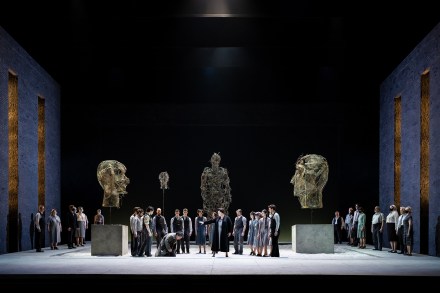
I’m reminded of an old Irish joke. A tourist approaches a local for directions to Dublin. The local, after much teeth-sucking and head-scratching, eventually replies: ‘Well, I wouldn’t start from here…’. The news that, 75 years after her death, English composer Ethel Smyth has won a Grammy Award for her last large-scale work The Prison is as excellent as it is unexpected. But it’s also frustrating because, well, if I were setting out into Smyth for the first time, I really wouldn’t start from there.

The songs are still as fresh and appetising as a hot loaf: The Lightning Seeds livestream reviewed

Pop

One thing about a streamed festival is that the toilets are better than at the real thing. The other thing, though, is that it’s not really a festival. That’s not to knock the North Will Rise Again (TNWRA), which took place over Saturday and Sunday nights a few weeks back, the first featuring Liverpudlian bands and filmed in that city, the second coming from Manchester, with Mancunian groups. The simple fact is, you can’t replicate a festival online: what the best festivals offer is chance, when one stumbles across something wholly unexpectedly on some outlying stage at an unpromising time of day. Simple economics make that impossible for an event charging a tenner: unless you were to get Woodstock levels of attendance, there would be no way to pay the bands.

Riveting and heartbreaking: Sound of Metal reviewed

Cinema

The multi-Oscar-nominated Sound of Metal stars Riz Ahmed as a heavy-metal drummer whose life is in freefall after losing his hearing. Ahmed learned to play drums for the part. And he learned American Sign Language. And he learned to perform with white noise in his ears. However, he did not have to learn how to be riveting because, if you’ve followed his career, you’ll know he’s been that since day one, and he is magnificently, powerfully, heartbreakingly riveting here. If he doesn’t win the Oscar I’ll be furious. That counts for nothing, I know. But it had to be said. It is directed by Darius Marder, who co-wrote the screenplay with his brother, Abraham Marder. At the outset Ruben (Ahmed) plays in a band with his girlfriend, Lou (Olivia Cooke).

The Mozarts of ad music

Arts feature

It’s Christmas 2020 and Kevin the Carrot is on a mission. Snow swirls, ice glistens and roast turkeys and cold cuts wait on the table, bathed in cosy firelight. The visual symbols of Christmas are all present and correct in the big Aldi seasonal advert, but what pulls them together is the music. A hint of John Williams on a solo horn, a burst of swashbuckling rhythm; symphonic strings as our vegetable hero makes it home. It’s all there, sumptuously scored and precisely gauged to make you feel that in 30 seconds, you’ve experienced an epic. And then, of course, to go out and buy parsnips. ‘I was lucky, because the mood had already been chosen,’ says Guy Farley, the composer who wrote that score.

Reminiscent of Roxy Music’s cocktail sound: The Weather Station reviewed

Pop

One of the unforeseen consequences of the rise of streaming was a change in the very structure of the pop song. Listeners who needed only to click a button to explore an unfathomable amount of music rapidly lost patience. They were less willing to listen to long songs; they were less willing to wait for songs to develop, even over the course of three minutes; they liked songs that sounded the same as other songs they were familiar with. And so, over the past decade or so, pop has adopted a formula: songs now tend to open with a huge hook, then throw more hooks on top of that, and then — because a small cadre of songwriters and producers are viewed as safe hands — they get remade in barely different forms again and again.

The mystery and romance of the cassette tape

Music

May the gods of Hiss and Compression bless Lou Ottens. As head of new product development at Phillips, the Dutch engineer invented the compact cassette in 1963 and changed music for ever. Ottens died last week at 94. A good age, and a good number. You could get a full album on each side. For many of us born in the 1970s, who came of age musically in the 1980s and 1990s, the blank cassette has an unkillable romance. We measured our lives in spools of magnetic tape: C60, C90, the occasional C46. Inside those hard plastic shells we surfed the thin end of the aural wedge, composing scrappy love letters in the medium’s notoriously tinny register — no bass, all treble. Tapes were desirable not for their audio quality, which was sub-prime, or aesthetic appeal.

Revelatory and grubby: Framing Britney Spears reviewed

Pop

The most headline-grabbing of these three pop docs was Framing Britney Spears, part of the New York Times Presents documentary series, and a bit of a worldwide sensation. It was both revelatory and grubby. As many have noted, the footage of interviews with Spears as a prepubescent and teenager was so deeply unpleasant, so unrelentingly sexual, that it seemed to come not from 20 years ago, but from Neanderthal times. The simple accumulation of the public record was horrifying. No wonder people such as Jimmy Savile were able to thrive. If television interviewers could ask a teenage girl about her breasts, about whether she was having sex, then is it any wonder young women could be treated as sexual chattels behind closed doors?

Barack Obama will make you cringe: Renegades: Born in the USA reviewed

Radio

Barack Obama wants the world to know how much he loves singing. In his new podcast, which takes the form of a series of conversations with Bruce Springsteen, he’s rarely without a tune on his lips. ‘Further on up the road…/ you been laughing, pretty baby…’ A shower-singer, a bedroom warbler, an Air Force One air guitarist with an okay voice, the former president is proof that you really can be embarrassing without feeling an ounce of embarrassment. Oh, to have seen his daughters’ faces when he broke into ‘Let’s Stay Together’ in front of Al Green. The sound team at the fundraiser in Harlem urged him to do it, he tells Springsteen, but no one’s buying it.

The death of the mainstream band: Black Country, New Road reviewed

Pop

Twitter was awash with mockery last week, after Adam Levine, the singer of the American group Maroon 5, was interviewed on Apple Music and told Zane Lowe: ‘It’s funny, when the first Maroon 5 album came out there were still other bands. I feel like there aren’t any bands any more, you know?’ Out came the outraged, citing their favourite bands with fanbases numbering in the dozens. What about the fertile deep sludge scene based around Pimple Nose Records of Butt Wipe, Montana, eh? Then there were the K-Pop stans, demanding BTS — a seven-piece vocal group who, had they been formed in England in the 1990s, would clearly have been a boyband — be recognised as functionally equivalent to the Rolling Stones (there’s no moral judgment there, BTS stans.

Three new releases that show the classical recording industry is alive and well

Classical

Rachmaninov’s First Symphony begins with a snarl, and gets angrier. A menacing skirl from the woodwinds, a triple-fortissimo blast from the brass, and then the full weight of the strings, hammering out one of those doomy Russian motto-melodies like lead boots dragging you to the bottom of the Neva. ‘Vengeance is mine; I shall repay’ glowers the epigraph that Rachmaninov inscribed at the top of the score, and you’d better believe it. The symphony’s première in 1897 was a disaster that stunned the 23-year-old composer into near-silence.

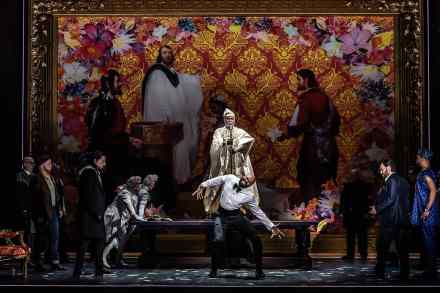
Astonishing, relentlessly pleasurable rediscovery – tantric opera: Luigi Rossi’s Il Palazzo incantato reviewed

Classical

I don’t say this lightly, but after 20 years of opera-going, Luigi Rossi’s Il Palazzo incantato might just be the most baffling opera I’ve ever seen. And I’ve seen Stockhausen’s Licht. It starts with 27 named roles and originally featured no fewer than ten castrati among its cross-dressing, all-male cast. This operatic game of Twister was premièred in Rome in 1642, where it originally played out over seven scintillating hours and nearly 3,000 verses of poetry written, incidentally, by the man who would go on to become Pope Clement IX.

In Chet Baker’s albums you can hear America’s romantic self-image curdling

Music

The thing to remember about Chet Baker, an old acquaintance says of the errant jazz musician in Deep In A Dream, James Gavin’s exemplary 2002 biography of Baker, is that ‘he can hurt people even after he’s dead’. Baker could be dangerous but mostly he hurt himself. He died, squalidly, in 1988, and his music, at least, can still wound. In Baker’s oeuvre the ballads are deep blue and the up-tempo tunes are somehow tinted even darker. The ‘jazz James Dean’, the ‘Prince of Cool’, Baker was extremely pretty in his younger days and made music that cast a similar enchantment. His trumpet style was lyrical, his singing voice light and seductive.

The triumph of bedroom pop

Arts feature

I must have been about 16 when I got my first Portastudio. The compact home recording unit had first been introduced by Japanese electronics firm Teac in 1979, offering unprecedented multitrack dubbing to the bed-bound amateur musician. For a little less than $1,000, you could record four separate tracks of instrumentation — as much as the Beatles had when making Sgt. Pepper — on an ordinary cassette tape. By the time I got my teenage hands on a four-track machine of my own, that price had come down by an order of magnitude. It was a chunky little unit in pigeon blue with just two microphone sockets and a small handful of mixing dials for volume control and stereo panning.

Perfect English songs in fresh new colours: Roderick Williams sings Butterworth

Classical

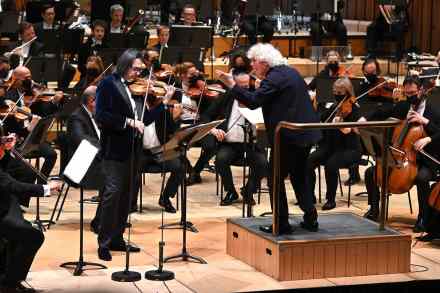
Another week, another online concert; and since orchestral music seems likely to be confined to screens and stereos for a while longer, one might as well try and experience something new. But not too new — I’ve pretty much had it up to here with the present. The Hallé orchestra is currently streaming a collection of Shropshire Lad songs by George Butterworth, conducted by Sir Mark Elder and sung by the baritone Roderick Williams in orchestral versions of his own creation. That seems ideal: music by the most perfect of English classical songwriters, in fresh and unfamiliar new colours. And time spent with an artist as likeable and intelligent as Williams is never wasted.

‘I like upsetting people’: Steven Wilson interviewed

Music

Steven Wilson is going about becoming a pop musician entirely the wrong way. For one thing, he’s into his fifties, not typically the point in life at which budding chart-botherers launch their assault on hearts and minds. For another, in an age in which pop stardom and identity politics have become entwined — in cultural discourse, at least, even if not necessarily in your teenager’s listening habits — he has everything going against him. ‘I come from a very well-adjusted family. I’m heterosexual. I’m white.’ Of course, Wilson doesn’t really expect to be competing against Stormzy and Dua Lipa and Cardi B.

Epic prog rock without the widdly-woo solos: Mogwai at the Tramway reviewed

Pop

You very possibly know the music of the Glaswegian band Mogwai, even if you don’t think you do. You might well have not listened to a note of their ten studio albums, their three live albums, or their four compilations. You may never have seen one of their pulverisingly loud live shows, or heard them on BBC 6 Music, their natural home. But you may well have heard them on TV, either as background music, or on one of their commissioned soundtracks — seven of them now, including the current Sky Atlantic mob series ZeroZeroZero.

The two composers who defined British cinema also wrote inspired operas

Opera

It’s my new lockdown ritual. Switch on the telly, cue up the menu and scroll down to where the vintage movies gather — Film 4, or the excellent Talking Pictures TV. Then search through their early-hours offerings, and press ‘record’ more or less at random. Gainsborough costume flicks; Rattigan adaptations; anything with John Mills in a submarine — it’s all good. Then, next day, trawl through the catch to see what’s surfaced, and who wrote the music. On a good night you might get Vaughan Williams in 49th Parallel, Richard Rodney Bennett in Billy Liar or — bewilderingly — the fire-breathing serialist Elisabeth Lutyens, keeping herself in cigarettes and brandy with scores for The Skull or Dr Terror’s House of Horror.