Culture

Culture

The good, the bad and the ugly in books, exhibitions, cinema, TV, dance, music, podcasts and theatre.

Repetitive, spiritless, god-bothering music: Kanye West’s Donda reviewed

The Listener

Grade: C– The nicest thing one can say is that this is a marginally better album than we would have got from either of the other two presidential candidates. Just about. But sheesh, it’s still nearly two hours of the most repetitive, spiritless, god-bothering music you will ever hear, full of portentousness and self-pity and utterly devoid of any insight or humour. Rap, trap, snap, all the tiresome bases covered. Decent tunes and memorable rhythms are few and far between. I like West, the man, for his stoic refusal to kowtow to the stupid liberal orthodoxies demanded by the music business. But his self-importance is now so bloated he resembles Mr Creosote from Monty Python’s The Meaning of Life, in those terrible few seconds before he eats a final wafer-thin mint.

Good noisy fun: black midi, at the Edinburgh International Festival, reviewed

Pop

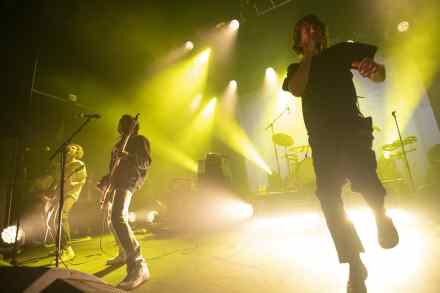
This year we must love Edinburgh for her soul rather than her looks. The EIF should be commended for making the best of a tricky hand, but the lodgings for its music programme bring to mind a fallen society beauty forced from her New Town villa into a rented bedsit. Edinburgh Park is a cathedral-sized tent in a business park, wedged between the city bypass and a shopping mall. The wooden floor planks buck and roll like a galleon deck. There is a roof but no sides and the Covid-quelling ventilation is, shall we say, robust. So yes, forget the optics. In 2021, content is everything. As it transpires, it proved a fitting spot in which to experience three artists engaged in similar quests to remould the traditional and familiar.

The central performances are tremendous: Glyndebourne’s Luisa Miller, reviewed

Classical

Opera buffs enjoy their jargon. We all do it, scattering words like ‘spinto’ and ‘Fach’ like an enthusiastic pizza waiter with an outsize peppermill. It’s principally a means of signalling that you’re part of the club. But occasionally it’s genuinely useful, and Glyndebourne’s new production of Verdi’s Luisa Miller had me thinking about the concept of ‘tinta musicale’, a term used to describe Verdi’s sense that each of his operas should have its own distinctive sonic colour. The late-summer warmth that suffuses Falstaff, for example, or the maritime translucence of Simon Boccanegra. Or take La traviata: the enervated violins of the prelude, the hectic brilliance once the curtain rises.

What a genuine delight to be among people: Gorillaz, at the O2, reviewed

Pop

The new music economy relies on cross-promotion and artists reaching out to different scenes. And the rise of streaming means everyone can hop between audiences with ease, hence those singles apparently by one person but with a cricket team’s worth of other names credited. As the Beach Boys once sang, ‘you need a mess of help to stand alone’. Alongside the featured artist sausage factory there are musical patrons. Take Damon Albarn, who has spent much of the past 20 years elevating the work of other artists, using the strength of his own name — made, of course, as the frontman of Blur — to promote music that might otherwise slip past his core audience.

Hugely unmemorable: Billie Eilish’s Happier Than Ever reviewed

The Listener

Grade: C+ Time to get the razor out again — Billie’s back. The slurred and affected can’t-be-arsed-to-get-out-of-bed vocals. The relentless, catatonic introspection, self-pity and boilerplate psychological insights. The queen of sadgurls has a new album — and yes, of course, the title is the closest Billie has ever come to making a joke. Of course she’s not happy — that would be her schtick sold down the river. If Billie ever professed herself really happy her fans would quickly go elsewhere to slake their misery jones. Eilish has talent, along with the over-weening narcissism that comes with affording your every feeling a sense of great, dramatic import. But it is spread very thin here.

Ecstasy from Birmingham Opera Company: Wagner’s RhineGold reviewed

Classical

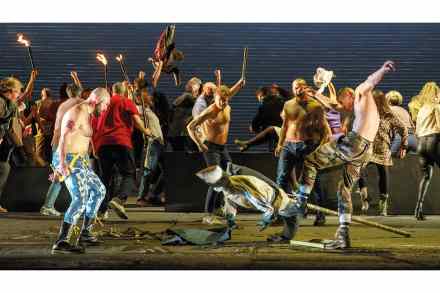
At the end of Birmingham Opera Company’s RhineGold, as the gods stood ready to enter Valhalla, Donner swung a baseball bat and summoned a rainbow bridge of human bodies — crawling, abject, before the new lords of creation. It was pretty much what we’ve come to expect from BOC’s founder Graham Vick, a director who never hints at a contemporary social message when he can ramraid our consciousness with one. Here, though, there was another twist of the knife. The human bridge was made up of delivery couriers, complete with branded cagoules and cycle helmets. Didn’t someone describe lockdown as ‘middle-class people hiding while working-class people bring them things?’. A smart touch, and vintage Graham Vick. Except Vick wasn’t there.

When musical collaborations go right – and when they go horribly wrong

Pop

Big Red Machine release their second album later this month. It’s a fine name for ten tonnes of agricultural apparatus but perhaps not quite so persuasive for a pop group, particularly one with a considerably lower profile than most of its members. A collective formed by the National’s Aaron Dessner and Bon Iver’s Justin Vernon, Big Red Machine has corralled the likes of Robin Pecknold (Fleet Foxes), Sharon Van Etten and Taylor Swift into making a collaborative record called How Long Do You Think It’s Gonna Last?. It sounds intriguing on paper, but the quality of musical collaborations is notoriously hard to gauge from the cast list.

Springtime for Putin: Grange Park’s The Life and Death of Alexander Litvinenko reviewed

Opera

Alexander Litvinenko lies in a London hospital, dying of polonium poisoning. That photograph from 2006 haunts the memory: the medical robe, the electronic monitors, Litvinenko’s accusing gaze and bald, ravaged head. But in case we needed reminding, Grange Park Opera handed out copies of Death of a Dissident, the account of the crime by Litvinenko’s widow Marina, and the principal source for Anthony Bolton and Kit Hesketh-Harvey’s new opera The Life and Death of Alexander Litvinenko. Minutes later, a hospital bed rolled on stage replicating that exact image. And then Litvinenko — the tenor Adrian Dwyer — opened his mouth and started to sing. Opera plays a high-stakes game with dramatic realism at the best of times, but this was startlingly upfront.

Zips along with enormous vim: Malcolm Arnold’s The Dancing Master reviewed

Opera

Malcolm Arnold composed his opera The Dancing Master in 1952 for BBC television. It never appeared, the problem being the source material — William Wycherley’s 1671 farce The Gentleman Dancing Master. Jokes about wedding nights and ‘scarlet foppery’ might have flown in the reign of Charles II but the New Elizabethans at Broadcasting House were altogether more shockable. ‘Too bawdy for family audiences,’ was Auntie’s official verdict, leaving The Dancing Master largely forgotten until a premiere recording late last year, and now — conducted by John Andrews and using almost the same cast — its first ever professional production, at the Buxton International Festival.

The real death of rock

Pop

What would a rock band have to do now to be seen as heralding the future? Twenty years ago, it was enough to be in possession of sharp cheekbones, tight jeans and 11 fantastic songs. The first album by the Strokes, Is This It, was released 20 years ago this month. It spread around the world in a way that would be impossible now. Only Australia got the album in July 2001. The UK release was not for another month, to tie in with the Reading and Leeds festivals. The US vinyl version was released on 11 September, but the CD edition was held back, so they could remove the song ‘New York City Cops’, whose refrain of ‘they ain’t too smart’ didn’t itself seem too smart in the wake of 9/11.

Comedy genius: Garsington Opera’s Le Comte Ory reviewed

Classical

Melons. An absolutely cracking pair of melons, right there on a platter: the centrepiece of the banquet that the chaste, all-female inhabitants of the castle of Formoutiers have provided for their surprise guests, a band of nuns. Except these sisters all seem to be singing well below the stave, and judging from the way she adjusts her crotch, Mother Superior has something more than a chastity belt beneath her habit. We all know where this is going. You can’t get your melons out on stage unless, sooner or later, some great hairy bloke in a wimple is going to shove them down his front. It’s the law.

The finest Falstaff you’ll see this summer

Opera

Comedy’s a funny thing. No, seriously, the business of making people laugh is as fragile, as mercurial as cryptocurrency — a constellation of shifting risk factors, many beyond control, any of which can kill a joke deader than Dogecoin. Opera is already at a disadvantage. Timing — comedy’s accelerant of choice — is predetermined, dictated by the demands of unwieldy choruses and slow-moving sets, pinned down to the second by a score whose creator may be anything but a natural comedian. Just ask Verdi, whose early farce Un Giorno di Regno was such a comprehensive flop that he gave up the genre altogether for almost an entire career. But at 75, all but retired after a sequence of bloody tragedies, the composer returned for one last shot at comic victory.

Is there anyone more irritating and stupid than Bobby Gillespie?

The Listener

Grade: B– Is there anyone in rock music more irritating and stupid than Bobby Gillespie? The rawk’n’roll leather-jacketed self-mythologiser. The affected drawl. The shameless pillaging of every hard rock album made between 1969 and 1972, but especially the Faces and the Rolling Stones. The moronic lyrics. The hard-left radical chic posturing and condemnations of Israel from a man with all the geopolitical understanding of a nipple-clamp. The desperate, pathetic, yearning to be cool. Trawl back through those Primal Scream albums and show me a moment of true originality. There isn’t one, is there? Which isn’t to say that — annoyingly — they’re devoid of fun and the occasional good tune.

You’ll shrug where you should marvel: Garsington’s Amadigi reviewed

Opera

When you think of Handel’s Amadigi (in so far as anyone thinks about the composer’s rarely staged, also-ran London score at all) it’s as a magic-opera. Sorcerers and sorceresses do battle in a fantasy land not found on any map. The stage directions alone are enough to stir the commercial loins of any 18th-century impresario. Enchanted palaces are ‘split asunder’, caves transformed into ‘beautiful palaces’, monsters ‘ascend from the bowels of the Earth’ and a chariot ‘descends covered in clouds’.

Whiny, polite and beautiful: Kings of Convenience’s Peace or Love reviewed

The Listener

Grade: A– The problem with Norwegians is that they are so relentlessly, mind-numbingly pleasant. Well, OK, not Knut Hamsun or Vidkun Quisling. And probably not the deranged fascist murderer Anders Breivik either. But then maybe that’s what unrestrained, suffocating niceness does to a certain kind of person: they end up strapping on a machine gun, or yearning for Hitler. Or both. Kings of Convenience are two earnest and very pleasant youngish men who often wear nice jumpers. They come from Bergen, which is as pristine and congenial a city as you could wish for: sharp, clear northern air and wooden-framed houses filled with agreeably plain furniture. Oh, and fish everywhere.

Wow, this is good: Grange Park Opera’s Ivan the Terrible reviewed

Opera

There are worse inconveniences than having to wear a face mask to the opera. But there’s one consequence that hadn’t really struck home until an hour into Rimsky-Korsakov’s Ivan the Terrible. The citizens of Pskov are massing in the streets. The Tsar’s army is approaching, and Rimsky is building one of those surging Russian crowd scenes: bass-heavy chorus blazing away while ominous bell sounds — basses, horns and rasping gong — shake the orchestra to its bones. Suddenly a bloodstained figure staggers in and collapses; a refugee from nearby Novgorod. ‘Your brother-city sends its greetings, and asks you to arrange its funeral,’ he gasps.

The joys of musical comfort food

Pop

I’ve given up comfort food. I’m trying to shift lockdown pounds that have left me with the physique of the kind of ageing second-string wrestler you used to see on World of Sport early on a Saturday afternoon in the 1980s. It’s all eschewing oils and measuring portions round these parts, and so I have been seeking my comforts in music. Enough with your Lithuanian drone and your polyrhythmic technical metal from Indonesia! Bring me verses and choruses and melodies and vocal harmonies! Katy J. Pearson — a young woman from the West Country who perhaps wishes she were, instead, from the American west coast — was true comfort food. The whole thing also felt unnervingly like a real gig, the kind one used to go to Before All This.

A new concerto draws cheers in Liverpool: RLPO/Hindoyan reviewed

Classical

There was no printed programme for the Royal Liverpool Philharmonic Orchestra’s first concert under its music director designate Domingo Hindoyan. Nothing to download either; just a piece of paper the size of a train ticket, handed out by a steward with a conspiratorial air, containing a bare listing of the pieces we were about to hear. Stravinsky, Ravel and Prokofiev: fair enough. Known quantities. But about the second item on the programme — the world première of a new Trombone Concerto by Dani Howard —there was no information at all beyond that all-or-nothing title. All to the good, you might think: pure music and unprejudiced listening. There’s no such thing, of course.

How Trojan Records conquered the world

Pop

When Trojan Records attempted to break into the United States music market in the early 1970s, it hit an insurmountable barrier: the company shared its name with America’s most popular brand of condom. ‘It was a case of commercial coitus interruptus,’ says Rob Bell, at the time the label’s production manager. In America, Trojan signified rubber, not vinyl. The label proved to have greater staying power in the UK, where it was at the forefront of popularising Jamaican music.

The promoter the critics love to hate: an interview with Raymond Gubbay

Arts feature

When Raymond Gubbay left school, he was articled to an accountant’s firm. Fascinated by opera and depressed at the prospect of life as a Golders Green beancounter, he wriggled out of it in a matter of months, and into an assistant’s job at Pathé Newsreels. Sensing that newsreels had a looming expiry date, he asked Arnold Wesker (a family friend) to wangle him an interview with Victor Hochhauser, Britain’s leading promoter of mass-market classical concerts. Hochhauser sat behind a desk in his office above a fridge shop in Kensington and asked the 17-year-old Raymond three questions. Where did you go to school? Are you a Jewish boy? And can you start on Monday? Six decades later, even three questions feel unnecessary.

A new recording throws fresh light on Mahler’s puzzling Tenth Symphony

Classical

There are many Symphonies No. 10 by Gustav Mahler, or none. The situation is rare, if not unique, in the history of music. Basic facts: Mahler finished the Ninth Symphony and Das Lied von der Erde in the summer of 1910. At the same time he discovered that his wife Alma was having an affair with Gropius, and that he had an incurable heart complaint and hadn’t long to live. One might have thought that these last two completed works are as movingly valedictory as anything ever written, but Mahler’s view was more complicated than that, and he immediately set about writing a Tenth Symphony. Over and among the notes, he scrawled messages to Alma, God and even the Devil, anguished pleas and expressions of despair.

Lush, elegant and vivid: Der Rosenkavalier at Garsington reviewed

Opera

At the turning point of Richard Strauss and Hugo von Hofmannsthal’s Der Rosenkavalier, all the clocks stop. Octavian has arrived at the house of the teenage bride-to-be Sophie von Faninal as bearer of the silver rose — the symbol of a love that is simultaneously as artificial and as eternal as any human creation can be. Sophie smells real roses; yes, says Octavian, there is a drop of Persian fragrance amid the silver petals. ‘Like a heavenly, not an earthly rose’, sings Sophie: and her voice soars higher and purer than anything we’ve heard so far, suspended in stillness while Strauss’s orchestra shimmers around her. The thing is, in Bruno Ravella’s new staging for Garsington Opera we already know the rose’s secret.

Annoying but good: Black Midi’s Cavalcade reviewed

The Listener

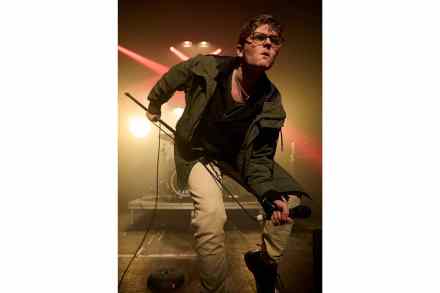
Grade: A– Imagine a really disgusting and immoral scientific experiment in which the members of Weather Report, the Mahavishnu Orchestra, King Crimson and Wire were somehow fused together into a giant caterpillar or something. This album is the kind of racket the forlorn creature might make. It sits in that usually arid zone where prog meets jazz fusion, with frequent bursts of staccato slash-and-burn brass and more ludicrous time signatures than you could shake a stick at. Or imagine Captain Beefheart speeded up, given a little focus and stripped of even the vaguest semblance of a sense of humour. That’s Black Midi. It works, even if singer Geordie Greep’s croon begins to grate even more than the shrieking mayhem behind him.

Wispy, gauzy beauty: This Is The Kit, Barbican, reviewed

Pop

On the way home from This Is The Kit’s show at a socially distanced Barbican, I listened to Avalon by Roxy Music, which had been brought to mind by the previous 90 minutes or so of music. It’s perhaps worth saying that This Is The Kit — the nom de chanson of Kate Stables, backed by a three-piece band and three horn players — have absolutely nothing in common with Avalon by Roxy Music, visually or musically. Stables, hair piled on top of her head, and dressed for comfort, not speed, did not look as though she intended to boost the Colombian export trade after the show; perhaps, instead, she would be offering forthright opinions about agribusiness over a lentil bake.

‘Germans thought we couldn’t play’: Irmin Schmidt, of musical pioneers Can, interviewed

Arts feature

‘The records are only half of the picture,’ says Irmin Schmidt, founder member of the great German experimental collective Can. ‘Live [performance] is the side of ours which actually has still to be discovered. For many of the people who came to our concerts, it was much more important in building up the legend than the records, because it was something extraordinary.’ Rock music is neck deep in retrospection these days, but the release of a ‘new’ Can album, Live in Stuttgart 1975, can’t be dismissed as just one more trawl through the floor sweepings. Instead, as Schmidt suggests, it reshapes what we know about one of the most influential bands of the 20th century.

World-class music, heavily symbolic staging: Glyndebourne’s Katya Kabanova reviewed

Opera

At the first night of Glyndebourne Festival 2021 there was relief and joyful expectation as Gus Christie made his speech of welcome. Never mind the hit to takings from the closed bar and the necessarily half-empty auditorium; never mind the scaled-back orchestra and abridged score. The new production of Katya Kabanova provided the thirsty opera-goer with a long cool drink of world-class music and heavily symbolic staging. Janacek’s exploration of a yearning female psyche has parallels with Anna Karenina and Madame Bovary. It lives or dies by its lead, and the Czech soprano Katerina Knezikova excelled as Katya.

A perfect welcome back to live music: Sarathy Korwar at Kings Place reviewed

Pop

There is a reason music writers tend to stick with music writing rather than transferring their manifold talents to the business side of things. Our dirty secret is that, for all our exquisite taste, most of us — with a few exceptions — have no conception of what the rest of the world actually wants from their music. The first piece I ever wrote was a student newspaper review of a gig in a Leeds pub, in which I gushed about the headliners but noted, with a sneer, the fact that the support didn’t appear to have any actual tunes. We would be hearing no more from them, I cautioned. The headliners were a long-forgotten band called Tad. I forget what happened to the other band; their name was Nirvana.

Hit every auditory G-spot simultaneously: CBSO/Hough/Gardner concert reviewed

Classical

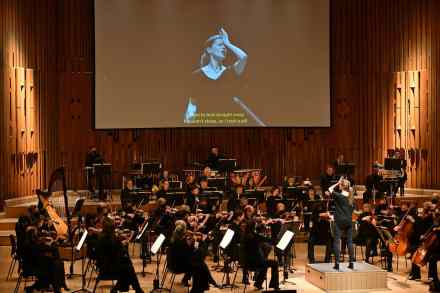
Rejoice: live music is back. Or at least, live music with a live audience, which, as Sir Simon Rattle admitted, addressing the masked and socially distanced crowd immediately before the LSO’s first full-scale public performance for 14 months, is kind of the whole point. Yes, he said, they’d streamed online concerts from the Barbican, but the silence of emptiness is a very different proposition from the silence of a hall containing 1,000 human beings. He’s right, of course. Those 14 months have tested to destruction the notion that digital platforms can offer the same sort of emotional nourishment. Once again, then — rejoice! And nobody mention the Indian variant.