Culture

Culture

The good, the bad and the ugly in books, exhibitions, cinema, TV, dance, music, podcasts and theatre.

Where to start with the music of Ethel Smyth

Classical

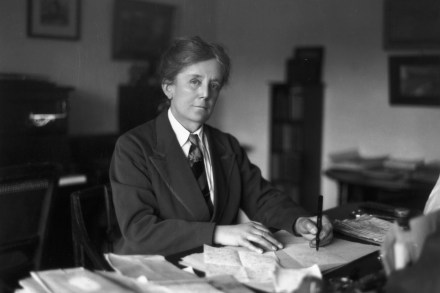
I’m reminded of an old Irish joke. A tourist approaches a local for directions to Dublin. The local, after much teeth-sucking and head-scratching, eventually replies: ‘Well, I wouldn’t start from here…’. The news that, 75 years after her death, English composer Ethel Smyth has won a Grammy Award for her last large-scale work The Prison is as excellent as it is unexpected. But it’s also frustrating because, well, if I were setting out into Smyth for the first time, I really wouldn’t start from there.

Three new releases that show the classical recording industry is alive and well

Classical

Rachmaninov’s First Symphony begins with a snarl, and gets angrier. A menacing skirl from the woodwinds, a triple-fortissimo blast from the brass, and then the full weight of the strings, hammering out one of those doomy Russian motto-melodies like lead boots dragging you to the bottom of the Neva. ‘Vengeance is mine; I shall repay’ glowers the epigraph that Rachmaninov inscribed at the top of the score, and you’d better believe it. The symphony’s première in 1897 was a disaster that stunned the 23-year-old composer into near-silence.

Astonishing, relentlessly pleasurable rediscovery – tantric opera: Luigi Rossi’s Il Palazzo incantato reviewed

Classical

I don’t say this lightly, but after 20 years of opera-going, Luigi Rossi’s Il Palazzo incantato might just be the most baffling opera I’ve ever seen. And I’ve seen Stockhausen’s Licht. It starts with 27 named roles and originally featured no fewer than ten castrati among its cross-dressing, all-male cast. This operatic game of Twister was premièred in Rome in 1642, where it originally played out over seven scintillating hours and nearly 3,000 verses of poetry written, incidentally, by the man who would go on to become Pope Clement IX.

Perfect English songs in fresh new colours: Roderick Williams sings Butterworth

Classical

Another week, another online concert; and since orchestral music seems likely to be confined to screens and stereos for a while longer, one might as well try and experience something new. But not too new — I’ve pretty much had it up to here with the present. The Hallé orchestra is currently streaming a collection of Shropshire Lad songs by George Butterworth, conducted by Sir Mark Elder and sung by the baritone Roderick Williams in orchestral versions of his own creation. That seems ideal: music by the most perfect of English classical songwriters, in fresh and unfamiliar new colours. And time spent with an artist as likeable and intelligent as Williams is never wasted.

From bad joke to 21st-century classic: the best recordings of Korngold’s Violin Concerto

Classical

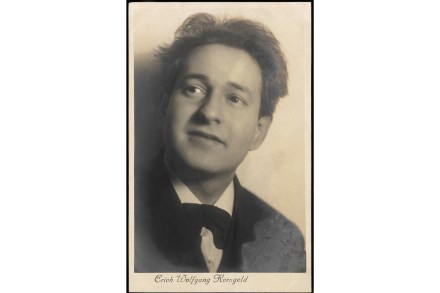
Erich Korngold was what you might call an early adopter. As a child prodigy in Habsburg Vienna, he’d astonished the world: a schoolboy composing orchestral scores that made Elektra sound tame. Jump ahead three decades, and Korngold, in his fashion, was still ahead of the curve. He was one of the first residents of Toluca Lake, North Hollywood, to buy a television. There wasn’t much to watch in 1947, but (according to Korngold’s biographer Brendan Carroll) Jascha Heifetz would drive over anyway from Beverly Hills, and the two exiles — the former protégé of Gustav Mahler, and the greatest violinist on earth — would sit there glued to the live wrestling.

The music we need right now: James MacMillan’s Christmas Oratorio reviewed

Classical

The two most depressing words in contemporary classical music? That’s easy: holy minimalism. I know, I know. Lots of people love the stuff, and I wish them joy. But the notion that one simply jettisons the whole western tradition of struggle, of purpose, of wholehearted emotional argument — and that the greatest and most crucial of human questions can be answered by a mush of soothing stylistic mannerisms — well, I’ve tried and so far I just can’t do it. I can’t simply tune in and drop out amid a haze of Yankee Candle harmonies. I hear those static choral clusters and watery melismas, and it feels like being suffocated in velvet. Silently, the spirit begins to scream.

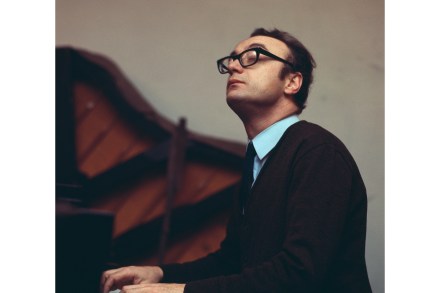
Alfred Brendel the Dadaist

Classical

How many people are celebrating the fact that, last week, one of Europe’s most inspired writers about music, modern art and aesthetics celebrated his 90th birthday? The answer is relatively few, which might seem surprising. He is a world-renowned authority on the grotesque and the absurd — territory through which he darts mischievously in his poems, originally composed in his native German. But you have to turn to his essays written in English to experience his refined sarcasm, which is either delicious or mortifying, depending on whether you feel incriminated by his strictures against intellectual laziness.

There’s no better sonic hangover cure: New Year’s Day Concert reviewed

Classical

The best moment in the Vienna Philharmonic’s annual New Year’s Day Concert comes after the end of the advertised programme. The conductor gives a tiny gesture, the violins start a shimmer of tremolando, and a ripple of applause spreads through the hall. At this point, if you’re watching with first-timers, they’ll look at you, surprised. Why have they stopped? And you smile, because you know what the conductor knows, what the orchestra knows and what even the audience in the Musikverein — those bejewelled Eurostiffs in their £1,000 seats — knows. We’re about to hear The Blue Danube, and music doesn’t get any better than that. Well, that’s how it feels to me, anyway.

Alan Rusbridger on the joys of four-hand piano

Classical

One of the few social activities not yet prohibited under lockdown laws is four-handed piano playing. I don’t mean sitting side-by-side at one keyboard. That would risk infection and, if snitched on, the possibility of sharing a prison cell with Piers Corbyn. No, the four hands must be divided equally across two pianos, and the instruments must be end-to-end. Safely isolated in this manner — perhaps three or four metres apart — the ivories can be tickled for as long as you want. I’ve been a devoted four-hand piano player all my life — due entirely to the limitations of the two I was born with.

Refined and dreamy: CBSO centenary concerts reviewed

Classical

For an orchestra to lose one anniversary concert may be regarded as unfortunate. To lose two? Welcome to 2020. The City of Birmingham Symphony Orchestra gave its first ever concert on 5 September 1920. But that was only a warm-up, a sort of soft opening if you like. The big public fanfare came two months later, on 10 November 1920, when the all new ensemble descended on Birmingham Town Hall for an inaugural gala conducted by Sir Edward Elgar. The plan in Birmingham this year was to recreate both events, in lavish style. Well, life comes at you fast, doesn’t it?

The beautiful, haunted symphonies of Franz Schmidt

Classical

The sounds that Franz Schmidt made while learning the trumpet were pretty much unbearable, or so the story goes. In order to practise he would leave his home in the Lower Austrian town of Perchtoldsdorf and walk up to the heath, a grassy hillside above the town. There, far from unappreciative neighbours, and looking down towards the spires of Vienna, a few miles north and east, he could crack notes to his heart’s content — in perfect isolation. Some artists hand you their metaphors on a plate. Schmidt spent his career trying to escape the suburbs of central European music, dogged by private grief and professional frustration. ‘Someone with a name like Schmidt should never become an artist,’ declared his piano teacher.

The grotesque unevenness of Mozart’s Requiem

Classical

It is amazing what fine performances you can get beamed to your computer these days. Slightly less amazing is the packaging these events come in, when they do. ENO relayed free a concert of Mozart’s Requiem, but it was preceded by a snatch of Strictly, with a row of muscular young guys ripping off their shirts, before we entered the Coliseum for a heavily pregnant Danielle de Niese hyping the event we were about to see and hear. She is delightful, but I wish she hadn’t been compelled to tell us that, despite his hard life, Mozart was sending us a message of hope that everyone, however ignorant of classical music, can be moved by. It’s just not true.

In defence of the tyrannical male maestro

Classical

Praising the grand old maestri of the podium isn’t a good look, as they say on Twitter. Conductors such as Herbert von Karajan, Leonard Bernstein and Georg Solti used to be lauded for the thrilling energy and sumptuous sound of their performances and recordings. These days if anyone mentions their names it’s only to list their crimes: tyrannising long-suffering orchestral players, commanding colossal fees, and in many cases looking on any female musician who comes within groping distance as fair game. The second of these alleged crimes I’m not so sure about. Earning lots of money is only a sign of moral turpitude if the money was dishonestly obtained. But there was nothing immoral about the sky-high earnings of Karajan.

Unobtrusively filmed, powerfully performed but still unsatisfying: LSO’s Bluebeard reviewed

Classical

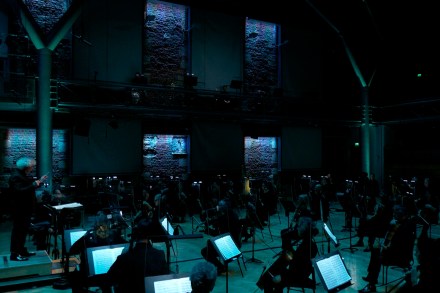
The timing couldn’t be better. Just as the gates clang shut on another national lockdown, trapping us all indefinitely with our nearest and dearest, the London Symphony Orchestra serves up an opera that’s pure domestic horror — a story about what happens when we lock all the doors, close the curtains tightly, and turn and look our beloved square in the eye. Bluebeard’s Castle, Bartok’s only opera, is a single-breath sort of piece. Barely an hour long, just two singers on stage throughout, it’s a conversation that starts with love and ends with — well, it’s not quite clear. Torture? Murder? Imprisonment? Bigamy? Truth, certainly.

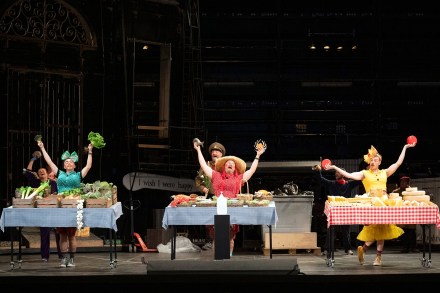
A silly, bouncy delight: Glyndebourne’s In the Market for Love reviewed

Classical

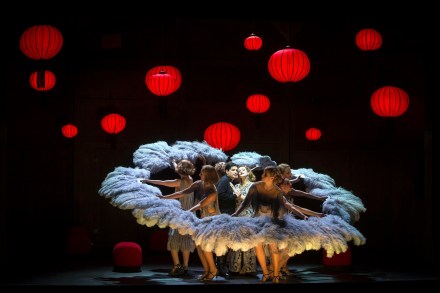
Offenbach at Glyndebourne! Short of Die Soldaten with a picnic break or a period-instrument revival of Jerry Springer: The Opera, it’s hard to imagine a less probable operatic outcome— even this year. I mean, Offenbach: the saucy skewerer of middle-class pretension; the dazzling, vulgar arriviste of 19th-century opera. It couldn’t have been more incongruous had the sideburned showman himself razzed up, bass thumping, in a pimped Renault 5 and started pulling skids on the ha-ha. He’s never been staged at Glyndebourne, and it’s not hard to guess why. The last time I saw an Offenbach one-acter done in the UK, it was Croquefer, a medieval farce that climaxes with the entire cast succumbing to projectile diarrhoea. Try turning that into a range of luxury gifts.

Why did Balakirev’s beautiful, inventive works go out of fashion?

Classical

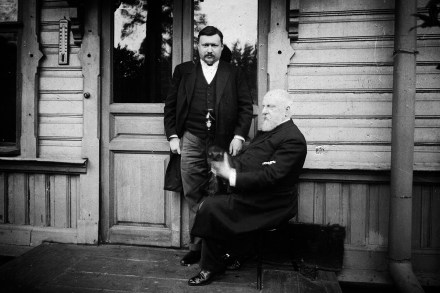
Anyone who invited the Russian composer Mily Balakirev to dinner had to be jolly careful about the fish they served. How had it died? Balakirev — mentor of Mussorgsky and Rimsky-Korsakov and regarded as the founder of the Russian nationalist school of music — would want to know. If the fish had perished on a hook, then he wouldn’t touch it. But if it had been clubbed on the head, fine. The many eccentricities of Balakirev (1837–1910) were regarded with amusement, horror and dismay by his contemporaries. Though, to be fair, the fish thing wasn’t a mad obsession of his own. Formerly an atheist, in his thirties he converted to an ultra-strict Russian Orthodox sect with firm views on the proper way to kill fish.

The joy of going to a real concert: OHP’s Heart of Delight reviewed

Classical

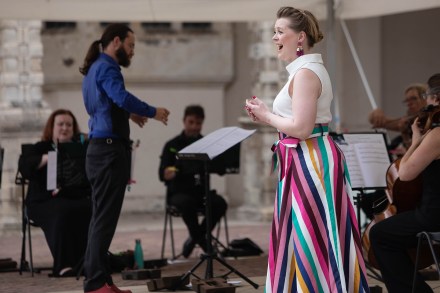
I went to a concert! Not a livestream or download: a real concert, with real musicians, a real conductor, a real audience, and the real sound of Waitrose cava bottles popping open in the late afternoon. In some ways, this open-air gala from Opera Holland Park made it feel as if the summer season were back on. There were floral-print dresses and canary-coloured chinos; I swear I even saw a tartan picnic rug. And here in a corner were the critics, released back into society for the first time since March. When the correspondent of the Mail on Sunday ostentatiously upgraded himself to a better seat mid-show, it was like we’d never been away. In truth, it only resembled normality if you ignored the total absence of Opera Holland Park’s huge tented theatre.

Art tackles social distancing and, for once, actually wins: Philharmonia Sessions reviewed

Classical

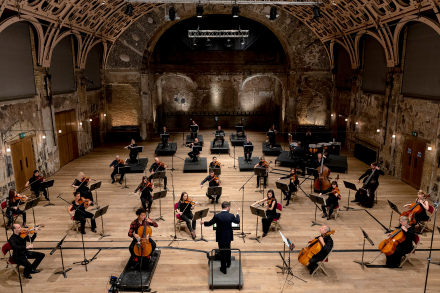
First there were the home recitals: musicians playing solo Bach in front of their bookshelves, wonkily captured on iPhones. Next came the Zoom ensembles, and near-infinite quantities of editing time and digital processing power achieved what, for a millennium up until March this year, could be produced instantaneously by putting some musicians in the same room. In June, we had live chamber music relays from empty concert halls. And now, after what might be the longest enforced break many orchestras will ever have taken, we have socially distanced online symphonic concerts: the latest, and let’s hope final, manifestation of this godawful New Normal (you’ll know we’re back to the Old Normal once critics start complaining about grey-haired audiences again).

Beethoven’s 32 piano sonatas were his musical laboratory – here are the best recordings

Classical

If you want to understand Beethoven, listen to his piano sonatas. Without them, you’ll never grasp how the same man could write the hummable, easy-listening Septet of 1799 and the scraped dissonances of the 1825 Grosse Fuge, which even today scares Classic FM listeners. It’s the 32 sonatas, not the nine symphonies or 16 string quartets, that join the dots. The symphonies are monuments rather than a guidebook. For example, the Second doesn’t warn you that the Eroica is about to explode in your face. The quartets, meanwhile, jump from the six of Opus 18, in which Beethoven essentially pours new wine into old bottles, to the three Razumovskys of Opus 59, by which time he has moved to another planet.

Portrait of the Royal Liverpool Philharmonic – Britain’s oldest and ballsiest orchestra

Classical

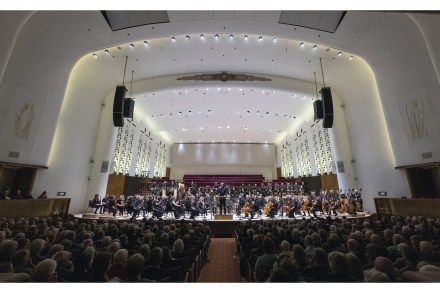
Liverpool’s last ocean liner lies half a mile inland, on the crest of a hill. The Philharmonic Hall, home of the Royal Liverpool Philharmonic Orchestra, sits between two cathedrals on Hope Street, its towers jutting over the city like twin prows. It’s an unavoidable metaphor: when you enter the Hall on a concert night, the first thing you see is a bronze memorial to the musicians of the Titanic. Everything about the Hall — the grand staircase; the long curving corridors; the art deco auditorium that looks like something from Alexander Korda’s Things to Come — suggests that you’re about to steam off on some fantastic voyage. I’ve heard concerts all over the world, but when I dream about music, it’s always at the Liverpool Phil.

The musical event of the year: Wigmore Hall BBC Radio 3 Special Broadcasts reviewed

Classical

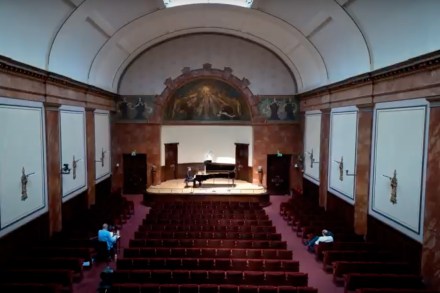
Remember when 2020 was going to be Beethoven year? There were going to be cycles and festivals, recordings and reappraisals; and if you weren’t actively promoting old Ludwig Van there was money to be made whinging about overkill. So was Stephen Hough’s decision to end his Wigmore Hall recital last Monday with Schumann’s Fantasie in C — a work conceived at least partly in homage to Beethoven, which opens with a fragmented musical landscape that Schumann at one point called ‘Ruins’ — a conscious reflection of the musical world’s changed circumstances? Or would that be reading too much into a situation in which a once-routine lunchtime concert suddenly feels like the musical event of the year?

I’m still not wholly convinced by Kirill Petrenko: Berlin Phil’s Digital Concert Hall reviewed

Classical

At the start of Elgar’s Second Symphony the full orchestra hovers, poised. It pulls back; and then, like a dam breaking, the music surges forward in wave upon wave of golden sound. ‘Rarely, rarely, comest thou, Spirit of Delight!’ writes Elgar, quoting Shelley, at the top of the score, and you won’t hear that spirit captured more exuberantly than in a performance from May 2009 by the Berlin Philharmonic under its future music director Kirill Petrenko. The violins gleam, the horns swell and every player is audibly leaning into the music. Under Petrenko, Elgar’s leaping compound rhythms almost seem to dance.

The marvel of Mozart’s letters

Classical

It’s 1771, you’re in Milan, and your 14-year-old genius son has just premièred his new opera. How do you reward him? What would be a fun family excursion in an era before multiplexes or theme parks? Leopold Mozart knew just the ticket. ‘I saw four rascals hanged here on the Piazza del Duomo,’ wrote young Wolfgang back to his sister Maria Anna (‘Nannerl’), excitedly. ‘They hang them just as they do in Lyons.’ He was already something of a connoisseur of public executions. The Mozarts had spent four weeks in Lyons in 1766 and as the music historian Stanley Sadie points out, Leopold had clearly taken his son (ten) and daughter (15) along to a hanging ‘for a jolly treat one free afternoon’.

The joy of Haydn’s string quartets – here are the best recordings

Classical

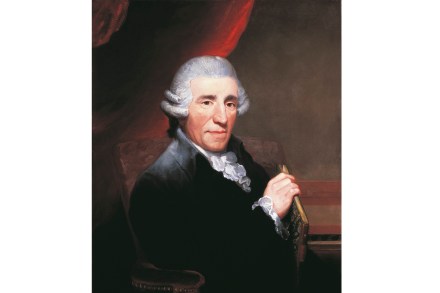
As Joseph Haydn was getting out of bed on the morning of 10 May 1809, a cannonball landed in his back garden. Napoleon’s armies were closing on Vienna, and Haydn’s suburban home was in the line of fire. His valet recorded that the bedroom door blew open and every window in the house rattled. Shaking violently, the 77-year-old composer’s first thought was for his household, which at that point comprised six servants and a talking parrot who addressed him as ‘Papa’. ‘Children, don’t be afraid, for where Haydn is, nothing can happen to you,’ he shouted. This was nothing particularly new. Over a long life Haydn survived smallpox, saw his house burn down (twice) and narrowly escaped castration at the hands of an overenthusiastic choirmaster.

Bleak humour, resourcefulness and wit: Budapest Festival Orchestra’s Quarantine Soirées reviewed

Classical

There’s a certain merit in bluntness. ‘Quarantine Soirées’ was what the Budapest Festival Orchestra called its response to the crisis, and if the name conveyed a certain bleak Magyar humour, the resourcefulness couldn’t be faulted. Elsewhere, orchestras were still talking optimistically about broadcasting concerts from empty halls, and (even more optimistically) about persuading online viewers to pay for them. Realising that any activity that brings 90 musicians into close proximity was probably running out of road, the BFO’s music director Ivan Fischer announced that ‘this is not the time for orchestral music’ and launched a programme of chamber recitals by the orchestra’s players, livestreamed from their rehearsal hall.

Bigamists, lunatics and adventurers: the raucous world of 19th century British music

Classical

For a patriotic German in the decades before Bismarck, Britain’s power was an object of envy. But there was one thing, at least, that you could always hold over the Anglo-Saxons on their foggy little island. On 1 January 1837, Robert Schumann sat down in Leipzig to hear a new piano concerto by the 20-year-old William Sterndale Bennett. ‘An English composer; no composer,’ commented his neighbour, smugly, before the music started. Few 19th-century German music-lovers failed to point out that the land of Shakespeare had somehow failed to produce a single really significant composer since the late 17th century. We know how that story ended; and if you want to explore the flowering of the British musical renaissance, it’s never been easier.

Inspired programming and a proper celebration: Barbican’s Beethoven Weekender reviewed

Classical

Beethoven wears a feather boa and pink shades. He wrangles an electric guitar. A red lightning flash streaks across that familiar, scowling face. ‘Genius before Elton. Radical before Prince. Iconic before Bowie’ proclaimed the posters for the Barbican’s Beethoven Weekender, and apparently there’ve been complaints about them, which probably means that they’ve got the tone about right. Two hundred and fifty years after his birth, Beethoven still has a way of driving all the right people round the bend. US campus musicologists have called for his music to be suppressed (you’d think that champions of inclusion would support a year-long celebration of a disabled composer, but it seems not. Wrong chromosomes).

The audience were in tears: Christian Gerhaher/Gerold Huber at the Wigmore Hall reviewed

Classical

‘Popular’ classical music is a relative term. Show me someone who thinks Beethoven is surefire box office, and I’ll show you someone who’s never tried to sell tickets for the Op. 9 string trios. Even Mahler, the blockbuster concert phenomenon of the past four decades, has his limits. Audiences love him, sure. But in 2011, when several orchestras performed complete Mahler cycles, the limits of that love became embarrassingly clear. The Second and Eighth symphonies — roof-raising choral spectaculars — promptly sold out. The gentle Fourth and the knotty, reconstructed Tenth: not so much. As for his songs, forget it. Well, that’s lieder for you.

Warmth, energy and gripping momentum: Stephen Hough’s Wigmore Hall residency reviewed

Classical

In the summer of 1878 Johannes Brahms finally succeeded in growing a beard. It was his third attempt. ‘Prepare your wife for the grisly spectacle, for something so long suppressed cannot be beautiful,’ he wrote to a friend, and by all accounts he wasn’t wrong. Clara Schumann pleaded with him to shave it off. She’d have remembered Brahms as the golden-haired 20-year-old who had arrived on her doorstep in September 1853, glowing with genius; in the words of her husband Robert, ‘a young blood at whose cradle graces and heroes stood guard’. For modern listeners, though, the beard has long since conquered — as if, like one of Philip Pullman’s daemons, it somehow embodies Brahms in his gruff and hairy definitive form.