Culture

Culture

The good, the bad and the ugly in books, exhibitions, cinema, TV, dance, music, podcasts and theatre.

The joy of Malcolm Arnold’s optimistic, hummable tunes

Classical

Never meet your heroes, they say. But if you grew up with classical music in the 1980s, there was fat chance of that. Stravinsky, Britten, Shostakovich, Walton: you’d just missed them. Which is why, in 2001, and finding myself duty-managing an 80th birthday concert for Sir Malcolm Arnold, I inched past his minders and delivered a few trite, polite but entirely sincere words of gratitude and admiration. No response: Sir Malcolm stared blankly ahead. Then he gripped my hand, and started shaking. And kept shaking, faster and faster, his grip tightening like a vice. Raising his head slightly, and pumping my hand with increasing force, he growled: ‘I’m not letting go until you call me Sir.

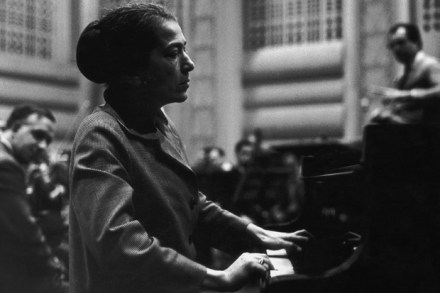
‘Ashtray’ Annie Fischer was a piano giant. Why didn’t more people realise this?

Classical

This year marks the centenary of a pianist whom London orchestral players nicknamed ‘Ashtray Annie’. Only at the keyboard did she have a cigarette out of her mouth. Annie Fischer (1914–1995) was one of those female pianists who, despite their spinsterish appearance, possessed far richer imaginations than splashy male virtuosos. Clara Haskil and Marcelle Meyer also come to mind. Of the three, only Haskil — a physically frail Romanian celebrated for her purity of line — is today given the recognition she deserves: Pope Francis recently named her as his favourite Mozart pianist. Meyer, who as a young woman played for Debussy, had a technique of such refinement that she could liquefy trills and arpeggios without any loss of accuracy.