Culture

Culture

The good, the bad and the ugly in books, exhibitions, cinema, TV, dance, music, podcasts and theatre.

Clear, complex and gripping: Opera North’s Rigoletto reviewed

Classical

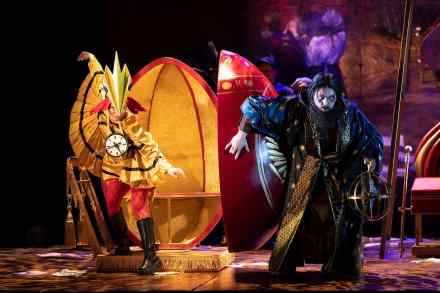
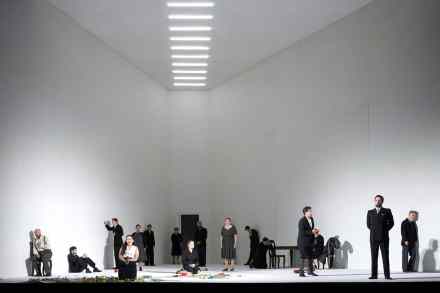
Say what you like about that Duke of Mantua, but he’s basically an OK sort of bloke. A bit of an arse, sure; the kind of TOWIE-adjacent, skinny jean-wearing reality star who’d commission photographic portraits of himself and recruit an entourage of hipsters and B-boy wannabes. But really, his worst crimes are against taste. His neon-lit crib might be hung with hideous religious art, but his parties are relatively free of the nudity, quaffing and non-consensual dry-humping that tends to characterise Act One of Verdi’s Rigoletto. In Femi Elufowoju Jr’s new staging for Opera North, the Duke lays on a hog roast for his posse but doesn’t forget to order pizza for his security staff. The Deliveroo courier got a big laugh as they pedalled in across the stage.

Not pleasant, and not in tune, but unarguably compelling: Royal Opera’s Nabucco reviewed

Classical

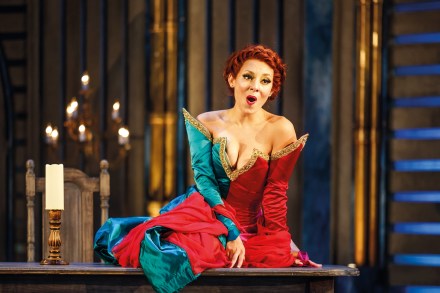
Nabucco, said Giuseppe Verdi, ‘was born under a lucky star’. It was both his last throw of the dice and his first undisputed hit, composed after the failure of Un giorno di regno and the death of his young wife and two children had driven him to abandon music outright. The story (at least, as Verdi told it) was that the director of La Scala had forced him to accept a libretto on the Biblical story of Nebuchadnezzar, and that when a page fell open on the chorus ‘Va, pensiero’ the muse returned. Citation needed, possibly, but there’s no question that the ‘Chorus of the Hebrew Slaves’ is one of those once-in-a-lifetime melodies; a tune (as Elgar might have put it) to ‘knock ’em flat’.

A booster shot of sunlight: Unsuk Chin’s new violin concerto reviewed

Classical

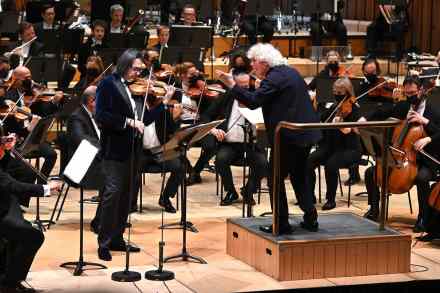
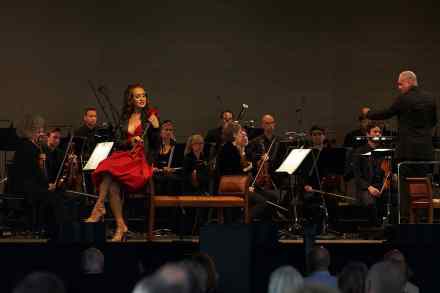
Sir Simon Rattle and the London Symphony Orchestra began the year with a world première. Unsuk Chin’s Second Violin Concerto opened with the soloist, Leonidas Kavakos, completely alone in front of a silent orchestra, playing phrases that rocked back and forth until, suddenly, they were striking sparks. As well they might; Kavakos, after all, is the reason that the concerto exists — the violinist whose ‘burningly intense’ (the composer’s words) artistry has prompted Chin to break her self-imposed rule of writing only one concerto for any given instrument. She explained in the programme notes that ‘the solo violin part forms the foundation of the whole score, the soloist triggering all of the orchestra’s actions and impulses.

Musical conservatives ought to love identity politics

Classical

It’s 2022 and classical music is, again, dead. It’d be surprising if it wasn’t. In 2014 the New Yorker published a timeline by the industry analyst Andy Doe showing the precise chronology of the decline and fall. Ageing audiences in the 21st century, the gramophone in the 20th, the dangerous new technology of the pianoforte in the 1840s: all, in their time, were considered proof that the rot was terminal. Doe traced the root of the problem back to a papal bull in 1324, giving new potency to Charles Rosen’s remark that ‘the death of classical music is perhaps its oldest continuing tradition’. Anyway, the fatal blow this time is the Great Awokening.

The genius of Tchaikovsky’s Nutcracker score

Classical

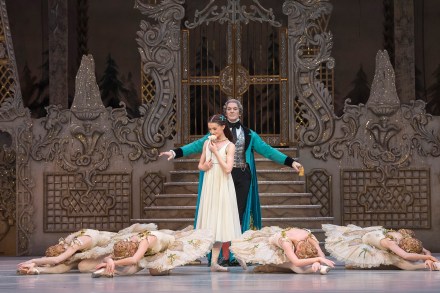
By all accounts, Tchaikovsky struggled to compose The Nutcracker. It wasn’t his idea of an effective ballet scenario, and he was unimpressed with the choreographer Marius Petipa’s prettified storyline. Mid-composition, he learned of the death of his younger sister Alexandra. ‘Even more than yesterday, I feel absolutely incapable of depicting the Kingdom of Sweets in music,’ he wrote. But inspiration can be counterintuitive. On a good day, Tchaikovsky could write as fluently as any Victorian serial novelist, churning out forgettable piano pieces (as he put it) ‘like batches of pancakes’. Projects like The Nutcracker put him through purgatory but the result, with hindsight, was nothing less than the sound of Christmas.

Modernism’s back, baby: Huddersfield Contemporary Music Festival reviewed

Classical

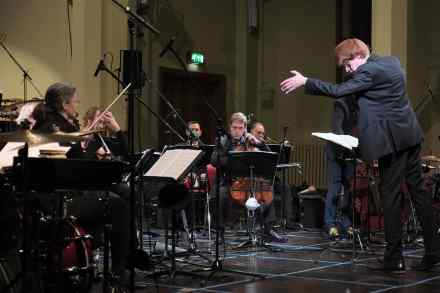
It’s not everyone’s idea of fun, a trip to Huddersfield in the depths of November. But as any veteran of Huddersfield Contemporary Music Festival knows, it usually pays off. Sure, none of the venues has a bar; the programming is as carefully curated as a b2b trade show, the main hall about as cosy as a care home. And true, calling all this a ‘festival’ sometimes feels like wishful thinking. And yes, you are in Huddersfield. (In November.) But HCMF remains one of the few places in this country where you can get a high-quality hit of musical modernism — and always freshly served piping hot straight from the continent’s finest compositional kitchens.

In defence of the earworm

Classical

That strain again… it’s the morning after the concert and one tune is still there, playing in the head upon waking, running around and around on an unbreakable loop over breakfast. I’ve never liked the term ‘earworm’. It suggests an alien parasite, an aural violation, when in fact some part of the musical brain is clearly in love with this scrap of melody, and getting a microgram of a dopamine hit every time it presses ‘repeat’. It’s consensual, even pleasurable. Why fight it? There’s an Arthur C. Clarke story about a scientist obsessed by the finale of Sibelius’s Second Symphony.

40 per cent sublime, 60 per cent ridiculous: ENO’s The Valkyrie reviewed

Classical

It’s the final scene of The Valkyrie and Wotan is wearing cords. They’re a sensible choice for a hard-working deity: practical but with a certain retro flair. Slumbering under a red puffer jacket lies his daughter Brünnhilde, and as Wagner’s music yearns and flickers, the Lord of Ravens shuffles slowly around on all fours, methodically attaching the carabiners for the climactic flying effect. First one, then another. Then another. Four more to go! Possibly we’re not meant to be seeing this. Possibly it was meant to be obscured by the ‘large final fire effect’ that a slip in the programme tells us has been cut (‘despite extensive planning’) at the last minute.

Hockney’s Rake’s Progress remains one of the supreme achievements

Classical

With Glyndebourne’s The Rake’s Progress, the show starts with David Hockney’s front cloth. The colour, the ingenuity, the visual bravura: 46 years after this production’s first appearance in 1975, it’s still capable of halting you in your tracks. So drink it in. No blockbuster art exhibition will ever give you such ideal viewing conditions, or so much time with a single artwork. And no mock-up or faded video will ever be able to restore to Hockney’s sets and costumes the meaning and the impact that they possess when they’re peopled by living performers and accompanied by Stravinsky’s score. Come for the backdrops, stay for the opera. This is one revival that nearly does send you out whistling the scenery.

Very much NSFW: Jean-Efflam Bavouzet/Quatuor Danel at Wigmore Hall reviewed

Classical

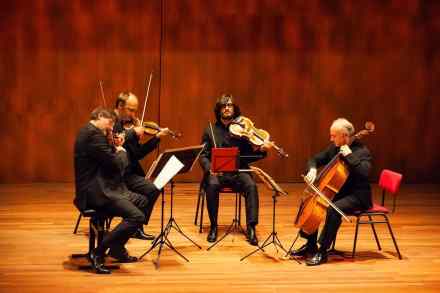
‘Drammatico’, wrote César Franck over the opening of his Piano Quintet, and you’d better believe he meant it. The score bulges with clues: piu dolce; espressivo sempre; eventually (and steamiest of all if you’re even slightly attuned to the absinthe-dazed atmosphere of French Wagnerism) tenero ma con passione — ‘tenderly, but with passion’. It was too much for Camille Saint-Saëns, who played the piano in the world première in 1880. The gossip was that Saint-Saëns knew of Franck’s infatuation with the composer Augusta Holmès, and was repulsed by music that — to jealous ears — sounded like the one-handed diary of a 58-year-old lecher.

The best recordings of the Goldberg Variations

Classical

I sometimes think the classical record industry would collapse if it weren’t for the Goldberg Variations. Every month brings more recordings of Bach’s monumental, compact and rhapsodic keyboard masterpiece. And that’s impressive, given that nowhere else does the composer demand such sustained technical brilliance from the performer, who must execute dizzying scales and trills that wouldn’t sound out of place in one of Liszt’s fantasies. If the Goldberg Variations are an ordeal for harpsichordists, they’re a bloody nightmare for pianists, because they have to tackle music written for two manuals on just one. Their fingers tumble perilously over each other; it looks a bit like high-speed knitting.

See it while it’s still hot: Royal Opera’s Rigoletto reviewed

Classical

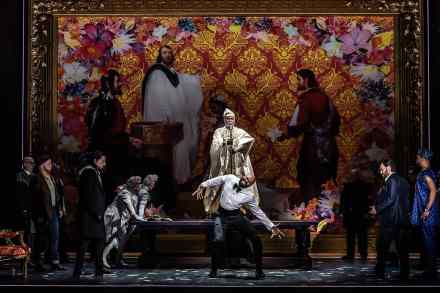
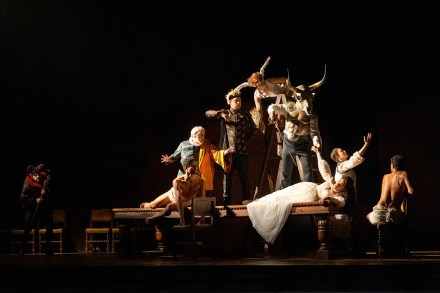
In Oliver Mears’s new production of Verdi’s Rigoletto, the curtain rises on a work of art. The stage is in deep shadow, the backdrop glowing with the rich impasto of an old master painting. Out front, and lit like a Caravaggio, the Duke of Mantua poses amid a mass of human figures in sculptural attitudes. It’s a living representation of some allegorical Renaissance swagger portrait and, as we’re about to see, this Duke is something of a connoisseur. A colossal Venus of Urbino reclines lasciviously above the Act One orgy, replaced in Act Two by an equally gigantic Rubens: Europa riding a wild-eyed bull. Anyway, it looks classy and suitably historic. The offstage band chunters away, and the audience can breathe a sigh of relief.

A lockdown masterpiece and the Jessica Rabbit of concertos: contemporary classical roundup

Classical

So it finally happened: I experienced my first vocal setting of the word ‘Covid’. An encounter that was, inevitably, more harrowing than when I caught the virus itself. ‘Coviiiiiiid!’ yowled the singer, while the orchestra emitted a boom, crack, snap, rumble rumble, shriek, bang, dissonance dissonance. Rice Crispies fans, eat your heart out. It was part of Exiles, a 30-minute new commission by Julian Anderson for the opening concert of the LSO season.

A terrific night of opera: Zanetto/Orfeo ed Euridice, Arcola Theatre, reviewed

Classical

For a one-hit composer, we hear rather a lot of Pietro Mascagni. His reputation rests on his 1890 debut Cavalleria Rusticana, the one-act Sicilian shocker that’s usually yoked (not always to its advantage) to Leoncavallo’s Pagliacci. But in recent years we’ve also seen the cod-medieval car crash of Isabeau, and a couple of outings for Iris, an opera that fuses orientalist opulence with tentacle porn, but not in a good way. In fairness, there have been winners too: Opera Holland Park revived L’amico Fritz in July, and this sun-kissed romcom about an Alsatian cherry farmer slipped down like a Negroni with audiences thirsty for a strong, sweet triple-shot of escapism, verismo-style.

Opera della Luna is a little miracle: Curtain Raisers at Wilton’s Music Hall reviewed

Classical

Arthur Sullivan knew better than to mess with a winning formula. ‘Cox and Box, based on J. Maddison Morton’s farce Box and Cox’ reads the title page of his first comic opera, composed to a libretto by F.C. Burnand a good five years before he latched up with W.S. Gilbert. ‘Those boys hit on a brilliant idea,’ Billy Wilder is supposed to have said when he saw the musical that Andrew Lloyd Webber and Don Black had created from his movie Sunset Boulevard. ‘They didn’t change a thing.’ Gilbert’s comic beats are sharper and faster; and he’d doubtless have shortened it by about 15 minutes.

Exuberance and class: Ariadne auf Naxos at Edinburgh Festival reviewed

Classical

For some reason, I’d got it into my head that the main work in the Gringolts Quartet’s midday recital at the Edinburgh Festival was going to be Beethoven’s Quartet in C sharp minor, Op.131. No problem with that, of course; it’s exactly the sort of big serious work you’d expect a big serious international violin soloist like Ilya Gringolts to play when he forms a string quartet, and then to bring on tour to a big serious international festival like Edinburgh. Still, it’s not a piece that you can really listen to before lunch without a certain amount of mental preparation; and it was while revisiting the Festival website that I saw that I’d got it all wrong. They were actually due to play the Quartet Op.106 in G major by Antonin Dvorak.

The central performances are tremendous: Glyndebourne’s Luisa Miller, reviewed

Classical

Opera buffs enjoy their jargon. We all do it, scattering words like ‘spinto’ and ‘Fach’ like an enthusiastic pizza waiter with an outsize peppermill. It’s principally a means of signalling that you’re part of the club. But occasionally it’s genuinely useful, and Glyndebourne’s new production of Verdi’s Luisa Miller had me thinking about the concept of ‘tinta musicale’, a term used to describe Verdi’s sense that each of his operas should have its own distinctive sonic colour. The late-summer warmth that suffuses Falstaff, for example, or the maritime translucence of Simon Boccanegra. Or take La traviata: the enervated violins of the prelude, the hectic brilliance once the curtain rises.

Ecstasy from Birmingham Opera Company: Wagner’s RhineGold reviewed

Classical

At the end of Birmingham Opera Company’s RhineGold, as the gods stood ready to enter Valhalla, Donner swung a baseball bat and summoned a rainbow bridge of human bodies — crawling, abject, before the new lords of creation. It was pretty much what we’ve come to expect from BOC’s founder Graham Vick, a director who never hints at a contemporary social message when he can ramraid our consciousness with one. Here, though, there was another twist of the knife. The human bridge was made up of delivery couriers, complete with branded cagoules and cycle helmets. Didn’t someone describe lockdown as ‘middle-class people hiding while working-class people bring them things?’. A smart touch, and vintage Graham Vick. Except Vick wasn’t there.

Comedy genius: Garsington Opera’s Le Comte Ory reviewed

Classical

Melons. An absolutely cracking pair of melons, right there on a platter: the centrepiece of the banquet that the chaste, all-female inhabitants of the castle of Formoutiers have provided for their surprise guests, a band of nuns. Except these sisters all seem to be singing well below the stave, and judging from the way she adjusts her crotch, Mother Superior has something more than a chastity belt beneath her habit. We all know where this is going. You can’t get your melons out on stage unless, sooner or later, some great hairy bloke in a wimple is going to shove them down his front. It’s the law.

A new concerto draws cheers in Liverpool: RLPO/Hindoyan reviewed

Classical

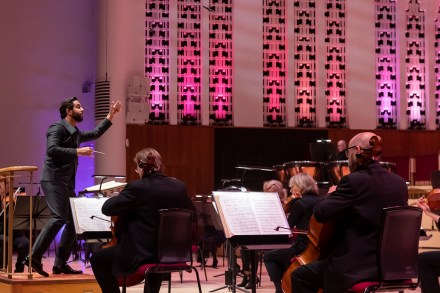
There was no printed programme for the Royal Liverpool Philharmonic Orchestra’s first concert under its music director designate Domingo Hindoyan. Nothing to download either; just a piece of paper the size of a train ticket, handed out by a steward with a conspiratorial air, containing a bare listing of the pieces we were about to hear. Stravinsky, Ravel and Prokofiev: fair enough. Known quantities. But about the second item on the programme — the world première of a new Trombone Concerto by Dani Howard —there was no information at all beyond that all-or-nothing title. All to the good, you might think: pure music and unprejudiced listening. There’s no such thing, of course.

A new recording throws fresh light on Mahler’s puzzling Tenth Symphony

Classical

There are many Symphonies No. 10 by Gustav Mahler, or none. The situation is rare, if not unique, in the history of music. Basic facts: Mahler finished the Ninth Symphony and Das Lied von der Erde in the summer of 1910. At the same time he discovered that his wife Alma was having an affair with Gropius, and that he had an incurable heart complaint and hadn’t long to live. One might have thought that these last two completed works are as movingly valedictory as anything ever written, but Mahler’s view was more complicated than that, and he immediately set about writing a Tenth Symphony. Over and among the notes, he scrawled messages to Alma, God and even the Devil, anguished pleas and expressions of despair.

Hit every auditory G-spot simultaneously: CBSO/Hough/Gardner concert reviewed

Classical

Rejoice: live music is back. Or at least, live music with a live audience, which, as Sir Simon Rattle admitted, addressing the masked and socially distanced crowd immediately before the LSO’s first full-scale public performance for 14 months, is kind of the whole point. Yes, he said, they’d streamed online concerts from the Barbican, but the silence of emptiness is a very different proposition from the silence of a hall containing 1,000 human beings. He’s right, of course. Those 14 months have tested to destruction the notion that digital platforms can offer the same sort of emotional nourishment. Once again, then — rejoice! And nobody mention the Indian variant.

For fans of neglected, niche and uncool music, lockdown has been a blessing

Classical

When this whole mess is over, there’ll be a shortish MA thesis — or at least a blog post — to be had from analysing classical music’s evolving response to the crisis. Already, looking back, distinct phases are emerging from the viral fog. Phase One: the Banana Bread Apocalypse — that first lockdown, when Jamie Oliver was telling us to smoosh up frozen peas and pretend it was pesto, and phonecam footage of a cellist playing Bach in the spare bedroom felt like a kind of miracle. Phase Two: orchestras working out what they could actually do while socially distanced and audienceless. Cue a spike in online performances of works for small (or spaced-out) orchestra. Lots of Tallis Fantasias and Siegfried Idylls.

Josquin changed musical history – why don’t we hear more of him?

Classical

Stepping into the Sistine Chapel, the choir loft is probably the last thing you’d notice. ‘Loft’ is, frankly, a stretch for what amounts to a small alcove with a wooden bench, carved out of the chapel’s wall. But if you made your way up there and ran your hand over the stone you’d feel something unexpected. Etched into the wall in haphazard graffiti are hundreds of names. In most cases the carvings are all that remain of centuries of singers from the papal choir. But one is different: ‘JOSQUINJ’. Chances are it’s the only surviving signature of Josquin des Prez — a composer whose name and legacy are carved just as deeply into the history of music itself. This August marks the 500th anniversary of Josquin’s death.

Are Mozart’s forgotten contemporaries worth reviving?

Classical

There are worse fates than posthumous obscurity. When Mozart visited Munich in October 1777, he was initially reluctant to visit his friend, the Bohemian composer Josef Myslivecek. Myslivecek was in hospital, undergoing treatment (as he told it) for a facial cancer brought on by a recent coach accident. But this being the 18th century, and Myslivecek having a reputation as a gallant, Mozart suspected venereal disease. When he finally appeared at Myslivecek’s bedside, he was appalled by what he saw: ‘The surgeon, that ass, has burned off his nose! Imagine the agony he must have suffered.’ Within four years, the luckless — and noseless — Myslivecek had died in poverty, aged 43. His music effectively died with him.

Where to start with the music of Ethel Smyth

Classical

I’m reminded of an old Irish joke. A tourist approaches a local for directions to Dublin. The local, after much teeth-sucking and head-scratching, eventually replies: ‘Well, I wouldn’t start from here…’. The news that, 75 years after her death, English composer Ethel Smyth has won a Grammy Award for her last large-scale work The Prison is as excellent as it is unexpected. But it’s also frustrating because, well, if I were setting out into Smyth for the first time, I really wouldn’t start from there.

Three new releases that show the classical recording industry is alive and well

Classical

Rachmaninov’s First Symphony begins with a snarl, and gets angrier. A menacing skirl from the woodwinds, a triple-fortissimo blast from the brass, and then the full weight of the strings, hammering out one of those doomy Russian motto-melodies like lead boots dragging you to the bottom of the Neva. ‘Vengeance is mine; I shall repay’ glowers the epigraph that Rachmaninov inscribed at the top of the score, and you’d better believe it. The symphony’s première in 1897 was a disaster that stunned the 23-year-old composer into near-silence.

Astonishing, relentlessly pleasurable rediscovery – tantric opera: Luigi Rossi’s Il Palazzo incantato reviewed

Classical

I don’t say this lightly, but after 20 years of opera-going, Luigi Rossi’s Il Palazzo incantato might just be the most baffling opera I’ve ever seen. And I’ve seen Stockhausen’s Licht. It starts with 27 named roles and originally featured no fewer than ten castrati among its cross-dressing, all-male cast. This operatic game of Twister was premièred in Rome in 1642, where it originally played out over seven scintillating hours and nearly 3,000 verses of poetry written, incidentally, by the man who would go on to become Pope Clement IX.

Perfect English songs in fresh new colours: Roderick Williams sings Butterworth

Classical

Another week, another online concert; and since orchestral music seems likely to be confined to screens and stereos for a while longer, one might as well try and experience something new. But not too new — I’ve pretty much had it up to here with the present. The Hallé orchestra is currently streaming a collection of Shropshire Lad songs by George Butterworth, conducted by Sir Mark Elder and sung by the baritone Roderick Williams in orchestral versions of his own creation. That seems ideal: music by the most perfect of English classical songwriters, in fresh and unfamiliar new colours. And time spent with an artist as likeable and intelligent as Williams is never wasted.