Culture

Culture

The good, the bad and the ugly in books, exhibitions, cinema, TV, dance, music, podcasts and theatre.

An old production that’s aged better than most: Royal Opera’s Turandot reviewed

Classical

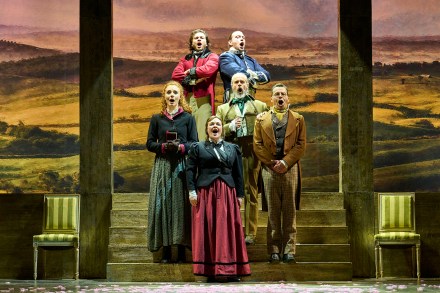
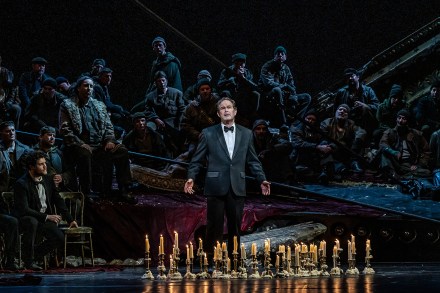
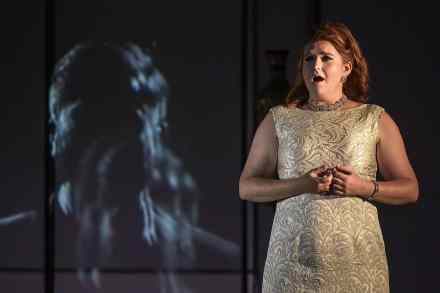
Since its première in 1984, Andrei Serban’s production of Puccini’s Turandot has been revived 15 times at Covent Garden, not counting excursions to Wembley Arena. The current revival has been running (by all accounts, to capacity houses) since 10  March. The compelling reason for reviewing such a well-worn revival mid-run is that this performance featured the Royal Opera debut of the Nottingham-born Wagnerian soprano Catherine Foster – which by any reckoning was well overdue. Foster is hugely esteemed in the German-speaking world. In itself, that doesn’t prove anything – I mean, they rate Franz Welser-Möst too.

If you’re anywhere near Edinburgh, get a ticket: Scottish Opera’s Il trittico reviewed

Classical

It does no harm, once in a while, to assume that the creators of an opera actually know what they’re doing. Puccini was clear that he wanted the three one-act operas of Il trittico to be performed together and in a particular order. Promoters and directors have had other ideas, and between the wars it was apparently common to perform the triptych’s comic final opera, Gianni Schicchi, in a double bill with Strauss’s Salome, which must have been an interesting night out. Come for the necrophilia, stay for the lulz. But Scottish Opera’s new production presents Il trittico in the form the composer intended, and what d’you know? It works.

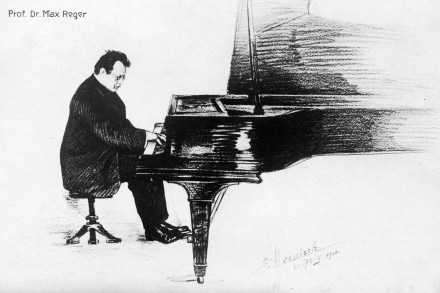
Why does everyone hate Max Reger?

Classical

The German composer Max Reger, born 150 years ago next week, is mostly remembered today for countless elephantine fugues and one piece of lavatory humour. When he was savaged by the Munich critic Rudolf Louis, he wrote back to him: ‘Sir, I am sitting in the smallest room of my house. I have your review before me. In a moment it will be behind me.’ The quip was probably borrowed from Voltaire, but since no one can find it in his writings the credit has gone to Reger. Max Reger was probably the most technically accomplished writer of large-scale fugues since Bach But let’s not dwell on the image of the morbidly obese composer taking his revenge. What’s interesting is that Reger was hated by so many critics.

Dated and wasteful: Rusalka, at the Royal Opera House, reviewed

Classical

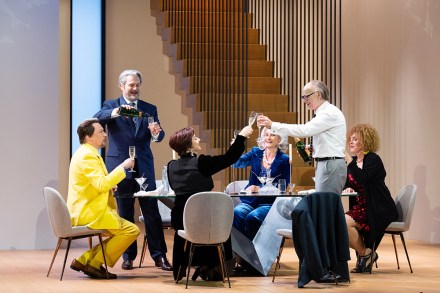
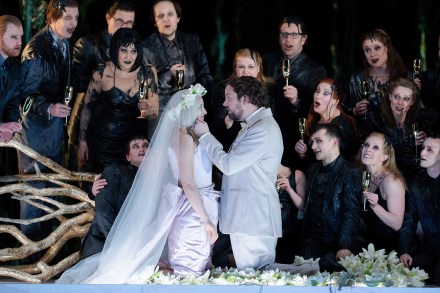
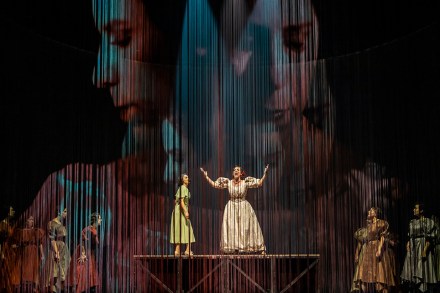
Careful what you wish for. There can be no definitive way to stage an opera, and it’s the critic’s duty to keep an open mind. Still, we’ve all occasionally gazed at a white cube that represents an Alpine meadow, or watched a chivalric hero slouch across the stage in tracksuit bottoms, and felt our hearts slump. Then you pitch up at the Royal Opera House’s new production of Dvorak’s Rusalka and it’s as if some mischievous sprite has magicked you straight back to 1960. The directors are also credited as ‘creators’ (back in your box, composer and librettist!) At first, you don’t suspect much. It’s actually rather enchanting: deep forest darkness and an aerial dancer in rippling, shimmering robes, drifting into the light in an exquisitely realised swimming effect.

The unknown German composer championed by Mahler

Classical

I was sceptical when the lady on the bus to Reading town centre told me that her father knew Liszt. Who wouldn’t be? This was a long time ago, mind: probably 1980, and I was on my way into school. I think our conversation started because I was reading a book about music. She was old and tiny, wearing a luxuriant wig. She introduced herself as Mrs Ball but her accent was unmistakably German. Even so, Liszt had been dead for nearly a century. Could it be true? ‘Oh, my father knew everyone,’ she said. ‘Richard Strauss was a great friend. And dear Bruno Walter. He lived in our house, you know. They were wonderful days – we were surrounded by the finest music.

Still ugly but worth catching for the chorus and orchestra: Royal Opera’s Tannhäuser reviewed

Classical

A classical concert programme is like a set menu, and for this palate the most tempting orchestral offering in the UK this January came from the Slaithwaite Philharmonic under its conductor Benjamin Ellin. They opened with a suite from Bernard Herrmann’s Vertigo, and the inclusion of Hollywood film music in a ‘straight’ classical programme was interesting in itself. Film music has been around for more than a century now. Many scores are fully as effective in concert as (say) Schubert’s Rosamunde or Beethoven’s Egmont, and yet this almost never happens. Film scores (unless by a big beast of the classical world) are generally hived off into ‘pops’ nights. Snobbery is the most adaptable of vices.

Stirring and sophisticated: RLPO, Chooi, Hindoyan, at the Philharmonic Hall, reviewed

Classical

Daniel Barenboim was supposed to perform with the Royal Liverpool Philharmonic Orchestra earlier this month. His recent health concerns made that impossible, but it was a reminder that for the first time since the appointment of the late Libor Pesek in 1987, the RLPO is under the direction of a conductor soaked in the German tradition. Domingo Hindoyan, the orchestra’s chief conductor since autumn 2021, was born in Venezuela and has a soft spot for French music, but Barenboim is his mentor and there’s a gravity – an intellectual centre – to his conducting that made me eager to hear him get to grips with the sacred monsters of German romanticism. It’s something of an RLPO tradition, after all.

What makes a Christmas song Christmassy?

Classical

Temperature records for Los Angeles in the summer of 1945 are patchy, but 90 in the shade seems to have been the norm. It was during one such scorcher, presumably, that the songwriters Jule Styne and Sammy Cahn pulled up at a red light on the corner of Hollywood and Vine. Cahn suggested going to the beach. Styne had a better idea: ‘Let’s go write a winter song.’ Driving over to the offices of their publisher Edwin H. Morris, Cahn commandeered a typewriter, glanced out the window and typed the exact opposite of what he saw: ‘The weather outside is frightful.’ The Great American Songbook had acquired another Christmas classic. And ‘Let it Snow!’ is no less classic – and all the more American – for omitting any mention of Christmas.

If Ravel’s Boléro makes you yawn, you’re not really listening

Classical

Only boring people are bored by Ravel’s Boléro. True, the composer – the slyest of wits – left his share of booby traps for the uncomprehending; take his comment, in a letter to Paul Dukas, that ‘I have written only one masterpiece, Boléro. Unfortunately there is no music in it.’ Yet Ravel was a sublime colourist; a master of the instrumental palette who makes Stravinsky’s orchestration sound coarse by comparison, and Boléro is one long twist of a fabulous kaleidoscope. Even its notorious repetitions are a red herring. Take the full score as a whole and you’ll struggle to find two bars that are identical (there are a couple at the start and a couple near the very end, but that’s basically it).

Hugely entertaining: Royal Opera’s Alcina reviewed

Classical

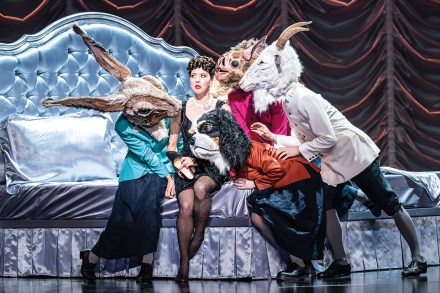
A hotel bellboy, the story goes, discovered George Best in a luxury suite surrounded by scantily clad lovelies and empty champagne bottles. ‘George, George’, he sighed. ‘Where did it all go wrong?’. It’s the same deal, essentially, with Ruggiero, hero of Handel’s Alcina. As the curtain rises he’s in the boudoir of Alcina, a smokin’ hot love-witch who lives on a paradise island with her minxy little sister, Morgana, and whose only serious failing – and who are we, really, to judge? – is a fondness for transforming her enemies into animals. This being an epic tale of chivalry, and this being 1735, it’s universally understood that having this much fun simply isn’t on.

A total (and often gripping) theatrical experience: Scottish Opera’s Ainadamar reviewed

Classical

Do you remember Osvaldo Golijov? Two decades ago he was classical music’s Next Big Thing: a credible postmodernist with a lush and listenable tonal flair, and an Argentinian with an interestingly complex European heritage in a millennium where everyone agreed – for a while, anyway – that the future was Latin American. Major labels recorded his music as soon as it was premièred; he was popular. Too popular for some – I remember a contemporary music promoter lamenting, with the demeanour of a housemaster who’s just found the head boy smoking behind the bins, that Golijov ‘hadn’t developed as we’d hoped’. Anyhow, Golijov was big, and then something stalled. Commissions failed to materialise, there were rumours of creative block, and the parade moved on.

A miniature rite of a very English spring: a Vaughan Williams rediscovery in Liverpool

Classical

Imagine a folk dance without music. Actually, you don’t have to: poke about on YouTube and you’ll find footage from 1912 (there’s music dubbed on, but it’s a silent film) of Vaughan Williams’s friend George Butterworth in full Morris fig, going through the moves with Cecil Sharp and a pair of pinafore-wearing gals. Note the precision of his movements, that big Kitchener moustache: how seriously Butterworth is taking it, four years before he stopped a bullet on the Somme. And they really were sincere, those folk song pioneers.

Grey, grey and more grey: Aida, at the Royal Opera House, reviewed

Classical

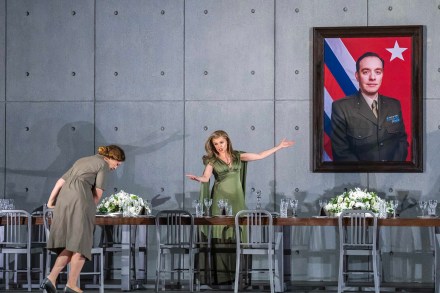
Grey. More grey. So very, very grey. That’s the main visual impression left by Robert Carsen’s new production of Verdi’s Aida. Possibly a few older operagoers still think of Aida as a fabulous spectacle: horses, temples, caparisoned elephants and all the gilded splendour of the Pharaohs. But if you cut your opera-going teeth more recently than 1990 – and unless you’re going to one of the more lavish Ellen Kent efforts – you’ll know by now to expect nothing of the sort. Carsen places the drama within the towering walls of a government bunker in some unspecified modern military dictatorship, with the cast (even Aida and Amneris) dressed almost entirely in shades of khaki.

Why does opera always feel the need to apologise for its plots?

Classical

Leos Janacek disliked long operas, and the first act of The Makropulos Affair is a masterclass in how to set up a drama without an ounce of fat. There’s a prelude: driving motor-rhythms, surges of emotion, and somewhere in the distance – far away (or long ago) – the sound of trumpets. The curtain rises and we’re tipped brusquely into a lawyers’ office in the early 20th century. The lawsuit they’re discussing is long-winded and complex: aren’t they always? No matter. By the end of the act, these blustering professional men have been interrupted by the magnetic and imperious diva Emilia Marty, who knows things about the century-old case of Gregor vs Prus that no living person could possibly know. We’re intrigued. End of Act One.

Holds out huge promise for future seasons: If Opera’s La Rondine reviewed

Classical

One swallow might not make a summer, but it certainly helps rounds the season off. ‘Perhaps, like the swallow, you will migrate towards a bright land, towards love,’ sings the poet Prunier to Magda, the heroine of La Rondine, but love itself is the real bird of passage in Puccini’s gorgeous Viennese operetta-manqué. Magda trades in her old lover for a younger, cuter model and after a summer of happiness leaves him too, without undue regret. That’s basically it. No death leaps from battlements, no ritual disembowelling; none of that stuff that we’re meant to find so regressive and problematic in an opera house, and so visceral and cool in an HBO drama. Just a simple, plausible romance, played out to glowing waltz melodies.

The joy of Franck’s Symphony in D Minor: BBCSO/Gabel, at the Proms, reviewed

Classical

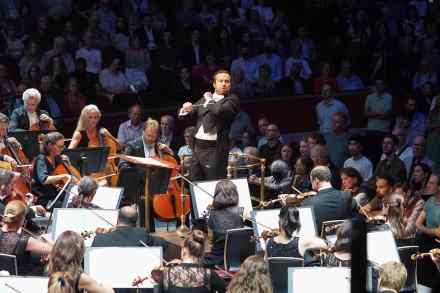
In the Rodgers and Hart musical On Your Toes, a Broadway hoofer is forced to work at a community college, teaching classical music like some kind of square. He picks out a melody on the piano: ‘Whom was this written by?’ ‘By Caesar Frank!’ chorus the students. ‘Pronounce it Fronk,’ he corrects them; and the audience, presumably, laughed in recognition. This was 1936, and César Franck’s Symphony in D minor was a hugely popular concert hall warhorse. Now: not so much. According to the stats in the programme book for this BBC Prom, it was performed 36 times in 50 years at the Proms, before falling off a cliff in 1959. This performance by the BBC Symphony Orchestra under Fabien Gabel was only its seventh Proms outing in as many decades.

A classic in the making: Glyndebourne’s Poulenc double bill reviewed

Classical

One morning in the 20th century, Thérèse wakes up next to her husband and announces that she’s a feminist. Hubby, who’s been in either of two world wars, just wants his bacon for breakfast. Too bad: declaring herself male, Thérèse has already detached her breasts and hurled them spinning into the middle-distance. But they keep hanging around, great pink wobbly orbs floating just above her head. She takes out a gun and blasts them to shreds. Renaming herself Tirésias, and with her husband trussed into a moob-enhancing corset, she sets out to run the world, leaving the men to work out how to make babies alone. Babies (we’ve been told by an evening-suited Prologue) being an urgent national requirement. More fizz, anyone?

A bleeding, inch-thick hunk of verismo sirloin: Royal Opera’s Cav and Pag reviewed

Classical

One legacy of lockdown in the classical music world has been the sheer length of the 21-22 season. In a typical year, most orchestras and urban opera companies would be winding down by mid-May. Not this time: after two years of postponements, and with lost income to recoup, seasons are stretching out like the finale of Dvorak’s Cello Concerto. Rumour maintains that audiences are being stretched too thinly, and although it’d be naive to infer anything fundamental from a smattering of vacant seats, it did feel surprising to see empty patches for the first night of the Royal Opera’s Cav and Pag. Absent Kaufmaniacs, disappointed by Jonas’s latest no-show?

An intimate, lucid and unforgettable new James MacMillan work

Classical

On Tuesday night I was at the world première of a motet by Sir James MacMillan and I don’t think I’ve ever heard a more haunting piece of music. It begins in half-light, with pinpricks from the organ so widely spaced that you could be listening to a forbidding tone row from the Second Viennese School. A four-part choir enters in close harmony and you realise that those apparently unrelated notes hint at austerely beautiful chords encircling the melody. In Carmel’s Shade is one of the smallest but brightest jewels in the MacMillan collection There are moments when we could be listening to Palestrina, to César Franck, to Benjamin Britten – a reminder that MacMillan is fluent in more musical languages than most living composers.

Claude Vivier ought to be a modern classic. Why isn’t he?

Classical

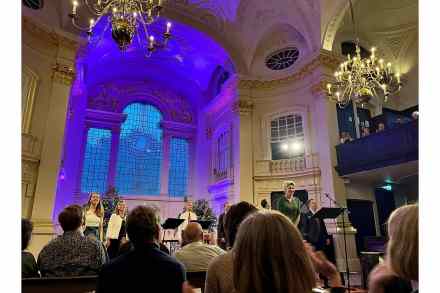
April is the cruellest month, but May is shaping up quite pleasantly and the daylight streamed in through the east window of St Martin-in-the-Fields at the start of I Fagiolini’s latest concept-concert, Re-Wilding The Waste Land. The centenary of Eliot’s poem is the obvious hook. But whether you’re counting from the Rite of Spring riot in 1913, Schoenberg’s Skandalkonzert the same year, or further back to Strauss’s Salome or Debussy’s Faune, music’s modernist moment occurred some time earlier. Which is helpful, in a way, because it freed the group’s director Robert Hollingworth from the limitations of chronological programming and gave him scope to do something a bit more interesting, and possibly a bit more Eliot-esque.

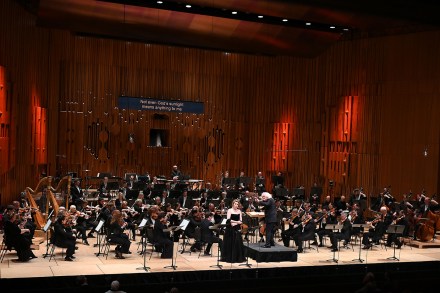
Even Nelsons’s miscalculations are fascinating: Leipzig Gewandhaus/Andris Nelsons, at the Barbican, reviewed

Classical

Imagine growing up with a whole orchestra as your plaything. Richard Strauss’s father was the principal horn of the Munich Opera, and doting relatives funded publication of the teenage Richard’s earliest compositions. At the age of 19 he was assistant conductor of the Court Orchestra in Meiningen, and had rather got used to having world-class musicians at his command.

Too affectionate, not enough cruelty: Don Pasquale, at the Royal Opera House, reviewed

Classical

There are many things to enjoy in the Royal Opera’s revival of Donizetti’s Don Pasquale, but perhaps the most surprising is that the director plays it straight. This was my first encounter with Damiano Michieletto’s newish (2019) staging, and the plan was to approach it without preconceptions. (If we’re about to experience, say, a Bold Feminist Re-Imagining, I’d prefer to deduce it from the evidence on stage.) But for an opera premièred in 1843, Don Pasquale is distinctly old-school, with all its commedia dell’arte assumptions intact and whirring away like clockwork. The elderly miser Don Pasquale disinherits his lovelorn nephew and marries a compliant young bride who instantly becomes an abusive shopaholic scold.

Igor Levit deserved his standing ovation; Shostakovich, even more so

Classical

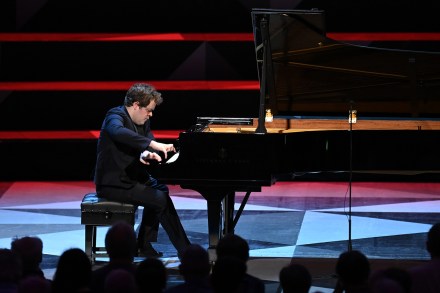
Music and politics don’t mix, runs the platitude. Looks a bit tattered now, doesn’t it? For Soviet musicians, of course, it wasn’t a question of whether you were interested in politics. Politics was unambiguously interested in you. Shostakovich wrote his 24 Preludes and Fugues for piano between 1950 and 1951, in the teeth of Stalin’s postwar crackdown, and in adopting the model of Bach, he seems to have been looking for a safe path forward: music that was politically neutral. He dedicated the Preludes and Fugues to the pianist Tatyana Nikolayeva, whose surprise victory at the 1950 Bach competition in Leipzig had been exploited by state propagandists. Bach himself was a permanent conundrum to the Soviets – that inconvenient fixation with God!

A spirited attempt to fix a show that’s never really flown: Utopia, Limited reviewed

Classical

Utopia, Limited (1893) is a rare bird, and one that every Gilbert and Sullivan completist simply has to bag. The point of completism, of course, is to acquire an overview: if artists are truly original, everything they created should illuminate the whole. But what if a career tailed off, or ran to seed? It’s just going to be depressing, isn’t it? By the time they began their penultimate opera, Gilbert and Sullivan hadn’t collaborated for three years. In fact, they’d barely spoken. Goaded back into harness, they produced a comedy that really ought to have sparkled and yet somehow… well, put it this way: even the late D’Oyly Carte company waited until 1975 before attempting a revival.

Pitch-black satire drenched in an atmosphere of compelling unease: ETO’s Golden Cockerel reviewed

Classical

Blame it on Serge Diaghilev. Rimsky-Korsakov died in 1908 and never saw the première of his last opera, The Golden Cockerel. When the great showman finally presented it in Paris in 1914, it was as Le Coq d’Or: a spectacular opera-ballet hybrid, with colourful, folk-inspired designs by Natalia Goncharova that came to define the Ballets Russes in its imperial phase. That was the form in which it came to Britain, where the Evening Standard described it as a ‘farrago of love-making, black magic and ingenuous inconsequence’ before turning to the real news – the costumes.

Spot-on in almost every way: Scottish Opera’s A Midsummer Night’s Dream reviewed

Classical

Scottish Opera’s new production of Britten’s A Midsummer Night’s Dream seems to open in midwinter. Snow falls, fairies hurl snowballs and the aurora borealis flickers and arcs across the darkened sky. Meanwhile Britten’s score swoons and sighs, its drowsy clouds of string tone wafting above gently snoring basses to create an atmosphere whose every glimmer evokes perfumed warmth. It should be a contradiction, but it doesn’t feel that way at all.

Astonishing, if unnecessary, grandstanding: Barbara Hannigan’s La voix humaine reviewed

Classical

I think it was when she leaned forward and balanced on one leg that Barbara Hannigan jumped the shark. It wasn’t just a question of physical agility, although that was impressive enough. Hannigan performed her on-the-spot acrobatics while singing; the results were projected on to a big screen by three remote-controlled cameras, which zoomed in on her eyes, merged blurry images of her face and occasionally froze, meaningfully, on a particularly arresting posture. She did all this at the same time as conducting the London Symphony Orchestra in Poulenc’s one-woman opera La voix humaine, though that wasn’t really what this was about; at least, not by the time she was on one leg.

The genius of Iannis Xenakis

Classical

This year is the centenary of the birth of Iannis Xenakis, the Greek composer-architect who called himself an ancient Greek stuck in the contemporary world. His instrumental music at times suggests an alien species trying to communicate with us through our musical instruments, his electronic music a distressed animal on the receiving end of amateur dentistry. For his part, Xenakis said that music ‘must aim… towards a total exaltation in which the individual mingles, losing his consciousness in a truth immediate, rare, enormous and perfect’. Of all the post-war European firebrands, Xenakis remains the most influential today.

Deserves to become an ENO staple: The Cunning Little Vixen reviewed

Classical

Spoiler alert. The last words in Janacek’s The Cunning Little Vixen come from a child playing a frog. The story has come full circle — there was a frog near the start of Act One, and naturally you assume it’s the same one. But no: ‘That wasn’t me. That was my grandaddy. He used to tell me about you.’ It’s the final sad-sweet sting; the orchestra swells and the curtain falls. Perfection. Or so Janacek thought, anyway: ‘To end with the frog is impossible,’ insisted his German translator Max Brod — the same well-meaning meddler who either rescued or (according to taste) wrecked Kafka. Brod wanted a final hymn to nature from the central human character, the Forester. You know, a proper peroration.