Culture

Culture

The good, the bad and the ugly in books, exhibitions, cinema, TV, dance, music, podcasts and theatre.

The best podcasts to be enjoyed at 4 a.m.

Radio

Now that all of the billionaires are going into space, the night sky holds a special new kind of allure. We see a little twinkle in the distance and we can think to ourselves, there they are, out there, far away, away from us. It’s not clear whether Jeff Bezos and Elon Musk spent their childhoods looking up at the stars, fantasising fervently about joining them at some future date, or if they are now just bored. But perhaps their sense of identification and belonging in the vast night sky can be understood in another way. Humans have always told stories about the stars, and many of these myths could be relevant to the ambitions of these very wealthy men. Think of Prometheus, too smart and powerful for his own good.

Blissfully colourful, fun and basic: In The Heights reviewed

Cinema

In The Heights is an adaptation of Lin-Manuel Miranda’s smash-hit stage musical — the one he wrote before Hamilton — and it is all-singing, all-dancing, and a ‘feelgood summer movie’, as they say. True, the storytelling is quite basic — anyone frowning over a calculator is sure to have money worries — and by the end of two and a half hours you may well be praying for less singing, and less dancing, I beg you. But what the hell. It’s colourful, it’s fun. It has an unstoppable energy. It has some tremendous set-pieces. And it’s blissfully straightforward.

Why I love Israeli TV

Television

Tragically it wasn’t my turn to review when Channel 5’s groundbreaking Anne Boleyn came out so you’ll never find out what my totally unpredictable critique might have said. As you know, I have previously been mad for all things Israeli and one of my plans had been to go there with my brother Dick and make a fun documentary where we train with the IDF, practise in one of those urban-warfare shooting ranges, learn krav maga, eat lots of Ottolenghi-type food, wallow in the Dead Sea, etc. But I’m afraid I’ve rather gone off Netanyahu’s vax tyranny and just can’t root for Israel in the way I once did. Still, this doesn’t seem to have put me off its TV shows, yet.

Remembering David Storey, giant of postwar English culture

Arts feature

There is a famous story about David Storey. It is set in 1976 at the Royal Court where, for ten years, his plays had first been seen before heading away to the West End and Broadway. That same week he had won the Booker Prize with his novel Saville. With unrivalled success across fiction, theatre and cinema, Storey was a giant of postwar English culture. He was also, compared with most writers, an actual giant. This Sporting Life, his novel made into a groundbreaking film, grew out of his experience of playing rugby league for Leeds. Unlike Saville, his new play Mother’s Day was greeted by a raspberry fanfare after Alun Armstrong dried during a speech containing 27 uses of the f-word.

A new recording throws fresh light on Mahler’s puzzling Tenth Symphony

Classical

There are many Symphonies No. 10 by Gustav Mahler, or none. The situation is rare, if not unique, in the history of music. Basic facts: Mahler finished the Ninth Symphony and Das Lied von der Erde in the summer of 1910. At the same time he discovered that his wife Alma was having an affair with Gropius, and that he had an incurable heart complaint and hadn’t long to live. One might have thought that these last two completed works are as movingly valedictory as anything ever written, but Mahler’s view was more complicated than that, and he immediately set about writing a Tenth Symphony. Over and among the notes, he scrawled messages to Alma, God and even the Devil, anguished pleas and expressions of despair.

Lush, elegant and vivid: Der Rosenkavalier at Garsington reviewed

Opera

At the turning point of Richard Strauss and Hugo von Hofmannsthal’s Der Rosenkavalier, all the clocks stop. Octavian has arrived at the house of the teenage bride-to-be Sophie von Faninal as bearer of the silver rose — the symbol of a love that is simultaneously as artificial and as eternal as any human creation can be. Sophie smells real roses; yes, says Octavian, there is a drop of Persian fragrance amid the silver petals. ‘Like a heavenly, not an earthly rose’, sings Sophie: and her voice soars higher and purer than anything we’ve heard so far, suspended in stillness while Strauss’s orchestra shimmers around her. The thing is, in Bruno Ravella’s new staging for Garsington Opera we already know the rose’s secret.

Annoying but good: Black Midi’s Cavalcade reviewed

The Listener

Grade: A– Imagine a really disgusting and immoral scientific experiment in which the members of Weather Report, the Mahavishnu Orchestra, King Crimson and Wire were somehow fused together into a giant caterpillar or something. This album is the kind of racket the forlorn creature might make. It sits in that usually arid zone where prog meets jazz fusion, with frequent bursts of staccato slash-and-burn brass and more ludicrous time signatures than you could shake a stick at. Or imagine Captain Beefheart speeded up, given a little focus and stripped of even the vaguest semblance of a sense of humour. That’s Black Midi. It works, even if singer Geordie Greep’s croon begins to grate even more than the shrieking mayhem behind him.

Two hours of kitsch tomfoolery: Amélie at the Criterion reviewed

Theatre

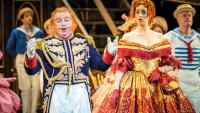
The latest movie to turn into a musical is Amélie, from 2001, about a Parisian do-gooder or ‘godmother of the unloved’. Some rate Amélie as the worst film ever made in France. Some consider it the worst film ever made. Our heroine is a 20-year-old waitress, a sort of proto-Greta, who plays truant from her restaurant job and wanders around Paris doing nice things to random strangers. Her inspiration is a box hidden by a child in her apartment 40 years earlier which she wants to restore to its original owner. Or, as the clunky narrator puts it, ‘Why is she holding that box like her future is inside it?’ Amélie’s odyssey brings her into contact with all kinds of misfits, pests and layabouts who belong in a magic realist novel.

At last some genuine gala material: Royal Ballet’s Balanchine and Robbins reviewed

Dance

The OED defines ‘gala’ as ‘a festive occasion’. In the ballet world this usually translates as a handful of stars, a mile of tulle and more triple fouettés than you can shake a stick at. Most balletgoers could put a half-decent programme together in their sleep: a firecracker duet (Swan, black), the odd solo party piece (Swan, dying), a dash of romance (Romeo, Manon) and the dear old Don Q. pas de deux. After a year being drip-fed small-screen ballet, the prospect of a little bling and bravura generated a buzz of excitement around Dame Darcey Bussell’s charity gala.

An immensely rich show – though it consists of only two paintings: Rubens at the Wallace Collection reviewed

Exhibitions

‘When pictures painted as companions are separated,’ John Constable wisely observed, ‘the purchaser of one, without being aware of it, is sometimes buying only half a picture.’ When he said those words at a lecture in Hampstead delivered on 9 June 1833, he had two great paintings by Rubens in mind: ‘A View of Het Steen in the Early Morning’ and ‘The Rainbow Landscape’. At that date they had already been split up, the first going to the National Gallery, the second eventually to be bought by the Marquis of Hertford. Because of the will of Lady Wallace, the eventual heir of the Marquis, or rather the way it was interpreted, the two have not been reunited since — until, that is, the current, marvellous display at the Wallace Collection.

Wispy, gauzy beauty: This Is The Kit, Barbican, reviewed

Pop

On the way home from This Is The Kit’s show at a socially distanced Barbican, I listened to Avalon by Roxy Music, which had been brought to mind by the previous 90 minutes or so of music. It’s perhaps worth saying that This Is The Kit — the nom de chanson of Kate Stables, backed by a three-piece band and three horn players — have absolutely nothing in common with Avalon by Roxy Music, visually or musically. Stables, hair piled on top of her head, and dressed for comfort, not speed, did not look as though she intended to boost the Colombian export trade after the show; perhaps, instead, she would be offering forthright opinions about agribusiness over a lentil bake.

Crystal Pite tore the house down: Royal Ballet’s 21st-Century Choreographers reviewed

Dance

The choreographers called on to get the nation’s dancers back on to the stage have as much to say about the state of our times as they do about art. Many of the works were created during the pandemic. English National Ballet’s Reunion started life as a series of dance films that were streamed last winter; with the opening of theatres, ENB’s artistic director Tamara Rojo asked the choreographers to adapt them for live staging. Sidi Larbi Cherkaoui’s Laid in Earth was the most moving; a portrait of man coming to terms with impending death, whether his own or his lover’s.

‘Germans thought we couldn’t play’: Irmin Schmidt, of musical pioneers Can, interviewed

Arts feature

‘The records are only half of the picture,’ says Irmin Schmidt, founder member of the great German experimental collective Can. ‘Live [performance] is the side of ours which actually has still to be discovered. For many of the people who came to our concerts, it was much more important in building up the legend than the records, because it was something extraordinary.’ Rock music is neck deep in retrospection these days, but the release of a ‘new’ Can album, Live in Stuttgart 1975, can’t be dismissed as just one more trawl through the floor sweepings. Instead, as Schmidt suggests, it reshapes what we know about one of the most influential bands of the 20th century.

Camp am-dram, plus stuff about the patriarchy: Channel 5’s Anne Boleyn reviewed

Television

Fifty-one years ago, in the BBC’s much-acclaimed The Six Wives of Henry VIII, Anne Boleyn was portrayed as a brave and innocent woman brought low by the men around her, notably Henry VIII and Thomas Cromwell. Even then, of course, this was by no means an unconventional view. Only the previous year, the film Anne of the Thousand Days — nominated for ten Oscars — had taken a similar line, as indeed had Foxe’s Book of Martyrs (1563), which objected to all ‘sinister judgments and opinions… against the virtuous queen’.

The joy of Radio 4 Extra

Radio

The best thing on the radio last week was, without question, Kind Hearts and Coronets. You may have missed it because it was on Radio 4 Extra, the poor, forgotten relation of the BBC’s main channels, which many regard as merely a Radio 4+1 for yesterday’s replays, when it is in fact home to the drama and comedy archive. Like the BBC4 TV channel, which is sadly ceasing commissioning, it hosts the sort of intelligent programmes people really enjoy, to the consternation of those who dismiss them as ‘old’. Fittingly, for Radio 4 Extra, Kind Hearts is all about a poor, forgotten relation who strives to reclaim his place within a family unwilling to acknowledge his existence.

A Shakespeare play at the Globe whose best features have nothing to do with Shakespeare

Theatre

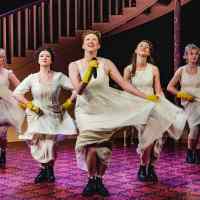
Back to the Globe after more than a year. The theatre has zealously maintained its pre--Covid staffing levels. On press night, there were eight sentries patrolling the forecourt where just 42 masked spectators watched a revival of Sean Holmes’s A Midsummer Night’s Dream. The Globe describes his show as ‘raucous’. The action is set in a forest near Athens during the classical era but the text uses 16th-century English. So it seems crazy to add a third time zone but most directors do so unquestioningly. This modernised production features an array of multicoloured stylings inspired by funfairs and Caribbean carnivals. The palette is a mad rainbow of acid pinks, savage yellows, eye-stabbing greens and brutal scarlets.

Rodin was as modern as Magritte and Dali, but more touching and troubling than either

Exhibitions

Rodin’s studio at Meudon in the suburbs of Paris is huge and filled with light — a sort of combined warehouse, factory and conservatory. It’s crammed with white plaster figures: battered, writhing and fragmentary. This strange, almost surreal effect has been recreated in The Making of Rodin at Tate Modern. The result is more interesting than beautiful. Few exhibits would normally be classified as finished pieces. Most are plaster casts of clay studies, ranging in scale from miniature to gigantic. Quite a lot aren’t even works in progress, more ingredients for art, bits and pieces he could play around with. Rodin called these ‘giblets’ (‘abats’).

The world’s first robot artist discusses beauty, Yoko Ono and the perils of AI

Arts feature

Like a slippery politician on the Today programme, the world’s first robot artist answers the questions she wants rather than the ones she’s been asked. I never had this trouble with Tracey Emin or Maggi Hambling. As we stand before a display of her paintings at London’s Design Museum, I ask Ai-Da whether she thinks her self-portraits are beautiful. What I want to get at, you see, is that, while it’s quite possible for a machine to make something beautiful, it’s hardly comprehensible for a thing made from metal, algorithms and circuitry to appreciate that beauty. ‘I want to see art as a means for us to become more aware of what’s going on in our lives. Art is a way to come together and a way to address problems. Art begins a conversation.

A perfect welcome back to live music: Sarathy Korwar at Kings Place reviewed

Pop

There is a reason music writers tend to stick with music writing rather than transferring their manifold talents to the business side of things. Our dirty secret is that, for all our exquisite taste, most of us — with a few exceptions — have no conception of what the rest of the world actually wants from their music. The first piece I ever wrote was a student newspaper review of a gig in a Leeds pub, in which I gushed about the headliners but noted, with a sneer, the fact that the support didn’t appear to have any actual tunes. We would be hearing no more from them, I cautioned. The headliners were a long-forgotten band called Tad. I forget what happened to the other band; their name was Nirvana.

A brilliant, tense, ragged slice of drama: Waiting for Lefty reviewed

Theatre

A Russian Doll is a monologue about Putin’s campaign to swing the Brexit vote in his favour. It stars Rachel Redford whose Borat accent becomes grating after a little. She plays Masha, a computer wizard and language expert, who works for a firm of hackers appointed to spread fake news ahead of the referendum. Masha uses two techniques. She poses as a British Facebook subscriber and drops scary comments on to her timeline. ‘If we don’t leave the EU, Muslim extremists will flood the country.’ Her other ploy is to share a quiz about bikinis with her female correspondents. If the offer is taken up, the bots can harvest data from the correspondents and from their followers too. These methods seem rather time-consuming and haphazard.

The podcast that makes the world strange, mysterious and compelling again

Radio

It’s interesting that we have decided shaming and yelling are the easiest ways to change people’s minds. Which is not to say I do not think there are people in this world who deserve to be shamed and yelled at: people who use the term ‘cancel culture’ sincerely, people who are deeply invested in the marriage and divorce cycles of celebrities, Meryl Streep. But do I think yelling at Ms Streep will accomplish what I fervently wish for, which is for her to stop ruining perfectly fine movies with her barely adequate performances? No. Every issue in our cultural lives is politicised right now.

Latest proof that western civilisation is over: Sky Atlantic’s Domina reviewed

Television

I’ve been looking at the reviews so far of Sky’s new Romans series Domina and none seems to have noticed the most salient point: it’s crap. This is almost more depressing than the fact that the series got made in the first place, for what it suggests is this: our culture is now so debased that even our arbiters of taste can no longer tell the difference between quality and mediocrity. Domina follows the story of Julius Caesar’s great-nephew Octavian, from when he was a member of the triumvirate to his apotheosis as Caesar Augustus. You’d think you couldn’t possibly go wrong with such fascinating historical material, rich with gore, scheming, politicking, backstabbing and will to power. But Domina says: ‘Hold my cervisia!

Definitely the best cow film of the year: First Cow reviewed

Cinema

Kelly Reichardt’s First Cow stars John Magaro, Orion Lee, Toby Jones, and a Jersey cow listed in the credits as ‘Evie’, who has a dewy face and big soft eyes. As Reichardt has confessed: ‘She is very beautiful and was cast purely on her looks.’ Evie is, thankfully, as convincing as she is beautiful, and this is a convincing and beautiful film. It is touching, tender, original, entrancing, definitely the best cow film of the year. Plus it’s also a quietly masterful thriller where a clafoutis (blueberry) will have you on the edge of your seat.

‘My voice is a curse’: Gary Numan interviewed

Music

Reading the opening chapter of Gary Numan’s recent autobiography, (R)evolution, I start to get the odd feeling that I could just as well be reading about my own early life. Like Numan, I grew up near Heathrow and found the aircraft that flew over our house beautiful and magical. My parents were working class and worked hard and supported me all the way. Like Numan, I wanted to be a pilot, and a rock star. And like him, I never quite fitted in. Perhaps I could have formed a seminal band, become a pilot in my spare time and moved to LA. But then I don’t have that voice, or that talent. Never mind. I am chatting to him by Zoom. He’s in his LA home and eagerly awaiting the release of his 18th solo studio album, Intruder.

The Byrds without the drugs: Teenage Fanclub’s Endless Arcade reviewed

The Listener

Grade: B– Advancing age has smoothed the edges of Bellshill’s finest lads, once — back in the early 1990s — arguably Britain’s best band. This is like being embalmed for ever in suffocating pleasantness. You doze off during ‘Warm Embrace’ and wake, perhaps hours later, to the same gentle, winsome, minor-key harmonies chugging by at a medium pace, the guitars strummed with deadening accuracy. Is it the same song? Have I died? The Fannies have been heading this way for a while and the departure of one of their better songwriters, Gerard Love (who jacked it in two years ago), has hastened their hitherto gentle descent towards the earnestly soporific, the slightly cloying.

Insane and fascinating: BBC World Service’s Lazarus Heist reviewed

Radio

The narrative podcast remains a form in search of a genre. The template set by the hit show Serial — enterprising American journalists with janky piano theme tune shed new light on tantalising murder — still predominates seven years on. To this we can add the format pioneered by S-Town (initial murder investigation subsides into rich human detail) and, more recently, the excellent Wind of Change (intriguing what-if maps cultural and macropolitical shifts, with bonus CIA window-dressing). I remain sceptical about the form’s usefulness as a way of breaking hard news. Caliphate, the New York Times jaw-dropper on the Islamic State, is less gripping now its key source has been revealed as a fraud.