Culture

Culture

The good, the bad and the ugly in books, exhibitions, cinema, TV, dance, music, podcasts and theatre.

I soaked my jumper with tears: The Last Flight Home reviewed

Cinema

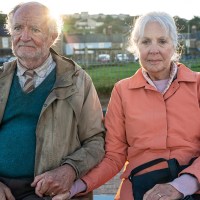
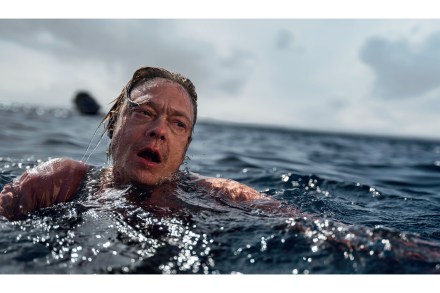
If you’re planning on seeing The Last Flight Home at the cinema, don’t make any plans for afterwards as you’ll be completely done in. I soaked the top half of my jumper with the crying, and then needed to race home to wring it out. It’s an unflinching documentary from film-maker Ondi Timoner following her father in the last days of his life right up to the moment he dies. Old age is no place for sissies, Bette Davis once famously remarked, and neither is this film. But it is also about how to live, how to be a mensch, and so full of love and respect. Plus, the older you get, the less of a sissy you can be. (Or so I find.)  Ondi Timoner (Dig!

Like A-ha after an extensive rewilding process: Sigur Ros, at Usher Hall, reviewed

Pop

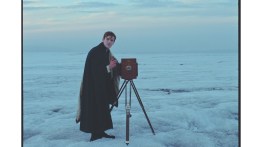
Plus: it's quite clear that MUNA are going to be huge What is it with Icelanders and mushrooms? Just weeks after Bjork releases a fungal-themed album, Fossora, Sigur Ros appear on stage with dozens of sporey lights illuminating the gloom. It’s boom time for mycophiles, but with Sigur Ros the link makes a certain kind of sense. Their aesthetic is not so much post-rock as glacial. For almost three decades the Icelandic quartet have been making large-screen, epically elemental music: celestial choral pieces, art-house concert films, ambient soundscapes and the occasional relatively conventional rock and pop song. Whether aware of it or not, you will have heard ‘Hoppipolla’ on numerous BBC nature documentaries. We won’t hear it tonight, though.

Does gender matter? Making Modernism, at the Royal Academy, reviewed

Exhibitions

 The catalogue to Making Modernism opens with an acknowledgment from the Royal Academy’s first female president, Rebecca Salter, that in the past it has overlooked women artists. To compensate, it has bundled seven – four headliners and three of their lesser-known contemporaries – into this one show. Excluded from official art schools and reliant on private tuition and ‘ladies’ academies’, these seven women escaped the feminine curse of the three ‘Ks’ – Kinder, Küche, Kirche (children, kitchen and church) – to forge independent careers in Germany before the first world war. They didn’t constitute an art movement, though Gabriele Münter and Marianne Werefkin – both comfortably off – facilitated one.

A once-great engine of culture, slowly running out of steam: the BBC at 100

Arts feature

I had my birthday recently – one I share  with a venerable old aunt who shaped my formative years. Well-travelled and fluent in more than 40 languages, Auntie broadened my horizons well beyond the dreary suburb where I lived. She informed me about events in faraway lands, but also steeped me in ‘our island story’. On intimate terms with everybody in the arts, Auntie was unbelievably cultivated. Back then, she also spoke with an unmistakable clarity that was a model for non-native speakers – such as myself. Millions worldwide acquired English in this way, gaining with it a whole civilisation. And so last month, on my birthday, I was genuinely more moved by the thought of the BBC turning 100.

Rebecca Humphries is dynamite – pity about the play: Blackout Songs, at Hampstead Theatre, reviewed

Theatre

Viewers watching a good romcom need to fall in love with three things. The boy, the girl and the affair itself. The new Hampstead melodrama, Blackout Songs, scores just one out of three. Rebecca Humphries is adorably chic and sexy as the Soho seductress who drifts from bar to bar, picking up men. Her toyboy is a disappointment, a teenage deadbeat who has none of her louche gusto. And his character is a puzzle when it ought to be crystal clear. At the start of the action he wears a neck-brace and speaks with a stammer. In the next scene, his neck has healed and his stammer has vanished as well. Is he two characters? Or is he a con man who assumes different personalities, and if so why? He dresses in a paint-spattered tracksuit but he claims to be a welder, a rock star and a fine artist.

Riveting: C4’s Who Stole the World Cup reviewed

Television

Have you ever seen film of the England 1966 football team holding the World Cup at the Royal Garden Hotel, Kensington, on the evening of their victory? The answer, I can guarantee, is no. Unbeknownst to everybody except a few policemen and FA officials, what they were holding was only a replica, made a few months previously after the real Jules Rimet trophy was stolenin London. But this was just one of the many eye-popping disclosures in Monday’s 1966: Who Stole the World Cup? Of course, it’s not uncommon for a documentary to claim the tale it’s telling is scarcely believable. Much rarer is for that claim, as here, to be true.

Hugely entertaining: Royal Opera’s Alcina reviewed

Classical

A hotel bellboy, the story goes, discovered George Best in a luxury suite surrounded by scantily clad lovelies and empty champagne bottles. ‘George, George’, he sighed. ‘Where did it all go wrong?’. It’s the same deal, essentially, with Ruggiero, hero of Handel’s Alcina. As the curtain rises he’s in the boudoir of Alcina, a smokin’ hot love-witch who lives on a paradise island with her minxy little sister, Morgana, and whose only serious failing – and who are we, really, to judge? – is a fondness for transforming her enemies into animals. This being an epic tale of chivalry, and this being 1735, it’s universally understood that having this much fun simply isn’t on.

Exhilarating: English National Ballet triple bill, at Sadler’s Wells, reviewed

Dance

Headed for San Francisco, Tamara Rojo bows out of her directorship of English National Ballet with an exhilarating triple bill demonstrating her success in expanding the repertory and raising technical standards. If only the company could tour this class of work outside London.  The climax of the evening was a new version of The Rite of Spring by Mats Ek – his second stab at dramatising music so graphically vivid and violently aggressive that choreographers since Nijinsky have struggled to find imagery and movement to match its primal energy. Even Kenneth MacMillan and Pina Bausch didn’t quite hack it for me. Ek has avoided the clichés: nobody stomps about plastered in scary face paint. I wonder if his scenario was inspired by Ari Aster’s elegant horror film Midsommar?

Odd, rich and adventurous: Erykah Badu, at the Royal Festival Hall, reviewed

Pop

You couldn’t call Erykah Badu one of the world’s most productive artists: it’s 12 years since her last album, and she’s released just five of them in 25 years, plus a couple of mixtapes. You’re more likely to see her name in the papers for something stupid she’s said – that she can see the good in everybody, even Hitler, because he was ‘a wonderful painter’, for example – than because she’s done something musical. Which is a shame because like her equally unproductive neo-soul contemporaries (Maxwell – five albums in 26 years; D’Angelo – three in 27 years), the music still sounds extraordinary.

Ralph Fiennes at his most terrifying: The Menu reviewed

Cinema

The Menu is a comedy-horror-thriller set in an exclusive restaurant on a private island and it gives the rich a good kicking, like The Triangle of Sadness, except here they manage to keep their food down, mercifully. (At $1,200 a head, you’d hope so.) But the diners are not spared otherwise, and it’s nastily fun, if not pure evil, and should possibly come with a warning: after this, you will never, ever wish to dine anywhere that isn’t Nando’s. https://www.youtube.com/watch?v=C_uTkUGcHv4 The film is directed by Mike Mylod with a screenplay by Will Tracy and Seth Reiss. (Both Mylod and Tracy have worked on Succession.) The opening sees the group of diners waiting to take the boat over to the island where the restaurant, Hawthorne, is located.

The bleak brilliance of Peanuts

Arts feature

The numbers are extraordinary. Charles M. Schulz, whose centenary falls next week, spent nearly 50 years of his life producing daily comic strips for Peanuts. Between 2 October 1950 and his death in February 2000, he drew a staggering 17,897 of them. He retired in December 1999 after a series of strokes and a cancer diagnosis; he died the day before his farewell strip was published. It’s not just the longevity that is remarkable. At its peak, Schulz’s work had a daily global audience of some 355 million. More than 2,600 newspapers in 75 countries carried his strip. Meanwhile, the licensing industry created around his characters was introducing 20,000 new product lines annually. The property as a whole was turning over $1.1 billion a year.

The joy of B-sides

Pop

Paul Weller releasing a collection of solo B-sides is cause for mild celebration. After all, the Jam were one of the great B-side bands. ‘Tales From The Riverbank’, ‘The Butterfly Collector’, ‘Liza Radley’ – all A-list songs, relegated to the subs’ bench. Remember the B-side? That bijou, creative safe space which didn’t merely permit but positively encouraged artists to write parallel narratives of exploration, experimentation and extemporisation. I still remember the first B-side I fell in fascination with. It was called ‘Christ Versus Warhol’, a queasily psychedelic, wilfully odd indulgence on the wrong side of the Teardrop Explodes’ determinedly poppy ‘Passionate Friend’. I felt like the protagonist in Gregory’s Girl.

The extraordinary case of Malcolm MacArthur

Radio

Non-fiction tells you what happened, fiction affirms the kinds of things that happen. According to Aristotle, anyway. So while journalism seeks out unlikely events, fiction creates pleasing inevitabilities. The problem as it pertains to our brave narrative podcasters is that they have to straddle the two worlds: their material must be interesting and unusual, but their final story should have the poetic coherence of good old unreality. They have to turn ‘some things that happened’ into ‘a kind of thing that happens’. Otherwise it’s all evidence and no charge, each event indistinguishable in its randomness from a bolt of lightning.

The careers of artists like Carolee Schneemann and Stephen Cripps are unthinkable today

Exhibitions

During the 1964 debut of Carolee Schneemann’s ‘Meat Joy’ in Paris, a man in the audience tried to throttle the artist before being hauled off by three female spectators. Schneemann’s performance, an ‘exuberant sensory celebration of flesh’, involved semi-naked dancers tangling and grappling while bits of chicken, raw fish and hot dogs rained from above and buckets of paint sloshed underfoot.

Riveting: Netflix’s The Bastard Son & The Devil Himself reviewed

Television

Gratingly edgy soundtrack, stomach-churning gore, torture, witchcraft, sadism and an indigestible title. The Bastard Son & The Devil Himself sounds exactly the sort of series most of us would wish to avoid. It’s aimed at young adults (based on a trilogy by Sally Green called Half Bad) and the only reason I was keen to give it a try was that it has been freely adapted by Joe Barton. For my money, Barton is – along with Jesse Succession Armstrong – the most exciting and original screenwriter currently working in TV.

A towering achievement: ENO’s The Yeomen of the Guard reviewed

Opera

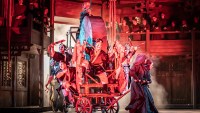
The screw may twist and the rack may turn: the Tower of London, in Jo Davies’s new production of The Yeomen of the Guard, is a dark place indeed, and that’s as it should be. ‘Men may bleed and men may burn,’ intones Dame Carruthers, as she delivers a magic lantern show about the history of the Tower, complete with colour slides of famous beheadings. In The Mikado Gilbert uses capital punishment as a particularly spiky punchline, but in The Yeomen of the Guard, sentence of death has been passed before the curtain has even risen. The shadows are lengthening from the off, and even Sullivan’s cheeriest melodies have a dying fall.

King Charles III’s love of classical music

Arts feature

The musical tastes of King Charles III are more sophisticated than those of our late Queen. That’s not being rude: it’s just a fact. Her favourite musician appears to have been George Formby, whose chirpy songs she knew by heart. No doubt she relished their double entendres – but the hint of smut meant that, to her regret, she had to decline the presidency of the George Formby Society. Our new monarch, by contrast, adores the Piano Concerto in E flat major by Julius Benedict (1804-85). He recommended it in an interview a couple of years ago. I’d never heard of the piece, which existed only in manuscript until Howard Shelley and the Tasmanian Symphony Orchestra recorded it for Hyperion in 2008.

The UK Drill Project, at The Pit, reviewed

Theatre

The UK Drill Project is a cabaret show that celebrates greed, criminality and drug-taking among black males in London. It opens with a septet of masked performers, sheathed in dark Lycra, singing a rhythmic poem while pretending to fire guns and stab people with knives. These sad young rappers are desperate to look scary because they’re scared themselves. And though they claim to be artists, their purpose in writing ‘drill’ songs and posting videos online is to protect their drug profits and to intimidate rival gangs. Musically, they lack accomplishment. They can’t play instruments and appear to own none. Harmony and melody are alien to them.

Arts Council England and the war on opera

Instructed by the Department for Digital, Culture, Media and Sport to move money away from London and reassign it to the regions as part of the Levelling Up strategy, Arts Council England has ended up making some very risky decisions. It has thrown funds at small untested groupuscules without a firm audience base and penalising major reputable institutions such as the Royal Opera House for their success and expertise. Given that the sector is struggling from the effects of the pandemic and the energy crisis – not to mention historic under-funding – the result could well be a catastrophic reduction in the quality and quantity of our cultural life, and a further blow to our international prestige. Opera is being particularly hard hit.

Kazuo Ishiguro: My love affair with film

Arts feature

Everyone has a type they can’t resist. For the writer Kazuo Ishiguro, it’s old men. Old men secretly worried they’ve spent entire lives on the wrong side of history. Old men born in a world of certainty, transplanted to a different, more dubious one. Old men asking themselves, as so many of us will do (if we haven’t already): ‘What was it all for?’ But as I wait at the offices of a West End PR firm to interview Sir Kazuo about his new film with Bill Nighy, Living, I can’t help but wonder what unlikely preoccupations these are for arguably the nation’s greatest living literary talent. Those of us with humdrum lives may daydream about winning a Nobel Prize.

Manet’s Mona Lisa: Radio 4’s Moving Pictures reviewed

Radio

Elizabeth the First is a ten-part American podcast series that isn’t about Elizabeth I at all. The assumption of its producers seems to be that the Tudor monarch was all right – a bit of a trailblazer, one might say – but not really worthy of her title. The real ‘Elizabeth the First’ was actually Elizabeth Taylor. The series aims to present the actress as the first ‘influencer’ the world has ever known, even though poor old Taylor didn’t even know what Instagram was. Taylor did, however, court the media before the word ‘social’ was attached to it. And she didn’t need to take selfies because people were always shoving cameras inher face. The podcast is narrated by Katy Perry, the Californian singer who kissed a girl and liked it and then married Russell Brand.

Refreshingly macho: BBC1’s SAS Rogue Heroes reviewed

Television

Sunday’s SAS Rogue Heroes – about the founding of perhaps Britain’s most famous regiment – began with a revealing variation on the usual caption in fact-based dramas about how everything in them really happened, except the things that didn’t. ‘The events depicted which seem most unbelievable,’ it read, ‘are mostly true.’ https://www.youtube.com/watch?v=gTWqFccBsgg And from there the same sense of somewhat incredulous, head-shaking admiration for its subjects remained. The unexpected result was a 2022 BBC drama that took an unashamedly gung-ho approach to macho heroism – and that, give or take a spot of swearing and heavy-metal music, didn’t feel very different in tone from those classic British second world war films of the 1950s.

The dialogue ripples with energy: King Hamlin, at the Park Theatre, reviewed

Theatre

King Hamlin is a shock-horror drama about gang crime in London. Hamlin, aged 17, has left school without learning any useful facts or skills. He even lacks a shirt to wear so he shows up for a job interview looking like a vagrant and starts to swear at his future boss. No work for him. He dreams of studying computer software but he doesn’t own a laptop and seems incapable of getting one. His life is devoid of functioning adults. There’s no teacher, relative, or competent older friend to advise him. No father, of course. His poor dad was knifed to death because he was ‘too good for the hood’. Which is a new cause of crime in London. An excess of virtue can get you stabbed, it seems.

A total (and often gripping) theatrical experience: Scottish Opera’s Ainadamar reviewed

Classical

Do you remember Osvaldo Golijov? Two decades ago he was classical music’s Next Big Thing: a credible postmodernist with a lush and listenable tonal flair, and an Argentinian with an interestingly complex European heritage in a millennium where everyone agreed – for a while, anyway – that the future was Latin American. Major labels recorded his music as soon as it was premièred; he was popular. Too popular for some – I remember a contemporary music promoter lamenting, with the demeanour of a housemaster who’s just found the head boy smoking behind the bins, that Golijov ‘hadn’t developed as we’d hoped’. Anyhow, Golijov was big, and then something stalled. Commissions failed to materialise, there were rumours of creative block, and the parade moved on.

A generational pop talent: Rina Sawayama, at the O2 Academy Brixton, reviewed

Pop

The first time I saw Franz Ferdinand was at the sadly lost Astoria, just after the release of their first album. I’d liked but not loved the record, but that night I experienced the single most exciting thing in live music: artist and audience absolutely united in the conviction that this – the biggest gig of their career so far and by far – was the last time this band would be playing a place this small. Both band and audience – and even the VIP enclosure of the balcony, in front of where I stood – radiated excitement about all of us being in this together: prepare for lift-off, next stop the stars! Rina Sawayama’s Brixton show was the same febrile, euphoric, shared experience.