Culture

Culture

The good, the bad and the ugly in books, exhibitions, cinema, TV, dance, music, podcasts and theatre.

High-table comedian

More from Arts

Rory Bremner is in a hurry. The controversial impersonator surges into his production office a few minutes late for our meeting. ‘So sorry. Did they tell you? We overran,’ he says in his light, energetic voice. ‘Won’t be a sec. Got to go to the loo. Ooh! Too much information.’ A few minutes later he reappears and sits patiently while I fiddle with the wrong buttons on the tape machine. ‘Quick soundcheck?’ ‘Testing, testing,’ he says helpfully. And we begin.

Scraping the barrel

More from Arts

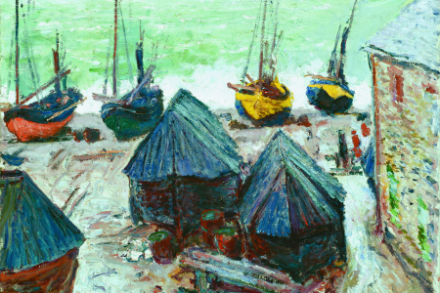
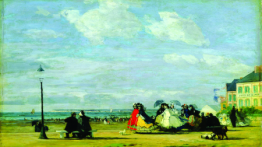
Here are two of the big hitters of Impressionism, both represented by shows which only investigate very particular aspects of their work. Monet and Renoir are names guaranteed to provide good box-office returns, but will the public be satisfied by the choice of work attached to their brand labels? Of course the RA and NG need to generate income from exhibitions in these increasingly expensive times, though both have managed to secure sponsors to help defray the costs of their shows. The RA exhibition comes with a vast doorstop of a catalogue, stuffed full of worthy scholarship, making the art-historical case for the importance of Monet’s hitherto largely unknown pastels and drawings.

Shock and awe

More from Arts

At the age of only ten, Leon Kossoff undertook a momentous journey across London on his own. He travelled from his family home in the East End to Trafalgar Square and, having mounted the steps, entered the National Gallery. At first, the early Christian art he encountered inside filled the boy with fear. But after a while, trepidation gave way to awe. Discovering the existence of paintings was a total revelation, and he subsequently ensured that the works displayed there became an indispensable part of his life. Today, 70 years after that initial childhood visit, the National Gallery is saluting the intensity of Kossoff’s commitment. For he has made hundreds of unbridled drawings from pictures in the collection, and a selection of these images now becomes a galvanic exhibition.

Rich pickings

More from Arts

Forget London, Paris and New York. For any serious collector of art and antiques there is just one unmissable event: The European Fine Art Fair at Maastricht. No one could have predicted 20 years ago that this once modest fair in a small Dutch town few had heard of before the eponymous treaty would become the greatest art and antiques fair in the world. Against all the odds — not least the unbeguiling ring-road venue of the town’s conference centre (not a natural habitat for the international über rich) — it has established itself as the pre-eminent professional marketplace. Unlike all its glamorous counterparts, this event has nothing to do with being seen, charitable good works or bella figura. It is a place where business is done.

Something nasty

More from Arts

‘I’m not a snob. Ask anyone. Well, anyone who matters.’ The author of this self-knowing gem is Simon LeBon and I read it on a freesheet discarded on the bus that took me to see Martin Crimp’s state-of-the-nation play, Attempts on her Life. Amazingly, this tossed-aside gag was the high point of my evening. Mr Crimp, a busy playwright with the resources of the National Theatre at his disposal, failed to produce anything as perceptive or entertaining as LeBon’s throwaway quip. Crimp’s play is a restless self-important plague of words and video-images, scruffy, impressionistic, ill-shaped and rambling, rather like this sentence, going everywhere and nowhere in particular.

Intense emotions

More from Arts

The first revival of Thomas Adès’s The Tempest showed that, impressive as the first series of performances had been, three years ago, they were sketchy compared with what we see and hear at Covent Garden this time round. Certainly it sounded far more exciting this time: the opening deluge of sound was both more overwhelming and more interesting in its details, and led more naturally, after the opening cry from the shipwrecked Court, into the scene between Miranda and Prospero. One of the few changes of cast from the first run is the recasting of Miranda. Excellent as Christine Rice was last time, Kate Royal has a more suitable voice for the role, and looks just as lovely.

Fire and water

More from Arts

It is not surprising that Baroque operas have long attracted the interest of contemporary choreographers. Apart from the numerous dance passages that punctuate these works, their classically inspired plots, rife with political, cultural and social metaphors, are inexhaustible and stimulating sources of inspiration for any modern-day artist. Not to mention the fact that a radical and often intentionally irreverent take on much-revered ‘important’ masterworks is a well-established trait of post-modern dance-theatre making. Sasha Waltz’s 2005 staging of Purcell’s Dido and Aeneas is one of the most recent additions in the long series of choreographic translations of early operas and oratorios.

Acoustic journey

More from Arts

I wonder whether Cameron and co. in their attempts to stir up worries about climate change, carbon emissions and the future of the planet ever spend much time listening to nature in the raw. Of course, to understand what’s happening on a global scale might well require expensive flights to the far reaches of the planet. But there are other, cheaper ways of appreciating and understanding what’s going on in what’s left of our green and verdant land. A few hours doing nothing, absolutely nothing, in the company of warblers and wigeon, pike and teal, godwits and hairy dragonflies, just watching the weather and tuning in to the antics of these alternative communities, can restore not just goodwill but also a sense of perspective on the scale and impact of human endeavours.

Gruesome twosome

More from Arts

A courier staggered up the stairs to my flat bearing Gilbert & George: The Complete Pictures with an essay by Rudi Fuchs (Tate Publishing, 1,200 pages, 1,500 full-colour illustrations, £39.99). It’s a two-volume hardback which comes in its own carrying case, but I was glad not to have to bring it home myself as it weighs over a stone on the bathroom scales. It is the season of G&G overload, for that much-exhibited, much-publicised and over-played pair have been given the signal honour of a grand exhibition of 18 galleries at Tate Modern. A whole floor is devoted to their asininities, which is nothing short of a disgrace. Never have I been to so empty and arid a major exhibition, the most overweening display of narcissism ever to have been mounted.

Prophet warning

More from Arts

Happy birthday to The Entertainer. The ultimate state-of-the-nation play is 50 years old. I’ve never quite bought the idea that Archie Rice, a failed music-hall comedian, is supposed to represent Britain’s decline as a superpower. A clapped-out comic to symbolise the death of a military hegemony? Don’t get it. But at the time this revolutionary play fomented a new kind of ambition for the theatre. A play was no longer just a play, it was a spiritual testament that reached beyond the foyer and into the streets, into the minds of the theatre-shunning majority, and captured the mood of the country.

Beyond belief | 17 March 2007

More from Arts

In this film Sandra Bullock plays Linda Hanson, wife of dishy Jim Hansom (Julian McMahon), mother to two adorable little girls, Megan and Bridgette, and one of those blissfully contented stay-at-home moms who — even though this is very much horses for courses — still make you want to puke a little. It’s a happy, Hanson family, all right. ‘Why don’t you take the girls out and have some fun?’ Linda suggests to Jim one Sunday morning. ‘Sure, that’s a great idea,’ he replies, as if she’s just come up with the internal-combustion engine. He’s a great catch, dishy Jim. Most dads would say: ‘What? All on my own?’ Or even: ‘Children? Since when?

War on the web

More from Arts

The pity of war has been well documented ever since we as rivalrous, destructive human beings developed pen and paper. But this latest British conflict against Iraq is the first in which the new possibilities of internet communication have really taken off. Blogs, emails, the YouTube and MySpace websites have given the soldiers out in Basra and Fallujah an unprecedented opportunity to tell not just us back home but the whole world exactly what it’s like to be out there, almost as it happens. Just switch on your computer, key into Google and type ‘Iraq soldier blogs’ and you’ll come up with any number — bootsonground.blogspot.com, justanothersoldier.com — or at least you could until a number of them were shut down by the military authorities.

A natural approach to Chekhov

More from Arts

Joanna Lumley bears a distinct resemblance to the delectable Mrs Algernon Stitch in Evelyn Waugh’s Scoop, who, while still in bed of a morning, supervises the painting of a mural, fills in the crossword, offers useful advice on matters of state, attends to pressing correspondence, corrects a child’s construing of Horace and deals with a friend’s emotional and financial problems, before bowling merrily into the London traffic in ‘the latest model of mass-produced baby car, painted an invariable brilliant black’. Her modern-day equivalent tends not to run her life from bed but is capable of juggling quite as many and as varied tasks simultaneously, from filming and producing to writing and working unshowily for key charitable causes.

Torments of love

More from Arts

Handel’s Orlando, apparently one of his greatest operas, is much more impressive in the first revival of Francisco Negrin’s production at the Royal Opera than it was at its first outing in 2003. Though my visual memory is most unreliable, I remember it as revolving dizzyingly, with characters whipping through door after door as the tripartite set sped round. There seemed then, too, to be far too much business going on during the da capo arias, as if Negrin didn’t trust Handel to command the audience’s attention unless they had something adventitious to watch.

Lower the volume, please

More from Arts

‘How I hate!’ is the first line of Torben Betts’s new play. Not a promising start. A teenage Goth with a scowl like a squashed spider crouches in her bedroom ranting against her smugger-than-smug parents. A revolution erupts. The Goth cheers and is then raped by a mad soldier. The civil war ends and order is restored, and in the closing tableau the stupefyingly complacent parents spout bourgeois platitudes while their pregnant daughter is assaulted afresh, with their connivance, by her rapist. Clearly this is a Big Idea production which seeks to mount a blistering attack on Western values. That’s why it feels so dated. And yet there are good things here.

Hearing voices

More from Arts

One of the most persistent and tiresome misunderstandings about how sacred music was performed in the past is that boys’ voices were always involved. In any number of places this was simply not true: male voices, yes, always; children’s voices, not at all necessarily. The country where boys seemed to have been used most standardly was England, which, typically, has encouraged us to assume that everywhere else was or should have been modelled on what we were doing. We have no licence to rush around the world insisting that Church music without boys is a debased currency. There is a study waiting to be written about this — I am not going to do it — during which the author will have fun detailing what went on in the Sistine Chapel in the 16th and 17th centuries.

Can of worms

More from Arts

Just to remind you, this is the week my splendid anti-Left polemic How To Be Right is published and if you Speccie readers aren’t its natural constituency I don’t know who is. So buy it, please, or I’m never going to be able to put Boy through that brilliant prep school I mentioned a few weeks ago, and instead of Latin and Greek, all he’ll ever be taught about is Diwali, Mary Seacole and global warming. Talking of which, I should like to thank two ideologically disparate institutions for having saved my bacon this week. The first  is the Centre for Policy Studies, which published Martin Livermore’s timely report on climate-change science rebutting the more hysterical claims of the eco-lobby.

Heaven and hell | 10 March 2007

More from Arts

‘Keep your angels about you,’ was the inspiring advice given by William Blake in Peter Ackroyd’s Drama on 3 (Sunday), based on ‘the story’ of the visionary poet and artist who was born 250 years ago in 1757 and who is famous for giving us ‘Bring me my bow of burning gold’ and ‘Tyger tyger’. It was stirring stuff. And particularly apt for the Christian season of Lent, which so often is depicted as 40 days (or rather, as those who, like Eddie and Lilian on The Archers, have given something up for the duration will have calculated, 46 days) of painful penance for sins past, present and future.

The squinter triumphs

More from Arts

To be called ‘the squinter’, which is what ‘il Guercino’ means, might not seem an auspicious nickname for an artist, but it doesn’t appear to have stood in the way of Giovanni Francesco Barbieri (1591–1666), who became one of the most famous Italian artists of the 17th century. Not only was he a distinguished Baroque painter, he was also a very fine draughtsman, and it is this aspect of his achievement which is celebrated in a glorious new exhibition at the Courtauld. Guercino’s quarter-centenary was in 1991, and was appropriately commemorated, but there’s no need of an excuse for a show of this quality. It’s quite simply ravishing.

Glower power

More from Arts

The Illusionist is one of those films that gains points for trying to be clever and different and ingenious but then promptly loses them all for being not clever or different or ingenious enough. It’s frustrating, really, because you can feel the good film trying to get out — ‘let me out, let me out!’ — but a banal script, some woeful miscasting and a rather desperate plot ‘twist’ simply won’t let it. I put the ‘twist’ in quotation marks because you’ll figure it out way before the characters, and will spend at least an hour of this film wishing they’d figure it out so we can all call it a day and get home for whatever it is we like to do at home. Personally, I like to nap and eat cheese.

Pyrotechnic display

More from Arts

Sunday evening at the Barbican was a revelation, no less gushy word will do. Janacek’s comic opera The Excursions of Mr Broucek is the Cinderella in his operatic output, if you don’t count the very early works, whole or fragmentary; even the weird but kind of wonderful Osud is more likely to turn up these days. Broucek didn’t make it into Decca’s much-lauded Janacek series under Mackerras, though it is he who has supervised the new edition which was used at the Barbican. After the intense exhilaration of this performance, it is difficult to remember what the problem was supposed to be. Admittedly, if you stress ‘comic’ you have to admit that Broucek isn’t very funny, but neither are most comic operas.

Hectic romp

More from Arts

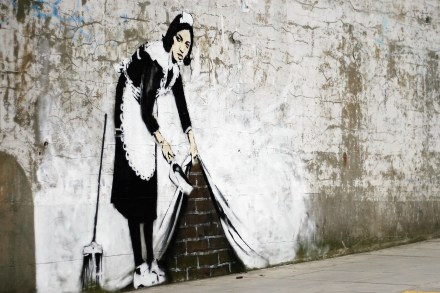
Michael Keegan-Dolan is to dance–theatre what radical and elusive Banksy is to the visual arts. Indeed, these two acclaimed bad boys of modern-day culture have a great deal in common; both derive their art from cruel satire of the everyday, which they portray with similar irreverent and shock-provoking strokes, in spite of their different means of expression. Both indulge in challenging the tenets of existing culture by tackling — some would say ‘desecrating’ — revered monoliths of the art world. And, in formulating their scorching critiques of the surrounding reality, they both resort to a kaleidoscopic pastiche which defies any classification.

Man with a mission

More from Arts

I used to write a few political profiles in my time, and the one thing I always hoped was that the subject would refuse to co-operate. You had to offer to interview them, naturally, otherwise there might be legal difficulties. But you prayed they would say no. That rarely happened. When I did see them, I would try to concentrate on the sort of detail that can be hard to come by — where they spent their honeymoon, why they had that row with X, favourite television programme and so forth. What I usually got was the elder statesman in relaxed and contemplative mode, casting his wise, benign eye over the political scene at great and tedious length. The good stuff invariably came from friends, colleagues and enemies.

I don’t believe it!

More from Arts

Got the right place? Yup, this looks like it. I’m about to meet TV’s grumpiest man, and his fixers have booked us a room in a fashionable media institute in Covent Garden. I peer through the frosted glass at what appears to be a hotel, a bistro, a therapy centre and a health farm all wrapped into one. It’s the kind of place where brunching executives can enjoy an organic chocolate bun and a milky stroppuccino while upstairs, in the anxiety suites, commissioning editors are being massaged, hypnotised and rebirthed from the comfort of their rowing machines. I glance down the street. A dark figure is ambling towards me. His collar is turned up, his head is low over his chest and his face is obscured by a cap and thick glasses. Is that him? I think it is.

Distinguished company

More from Arts

If ever there was an exhibition which warranted a speedy and assessing first look, and then a longer, more lingering concentration on certain pictures, then Citizens and Kings is it. Subtitled ‘Portraits in the Age of Revolution, 1760–1830’, it doesn’t have an exactly prepossessing moniker. Citizens and Kings sounds like something out of one of the duller Dickens novels, a historical tale where they chew bootlaces and eat rat soup. (Or is that Arnold Bennett?) In actual fact, the show is a grand slice of history, illustrated by some of the most remarkable faces of the period. But it also works as a sumptuous display of paintings, with masterpieces by the likes of Goya (who almost steals the show), Ingres and Reynolds.