Culture

Culture

The good, the bad and the ugly in books, exhibitions, cinema, TV, dance, music, podcasts and theatre.

Britain’s Gothic cathedrals owe everything to Notre-Dame

No wonder we feel the agony of Notre-Dame so acutely in Britain. Not only does the cathedral hold a special place in British hearts. But our greatest cathedrals and churches owe a huge stylistic debt to Notre-Dame. Most of Britain's great cathedrals are Gothic – and the Gothic style was born in northern France. And the greatest global example of French Gothic is poor, torched Notre-Dame. The Gothic style began in northern France in the 12th century AD. Notre-Dame wasn't quite the first Gothic building. That honour goes to Saint Denis Cathedral, four miles outside the Paris city centre. In 1144, Saint Denis was the first church in the world to have all the Gothic elements.

Ecstatic misery

Music

Last autumn, anyone who a) has an interest in pop music, and b) reads the weightier end of the press, would have come to the conclusion that the world was shortly to enter some kind of musical singularity, in which all of civilisation would be transformed by the 39-year-old Swedish pop singer Robyn. ‘After more than a half-decade of psycho-analysis, a relationship meltdown, the death of one of her closest collaborators and four years spent working on her masterpiece… a new Robyn is ready to return,’ a profile in the New York Times solemnly pronounced, ahead of Honey, her first album for eight years. The Guardian devoted 6,000 words — 6,000! — to her ‘seismic cultural impact’.

Men behaving very badly

Cinema

Fans of Paolo Sorrentino’s Il Divo, The Great Beauty (which won an Oscar) and his HBO series, The Young Pope, will have been keenly anticipating Loro, his take on the life and times of Silvio Berlusconi, the media tycoon and former Italian prime minister who has been involved in one lurid scandal after another. But if you were expecting some kind of blistering take-down, or satire, it isn’t that, and if you were expecting to somehow get under Berlusconi’s skin, heaven forbid, it isn’t that either. Hard to say what it is, beyond a sprawling mess that caters so exclusively to the male gaze it makes The Wolf of Wall Street look like a children’s tea party. Either that or this is: Manspreading, The Movie.

Sister act | 17 April 2019

Music

Total immersion weekends can prove tricky. The established masters don’t need them, while lesser-known figures often turn out to be relatively obscure for sound reasons. Nonetheless, there are plenty of composers whose works are too rarely performed, not so much through neglect as because of the awkwardness of their demands — huge orchestras and choruses, or unlikely combinations of forces. The Boulangers present in all respects a special case.

Goodbye to all that | 17 April 2019

Television

If you’ve ever faced the social embarrassment of having to admit that you’ve never seen Game of Thrones (Sky Atlantic, Monday), then imagine what it’s like when you’re a TV reviewer. The customary excuse of ‘There really isn’t time to keep up with everything on telly’ might work for most series. But now that GoT is officially a programme that everybody watches (apart from all the people who don’t), it’s beginning to feel a bit feeble for this one. So it was that, after swotting up as best I could on the scores of backstories over the weekend, I decided to give the final series a go. I was, of course, expecting the show to have an epic feel.

Hard lines

Radio

As if in defiance of the BBC’s current obsession with programming designed to entice in that elusive young and modish audience, Radio 4 has set us an Easter challenge. Each afternoon over the weekend Jeremy Irons is reading a chunk from The Psalms for half an hour, without illustration (except a bit of music), explication or deviation. It’s a discomfiting listen, at times harsh, unrelenting. The supple but rigorous language of the King James Version of the Bible is both daunting and uplifting. ‘Keep me as the apple of the eye’ is one of my favourite images, and ‘hide me under the shadow of thy wings’ has helped me through many a long night.

Thank God for hymns!

Features

Before embarking on this hymn to hymns, I’ll admit that hymn-enthusiasts feel a slight sense of anticlimax on Easter Sunday, when the pleasingly austere hymns of Lent are replaced with the too-happy, exclamation-mark-ridden hymns of Easter. Within minutes of the start of the Easter Eucharist, our mouths will ache from repetitive singing of the over-vowelled word ‘Alleluia’. I’ll also admit that I sometimes long for hymns to be over. I check to see how many more verses there still are: three down, three to go. I’m relieved if the vicar says ‘omitting verses five and six’ of a slow seven-verser. Anything to speed up our increasingly padded and long-winded Anglican services.

The return of plainchant

‘I’m still warmed up from last night,’ said Sophie Bevan early on a Sunday morning in the practice-room behind the presbytery of St Birinus Catholic Church in the charming village of Dorchester-on-Thames, Oxfordshire – a tiny Pugin-esque gem dwarfed by the enormous Anglican abbey up the road. She and the other four members of the Davey Consort (two of them her cousins from the musical Bevan clan) were running through a Renaissance polyphonic mass, with Sophie’s husband, the composer and conductor Ryan Wigglesworth, directing from the practice harpsichord.

Capturing a moment | 11 April 2019

Arts feature

On Tuesday, thousands of miles apart, in three great cities, London, New York and Los Angeles, 75 dancers will dance 100 solos in each venue in honour of the late iconoclastic choreographer Merce Cunningham, who would have turned 100 that day. It is a spectacularly ambitious wake for the choreographer who for 70 years denied dance a dramatic or expressive face, and threw all norms of beginnings, middles and ends, of meaningful sequence or physical logic, into a bonfire of expectations. This fabulous celebration, involving dancers of the whole spectrum from contemporary to the Royal Ballet, is a declaration of intent for posterity by the Cunningham Trust, established since his 2009 death to ensure digital preservation of 86 of his dances for future performance and study.

The art of repetition

Exhibitions

An eyewitness described Edvard Munch supervising the print of a colour lithograph in 1896. He stood in front of the stones on which the head of a masterpiece was drawn. He then closed his eyes tightly, stabbed the air with his finger, and gave his instructions. ‘Print... grey, green, blue, brown.’ Then he opened his eyes and remarked, ‘Now it’s time for a glass of schnapps.’ The whole performance, including the air of melodrama and that shot of spirits, was highly characteristic. The resulting colour lithograph, ‘The Sick Child’, is one of the artist’s masterpieces. It is on show in Edvard Munch: Love and Angst at the British Museum — an exhibition that attempts to do two jobs, and succeeds in doing one better than the other.

Billie Eilish: When We All Fall Asleep, Where Do We Go?

More from Arts

Grade: A– If your 12-year-old daughter’s a bit thick, she probably likes Ariana Grande. Come on, dads — you’ve got to face up to this stuff, you’ve got to JUDGE. Be ruthless. If, however, she’s a bit smarter, but also sullen, lazy and probably prone to self-harming, she’ll be a big Billie Eilish fan. Only just 17, from Los Angeles, Eilish is kind of sparse and woke emo electropop misery, very self-consciously ‘edgy’. An agreeably large number of her songs seem to be about killing herself, or just ceasing to exist. The rest are a little darker, and terminally angst-ridden.

Dreaming of Nashville

Cinema

Jessie Buckley is the actress who, you may remember, was ‘phenomenal’ in Beast — I am quoting myself here so it must be true — and she is also phenomenal in Wild Rose. She plays a Glaswegian, ex-jailbird single mum who dreams of Nashville and making it as a country star and, good grief, the pipes on her. Sensational. And you can quote me on that. Indeed, I wish that you would. Bit fed up, frankly, of always having to quote myself. Like I don’t have enough to do! Directed by Tom Harper (War and Peace, BBC) and written by Nicole Taylor (Three Girls, also BBC), this opens with Rose-Lynn (Buckley) leaving prison after completing a year-long sentence for a drugs offence. ‘You gonnae be the next Dolly Parton!

Planet propaganda

Television

If you liked Triumph of the Will, you’ll love this latest masterpiece of the genre: Our Planet. The Netflix nature series exploits the prestige, popularity and swansinging poignancy of Sir David Attenborough to promote an environmental message so relentlessly dishonest and alarmist it might have been scripted by the WWF. ‘Walruses committing suicide because of global warming.’ That was the nonsense from episode two repeated uncritically by all the newspapers, none of which seems to have been much interested in questioning the veracity of the claim. You’ll never guess what it was that really drove those walruses over the edge of the cliff...

Rising to the top

Theatre

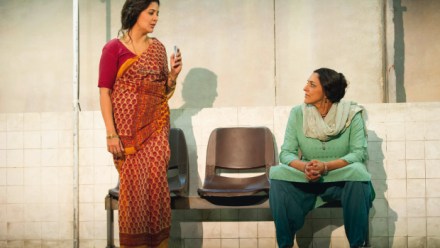
Caryl Churchill’s best-known play, Top Girls, owes a large debt to 1970s TV comedy. It opens with a Pythonesque dinner party in which noted female figures from myth and history get drunk while swapping gags and stories. We meet a Victorian explorer, an emperor’s concubine, a 16th-century Flemish battle-axe and a long-suffering Italian peasant girl. The scene has no internal logic or dramatic direction and, just like a Python routine, it’s besotted with its own inventiveness and it relies on erudite banter and verbal shocks to sustain our interest.

Electrifying and strange

More from Arts

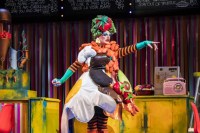
‘Where was the Kahlo brow?’ asked my guest in the first interval of English National Ballet’s She Persisted, a triple bill celebrating female choreographers. She was right: Frida had been plucked. It was an odd decision for a production that does not otherwise shy from ugliness. Broken Wings, a ballet inspired by the life of Frida Kahlo by Belgian-Colombian choreographer Annabelle Lopez Ochoa, was first performed in 2016 and is revived here in a carnival of Tehuana skirts, antler bonnets and capering day-of-the-dead skeletons. The surrealist André Breton likened Kahlo’s art to ‘a ribbon around a bomb’ and that is Katja Khaniukova’s Kahlo: silken and explosive. We see her first as a teenager, all possibility, lifts and lightness.

Hey Judith

Music

‘When a man takes it upon himself to write an oratorio — perhaps the most gratuitous exploit open to a 19th-century Englishman — he must take the consequences,’ wrote George Bernard Shaw, reviewing Parry’s oratorio Judith in 1888. The consequences for Judith seem to have been unusually drastic. Premiered at the Birmingham Triennial Festival, it was a major success: if not quite on the scale of its obvious model, Mendelssohn’s Elijah, then certainly not far behind it. And then it vanished. The most recent UK performance seems to have been in 1951, and while enterprising record labels have blown the dust off Victoriana ranging from Sullivan’s Kenilworth to Ethel Smyth’s Mass in D, there’s no recording of Judith.

Why Peter Sellars’s staging of the St John Passion – which I sang in – was deeply flawed

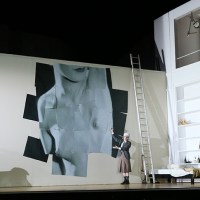
It has been my privilege over the past two weeks to sing in the chorus of the Orchestra of the Age of Enlightenment under conductor Simon Rattle and director Peter Sellars in a staged production of J.S. Bach’s St John Passion. The experience has been life changing for some of my colleagues; it has certainly been unique. Dressed in black casual clothing, we spend much of the performance sauntering around the stage making abstract gestures intended to highlight certain words and distill the myriad emotions found in the music. Some find this effective; others find it silly.

Moonstruck

Arts feature

In Shakespeare’s A Midsummer Night’s Dream, a group of slightly ramshackle workmen decide to put on a play. The play they choose — The Most Lamentable Comedy and Most Cruel Death of Pyramus and Thisbe — is famously and funnily terrible, as is their handling of it. Its central scene takes place at night, so they decide to dress up one actor with a lantern and a thorn bush: the idea is that light might shine through the thorns and convey the illusion of moonlight. This is an elegant solution, but Peter Quince, who is directing the scene, adds that the actor must explain to the audience that ‘he comes to disfigure, or to present, the person of Moonshine’.

Capital punishment

Exhibitions

Is now a good time to talk about Jews and money? The Jewish Museum in London thinks so, and perhaps it is right. Motifs of Jewish financial chicanery that have never really gone away are back. The internet age has allowed memes about Rothschilds, rootless financiers and other thinly veiled claims of Jewish duplicity to thrive as they haven’t for several generations. A film at the start of this new exhibition at the museum in Camden gives some context, with clips of recent anti-Jewish statements from the likes of Louis Farrakhan and other conspiracy theorists. It also includes Donald Trump talking about ‘elites’ draining power from America, which strikes me as an unfair overclaim about what the contents of this poisonous cauldron really are.

I’m sorry I haven’t a clue

Cinema

Alice Rohrwacher’s Happy as Lazzaro sets out as a neorealist tale of exploited sharecroppers, but midway through the story it falls off a cliff (literally) and returns as magical realism, although we mustn’t hold that against it. Or should we? I was sad to see the first narrative go, frankly — come back! Come back! — and the second half rather lost me. This film is beguiling and intriguing and poetic (she says, defensively) but God knows why it couldn’t have carried on as it began, and God knows what it adds up to. I haven’t the faintest. Written and directed by Rohrwacher (The Wonders, Corpo Celeste), the film won the prize for best screenplay at Cannes.

Menace and magnificence

More from Arts

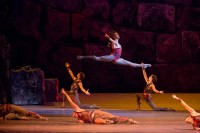
Two households, both alike in dignity. Capulets in red tights, Montagues in green. Kenneth MacMillan’s Romeo and Juliet opens in a piazza where the clash of swords makes a fifth section of the orchestra. Strings, woodwind, brass, percussion… and steel. If Shakespeare’s young bloods and blades once seemed remotely Renaissance, made romantic by distance, Verona’s knife-crime crisis is now horribly real and present. Romeo, Mercutio and Benvolio (Matthew Ball, Valentino Zucchetti and James Hay) make a convincing gang: pumped-up, freewheeling, anarchic. They goose the harlots, twit the nurse and goad each other in reckless acts of lads, lads, lads bravado. Their bragging, ragging gatecrashers’ dance is a tour de force.

Splitting headache | 4 April 2019

Music

Back when the UK was assumed to be leaving the European Union on 29 March, the Aurora Orchestra was invited to Brussels to participate in Klarafestival: specifically, an evening of words and music ‘celebrating cultural links between Europe and the UK’. And because arts organisations in general (and orchestras in particular) change direction with the agility of a supertanker in pack ice, it went ahead regardless. The cellist Nicolas Altstaedt played John Tavener’s The Protecting Veil with exquisite purity of tone. Ian Bostridge sang Britten’s Les illuminations: brisk, earthy, vividly theatrical. The Aurora Orchestra’s strings, playing standing up, flashed and bristled back at him. Musicians like to talk about the power of their art to unite and heal.

The wisdom of the crowd

Television

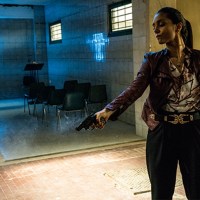
On Sunday a drama began with ED905 being stolen by an OCG who’d faked an RTC that required IR, little realising that they had a UCO in their midst. So yes, Line of Duty (BBC1) is back in all its jargon-laden glory — and, judging from the first episode, it’s lost none of its ability to grip either. For those a bit rusty on their police abbreviations, that opening scene featured the female member of an organised crime group pretending she’d crashed her car with a baby inside, causing the woman in charge of a passing police convoy to stop and help. The rest of the gang then appeared in regulation Line of Duty balaclavas, killed three officers and drove off with the lorry-load of heroin the police were escorting.