Yemen

Watch: Tory MP accuses BBC of bias over ‘amateurish’ Newsnight Yemen special

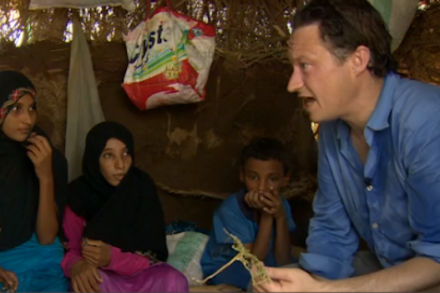
With charter renewal looming, the BBC is under increasing scrutiny from the government to justify its licence fee. So it's fair to say Thursday night's Newsnight Yemen special did little to endear the corporation to some members of the Tory camp. The programme -- led by the BBC's Gabriel Gatehouse -- looked into Yemen's 'forgotten war'; highlighting the Saudi-led coalition's bombing campaign over Yemen to drive Houthi rebels from the city. It reported how the airstrikes -- which have hit some civilian targets -- are supported by Britain as the country sells arms to Saudi Arabia. Alas, this focus has not gone down well with Daniel Kawczynski, the Tory MP who is a member of the Foreign Affairs Select Committee.

Portrait of the week | 6 August 2015

Home Tom Hayes, aged 35, a former City trader who rigged the Libor rates daily for nearly four years while working in Tokyo for UBS, then Citigroup, from 2006 until 2010, was jailed by Southwark Crown Court for 14 years for conspiracy to defraud. The government sold a 5.4 per cent stake in Royal Bank of Scotland, for 330p a share, against the 500p or so that it paid six or seven years ago to save the banking group; the government now owns 73 per cent of RBS. Monitor, the regulator for health services in England, sent out letters ‘challenging the plans of the 46 foundation trusts with the biggest deficits’. Kids Company, the charity founded by Camila Batmanghelidjh, appeared likely to close.

Why Yemen is quickly becoming the new Syria

Though it hasn’t been hitting the headlines recently, the situation in Yemen has been rapidly deteriorating and looks set to grow worse in the coming months. The country now seems to have fallen into all-out civil war, with a level of complexity which echoes the catastrophic war occurring 1,500 miles north in Syria. The war in Yemen is part of the larger Sunni-Shia conflict currently shaking the Middle East. There are the Houthis, a Shia Islamist group, which back in February forced President Abdrabbuh Mansour Hadi out of Sana'a, the capital of Yemen.

British jihadis, go to Yemen

The British embassy in Yemen is to be closed for a couple of days because the Americans have got wind of a terrorist threat. The Foreign Office has gone so far as to urge all Britons to leave the fractious, arid, maniac-bedevilled wasteland right now. I think they should stay where they are. Any Britons visiting Yemen are either mentally ill or actually involved in plotting the very terrorist violence the FCO is worried about. If only we could persuade all of our trainee jihadis to export their talents to this desolate agglomeration of rocks and sand, Britain would be a happier and safer place to live in.

High life | 16 July 2015

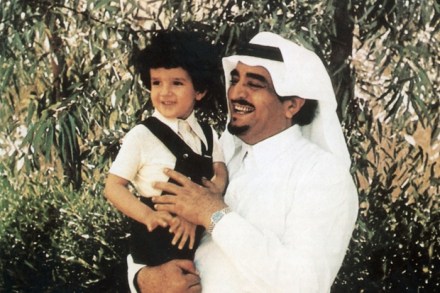
I have signed an affidavit for a hearing in the High Court stating that Janan Harb was, to my knowledge, married to Fahd of Saudi Arabia, who later became king of that ghastly country until he ate himself to death. His son Abdul Aziz, a fat playboy who drifts around the world with an entourage of 150 bootlickers, is challenging Janan’s claims, which, in the immortal words of Mandy Rice-Davies, ‘he would, wouldn’t he?’ Saudi camel-drivers-turned-self-proclaimed royals do not like to pay for the mess they leave behind their ample posteriors, and they definitely do not like to pay for their women. (I’ve often wondered if they really think women stay with them for their looks.

Al-Qaeda could end up the big winners in Syria

[audioplayer src="http://rss.acast.com/viewfrom22/workingwithal-qa-eda/media.mp3" title="Ahmed Rashid and Douglas Murray discuss how the West is working with al-Qa'eda" startat=38] Listen [/audioplayer]After plunging Syria into five years of a bloody civil war that has killed 300,000 and displaced 10 million, Bashar al-Assad is preparing for the endgame. He has been digging a bunker for himself, creating an enclave in the mountains around the coastal city of Latakia where his community, the Alawites, are in a majority. The Iranians are helping him set up this new retreat, but his hope of hanging on to Syria is dying.

Good companions

‘Choose your companions’, says an early Arab proverb, ‘thereafter your road.’ In the 1970s, Hugh Leach’s companion on his travels to Northern Yemen was Freya Stark, and she has become his companion again, in this affectionate hommage of photographs and short, scholarly texts. ‘Choose your companions’, says an early Arab proverb, ‘thereafter your road.’ In the 1970s, Hugh Leach’s companion on his travels to Northern Yemen was Freya Stark, and she has become his companion again, in this affectionate hommage of photographs and short, scholarly texts.

Portrait of the week | 2 July 2015

Home At least 30 British people were among 38 shot dead at a beach resort at Sousse in Tunisia by Seifeddine Rezgui, aged 23, a Tunisian acting for the Islamic State and said to have been trained in Libya. Soldiers, emergency services and 1,000 police took part in a two-day exercise in London simulating a terrorist attack. A statutory obligation became binding on public bodies, including schools, to prevent people being drawn towards terrorism. Nicky Morgan, the Education Secretary, said that schools should look out for ‘homophobia’ as a symptom of Islamist jihadism.

Did Yemen’s intelligence service collude with Al Qaeda?

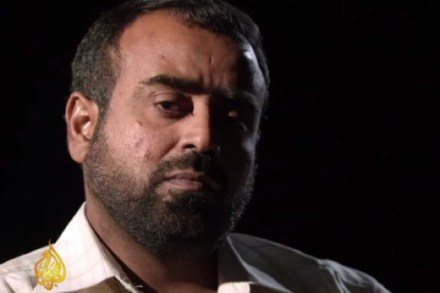
Al Qaeda terrorists have never had good press. For sound reasons they are always represented as evil, nihilistic, faceless murderers. There are certain interesting signs this is starting to change. This is happening in part because the emergence of Isis has shown that there is something worse than Al Qaeda. It is in part because the West has joined forces with Al Qaeda in some of its wars. The Al Qaeda affiliate Al Nusra, for instance, seems to have become a western ally in the war against Assad. Tonight Al Jazeera presents an intriguing portrait of an Al Qaeda terrorist. The documentary Al Qaeda Informant tells the story of the life of Hani Mujahid, a Yemeni citizen who joined Al Qaeda as a foot soldier in the late 1990s.

Shifting sands in Saudi

Whatever happened to America’s desert kingdom? In the four months since Salman bin Abdulaziz al Saud became king of Saudi Arabia, everything we thought we knew about this supposedly risk-averse US ally has been turned on its head. In a ruling house long known for geriatric leadership, the new king has pushed aside elder statesmen and seasoned technocrats alike in favour of an impetuous and uncredentialled son, Mohammed bin Salman, who may be in his late twenties. Now the world’s youngest defence minister, the princeling is already second in line for the throne, prompting grumbles from Iran’s supreme leader, Ali Khamenei, about ‘inexperienced youngsters’.

Portrait of the week | 23 April 2015

Home The prospect of a parliamentary alliance between Labour and the Scottish National Party injected an element of fear into the election campaign. The SNP manifesto promised to increase spending and to find a way to stop the renewal of the Trident nuclear deterrent. Nicola Sturgeon, the SNP leader, said she wanted to make Labour in government ‘bolder and better’. Lord Forsyth, a former Conservative Scottish secretary, said that the building up of the SNP, to take seats in Scotland, was a ‘dangerous view which threatens the integrity of our country’. Ed Miliband, the Labour leader, said the Tories should not be ‘talking up’ the SNP. Even the Democratic Unionists began to eye prospects for advantage in a hung parliament.

Britain might want a holiday from history, but we’re not going to get one

The more I think about the debate on Thursday night, the more I think it was a disgrace that there was no question on either defence or Britain’s role in the world. This country might want a holiday from history. But, sadly, we don’t look like getting one on. On Europe’s Eastern border, the Russians are behaving in an increasingly aggressive fashion. The Times' account of a recent meeting between ex-intelligence officials from Russia and the US shows just how bellicose Putin is and reveal that Britain might well soon have to decide whether to honour its Nato Article 5 obligations to the Baltic states. On Europe’s Southern border, Islamic State is a threat to the civilised order.

The last thing Yemen needs is more war. But that is what it’s getting

After years of hearing how terrible Western interventions are in the Middle East (Exhibits A, B and C the fiascos of Iraq, Afghanistan and post-Gaddafi Libya), it will be interesting to see how a Saudi-led all-Muslim intervention fares in Yemen. My prediction is it won’t be much better than those of the infidels. For a start we are dealing with the poorest country in the Arab world. Whereas Iraq sits on a lake of oil, squandering the proceeds with a venality that is ghastly to behold, Yemen is running out of water, let alone oil. With an estimated GDP per capita of $2,500, the country comes 187th in the world. The figure for Saudi Arabia, incidentally, is $31,300. The last thing Yemen needs is more war.

Was Netanyahu’s message worth the diplomatic damage it caused?

For weeks before his plane set off for Washington, Benjamin Netanyahu's speech to the US Congress was exhaustingly analysed here in DC. Did Speaker Boehner adequately notify the White House about the invitation? How angry was the President really about this fait accompli? Were the Republicans using the invite to try to show themselves to be more pro-Israel than their Democrat rivals? Or were certain Democrats talking of no-shows and walk-outs during the speech only in order to show themselves more critical of Israel than the Republicans? By the day of the speech it seemed both sides had need of the fight. Of course Netanyahu had not single-handedly created this problem. As any member of Congress will tell you, the House has never been more divided, nor its partisan atmosphere more toxic.

Why does Isis slay hostages? To cover up the fact that it’s losing

At this point in the war between the jihadist group known as the Islamic State and a US-led international coalition, many observers are wondering how Isis keeps winning. Isis is up against western air power and powerful regional opponents, and yet has apparently seized a territory larger than the United Kingdom, and is expanding into Egypt, Libya, Algeria, Yemen, and elsewhere. It seems incredible. But the truth is that it’s difficult to say Isis is winning by any objective measure. In Iraq, the group has been put on the defensive in the provinces of Nineveh, Salahaddin, and Diyala, and may soon face a major offensive on its stronghold of Mosul. It’s true, unfortunately, that Isis is on the offensive in Anbar province, and could potentially capture new territory there.

What the Arab world really wants

Two years ago, the West thought it recognised what was happening in the Arab world: people wanted democracy, and were having revolutions to make that point. Now, recent events in Egypt have left many open-mouthed. Why should the generals be welcomed back? Why should the same crowds who gathered in Tahrir Square to protest against the old regime reconvene to cheer the deposing of their elected president? Could it be that the Arab Spring was about something else entirely? I believe so. The Arab Spring was a massive economic protest: a demand that the poor should have the basic rights to buy, sell and make their way in the world.

When spring doesn’t turn into summer

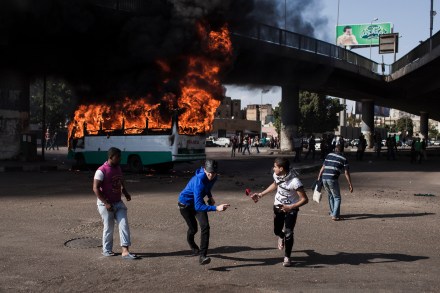
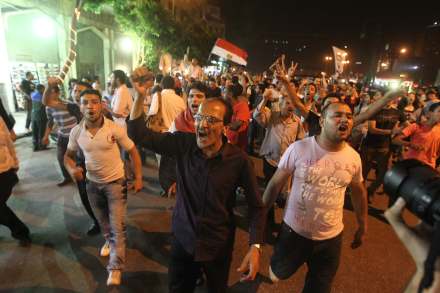
A high-ranking member of Hosni Mubarak’s disgraced government, or someone from the Muslim Brotherhood? It’s hardly an enviable choice — but that is the choice facing Egypt in next month’s Presidential election, after the official results of the preliminary vote were released yesterday. For obvious reasons, neither candidate much appeals to the freedom-loving younger generation that set the country’s revolution a-rolling in the first place. So, overnight, we’ve seen a return to protests, anger, fire, etc. This is still an immensely divided polity. As grim as the situation is, it will come as little surprise to Spectator readers (or to anyone, really).

Attention shifts to Yemen

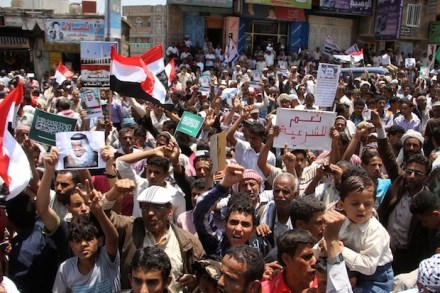
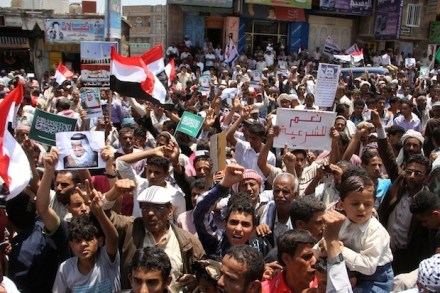
Since last week’s attack on Yemen’s President Saleh and his subsequent flight, Sana’a has been on the cusp of anarchy. Perhaps as many 400 people were killed in riots last week and the killing continues. Western diplomatic services fear for the safety of their citizens in Yemen. The MoD has been preparing contingencies. Forces and materiel deployed in the Libya are moving east. Two fleet auxiliary ships, equipped with helicopters and landing craft, and 80 Royal Marines have been stationed off the Yemeni coast. Should the 800 or so British nationals in Yemen need to be evacuated, the marines will secure a bridgehead. A further detachment, currently on exercises in Albania, is poised to join the task force.

So long, Saleh?

The Middle Eastern merry-go-round takes another turn with the news that President Ali Abdullah Saleh has fled to Saudi Arabia. He has been promising to depart his role, if not his country, for some time now — but the wounds he allegedly sustained after an attack on his compound may have forced the issue. There's always the possibility that he could return to Yemen after his treatment across the border, although it's an unlikely prospect. The Saudis have already gone out of their way by granting this brutal dicatator some degree of clemency, without foisting him back upon his country. And Saleh will already have lost power and influence by accepting their help.

Yemen implodes

Sometimes you wait and wait for an event, and nothing ever happens. Pakistan is always said to be teetering on the brink of collapse but never quite edges over the precipice. The same used to be the case with Yemen. In fact, Coffee House predicted that Yemen would implode last year, but Yemeni President Ali Abdullah Saleh managed to hold the country together in the face of terrorism, irredentist movements, insurgency and, recently, pro-democracy protesters demanding his resignation.   Now, however, the wily leader may finally have run out of road. Heavy clashes have erupted in the capital Sanaa, a day after Saleh again refused to sign a Gulf-brokered power-transition.