Yemen

The decline of drone killings

From our US edition

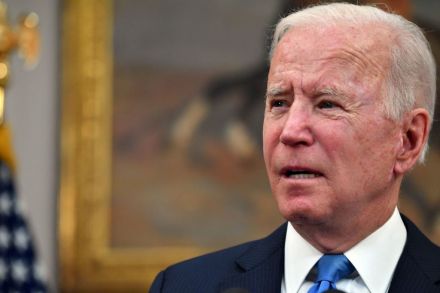
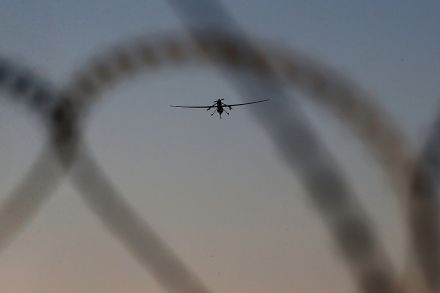
On the very same day that Joe Biden was inaugurated, he imposed an order on the national security bureaucracy that received little attention at the time: drone strikes in Yemen and Somalia were to be curtailed until further notice. If American commanders wanted to strike a target in those countries, they would have to bring the request directly to the White House for debate. The new, temporary guidelines would be in place until the Biden administration completed its inter-agency review on America's policy of targeted killings. That review is still in the process of being finalized. And while we don’t necessarily know what the Biden administration’s new rules and procedures will be, we do know that the White House is ramping down the pace of drone strikes.

The dark Prince

From our US edition

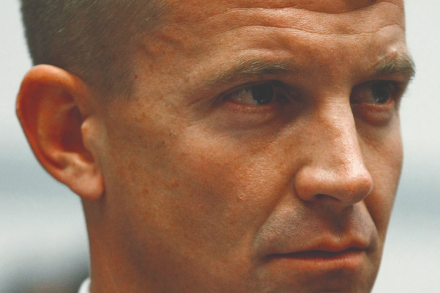
‘No modern US war would be complete without the involvement of Blackwater founder Erik Prince,’ wrote journalist Jeremy Scahill in his seminal book Dirty Wars. That was back in 2013. Since its founding in 1997, Blackwater, Prince’s private military outfit, has been reincarnated several times under different names. But Prince has stayed the same. Iraq, Afghanistan, Libya, Somalia — Prince, a very 21st-century mercenary, has wreaked havoc in all these places. He comes, he spoils, he leaves a mess that is impossible to clear up. Take Libya.

prince

How drones are dramatically changing warfare

From our US edition

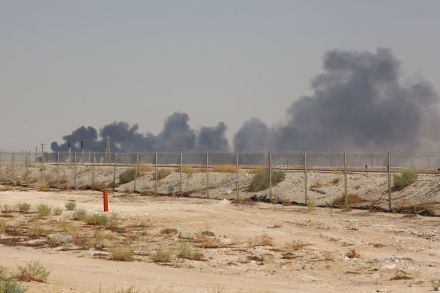
The attack on Saudi Arabia’s oil facilities by Houthi rebels using a fleet of 10 drones loaded with explosives has caused serious damage and will result in a global production cut of around five percent. The Houthi strike was the second aimed at Saudis oil facilities after a previous effort last month resulted in minimal damage. The Houthi drones were likely supplied by Iran, which has a large drone fleet and has been arming the rebel group in Yemen for years. Saudi Arabia is likely to launch retaliatory strikes against both the Houthis and Iran. Drones have become a new frontier in warfare allowing activist groups and nations access to a potent weapon that can be used for surveillance or as a remotely piloted bomb.

drones oil saudi arabia

Yemen Notebook

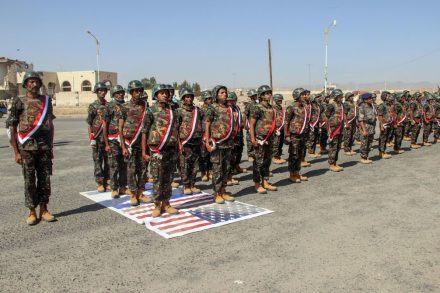
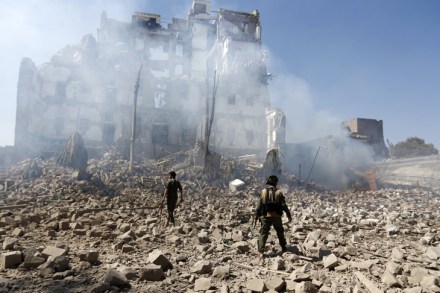
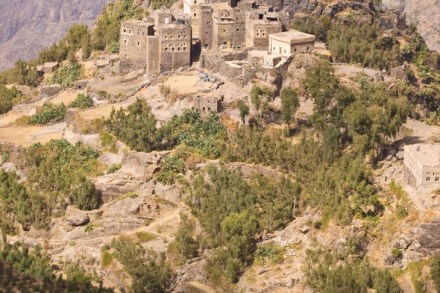
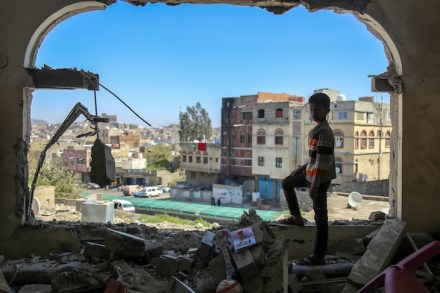
Most nights Saudi bombers fly low over the Yemeni capital of Sanaa dealing out random destruction. High up in the Yemeni mountains, Sanaa claims to be the oldest inhabited city in the world. Its old city, a Unesco world heritage site, is at least as unique, ancient and priceless as any western city. Many of its buildings have been destroyed or damaged by Saudi bombs. Imagine the outcry in the West if Venice or Florence were being targeted in this way. However, nobody seems to care one way or another about Yemen. This is because the country is under attack from Britain’s oldest ally in the region, Saudi Arabia. So that’s all right then. Sanaa is in the hands of Houthi rebels.

The US and Yemen: stopping Iran or appeasing Saudi Arabia?

From our US edition

On Monday, Sen. Bernie Sanders circulated an open letter, calling on Congress to override last week’s presidential veto of a bill demanding a halt to US participation in Yemen’s civil war. The bipartisan bill was the first time Congress invoked the 1973 War Powers Resolution to check presidential foreign policy. Amid the president’s myriad other current problems, a potential veto override could be a chance to rub salt in the wounds. The issue of Yemen, then, will linger. Was Yemen worth the veto? The war, occurring the most secluded and oil-poor corner of the Arabian Peninsula, seems, to many, tangential to American interests.

yemen saudi arabia iran

Britain must follow Germany’s example to help end Yemen’s civil war

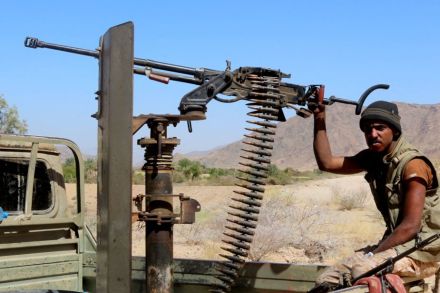
There is no civil war in the world today whose effects are so detrimental to civilians as the conflict engulfing Yemen. The war, pitting a Houthi rebellion in control of the Yemeni capital against the nominal Yemeni government in the south, just crossed its four-year anniversary last week. The United Nations is trying its best to end the fighting, with little to show for it other than a ceasefire in the Yemeni port city of Hodeida which may or (more likely) may not get peace talks off the ground. Unlike the United Kingdom, which has exported £5.7 billion of arms to the Saudi-led military coalition bombing Yemen to smithereens, Germany has largely been a passive spectator to the conflict.

An eye on the prize

We don’t know whether ‘Aziz H’ listened to radio plays as he grew up in Yemen. In fact we don’t even know his real name, nor what he looks like. He was unable to get the visa that would have allowed him to come to London to receive his prize as one of the winners in this year’s BBC World Service/British Council International Playwriting Competition. His drama, A Broken Heart in a Warzone, is the first he’s written for radio but he seems to know instinctively how to create character through voice alone, atmosphere through simple cues, drama out of juxtaposing situations. ‘As someone who isn’t a writer,’ he told the competition organisers, ‘I doubted making it to the shortlist.

Trump’s phony anti-globalism should fool no-one

From our US edition

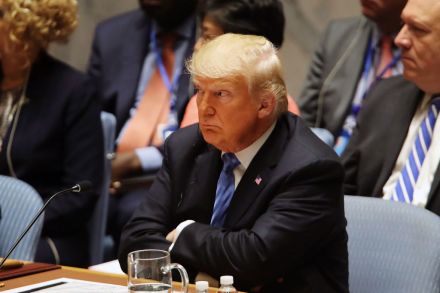
It was fitting that Donald Trump’s blustery speech at the United Nations this week, in which he defiantly denounced ‘the ideology of globalism,’ came just one day after his top adviser John Bolton vowed limitless American military commitment to yet another global conflict. Bolton had essentially declared that US forces would be in Syria for perpetuity, or ‘as long as Iranian troops are outside Iranian borders.’ Though this deployment was never formally debated, voted on by Congress, or subjected to a modicum of public scrutiny, Bolton saw fit to announce that US troops would remain there for an open-ended mission with no termination date.

donald trump anti-globalism

High life | 10 May 2018

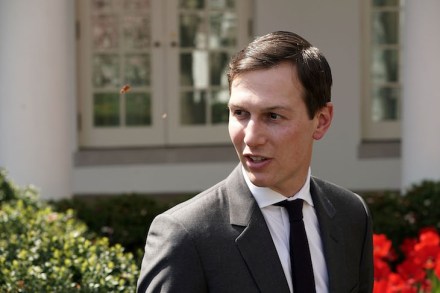
New York Talk about high life this is not. I smelled a rat long ago, but then the scent got weaker and weaker. Now it’s back — and stronger than ever. I’m talking here, of course, about the Saudis, the Qataris and the son-in-law who has also risen, Jared Kushner. Almost a year ago the Saudis issued an ultimatum to Qatar to meet its list of demands or face a blockade by Saudi-allied countries in the Gulf. All sorts of accusations were made and the Qataris were given 24 hours to comply. While the 300,000 Qatari citizens froze en masse, the couple of million non-Qatari migrant workers went about their business. In fact, they welcomed the crisis because it momentarily stopped them being mistreated and abused by Qatari locals, who were busy hiding under their beds.

The prince of PR…

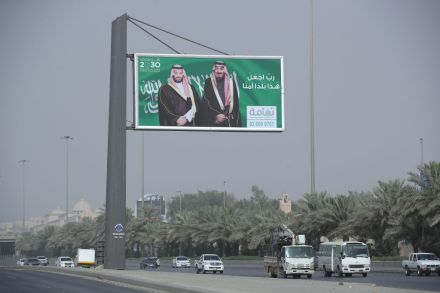
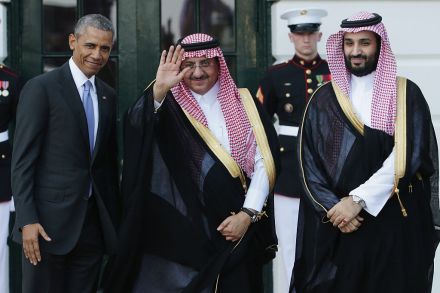
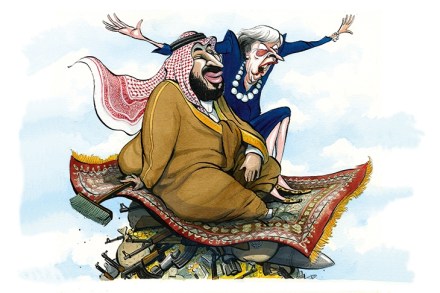
This week, Mohammad bin Salman, also known as MBS, is on his not-quite-state visit to Britain. A parade down the Mall and a state banquet could only be afforded to his father, old King Salman, who made MBS crown prince last June and has given him unprecedented latitude to liberalise Saudi society, lock up his enemies and light fireworks abroad. MBS arrived in London on Wednesday fresh from visiting one friend, Egypt’s General Sisi, and will go on to see another, Donald Trump, on 19 March. Theresa May’s aim will be to show that Britain can thrive outside the EU, but she should think twice before co-opting this new strongman who reputedly encourages his courtiers to call him Iskander — the name by which Middle Easterners know Alexander the Great.

America’s involvement in the Yemen war is unconstitutional — and stupid

From our US edition

Only very rarely in today’s Washington, D.C. is a cause so strong that it brings together America’s most famous progressive with one of the country’s most ideological conservatives. But the nasty, bloody, and intractable proxy war in Yemen - and the U.S. military’s involvement in it - is one of those causes. Yesterday afternoon, Vermont Senator Bernie Sanders and Utah Senator Mike Lee held a press conference on Capitol Hill to unveil the introduction of a resolution that, if passed by both houses of Congress, would compel a withdrawal of all U.S. military assets from the Saudi-led campaign against the Houthi rebels.

Coffee and Kalashnikovs

‘This guy’s crazy,’ says a taxi driver, listening to a BBC interview with a man who has decided to become the first exporter of coffee from Mokha, Yemen, in 80 years. The man being interviewed, we have learned, has risked his life quite a few times over, in the most hair-raising ways imaginable it would seem, to achieve his dream of putting Yemeni coffee back on the map. We meet this taxi driver towards the end of the book, and although he does not know that the man being interviewed is actually sitting in the back of his cab, by this stage we have come to think that, yes, the man concerned, one Mokhtar Alkhanshali, is crazy. Coffee was discovered — or, to be more accurate, the beverage invented — in Yemen.

Playing it safe | 5 October 2017

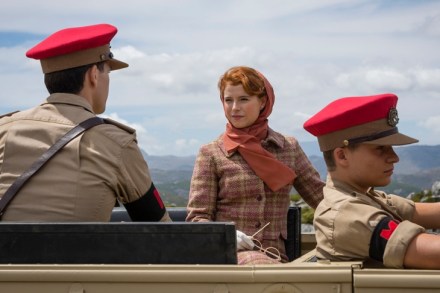
BBC1’s latest Sunday-night drama The Last Post, about a British military base in Aden in 1965, feels like a programme on a mission: that mission being to avoid getting shouted at by either the Guardian or the Daily Mail. To this (possibly doomed) end, it goes about its business very gingerly, with an almost pathological devotion to balance, and a safety-first reliance on the trusty methods of the well-made play, where each scene makes a single discrete point and the characters are as carefully differentiated as the members of a boy band. The first episode opened with the base’s new captain landing at Aden airport with his wife. ‘It must be a hundred degrees,’ she said scene-settingly as they descended from the plane.

High life | 7 September 2017

After the heat in Greece, the Alps are cool and green and very comfortable. My sensei Richard Amos is over here and we squeezed two weeks of intensive karate training into three days. Nothing makes me feel better than the sense of total exhaustion after a hard day’s fighting. We do kihon, kata, and then we let fly in kumite. Except that recently I’ve caught him diving, as they call it in the ugly game. Fight like a man, I say, through gritted teeth. He picks up the tempo but my suspicions remain. The sensei (teacher) is taking it easy on the sempai (senior). I hate it but it’s the way of our world, the best one there is, the world of martial arts and of the bushido spirit.

High life | 29 June 2017

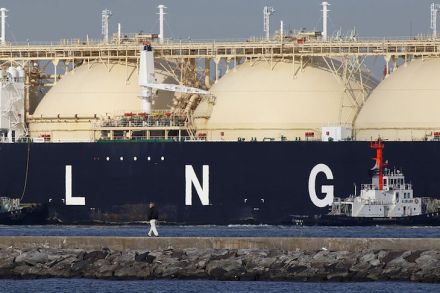
A major Greek ship owner, whose political knowledge matches his wealth and business acumen, explained to me what the Qatar brouhaha is all about. My friend Peter had the foresight to invest in liquefied natural gas (LNG) carriers, among the most expensive of ships to build but big-time money-makers. Why is it that it takes a major ship owner to tell us what’s really going on? Forget the bull put out by American hacks, whose minds no longer seem to function — at least since Trump’s triumph last November. Here goes: we sat on my terrace in Gstaad under the stars, watched the mountains turn from grey to dark blue, drank some good red wine, and I got the scoop. The first to ring the Donald after the election was the ruler of Saudi Arabia.

War-war, not jaw-jaw

It’s often said that the Trump administration is ‘isolationist’. This is not true. In fact, we are now witnessing a dramatic escalation in the militarisation of US foreign policy in the Middle East, Africa and Afghanistan. This has not been announced but it is happening, and much of it without consultation with Nato or other key allies, or any debate in Congress or the media. A few weeks ago, US aircraft carried out over 30 air strikes against Islamic militants in Yemen — almost the same as the number carried out there all last year. In Iraq and Syria there have been many reports of civilian casualties in US raids. As many as 200 are thought to have been killed in air strikes on Mosul, although Iraqi authorities dispute that. Andrew J.

Trump’s foreign policy seems designed to terrify everyone – including his own government

‘Plan, prepare, and train for the outbreak of chaos,’ says al Qaeda’s handbook, The Management of Savagery, a blueprint for building the Caliphate through what might be called creative destruction. ‘At the outbreak of chaos, the onset of jihad: ride the wave…exploit the situation.’ Did Steve Bannon, Donald Trump’s new chief strategist, read The Management of Savagery? He has been accused of implementing a ‘chaos theory of government’. Create chaos. Destroy the old order. Build paradise. The Trump administration has seemed busily engaged in phase one during its first two, hair-raising weeks in office.

Boris Johnson is right about Saudi Arabia

In what sense does anyone actually disagree with what Boris Johnson said about Saudi Arabia and Iran? Does anyone actually think that his observation that they are both engaged in 'puppeteering' in Syria and Yemen is not only true, but understates the seriousness of the problem? Does anyone believe the Foreign Office when it says that Mr Johnson’s remarks do not reflect the position of the Government? Now I know the argument, viz, that Saudi Arabia is an important and very sensitive ally and the way to deal with its sensitivities is to make criticism in private, which is what, we are invited to believe, Theresa May did when she visited the Kingdom.

Portrait of the week | 25 February 2016

Home David Cameron, having continued talks through the night in Brussels, announced that he had achieved a ‘special status’ for Britain in the European Union and would call a referendum on it for 23 June. One concession he had wrung was that, for seven years, Britain could decide to limit in-work benefits for EU migrants during their first four years in Britain. ‘I do not love Brussels; I love Britain,’ he said. The cabinet met next morning, and six members left by a back door to promote their support for the campaign to leave. The biggest beast among them was Michael Gove, and the others were Chris Grayling, Iain Duncan Smith, Theresa Villiers, John Whittingdale and Priti Patel.

Portrait of the week | 24 September 2015

Home In a speech at the Shanghai stock exchange, George Osborne, the Chancellor of the Exchequer, announced a feasibility study into the trading of Chinese and British shares in both countries. At least half of all British banknotes in circulation are held overseas or used in the black market, a Bank of England report suggested. The political impasse in Northern Ireland continued. Sir David Willcocks, the director of choirs, died, aged 95. Brian Sewell, the art critic, died aged 84. Jackie Collins, the author of titillating blockbusters, died aged 77. An outbreak of highly drug-resistant gonorrhoea was detected in the north of England, from Oldham to Scunthorpe.