World war two

Masters of the Air is an old-fashioned TV masterpiece

From our US edition

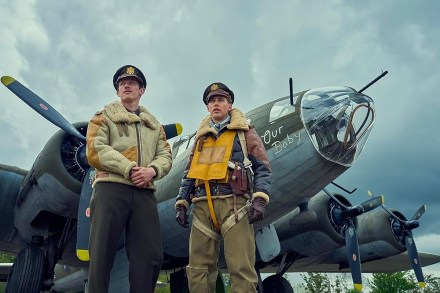
The greatest show of the "new” TV era is probably Better Call Saul. It’s introspective and cynical and novelistic — and even the “good guys” aren't good guys; they’re just flawed rather than evil. Among those who’ve sold their souls, and others who never had them, our charming lead, Jimmy McGill is working to get his back, having pawned it off. It’s the best storytelling and characterization that the current style of TV can produce, and a triumph for the medium. Masters of the Air is a very different beast. It has the young rising talent of today — notably, Austin Butler and his Elvis voice, alongside Saltburn’s Barry Keoghan and the always excellent Callum Turner — and a bloated 2020s TV budget.

masters of the air

Ian Buruma: Collaborators

49 min listen

My guest in this week’s Book Club podcast is the writer and editor Ian Buruma, to talk about his new book Collaborators: Three Stories of Deception and Survival in World War Two. A Chinese princess who climbed into bed with Japanese nationalist gangsters; an observant Jew who sold his co-religionists to the Nazis; and Himmler’s personal masseur. Ian describes how their stories link and resonate, and how murky morality gets in a time where truth loses its meaning altogether.

War hero, bon viveur, Japanese spy: Frederick Rutland wore many masks

From our US edition

It is early in the morning on the “day of infamy,” Sunday, December 7, 1941. Two hundred and fifty miles north of Hawaii, six Japanese aircraft carriers are preparing to launch more than 350 aircraft in a surprise attack on the United States Pacific Fleet at Pearl Harbor. The fleet’s commander-in-chief, Admiral Husband E. Kimmel, had told a reporter the day before that the Japanese would be “damned fools” to attack the United States, ignoring the warnings that war was imminent. Around 7:30 a.m., the lead Japanese pilot fires a single flare, giving the pilots the “final go” signal. “Within an hour... the US Pacific Fleet was in ruins.” The American public, writes espionage historian Ronald Drabkin in Beverly Hills Spy, quite rightly demanded: “Whose fault was it?

rutland

A history of intellect

From our US edition

It has it been widely noted that, as Western culture generally has grown steadily more materialistic in its values and interests (as if it were ever anything else, ungenerous critics might suggest) over the past half-century, it has become simultaneously more abstracted in its mental habits and orientation? Chesterton described a paradox as truth standing on its head to draw attention to itself. In this instance, we have an obvious example. But it’s a good question how this particular one came to be. Ancient Greece was an intensely intellectual world of ideas that were firmly grounded in empirical reality and in observed and confirmable truth.

intellect

The atomic bomb saved Japanese lives, too

From our US edition

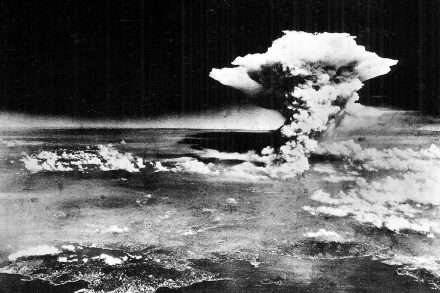
It’s August 6, which means that it is the anniversary of the atomic bombing of Hiroshima.   Every year at this time there are a spate of articles about that horrific event. Some of the articles are condemnatory; some hand-wringing; some are defiantly supportive.  This year, the recent release of Christopher Nolan’s new movie about J. Robert Oppenheimer and the making of the atomic bomb has given the controversy over the development and deployment of that awesome weapon a new urgency.   Something else that has contributed to the fraught atmosphere is the war in Ukraine. After all, one side in that conflict, Russia, controls the world’s largest arsenal of nuclear weapons, more than 6,000 warheads. My friend Roger L.

hiroshima atomic bomb japanese

The advent of AI-piloted planes

From our US edition

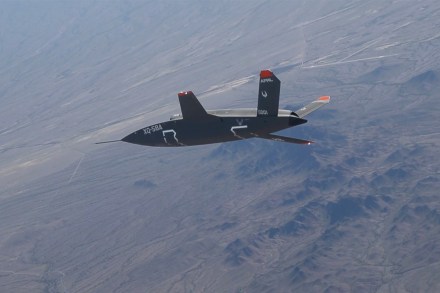
The US Air Force conducted the first flight test of the XQ-58A Valkyrie drone, from Kratos Defense and Security Solutions, piloted by artificial intelligence, on July 25. The test was part of a years-long effort headed up by the Air Force Research Lab designed to integrate advanced technology into the Air Force’s arsenal. The lessons learned and data gathered from the test will be applied to the Collaborative Combat Aircraft program, which seeks to procure an unmanned combat drone capable of working — collaborating — with manned systems, like a traditional fighter jet.  Bringing AI into the fold offers numerous benefits to the modern warfighter.

The Kratos XQ-58 Valkyrie ai drones

The myth that Hiroshima was necessary

From our US edition

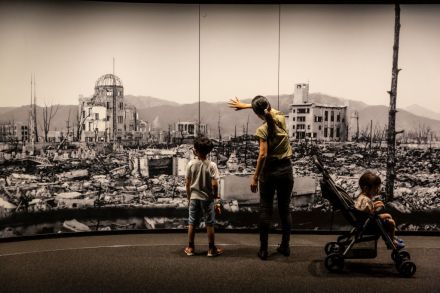
If you think the falsehoods spilling out of Ukraine about casualties and atrocities are shocking, meet the greatest lie of modern history. August 6 marks the seventy-seventh anniversary of the nuclear destruction of Hiroshima and death of some 140,000 non-combatants. Yet the only nation in history to employ a weapon of mass destruction on an epic scale, against an undefended civilian population, shrugs off the significance of an act of immorality. Beyond the destruction lies the myth of the atomic bombings, the post-war creation of a mass memory of things that did not happen. This myth has become the underpinning of American policy ever since, and carries forward the horrors of Hiroshima as generations pass.

Japan deserves to see Oppenheimer

From our US edition

As millions of people across the world rush into cinemas this week to see Christopher Nolan’s latest epic thriller Oppenheimer, one notable country will not be part of the film’s initial release window despite the relevant subject matter — Japan. For reasons that are still unclear, Universal Pictures has not announced a Japanese release date. Yet if any place deserves to see a film based on the life of the theoretical physicist who played an essential role in developing the atomic bombs which ended World War Two, it should be the country that was most affected by them. Hollywood films being delayed for release in Japan is a very common occurrence, and it rarely ever has anything to do with politics.

japan oppenheimer
oppenheimer

Oppenheimer’s passenger

From our US edition

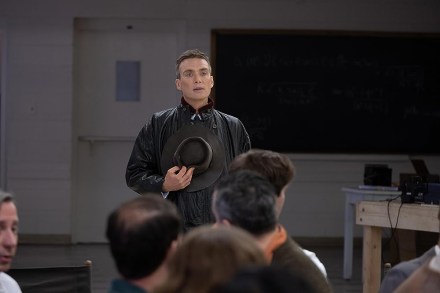
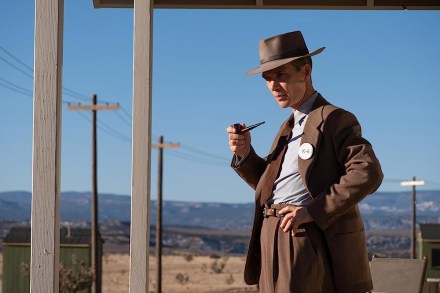
Ripples appear in courtyard puddle outside the Cavendish Laboratory at the University of Cambridge; a tornadic funnel erupts from the black atmosphere toward Earth. Between these images — the small one of intimate life and the colossal one of planetary death — a haunted young man looks on in curiosity and horror.  The man is Robert Oppenheimer, played to perfection by Cillian Murphy, a theoretical physicist “troubled by visions of a hidden universe.” This visionary, capable of conjuring apocalypse from the particles stowed inside atoms, spends the first fifteen minutes of the film looking bewildered — a gaunt, gray sliver of a man wandering through his life like a ghost.

Russian failure is a lesson for America

From our US edition

We may never understand the series of events and decisions that led Yevgeny Prigozhin to stage an armed rebellion against Russian president Vladimir Putin’s administration with his Wagner Group private military company, or PMC. Prigozhin was opposed to the planned forcible incorporation of Wagner into the Russian armed forces. He also came to be a sharp critic of the fabricated rationale for Russia’s war on Ukraine and the sloppy way it was being waged by its generals, who are more focused on politics than on defeating Kyiv.

russian military

Men at War examines homosexuality among World War Two soldiers

From our US edition

As a little boy, Luke Turner, like so many other little boys, was fascinated by World War Two. He used to spend hours carefully making Airfix models of warplanes, and his favorite haunt was the Royal Air Force Museum in Hendon, a suburb of North London. Men at War, his second book, is an attempt to explore and explain both this interest and his own sexuality (he is bisexual, with a female partner), in response to what he sees as the dominant, jingoistic attitude propagated via general British cultural discourse. He claims that we do not see those who fought as individuals, but as clipped, heroic avatars, like Captain Sir Tom Moore, who raised millions of pounds for NHS charities during the lockdowns: dignified, silent, brave.

war

The difficulties of writing historical fiction

From our US edition

I was dozing, a little hungover, on the morning flight from Prague to London, when I saw them for the first time. Ten men on a beach, dragging a landing craft up the sands. Where? Can’t tell yet. When? The fourteenth century. Who? Don’t know, but they look like trouble. I woke up. Through my AirPods I heard the Blur singer Damon Albarn growling the final song from their 1997 album Blur. “In these towns, the English army grinds their teeth into glass / You know you’ll get a kicking tonight...” I opened my laptop and started making notes. The men came surprisingly well-formed. They were soldiers of fortune in the Hundred Years’ War. They already had names. Faces. Talents. Foibles. Yearnings. Secrets. I wrote down as much as they could tell me before the plane landed.

historical fiction

A Winston Churchill Christmas

From our US edition

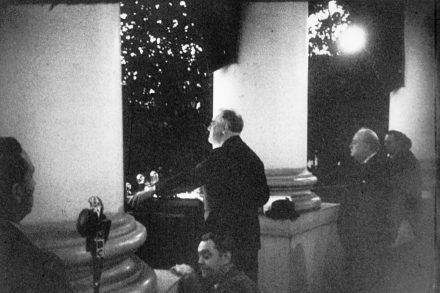
On Christmas Eve 1941, in Washington on a diplomatic mission to organize the support of Britain's American allies in the efforts to stop the Nazi menace, Winston Churchill was offered the opportunity to address the American people from the south portico of the White House. America as a nation had been attacked like never before just weeks earlier; the horrors of Pearl Harbor were on the minds of every patriot. It was rumored the annual Christmas Tree lighting would be canceled. Instead, 20,000 people came to see it, seeking some light in a very dark world. Just two days later, Churchill would deliver a historic political address in the US Senate chambers to a packed audience.

fdr winston churchill

Eighty years later, World War Two is fading from historical memory

From our US edition

With worries about inflation, the war in Ukraine, and tension over Taiwan, it's easy for Americans to forget that we are now deep into the four-year period marking the eightieth anniversary of World War Two. Last December marked eighty years since the day of infamy at Pearl Harbor, while this June passed the date of the critical victory at Midway. In a little less than two years, it will be eight decades since the greatest invasion in history, on D-Day. Soon after will follow commemorations of Hiroshima and Nagasaki and both VE and VJ Days. Each year, living memory of that global struggle continues to fade, with the passage of both time and the Greatest Generation.

world war two

The prodigal daughter

From our US edition

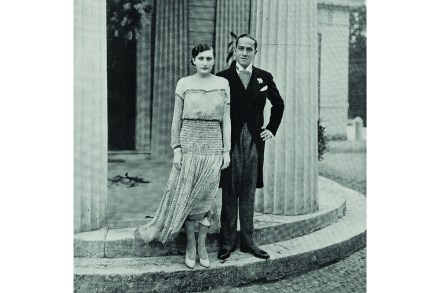
In April 1930, the nineteen-year-old Edda Mussolini married Count Galeazzo Ciano, aged twenty-seven, after a brief courtship in which love appears to have played little part. Her father, Il Duce, wanted the magnificent occasion to be not merely the wedding of the century but a grand, almost royal, demonstration of fascist might and a celebration of fecundity. Edda, his beloved firstborn, was to stand for everything that was best about fascist womanhood, while the groom was to carve out the path of “the new Italian man.” These were the glory years, and thousands of schoolchildren sent poems and cards with angels in advance of the occasion, which the Papal Nuncio attended with a present from the Pope.

mussolini

Berlin as the unreal city

From our US edition

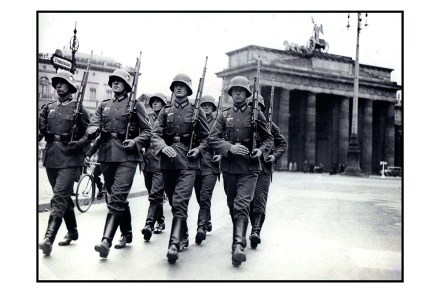
"Berlin has too much [history]." Sinclair McKay cites this rueful observation in the preface to his new book about the city. Given that he is not simply discussing Berlin between the wars, or during the second of those wars, or in the Cold War that followed, but all of it, this may come off as a cry for help. History may — in those words attributed to, well, take your pick — be “one damned thing after another,” but when it came to Berlin, those things hurtled through time in a horde, colliding, overlapping and refusing to form an orderly line. And, in Berlin’s case, they had a way of mattering. Not for nothing does this book’s subtitle refer to Berlin as “the city at the center of the world.” Bad news for a writer aiming, presumably, at a degree of concision.

berlin

Carry on regardless

From our US edition

The director Werner Herzog’s first novel, The Twilight World, occupies quintessential Herzogian territory. Those familiar with his films will recognize the themes: man’s insignificance in the face of a totally implacable nature and his overweening ambitions to surmount this failure. Futility and pride are locked together in hallucinatory, self-destructive cycles. His film Fitzcarraldo, for example, demonstrated the real-life attempts of a rubber baron to transport a steamship over a mountain in Peru. Grizzly Man, meanwhile, documented the sad life of a man who had made his home among bears. It doesn’t end well. (Those readers who haven’t the time to get to know his work may wish to find “Werner Herzog” reading Curious George on YouTube — a delightful parody of his style.

herzog

Putin’s cult of war

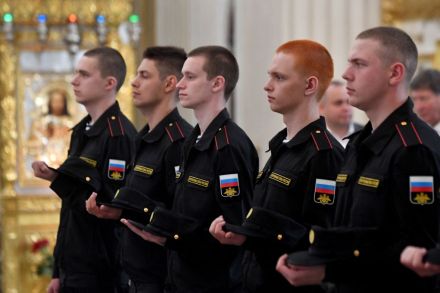
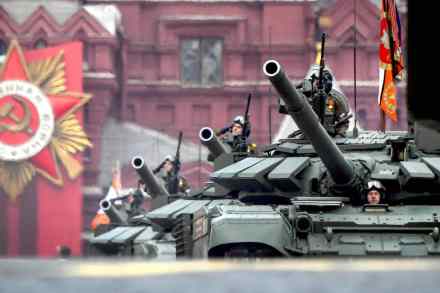
This idolisation of the Soviet military is Russia’s modern tragedy. Not least because it is crucial to Putin’s way of controlling the country. Russians are prodded to believe in a golden thread linking the achievements of an unsullied Red Army with what their soldiers are perpetrating in Ukraine today. This is why it was entirely to be expected that at today’s Victory Day parade Putin again couched his so-called ‘special military operation’ in terms of a fight against ‘Nazis’. It’s also why the Russian foreign minister, Sergei Lavrov, has compared Ukraine’s Jewish president to Hitler.

Et in Arcadia ego

From our US edition

"Oxford I do not enjoy,” wrote T.S. Eliot to Conrad Aiken in February 1915. “The food and the climate are execrable, I suffer indigestion, constipation, and colds constantly.” The poet was clearly having one of his bad days. Since arriving at the university the previous October, he had found himself in and out of love with the place, which was hardly surprising, given the timing. Most of the undergraduates at Oxford had either left or were on the verge of leaving to fight for their country, meaning that the lecture and tutorial rooms were almost empty, the sports fields green through lack of use, and the centuries-old traditions stalling like motor cars on the long stretch of the High.

Oxford

Peace and its consequences in Ukraine

From our US edition

It is now a matter of consensus that Vladimir Putin never intended to fight the type of war that now faces him in Ukraine. What was plainly meant to be a blitzkrieg-style assault has devolved into a war of attrition, with death, destruction and violence on a scale unseen in Europe since the disasters of the last century. It is quite plain that the Kremlin, despite its bluster, is aware of this. The Kyiv government's claims of Putin dismissing his generals and raving in fury at his security services are consistent with events on the battlefield; indeed, after two weeks of fighting, Russia has only managed to decisively claim one Ukrainian city.

volodymyr zelensky ukraine invasion