World war two

The history of the American Memorial Chapel

From our US edition

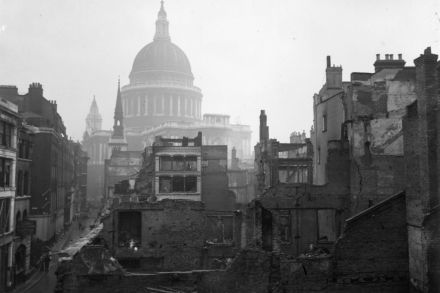
The clipped voice on the old television newsreel tells us that November 27, 1958 was a gray old London day. The Queen, accompanied by Vice President Richard Nixon, was dedicating and opening the American Memorial Chapel at the far east end of the City of London’s great cathedral. Ordinary men and women from all over Britain paid for the chapel by public subscription. It was the least we could do. It was a miracle that the cathedral had survived the Nazi Blitz almost intact. One part of the cathedral was hit by a bomb in October 1940, and it was on that site that eighteen years later the Memorial Chapel was built. The Chapel is dedicated to the 28,000 American people who were stationed on British soil and died in World War Two, many of them on D-Day.

chapel

How Hitler’s great gamble nearly paid off

From our US edition

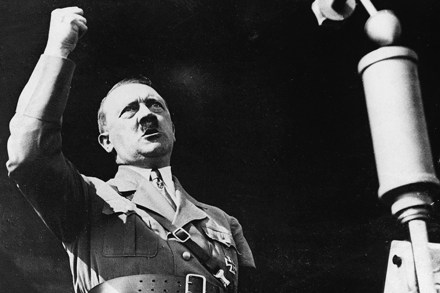
Do we need another wrist-breaking book about Adolf Hitler, the Third Reich and World War Two? What is there left to say? To gain attention, any new study has to have a thesis: some fresh angle that previous writers have overlooked or played down. For Frank McDonough it is the insane impossibility that Germany could ever have won the struggle it launched against the combined powers of the US, USSR and the British Empire that was the Führer’s fatal flaw. McDonough is an academic specializing in Nazi Germany, and he writes clearly and readably, with just enough detail, on the huge canvas that he covers.

hitler

The rise and fall of the yakuza

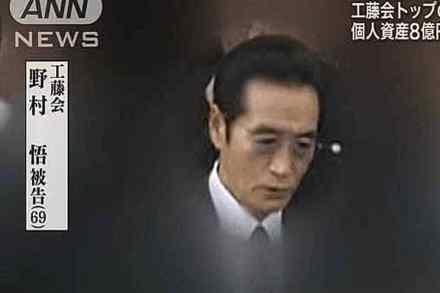
For the first time in history, an organised crime ‘yakuza’ boss has been sentenced to death in a Japanese court. Satoru Nomura, head of the Kudo-kai group in Fukuoka, was found guilty of murder and three assaults after a trial held without a jury due to fears of possible intimidation. If a planned appeal fails, he will be hanged. We’ll find out about it after it happens. What makes the case remarkable is that no evidence was presented linking Nomura directly with the crimes he was accused of. The judge nonetheless concluded that they took place on his orders and had the confidence to deliver the ultimate sentence. The case marks a new low in the seemingly terminal decline of the once fearsome crime syndicates.

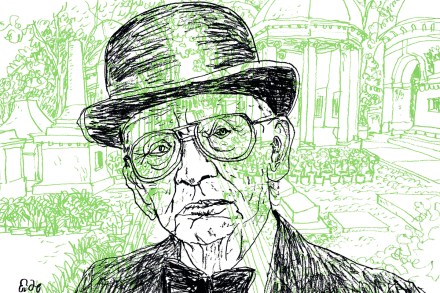
In search of Nirad Chaudhuri

From our US edition

The false sense of complacency in Washington DC, now restored as the imperial capital of the world, is only matched by a tone of utter bafflement. History has apparently renewed its march toward a progressive utopia, and the American cabinet seems as epidermally diverse as it is ideologically totalitarian. But there remains a sense of unease. The imperium suffered a systemic shock in 2016, one that needed and still lacks explanation. The shock was not limited to America. The Guardian struggles to comprehend that British Indians tended to support Brexit, and that members of their community such as Rishi Sunak and Priti Patel have risen to influence in the Conservative party and high office in the government.

chaudhuri

How crises shape government

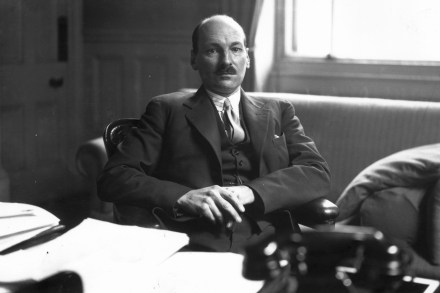
Crises often exhaust the capacity of governments to renew themselves. All consuming problems do not allow prime ministers to have what Walter Bagehot called ‘mind in reserve’ — and yet future success at the polls depends on it. The vast achievements of the postwar Labour government were largely built on the work of a Liberal in the form of the 1942 Beveridge Report, which most notably recommended a National Health Service. But Attlee was unable to create a new vision of his own during an era of crippling rationing and economic strife. Labour went from winning their first overall majority in 1945 to a very slim majority in 1950. Churchill’s Conservatives were returned to power within a year.

Gibraltar rocks on

From our US edition

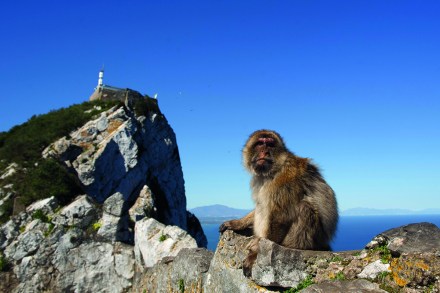
Tourists take the cable car to the Top of the Rock to pester the monkeys that live at the summit, but the best thing about this clifftop arena is the view. Standing on the cliff edge, gazing down at the big ships traversing the busy strait below, you realize what makes Gibraltar so important. Spain lies behind you, Morocco lies ahead. To your left is the Mediterranean and, on your right, the wild Atlantic. This is the bridgehead between Africa and Europe, the gateway between the Old World and the New. No wonder Britain has always been so determined to hold onto it. Whoever controls the Rock controls this narrow strait and all the traffic that passes through it, about a quarter of the world’s shipping.

gibraltar

Why teaching the Holocaust still matters

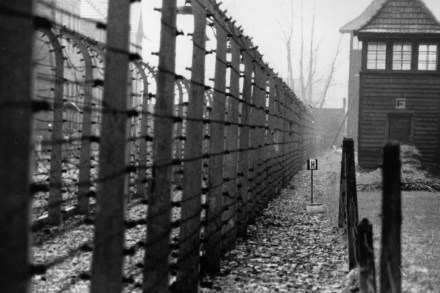
Pretzsch is a normal small town on the River Elbe, 35 miles north east of Leipzig, with little or nothing to suggest its dark past. Eighty years ago, in the spring of 1941, it became a mustering point for a cadre of men who would perform ‘special tasks’ during the forthcoming Nazi invasion of the Soviet Union. Over the spring and early summer months, around 3,000 men arrived in Pretzsch. Quartered in SS accommodation, the men eventually learnt they would be part of four Einsatzgruppen — special task forces — who were to move behind the German front line. Their task was framed as maintaining security and eliminating resistance.

The big state won’t save our post-Covid world

The big state is back. The Budget puts Britain on a path to having the highest tax levels since the 1950s, and a state that controls as much of our GDP as it did in the days when it still owned carmakers, phone lines and travel agents. Despite Rishi Sunak’s best efforts to contain spending, the figures are likely to go higher still, as the bills for the NHS, social care, and disrupted education continue to rise. But it’s not just about the numbers. Even before the pandemic, the political winds were blowing towards larger government, with Boris Johnson embracing a more muscular, state-led industrial strategy. But the pandemic has put that on steroids.

A tinpot Caesar

From our US edition

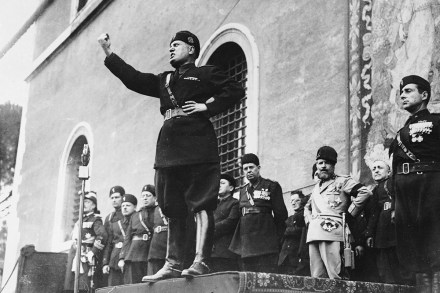
In 1919, an obscure political agitator called Benito Mussolini assembled a ragbag of Blackshirt diehards in the Lombard capital of Milan and launched the movement that was to become, two years later, the National Fascist party. The party took its name from the classical Roman symbol of authority — an ax bound in rods, or fasces. Once in power, Mussolini introduced the stiff armed Roman salute after the handshake was deemed fey and unhygienic. At times he wore a richly tasseled fez and thrust out his chin pugnaciously for the cameras. For all his posturing and demagoguery, Mussolini was widely admired in pre-war Britain, where Lord Rothermere’s Daily Mail routinely carried flattering portraits of him.

mussolini

My debt to Royaumont

From our US edition

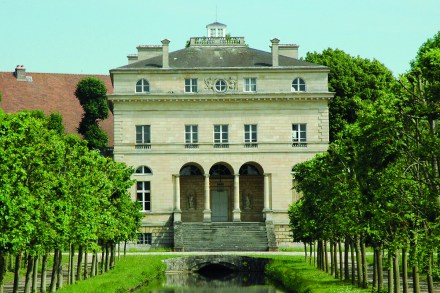
As ruins go, Royaumont is as good as any. French roads also being what they are, Royaumont is about 45 minutes from Saint-Denis, the cathedral in Paris where the kings of France are buried, and perhaps 20 minutes from Chantilly, where as much English as French is spoken on the racecourse. Beginning his reign in the 13th century, King Louis IX chose Royaumont as the site of one of the Cistercian abbeys he was building. Dying while on crusade in North Africa, he probably never saw what was reputed to be the most magnificent of all Cistercian abbeys in the whole country, the rival of Mont Saint-Michel or Fontevrault. Royalty notwithstanding, the Vatican singled him out for canonization.

royaumont

The doctor’s dilemma

From our US edition

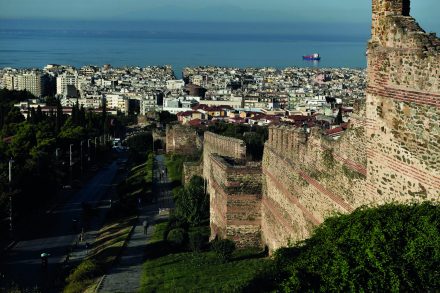
The facts are stark, if little known. Before World War Two, the Jewish community of Thessaloniki, Greece (Salonica, in its old Ottoman name) numbered over 50,000. Jews were this Mediterranean port city’s most numerous ethnic minority and had shared in many of its past glories. When the war was over, only 5,000, less than 10 percent, of the Salonica Jews survived. Between March 15 and August 10, 1943, the local Greek police, supervised by the SS, arranged the deportation of 45,000 men, women and children in 19 convoys, most of them bound for death at Auschwitz-Birkenau. My grandmother’s family was among them. Talking Until Nightfall is a grim and gripping family saga. It compiles the testimonies of three generations of the Matarasso family.

Why face masks weren’t compulsory during WW2

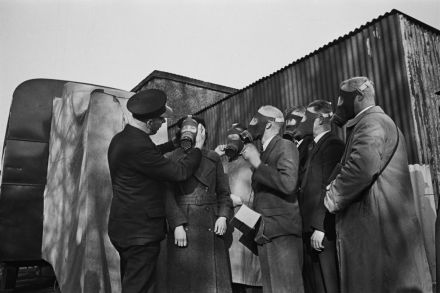
Britain has been here before when it comes to furores about face masks. Exactly 80 years ago the same argument was raging, with the country split between those who wanted the wearing of gas masks to be made compulsory on pain of financial penalty, and those who maintained it should be an individual choice. Unlike today's virus, the threat facing the country in the summer of 1940 was a destructive Nazi war machine that in a matter of months had torn through most of western Europe. Britain was next in Hitler's sights and an aerial gas attack was what the government feared most. In 1938 Neville Chamberlain's government, aided by a coterie of academics and intellectuals, launched its own 'Project Fear'.

Pigeons are the solution to the statue controversy

From our US edition

Will nobody think of the pigeons? That thought has repeatedly occurred to me, as beloved roosts for generations of urban pigeons have been toppled in one city after another on both sides of the Atlantic by the radical left, in the greatest eruption of iconoclasm since the era when Theodora graced the burlesque stage in Constantinople. Tearing down Confederate war memorials, it turns out, is a gateway drug to toppling statues of Catholic saints, Civil War abolitionists and Abraham Lincoln himself. Gradually, it has dawned on a horrified, watching world: they don’t hate Confederates. They hate statues! All statues!Now, thanks to the actions of a lawless few, countless pigeons in cities in America and Europe have been rendered homeless.

pigeons

Articles of War

From our US edition

Universal genius is a law unto itself, but the personalities presented in Signatures at least deserve to be remembered by generations yet unborn. Ernst JüngerJournals, 1951 Researching for my book Paris in the Third Reich, I was just in time to catch some German officials or soldiers who had played a part in the occupation. Understandably, they tried to put themselves in the best possible light. Ernst Jünger was different. A staff officer, exceptionally intelligent and exceptionally observant, he kept a day-by-day record of his life in Paris. Much more than a timely self-portrait, these diaries fix for posterity the historic moment when the long-drawn contest for power in continental Europe appeared to have ended conclusively in German victory and French defeat.

war

Ghost riders in the sky

From our US edition

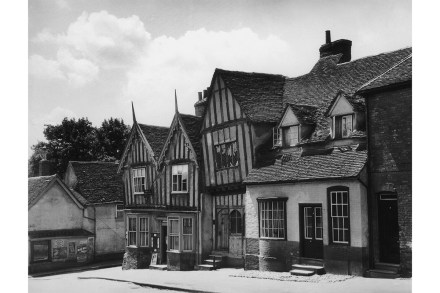
Christmas Eve 1944, and the airfield near the tiny Suffolk village of Lavenham shook with the noise of bombers from the 487th Bomb Group, part of the 8th US Army Air Force. The commanding officer, leading more than 2,000 aircraft from various airfields, was brigadier general Frederick Walker Castle, and today was to be his 30th and final mission. Over Allied-held territory in Belgium, Castle’s B-17 Flying Fortress developed engine trouble. Dropping back from the bomber stream so as not to slow it down, he refused to jettison his bomb load on the Allied troops below. He was a sitting duck. After repeated fighter attacks, his plane on fire and in a tailspin, Castle ordered his crewmen to bail out.

lavenham
covid

Does COVID-19 mean socialism or social collapse?

From our US edition

Inequality is the price we pay for civilization. Property rights, inheritance customs and unequal gains from technological innovation have long divided us into haves and have-nots. Because stability favors such disparities, it usually took powerful shocks to flatten them. The collapse of states wiped out elites. The World Wars slashed returns on capital and imposed heavy-handed regulation and confiscatory taxation. Communist regimes equalized by force and fiat.The greatest plagues also turned into levelers, by killing so many that labor became dear and land cheap. For a while, the rich became less rich and the poor less poor: Europe after the Black Death is the best-known example.

The return of the deep shelter mentality

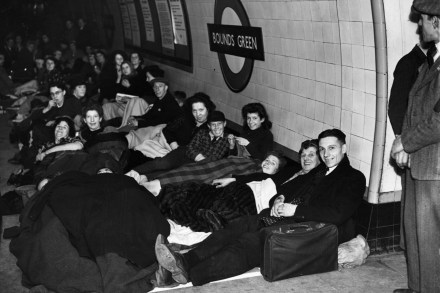
Seven weeks confined to a city apartment changes a man. Trees, for example, have never been a particular passion of mine but recently I've spent many happy moments studying the plane tree outside my bedroom window, and in particular the magpies' nest therein. On Saturday a baby magpie emerged from the nest and edged tentatively along a branch. There it stayed for several minutes until it retreated to the security of its nest. On Sunday, the Observer reported that a similar nervousness now afflicts the British. According to the paper, fewer than one in five of the public believe the time is right to end the lockdown. Britain is not alone in its apprehension.

How government should respond

From our US edition

Misdiagnosis can be fatal in a pandemic. Treating the economic effects of the global COVID-19 epidemic as a conventional recession means prescribing the wrong medicine and harming the patient. This is a supply-side recession, not a demand-side recession. The shortfall includes intensive care beds, ventilators, protective gear for healthcare workers, and other medical supplies. Thanks to these shortages, as well as insufficient trained medical personnel, hospitals may soon be overwhelmed everywhere by the demands for treatment of coronavirus victims. To slow the spread of the virus while augmenting existing medical supplies and personnel, governments are promoting social distancing and sheltering in place, both euphemisms for quarantine.

health finance

Will Japan ban its ‘offensive’ Rising Sun flag at the Tokyo Olympics?

Ant and Dec have done most things in their long careers in light entertainment. But the versatile duo broke new ground last week when they infringed on international diplomacy by wearing Japanese Rising Sun flags on their headbands in a skit with singer Anne-Marie. The use of allegedly offensive WW2 era imagery forced programme makers to edit the sequence for future broadcast. ITV and Anne-Marie were obliged to make hasty apologies. But is the Rising Sun really offensive? And is anyone really offended? The flag is of ancient origin, but it has been associated with the Japanese military since 1870, it is still the emblem of the Self Defense Force (as close as modern Japan gets to an army).

A chance encounter with a butterfly-catching Nazi

From our US edition

In the winter of 1943, Eric Newby, captured in 1942 on a commando raid on Sicily, escaped from an Italian prisoner of war camp. Love and War in the Apennines, his memoir of life on the run among the peasant farmers of the Apennine Mountains, is that rarest of combinations, a military classic and a love story. Patrick French’s tribute to Newby’s memoir can be read here. In this excerpt, Newby describes an unlikely encounter in a mountain pasture. As I climbed, the trees began to thin out and at last I came to a place where there was nothing but juniper growing.

butterfly naxi apennines