Welfare

Pat McFadden on his plans to get the young into work

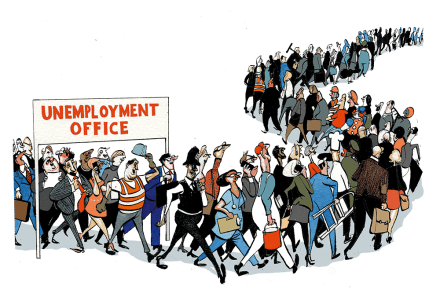
Pat McFadden, the Work and Pensions Secretary, was in a Job Centre in Bellshill, outside Glasgow, when he realised the urgency of the task he had assigned to Alan Milburn, the youth benefits tsar whose report will be published on Tuesday – the first step to reducing the burgeoning benefits budget. ‘The area manager said to me she ran a network of 13 Job Centres across central and east Scotland,’ he says. ‘Over 40 per cent of the young people that she was dealing with were what they call “on the health journey”, which is DWP’s term for either claiming or on the way to claiming long-term sickness benefits. That’s people under 25. I was really struck by that.’ Close to one million young people are not in education, employment or training (Neets).
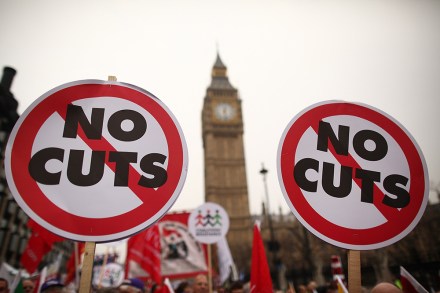
No one should be spared from the coming cuts

What could our government do, should a crisis of confidence in Britain’s creditworthiness hit us out of the blue next year? This may not be the likelihood, but anxiety in the bond markets must be a possibility real enough to trouble those in government who plan for contingencies. Imagine that Sir Stephen Timms’s or Alan Milburn’s proposals for solving the problem of our almost a million Neets, however tentative these prove to be, face a mutiny on Labour’s back benches. Or imagine (more likely) parliamentary trouble with the government’s Spending Review, scheduled for next year. Indeed, trouble may already have started: it now looks as if this has been postponed until the autumn. This is strange. Ministers are refusing to confirm the review will be in the spring.

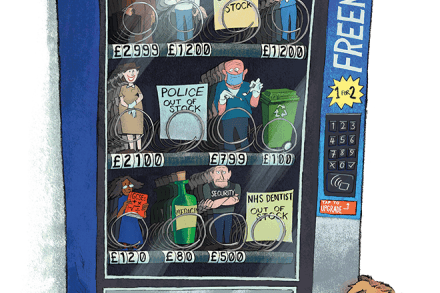
Sod the state: the middle-class race to go private

Postwar Britain can be defined by a bargain made with its middle class: pay for public services but benefit from them too. Private education has always been the choice of a very small minority; private healthcare was reserved for the wealthiest and those whose employers paid for it. Middle England was content to send their children to the same schools as everyone else and use the same GPs, hospitals and dentists. This is no longer true. State spending continues to grow, yet large parts of the population now pay privately to supplement what their taxes have already provided.

The uncomfortable truth about Neets

It was, I believe, Fraser Nelson, the former editor of this magazine, who more than two years ago brought to Spectator readers’ attention the ballooning cost of disability benefits, and the way in which claims for mental-health disorders were skewing the system. Since then, the problem Fraser described has been universally recognised and its gravity acknowledged. The present government is worried about the cost and the trend and has commissioned Alan Milburn to report on the situation. Milburn is an impressive former (Labour) health secretary, who can be counted on for thorough research and balanced and intelligent judgment. His report is due next month.

Shut up about your disability

Britain is crippled. More of us than ever before are disabled. One in four, at the last count. But it is a statistic so obviously at odds with reality that anyone with working eyesight should question it. Instead, it has been adopted as fact by government, doctors, charities and benefits assessors. This mass collapse in health – nearly four million more people describing themselves as disabled in the past decade – is driven, we are told, by genuinely worsening mental health and a surge in diagnoses of conditions such as ADHD and autism. So vast is the problem that a government review last week found the sickness-welfare system ‘not fit for purpose’.

Letters: No, pensioners don’t ‘have it easy’

Same old Sir: In Michael Simmons’s otherwise excellent yet alarming essay on ‘Benefits treats’ (11 April), one sentence spoiled the rest of my day: to say that pensioners are ‘protected from and by every government decision’ is maddening nonsense. Pensioners are affected in exactly the same way as everyone else whenever the government of the day changes anything. Every time we switch on the heating, shop, fill up the car, pay any bill, we are suffering under the same government-fuelled inflation as everybody else. The chaotic finances of local government mean our council tax goes up along with everybody else’s. Every time tax thresholds are frozen, many of us pay more tax.

Is Britain losing its sense of fairness?

49 min listen

Has Britain become a freeloader’s paradise, asks the Spectator’s economics editor Michael Simmons in our cover piece this week. Michael analyses ‘the benefits of benefits’, at a time when Britain’s welfare bill is burgeoning and most households are struggling with cost of living. For example, while a family of four can expect to pay £111 to visit the Tower of London, that is just £4 total on Universal Credit (UC), and for London Zoo it is £108 compared to £26. Michael is not arguing against the idea of helping those in need, but pointing out that – as the benefits bill continues to increase – this is another case of governments prioritising ‘welfare over work’ and ultimately squeezing the working poor.

Is Britain losing its sense of fairness?

America’s Somalis and the ‘learing’ explosion

From our US edition

I suspect that Somalis around the country – especially, but not exclusively, in Minneapolis – wish about now that they had spent more time studying the wit and wisdom of Gertrude Stein. Stein, had she lived in our own day, might well have become commissioner of New York City’s Fire Department. She had the one qualification that Zohran Mamdani seems to deem essential to the post. A modicum of fraud among friends often gets a pass. Overdo it, however, and the authorities get waspish Sadly, that was not to be. But there is no denying that, on certain matters, Stein was a font of practical wisdom that remains as pertinent today as it was when she was pontificating in Paris a century ago.

learing somalis

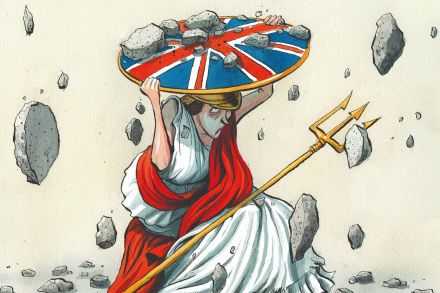
Britain is broke – and we all need to face it

Sometimes when I go to bed, I think that if I were a young man I would emigrate,’ said James Callaghan, the then foreign secretary, in 1974. He was referring to that decade’s chronic economic dysfunction, with its double-digit inflation, growing unemployment and stuttering growth. Two years later, as prime minister, he would have to go cap in hand to request a bailout from the International Monetary Fund. Two years after that came the Winter of Discontent. Today’s economic picture may not be quite so bleak. Even so, the young see only intractable stagnation, cost-of-living pressures and visible decline.

Portrait of the week: Welfare rebellions, Glastonbury chants and Lucy Letby arrests

Home Sir Keir Starmer, the Prime Minister, in the face of a rebellion by 120 backbenchers over the welfare bill, undertook to limit to new claimants restrictions on personal independence payments (Pip). Modelling by the Department for Work and Pensions predicted that 150,000 people might be pushed into ‘relative poverty’ by the revised welfare cuts, compared with 250,000 before. Still fearing defeat, the government made more last-minute concessions, postponing changes to Pip rules until after a review by Sir Stephen Timms, the disability minister. The government then won the second reading by 335 to 260, with 49 Labour MPs voting against. It was not clear that the eviscerated bill would reduce spending.

Is Britain’s Rachel Reeves the new Hillary Clinton?

From our US edition

Britain's Chancellor of the Exchequer Rachel Reeves, the second most powerful politician in the country, shed a few tears from the front row of the government benches in the House of Commons during the weekly Prime Minister's Questions session. Her boss Prime Minister Keir Starmer – to her mounting horror – pointedly refused to confirm whether she'd be staying in her current post. "We’ve got free school meals, breakfast clubs, we’ve got £15 billion invested in transport funds in the North and the Midlands. We’re cutting regulation, planning and infrastructure is pounding forward," Starmer said with affected bolshiness.

Reeves

Does Starmer still want to be PM?

13 min listen

There have been a number of navel-gazing interviews with the Prime Minister over the weekend. Across thousands and thousands of words, he seems to be saying – if you read between the lines – that he doesn't particularly enjoy being PM. In better news, Labour seems to have quelled the welfare rebellion. Liz Kendall is making a statement in the Commons this afternoon, in which she will outline the concessions that Labour has made on its controversial welfare bill. All in, the cost has spiralled by £3 billion per calendar year – which an already put-upon Chancellor will have to find. Whilst it remains the largest rebellion of this government, the number of rebels has shrunk to around 50.

Steve Baker on how to organise a successful rebellion

25 min listen

As Labour rebels appear to have forced concessions from Keir Starmer over welfare this week, former Conservative MP Steve Baker joins James Heale to reflect on his own time as a rebel, and to provide some advice to Labour MPs. Steve, an MP for 14 years and a minister under Theresa May, Liz Truss and Rishi Sunak, tells James about the different rebellions he was a part of (from Brexit to Covid), explains how to organise a successful one and reveals how he has lost close friends when he has made the decision to compromise.

Welfare U-turn: is Keir in control?

15 min listen

Keir Starmer has performed a screeching about-turn on his flagship welfare reforms, all in the hope of quelling the rebellion from more than 120 MPs who have been promised ‘massive concessions’ over concerns about disability benefits. These include moderating the bill to make it easier for people with multiple impairments to claim disability benefits, and offering to protect Personal Independence Payments (PIP) for all existing claimants for ever – to ensure there would be no detriment from the reforms for existing claimants, a key concern of the welfare rebels. But new claimants will be affected, as ministers desperately try to stop ever-spiralling disability and sickness welfare spending climbing to £100 billion by 2030.

Who’s having a worse week: Keir or Kemi?

20 min listen

It’s bad news all round for Labour and the Tories. An MRP poll out today forecasts that if an election were held tomorrow, Labour would not only lose its majority, but fall behind Reform to become the second-largest party. The Conservatives would be reduced to a mere 46 seats, placing them fourth behind the Lib Dems. But that’s just the beginning of their collective woes. On the Labour side – despite Keir Starmer’s charm offensive and ongoing talks with Labour MPs about potential changes to welfare policy – the number of rebels appears to be growing. The feeling increasingly is that someone might have to go, and calls for ‘regime change’ splash the Times. Is time up for Morgan McSweeney?

Welfare rebellion: why Starmer – and Reeves – should be worried

17 min listen

Keir Starmer is facing war on both fronts. He is in the Netherlands to talk about defence and announce a major change in the UK's nuclear posture in response to rising challenges in the Middle East. But everyone in Westminster wants to talk about a different kind of warfare: the warfare over welfare. MPs will vote on the government’s controversial welfare bill, after more than 120 MPs signed a reasoned amendment that would effectively stop the bill in its tracks. What has been most concerning for the government is how organised the rebellion appears, with many picking up on the mutinous mood since Kim Leadbeater’s assisted dying bill. The government is increasingly looking like it will lose the vote. Are Labour going to pull the bill?

Iran: ‘what the f***’ is going on?

14 min listen

It is rare to see the President so visibly frustrated (see The Apprentice, circa 2004), but after Iran and Israel seemingly ignored his ceasefire announcement – and his plea on Truth Social, ‘PLEASE DO NOT VIOLATE IT!’ – Donald Trump has come down hard on both sides. In a clip taken this afternoon he exclaimed: ‘These are countries who have been fighting so long and so hard, that they don't know what the f*** they're doing.’ Succinctly put by the President. The exchange of fire could be the expected tit-for-tat seen after the announcement of ceasefires in other global conflicts, but it has dampened the mood at Nato, which world leaders were approaching with cautious optimism, believing the road to de-escalation was clearing. What happens next?

Will any party stand up for ‘Nick’?

Meet Nick. He is 30 years old, has a good job and lives in London. He keeps himself to himself. He isn’t political. At least he never used to be. And yet the struggle of Nick has become the struggle of our age. For Nick, the social contract has broken down. Nick embodies a generation for whom achieving the same life quality as their parents is a distant dream  After he has paid his taxes, student loan and the rent for his Zone 4 shoebox, Nick’s take-home pay is meagre. He knows where his money goes: on the benefits, social housing and remittances of one Karim, 25, an aspiring grime artist; and on Simon and Linda, 70, a retired couple spending the fruits of their final-salary pensions and property portfolio on cruises.

What do ‘Labour values’ actually mean?

Keir Starmer’s appearance before Labour MPs on Monday was a crowded affair. Such was the level of excitement that organisers set up an overspill room in parliament. A fortnight after a dire set of local election results, the Prime Minister promised to fight the next election ‘as Labour’. Yet his troops seem increasingly divided as to what that actually means. More than two dozen MPs spoke at that meeting, criticising Starmer’s Gaza policy, migration speech and welfare cuts. It is those benefit changes that are causing the most immediate grief to the whips. Ministers want to restrict the eligibility requirements for disability payments, meaning only those with the most serious conditions can claim support. The hope is this will save £5 billion a year by 2030.

Winter fuel U-turn and a rift at the heart of government

12 min listen

After sustained speculation and a local elections drubbing, Keir Starmer announced today at PMQs that the government will be softening their policy on winter fuel. Whilst it won’t come into effect for some time, they have agreed to ensure that ‘more pensioners are eligible for winter fuel payment.’  This comes hours after a memo was mysteriously leaked to the Telegraph. It contains an extensive list of recommendations from Deputy Prime Minister Angela Rayner to the Treasury, including a set of eight tax rises such as reinstating the pensions lifetime allowance and altering dividend taxes. This amounts to a direct challenge to Rachel Reeves’s fiscal approach and preference for spending cuts.