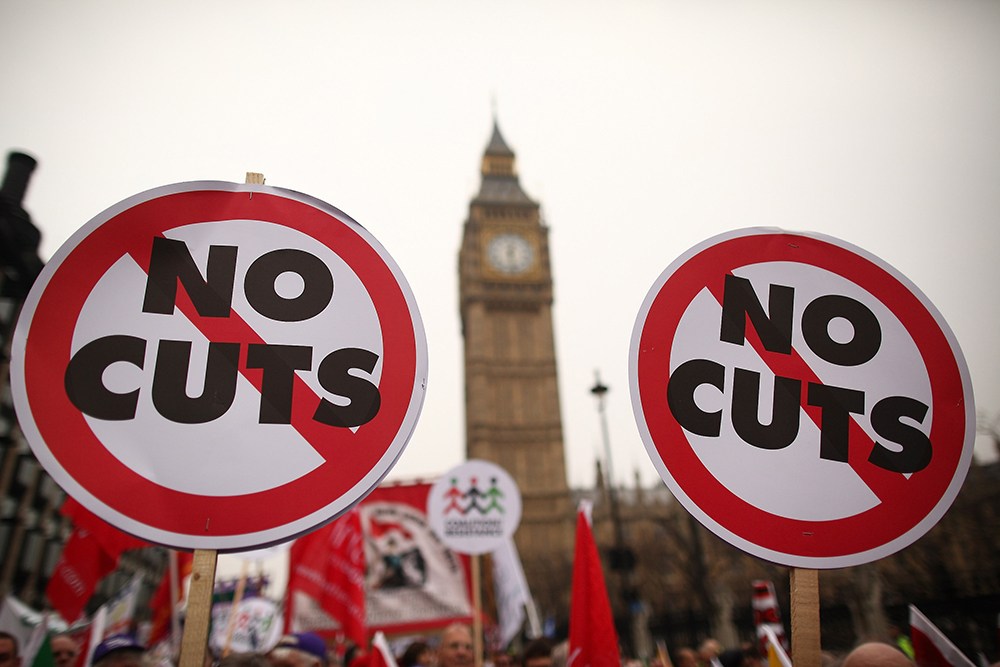


What could our government do, should a crisis of confidence in Britain’s creditworthiness hit us out of the blue next year? This may not be the likelihood, but anxiety in the bond markets must be a possibility real enough to trouble those in government who plan for contingencies.
Imagine that Sir Stephen Timms’s or Alan Milburn’s proposals for solving the problem of our almost a million Neets, however tentative these prove to be, face a mutiny on Labour’s back benches. Or imagine (more likely) parliamentary trouble with the government’s Spending Review, scheduled for next year. Indeed, trouble may already have started: it now looks as if this has been postponed until the autumn.
This is strange. Ministers are refusing to confirm the review will be in the spring. Hitherto, spring was the assumption. A new administration that cannot in a timely manner agree its spending plans is in difficulty. Only last month, the Chancellor called his Budget a ‘breathing space’. He said that all-important plans (for increased defence expenditure, for example, to meet our Nato commitments) would be in the Review. Do ministers now really contemplate a whole year, from one Budget to the next, without settled spending plans? Some breathing space!
Why so coy? One does wonder whether Treasury ministers’ confidence in the Parliamentary Labour Party’s support for any Spending Review is faltering, so they’ve kicked things another six months down the road.
Troubled waters lie ahead. Today, France may be making all the running as an economy and polity struggling to keep its head above water but France is in the eurozone, giving some assurance to the bond markets. We are on our own. Our Prime Minister’s undoubted skills at projecting calm and amiable confidence may carry us some way, but – short of very good news on our domestic economy – there’s a real chance Britain’s money worries will attract critical notice before too long.
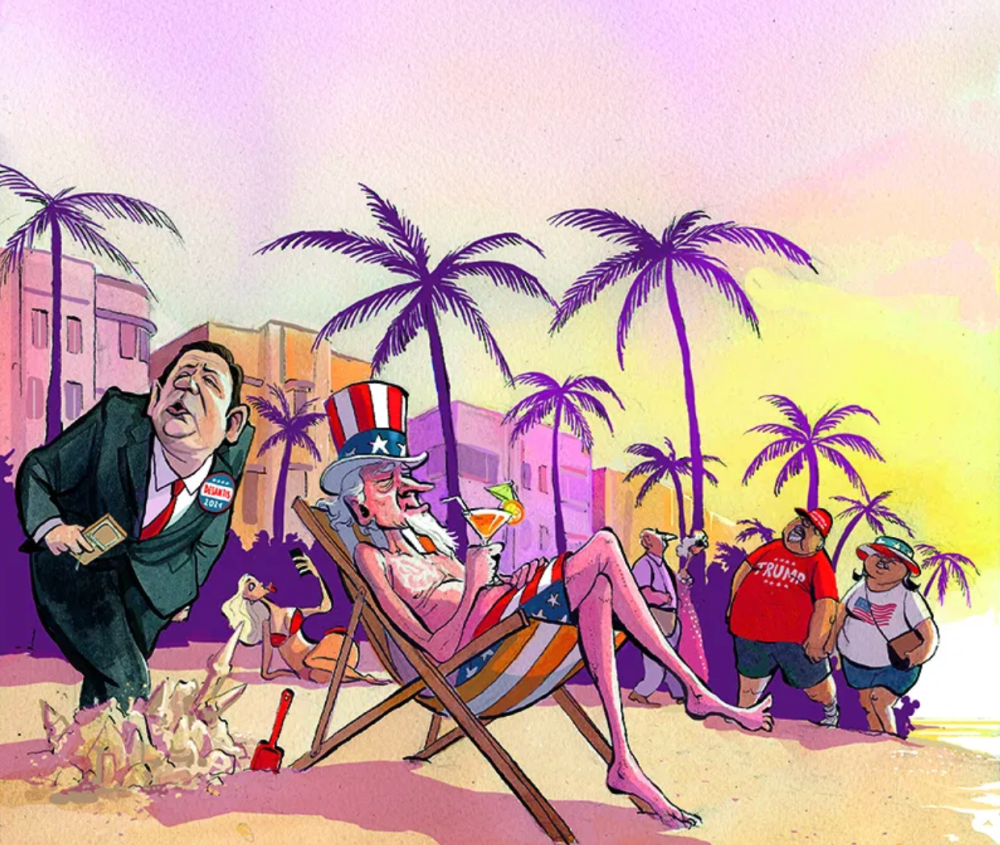
Imagine, then, that disappointing news on the economy, or some big and unanticipated outlay, or major industrial action, or a significant reversal for the government in the division lobbies, were to precipitate a sharp increase in the interest the bond markets demand on our debt, and it began to look as though we were in difficulty, borrowing more to pay for our borrowing. The government would need to bring to the altar at which these bond markets worship a substantial spending sacrifice of headline-making proportions. What might be for the chop, and how might this be justified to mutinous Labour backbenchers?
Now here’s an apparent paradox. My instincts tell me that the more specific the area of spending you target, the harder it will be to carry MPs and voters. Restricted to one or just a few government departments, an overall cut would have to be very substantial in each. Health? Picture the outcry. Education? Universal credit? Disability benefits? Pensions? Local government? Each, if asked to carry much of the pain, would howl that they should not have been ‘singled out’ and there were other departments that should have been first in line. Ministers, in response, would be obliged to explain that something about the targeted department made it more deserving of cuts than the others. This would feel invidious.
Cut one, cut all, I say.
By no merit of my own I’m older than most of my colleagues in media commentary. My mind goes back 46 years to when I was a new backbencher in the spring of 1980. Margaret Thatcher had become prime minister the previous summer, appointing Geoffrey Howe as her chancellor. Both were under pressure, and determined to stamp a clear direction and to do it early. In opposition both had said that welfare spending was too high, heading the wrong way, and could not be sustained.
Within a year of coming to power, and with Thatcher’s full and very public support, Howe imposed an immediate real-terms cut of about 5 per cent on a huge spread of welfare spending. It was almost but not quite universal: pensions, the NHS and the ‘supplementary benefit’ safety net were exempted. But unemployment benefit, sickness benefits, invalidity pensions and allowances, industrial injury benefit and maternity allowance, and others, all faced the same 5 per cent scythe.
Ministers did not argue that these benefits wasted taxpayers’ money. They avoided discussion on the merits. A more general argument was made: that the state was spending too much overall and this couldn’t carry on; inflation (which would top 20 per cent) must be controlled and so people must be more self-reliant. It was pointed out that government spending had risen by some 50 per cent in a decade, more than three times as fast as GDP, an example (Howe said) ‘of the nation’s capacity for spending money before it has been earned’.
Because inflation was high, the cuts were achieved by reducing the inflation-linked increases in benefits, so no recipient saw a cut in cash terms. Appearance was important.
The more specific the area of spending you target, the harder it will be to carry MPs and voters
We could do the same now. Inflation today is about 3 per cent. Freezing what are very broadly the equivalents of these 1980 benefits for two years would more than achieve a 5 per cent cut overall. And I would add old-age pensions and universal credit to the two-year freeze. Back-of-envelope calculations suggest that this could save a sum well into double figures of billions.
There being no straightforward read-across from the 1980 welfare net to what we provide now, and being myself neither statistician nor economist, my figures and examples are only indicative. My purpose, though, is to describe for politicians a methodology for substantially cutting spending while drawing the argument away from local consequences and towards a general cause. For our present government, the word of the hour would be ‘emergency’. The wrath of the bond markets would indeed be an emergency. That sense of emergency would be no bad thing.
It has not come to that yet. But spending money before it has been earned has consequences; and if he does what he says he’ll do, then somewhere down the road Mr Burnham will meet them. I describe here a first-aid kit for if that happens.






Comments