Water

Pubs, schools and water in crisis: my economic forecast for 2026

Forecasting is a mug’s game, as the Bank of England governor Mervyn King once said. But I’ll sketch a few trends for 2026 nevertheless, starting on a positive note in the stock market before moving on to some of the many choices on an à la carte menu of gloom. The FTSE 100 index will have ended 2025 almost 20 per cent higher than it started – slightly better than the US S&P 500 index – and the consensus of fund managers is that (having closed for Christmas at 9,870) it will carry on upwards, perhaps even towards 11,000. Why? In short because many UK blue-chips in traditional sectors such as banking, housebuilding and mining have been undervalued for too long, because interest-rate cuts will help, and because stock markets have a mind of their own.

How private equity ruined Britain

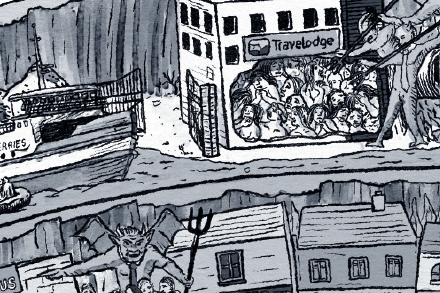
What has happened to Britain’s rivers isn’t a mistake. The fact that serious pollution is up 60 per cent on the year, or that only one in seven rivers can be called ecologically healthy, is the result of corporate tactics. It is effluent from the murky world of private equity. Some 2.5 million people in the UK now work for a business that is ultimately owned by private equity. Since the 2008 financial crisis, Britain has become a prime target for takeovers, driven by low company valuations, favourable exchange rates and a pliable regulatory environment. Everything from Bella Italia to the Blackpool Tower, Travelodge to Legoland, the AA to Zizzi, has been owned by private equity. Today, it claims to make around £7 in every £100 generated for the British economy.

Portrait of the week: Epping protests, votes at 16 and Ozzy Osbourne dies

Home Six people were arrested during a protest by 1,000 outside the Bell hotel in Epping, Essex, which houses asylum seekers; an asylum seeker had earlier been charged with sexual assaults in the town. The Conservative leader of the council said: ‘It’s a powder keg now.’ The number of migrants arriving in England in small boats in the seven days to 21 July was 1,030. The Lionesses, the England women’s football team, decided not to take the knee before winning their semi-final Euro game, after a player, Jess Carter, had been inundated with racist abuse on social media during the tournament.

A new water regime must still reward private investors

The weekend’s torrential Yorkshire rain amid a hosepipe ban offered a handy metaphor for the chaos that has befallen the privatised UK water industry. Sir Jon Cunliffe’s Independent Water Commission report – aiming for a ‘fundamental reset’ to restore public confidence, clean our waterways and ensure future supply – is welcome for the clarity of its central conclusion: that unfit-for-purpose Ofwat and a jumble of other regulators should be replaced by a single body with more teeth and comprehensive oversight of the sector. So far, so good. Cunliffe – a veteran of the Treasury, the Bank of England and Brussels – can also be applauded for his bureaucratic cunning in tabling no fewer than 88 recommendations, in the hope that perhaps eight of them might actually be adopted.

The Romans wouldn’t have put up with Thames Water

It is embarrassing to compare Thames Water’s efforts even to the Greeks, let alone the Romans. Most Greek cities got their water from public fountains fed by springs. Doctors new to a district examined the supply to determine likely ailments (one spring was said to make your teeth fall out). A few towns had piped supplies: Athens had one, and Greek Pergamum (in Turkey), from a source 20 miles away. An inscription there ordered wardens to ensure ‘fountains are clean and pipes supplying them allow the free flow of water’. But the Romans were the great water engineers, spreading comfort and luxury thereby far down the social scale. Initially they were privately funded benefactions (not ‘serious’ enough for the state: this changed under the empire).

The truth about Sydney Sweeney’s bathwater

In the 2004 film Mean Girls Ms Norbury (Tina Fey) cries to her High School students: ‘Girls! You’ve got to stop calling each other sluts and whores!’ Do we? I ask because Sydney Sweeney, an American actress, is selling her bathwater to men with unfathomable desires. No woman would buy it. We have an infinite supply. Selling bathwater is hard. It’s the logistics. How do you distribute it? By fishing trawler? By pipe? Sweeney, who has marketing skills – and this is all marketing, she designed a Ford Mustang, which can’t be drunk, last year – has partnered, as they say, with a soap company, which will incorporate drips (dribbles?) of her bathwater into a soap. At least that is what we are told.

The Greek guide to swearing an oath

A lawyer who wished to serve on a jury but was no Christian was given permission to swear his oath in the name of a local river. He saw it as ‘his god’, as people did in the past, when the association between nature and divinity was widely taken for granted. Consider, for example, the ancient Greek understanding of the natural world. The farmer poet Hesiod (c. 700 bc), often drawing on Hittite and Babylonian myths, provided the West with its first account of how the world was made. First there was khaos, he said (that meant, ‘emptiness, void’, cf. ‘chasm’). Then there appeared Earth, Underworld and Eros (without which nothing could be generated), Night and Day.

After the Flood: There Are Rivers in the Sky, by Elif Shafak, reviewed

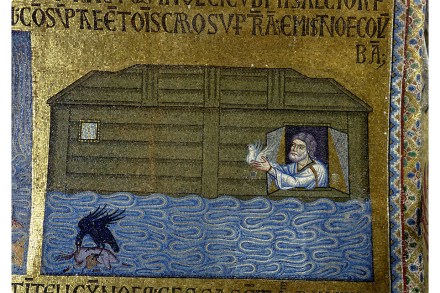
A drop of water falls on the head of Ashur-banal, the erudite but merciless king of Assyria, as he walks through his capital, Nineveh. Having dissolved into the atmosphere, it reappears in 1840 as a snowflake that falls into the mouth of King Arthur of the Sewers and Slums, the fancifully named son of a mudlark, born on the banks of the Thames. After another 174 years that same droplet is found in a bottle in south-eastern Turkey to be used in the baptism of Narin, a nine-year-old Yazidi girl. In Yazidi Creation and Flood myths, humanity descends from Adam alone and the serpent is a saviour Water is both the unifying image and the dominant concern of Elif Shafak’s gloriously expansive and intellectually rich There Are Rivers in the Sky.

Portrait of the Week: Infected blood apologies, falling inflation and XL bully attacks 

Home Rishi Sunak, the Prime Minister, said: ‘I want to make a wholehearted and unequivocal apology’ for a ‘decades-long moral failure at the heart of our national life’, as described in the report by Sir Brian Langstaff from the Infected Blood Inquiry, which found that successive governments and the NHS had let patients catch HIV and hepatitis. Sir Keir Starmer, the Labour leader, apologised too. So far more than 3,000 have died, of the 30,000 infected with HIV or hepatitis C from blood products or transfusions between 1970 and the early 1990s. Interim compensation of £210,000 will be paid to some within 90 days. BT postponed until January 2027 a deadline for forcing customers to switch from copper-based landlines to internet-based services.

The war on life’s simple pleasures

From our US edition

There are few things better in life than taking a hot shower at the end of a long day, crawling into a freshly made bed and passing out into the deepest sleep ever. There are also few things that ruin this uniquely cozy experience more quickly than stepping into a shower with dinky water pressure. Luckily, I’ve rarely dealt had to deal with that issue because I grew up with a plumber for a dad. We eschewed so-called “water-saving” shower heads in our home in favor of ones with such high water pressure that showers felt like a deep-tissue massage. When I moved out after college, my dad would drop by my various apartments to drill a hole in the non-removable flow restrictors put in shower heads by management.

simple pleasures

Would a German takeover of BT be so bad?

To the Mansion House, on an unbearably humid evening, for the Lord Mayor’s annual ‘Financial and Professional Services’ dinner. It’s a big night for the City, with the formal unveiling of reforms designed to channel pension money into unlisted equities, creating by 2030 a £50 billion pool of capital for high-growth UK companies that might otherwise list in New York or sell themselves elsewhere. Simplified London listing rules, favourable to founder-entrepreneurs, will be another part of a wider reform package, much of which has been foreshadowed in this column over recent months. But what a way to put out a major policy announcement.

Let’s flush away the idea of a return to state-owned water

Water, water everywhere in the media this week, as the Thames Water utility – crippled by debt and shamed by Niagaras of raw sewage – reached the brink of collapse. Anticipating government intervention if Thames’s owners cannot inject sufficient new equity, pundits decried the 1989 privatisation of English and Welsh water – which passed from conventional shareholders to private equity and foreign sovereign wealth that combined to extract £72 billion of dividends while loading the industry with £60 billion of debt and allegedly denying it new reservoirs and leak-free pipes. Put like that, the fate of water – a resource so natural that some say it should be immune from all financial alchemy – is indefensible.

Parched at the Trump rally

From our US edition

Cockburn was in Waco, Texas, this weekend, covering the first official rally of Trump's 2024 presidential campaign. He nearly passed out from both physical and political exhaustion. Despite using his press pass to bypass the line, Cockburn's populist streak led him to refrain from joining the other hacks ensconced on the press dais. After having his vape confiscated by the TSA, he chose instead to meander through the crowd of cranky boomers murmuring about the lack of water amid the sweltering Texas heat, which approached ninety degrees on the tarmac of the Waco Regional Airport. Cockburn could relate.

waco donald trump

Why California’s rainstorm ‘disaster’ is a blessing

From our US edition

No doubt California’s extreme weather makes for dramatic television, and for climate eschatologists it stirs up another round of end-times unease. California cliffs tumbling onto highways and sinkholes appearing out of nowhere have been all over the news. Lowland and flood plains are underwater up and down the state. Dry creeks have been raging torrents. One Guardian headline goes, “California’s rainstorm hell ‘among the most deadly disasters in our history.’” California governor Gavin Newsom tweets, “California is proof that the climate crisis is real and we have to take it seriously.” Both the media and Governor Newsom should get a grip. There is no evidence that climate change is to blame for these heavy rains. California has long suffered from extreme weather.

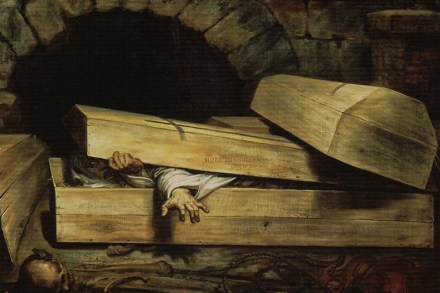
If buttons, balloons or premature burial terrify you, rest assured you’re not alone

Every summer, during our holiday in Orkney, there is a moment of panic. We’re standing on a dizzying cliff – looking across a sleeve of sea at the Old Man of Hoy, maybe – and I’m consumed with a longing to fling myself over. It’s not suicidal. I just yearn to feel the wild rush of air against my cheeks: I want to fly. I’ve never met anyone who shares this compulsion, but The Book of Phobias and Manias assures me it’s quite common. Indeed, it has a name: acrophobia. Kate Summerscale understands it perfectly: ‘The whirl of vertigo,’ she says, can ‘seem like the giddiness of yearning.’ A new book from Summerscale is always a treat.

What’s Helsinki’s nightlife like?

Finnish lines Finnish Prime Minister Sanna Marin said she had taken a test for illegal drugs after being filmed at a party at which some people were shouting ‘flour’ – Finnish slang for cocaine. What’s Helsinki’s nightlife like? — The Hostelworld website identifies a Helsinki venue, Kaiku, as one of its 20 top clubs in the world. — Insider.com names Helsinki as the second best city in the world for socialising. — However, Finder.com rated Helsinki as the 16th most expensive city in the world in which to buy a pint, although it did come out cheaper than Oslo and Stockholm. Screen out Cineworld was reported to be on the verge of filing for bankruptcy, following Covid and what it said was a lack of blockbusters this year.

Water woes: who’s to blame for the shortages?

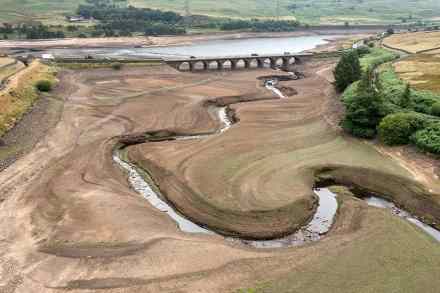
For residents of the London borough of Islington whose homes were flooded this week by a burst water main, Thames Water’s decision to announce a hosepipe ban the following day must have come across as a sick joke. Just a few days before the flood, the company sent out an email asking its customers to be a ‘hot spell hero’. ‘Every drop you save really is another drop more in your local river or reservoir.’ But Thames Water seemed unable to follow its own advice: five million litres of water were lost during the leak. The episode neatly encapsulated much of what is wrong with Britain’s water industry: crude, 1940s-style rationing on the one hand and a failure to prevent much of the product leaking away on the other.

Should you grass on a neighbour who breaks the hosepipe ban?

We know many water companies are themselves guilty of profligate waste through unrepaired leaks. So to snitch on a neighbour, who is making a comparatively tiny personal contribution to the drought, seems petty. But we are only human and it is hard to watch your flowers and vegetables wither and die while your neighbour is still drenching his own produce with gay abandon. If you have a smart water meter you might be more careful about over-use as Big Brother is watching you. Candy, a wife and mother of three in my nearby town, showed me her own bill for water use. It announced that her total water use was 93m3 between January and July 2022. The bill declared: ‘That’s the same as about 372,000 cups of tea, OR 1,240 showers OR 1,163 baths.

Do we need a Roman-style Water Czar?

It is clear that the country will soon need a Water Czar. Augustus’s right-hand man Agrippa would be the one to reshape the whole system, and Frontinus to ensure it all worked. Of Rome’s aqueducts, ‘cut-and cover’ masonry channels, following the contours of the ground, made up 80 to 90 per cent of their total mileage, with tunnels and arches only as necessary. Rome’s first three aqueducts, built between 312 bc and 144 bc, were ten miles, 40 miles and 56 miles long, the last with arches along the final flat seven miles into the city.

Iran, a dammed nation

From our US edition

The recent events in Afghanistan have made us think we know what regime collapse looks like. Militias roaming the streets, soldiers scrambling to helicopters, up against the clock to escape the anarchy below. But in some instances, the reality can be far more mundane. Across from Afghanistan’s own border, another Islamic theocracy — Iran — is struggling to manage a dangerous water shortage. As one hardline Muslim regime arose in Central Asia this year, another could yet be at the very beginning of its fall. In July, during the worst drought in half a century and scorching heat of over 120°F, protests erupted in the oil-rich province of Khuzestan as a water crisis that has been slowly bubbling for decades hit boiling point.

dammed water