Vaccines

Can we boost immunity with the vaccines we have now?

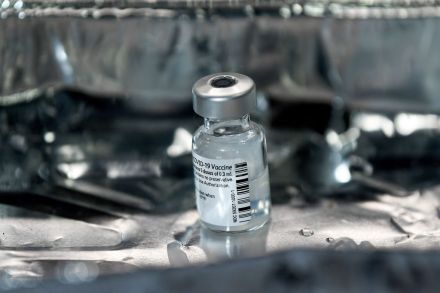
What to make of the news this morning that Oxford University is to ask for volunteers to take part in a trial to ‘mix and match’ the Pfizer and AstraZeneca vaccines? Researchers will ask for 820 volunteers, all over 50 years old, who will be given two shots of a vaccine, two weeks apart. Some will receive AstraZeneca followed by Pfizer, some the other way around and some — the control group — will be given two doses of the same vaccine. Britain has set itself apart from the EU, not just in the speed and extent of its vaccine procurement programme but also for its willingness to experiment.

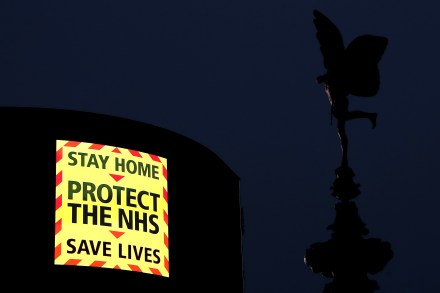
What the latest vaccine news means for lifting lockdown

As more good news about vaccine efficacy rolls in, questions are already starting to be asked about what it means for the Prime Minister’s lockdown timetable. Boris Johnson has committed to publishing his ‘roadmap’ out of lockdown — but news from the last few days may be influencing what that roadmap looks like, especially the PM's top priorities of getting children back to school and lifting major social distancing restrictions. Today’s antibody survey from the Office for National Statistics shows 15.3 per cent prevalence in England, up from 10.7 per cent last month. This time around, the increase is not just due to infections: vaccines are playing their part too.

France takes another pop at Britain’s vaccine strategy

The number of Brits who have received at least one dose of a Covid-19 vaccine hit 9.2million yesterday. But not everyone is impressed at the pace of the rollout. Step forward, France's Europe minister, Clément Beaune, who has followed the example set by his boss Emmanuel Macron in criticising the British approach. The UK has taken 'a lot of risks' in its vaccine programme, Beaune told reporters:  'The British are in an extremely difficult health situation. They are taking many risks in this vaccination campaign. And I can understand it, but they are taking many risks. They have spaced – and the scientists have told us not to – they have massively spaced the two injections apart…They mainly depend on one vaccine, AstraZeneca.

Concern grows over South African variant

Although there's plenty of positive vaccine news to go around, the latest government press conference offered a sobering reminder of the obstacles that remain when it comes to ensuring a successful vaccination programme. The Health Secretary said that despite recent efforts to prevent new arrivals to the UK bringing in the South African variant, random check found 11 cases that could not be linked to international travel. This means there has been community transmission.  While Hancock said there was 'currently no evidence' to suggest this variant is more severe, its emergence is of concern across government. The reason? The effect of vaccines on the new strain.

One year after Brexit, Britain is reaping the benefits

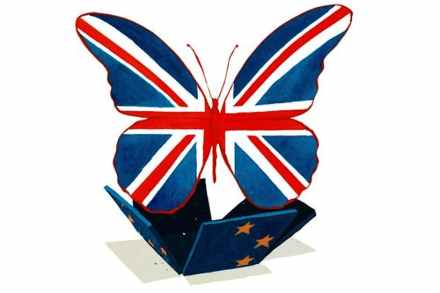
A year ago today Britain awoke to a rather muted celebration – which seemed to consist largely of a bubble car driving around Parliament Square with a Union Jack in tow – ready to face up to a brave new future outside the EU. Who would have imagined then that the Observer would mark the first anniversary by running a leading article condemning the EU as 'shambolic' and instead praising Boris Johnson’s government for something Britain did all by itself? Of course, the Observer’s judgement is only in respect to one thing: the EU’s joint vaccination procurement programme. Nevertheless, it is something rather important, on which a great number of people’s lives are dependent.

Sunday shows round-up: Liz Truss guarantees vaccine supply from EU

Liz Truss – We can guarantee UK’s vaccine supply The European Union’s attempt at vaccine procurement has not been its finest hour. Concerns about lack of supply across Europe prompted the EU Commission to consider how it might override Pfizer and AstraZeneca’s prior commitments and commandeer the output of their Belgian factories for the bloc’s own internal use. Signalling that the EU might block the export of the jabs, many of which had been intended for use in the UK, triggered an immediate backlash, and the EU eventually climbed down. The International Trade Secretary Liz Truss spoke to Andrew Marr, who asked her if she could be certain that the UK would be receiving its expected doses in full: https://www.youtube.com/watch?

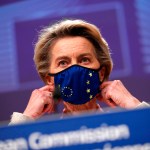
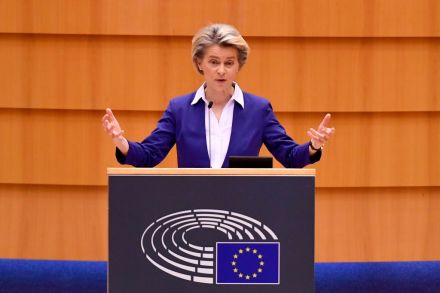
Ursula von der Leyen has always left a trail of disaster

The German Army had to join a NATO exercise with broomsticks because they didn’t have any rifles. It’s special forces became a hotbed for right-wing extremism. Working mothers were meant to get federally-funded childcare, to help fix the country’s demographic collapse, but it never arrived, and the birth rate carried on falling. Every child was supposed to get a hot lunch at school every day, but somehow or other it didn’t quite happen. There is a common thread running through the career of Ursula von der Leyen, the President of the European Commission. A series of catastrophic misjudgements, and a failure to deliver.

The EU’s vaccine opportunism will not be forgotten

At first, it sounded like empty rage. The European Union had spent all week making wild statements about controlling vaccine exports — even challenging the notion of contract law. On Friday, it has started to act on its words and announced it will introduce controls on vaccines made in the EU — potentially giving itself the power to stop Pfizer sending Britain the vaccines it has paid for. Worse, when it made the announcement, it included Northern Ireland. The EU was set to use the ‘last resort’ mechanism in the recently-agreed Northern Ireland Protocol, Article 16, that can unilaterally impose a land border: something both the UK and EU spent years trying to avoid.

Could this drug offer immediate protection from Covid-19?

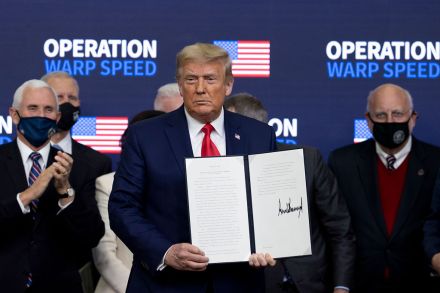
When Donald Trump returned to the White House after a brief spell in hospital with Covid-19 last October he made a video attributing his rapid recovery to a drug he called ‘Regeneron’. ‘They call it a therapeutic drug, but to me it wasn’t therapeutic – it made me better,’ he said. ‘I call that a cure.’ Naturally, given that Trump had on a previous occasion appeared to advocate injecting humans with disinfectant, there was an element of scepticism on the part of many viewers. However, the drug he was talking about went on the receive emergency use authorisation in November from the US Food and Drug Administration. We now have interim results from a Phase 3 trial in which the drug was used as a ‘passive vaccine’.

vaccines autism

Dispelling the myth of the vaccine-autism controversy

From our US edition

Vaccines didn't cause Rachel’s autism. Or Sam’s, or Daniel’s, or anybody else’s for that matter. The reason is simple. Vaccines don’t and can’t cause autism. Peter Hotez ought to know. A certified pediatrician, he's one of the world’s leading vaccine scientists, developing vaccines against ‘neglected tropical diseases.’ He’s also the father of Rachel, an autistic and intellectually challenged young woman. There is no vaccine controversy, just as there is no shape-of-the-earth controversy. Anybody who understands the scientific method knows that there is no link whatsoever between vaccines and autism, just as they know that they can walk as far as they’d like around the world without falling off the edge.

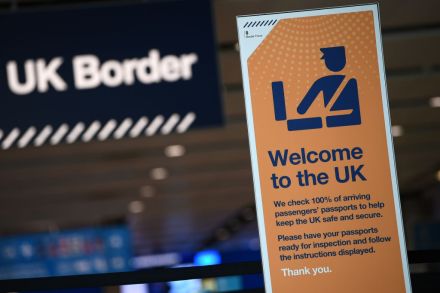
Controlling borders is a critical step in the fight against Covid

Over the last two months our fight against Covid-19 appears to have changed dramatically. The emergence of novel variants in the UK, South Africa and Brazil has generated plenty of headlines and concern. We shouldn't panic. But one thing is clear: if we don't act now, we could come to regret it. In the UK, for obvious reason we have been most focused on the B.1.1.7 variant. The evidence seems pretty clear that it is more transmissible and potentially more severe. Part of the reason we have such extensive data on virus mutations in the UK is the quite astonishing efforts that have gone into sequencing the viral genomes.

Can Boris hit his vaccine target?

The government has failed to meet so many Covid-related targets so far that many will be extremely sceptical of the Prime Minister’s pledge on Monday evening to get the over-70s, front-line care workers and vulnerable people of all ages vaccinated by the middle of February. That is around 13 million first doses which will have to be delivered over the next six weeks – compared with just over a million which have been administered since the Pfizer vaccination programme began four weeks ago. We now have the AstraZeneca vaccine as well as the Pfizer one, but can the NHS really increase the rate of vaccination tenfold, as would be necessary to meet the PM’s target? There ought not to be a problem with the vaccination process itself.

Trump was right about the vaccine release

From our US edition

Donald Trump said during the second and final presidential debate on October 22 that he was optimistic a vaccine would be ready 'within weeks’. When moderator Kristen Welker asked if that was a 'guarantee’, Trump replied that it was not, but that the US would have a vaccine by the 'end of the year’. It wasn't the first time he had made this prediction publicly: 'I think we’re going to have a vaccine by the end of the year,’ Trump said back in May. The media could have accepted that the President probably has better insight into the timeline of vaccine development and approval than those not involved in the process.

vaccine

Should skin color decide who gets the vaccine first?

From our US edition

After eight months of frantic work, several coronavirus vaccines appear ready for launch. But there are 330 million Americans, and decidedly less than 330 million shots right now. So the great question America must ask is, who should receive the vaccine first?At least, it was supposed to be a great question. Mercifully, the New York Times has come forth like the Good Witch of the North to show us the way. Figuring out health policy is easy, it turns out: just decide the best policy based on race.That was the clear message of a Saturday article posing the question: 'The Elderly vs. Essential Workers: Who Should Get the Coronavirus Vaccine First?

vaccine

Finally America is realizing that Andrew Cuomo is a putz

From our US edition

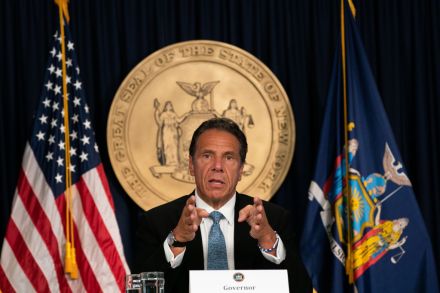
In a sane world, Andrew Cuomo would be America's least popular politician, a welcome target for a primary campaign or a robust Republican challenge in 2022. Yet the anti-Cuomo chorus has included precious few voices this year. The New York Post has been unrelenting in its criticism, as have conservatives in publications such as this one. ProPublica and the Associated Press rigorously reported out the nursing home debacle. But Cuomo's performance has been largely been lauded by liberal New Yorkers and pundits in the mainstream media. In July the New York governor was the 'politician of the moment', according to the New York Times.

cuomo

Stop shunning anti-vaxxers just for bringing disease into the herd

From our US edition

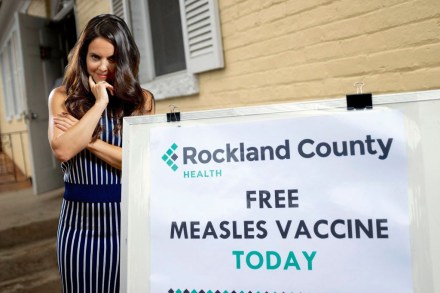
Where, oh where, are the valiant crusaders standing up for the anti-vaxxers? Am I the only one who sees their persecution as a danger to the health of a free society? Ostracized for their refusal to follow basic common sense, it’s shocking that these model examples of parenting would be shunned simply for bringing disease into the herd. You can’t expect these poor, frightened individuals fighting for the rights of their children to die of an ancient disease — to stand a chance against billions of people who have been brainwashed by thousands of years of evolutionary psychology, can you? Disease avoidant behaviors like revulsion are clearly yet another example of government Mind Control. At least that’s what I read in a r/deadkidsdontgetautism thread.

bridget anti-vaxxers