Vaccine

Matt Hancock is right: we are in a vaccine race with France

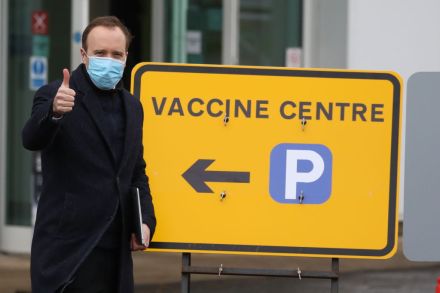
There are plenty of different ways in which Matt Hancock, the health secretary, can be criticised for his handling of the Covid-19 crisis. Track and trace didn’t work, lockdowns were sporadic and probably too late, and the messaging wobbled all over the place. But comparing the British vaccination drive to France and the rest of the EU? That was completely right. When Hancock remarked on Sky News yesterday that the UK had vaccinated more people in just three days than France had managed in total, his critics on social media went into a predictable meltdown. It’s not a competition or a race lectured the finger-waggers. We have only done one dose.
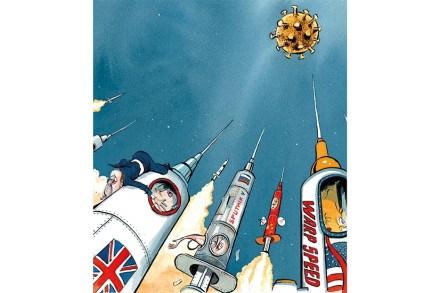
The EU’s vaccine catastrophe is a crisis of its own making

As news emerges that both Pfizer and AstraZeneca are cutting supplies of their Covid-19 vaccines to the EU by up to 60 per cent, EU officials are turning on the drug companies, threatening fines and lawsuits if they don’t speed up deliveries. The Italian Prime Minister Giuseppe Conte has blasted the delays as unacceptable and threatened to take the companies to court. While the European Council President Charles Michel is threatening to use ‘all the legal means at our disposal’ to make the drugs companies ‘respect the contracts’ signed with the EU. But hold on, because on closer inspection it turns out that much of the unfolding vaccine catastrophe in the EU is of its own making.

How effective has the Covid vaccine been in Israel?

The world’s eyes are on Israel at the moment, as the country continues its phenomenally fast roll-out of the Pfizer vaccine. As of yesterday, the country had vaccinated a third of its population with at least one dose, which means we are starting to find out vital information about the vaccine’s effectiveness and how it works in the real world. So what have he learned about the vaccine so far? First some statistics: as of yesterday, 78 per cent of people over the age of 60 in Israel will have received at least one dose of the Pfizer vaccine. 58 per cent of the over-60s are over 14 days from their first dose, meaning they should have some immunity from the disease and 30 per cent of the over-60s have already received their second dose.

Vaccination is the only way out of this catastrophe

Monday started with me opening my bedroom windows to let what little light there is come through, only to find two workmen on my balcony looking surprised that anyone lived in the building. Since my shooing gestures weren’t understood, I had to step outside, putting myself inside the regulatory two metres, to tell them to ‘get off my land’. As they weren’t even wearing masks, I now am worried they could have been carrying Covid. My landlord is carrying out external redecorations. Is this truly ‘essential’ work? I asked.

The truth about the vaccine ‘postcode lottery’

‘Postcode lottery!’ people scream when one area feels less well treated than another in a public service — in this case, the rollout of the Covid vaccines. It is a silly phrase, if you believe in the devolution of power and the importance of locality. The point of local health trusts, councils and so on is to let local people run most of the things that matter to them. The logical result is that — even within a national set-up like the NHS — there will be differences. If there were no differences, it would not follow that everyone was getting the same high-quality service. It would much more likely show that the service was uniformly bad, because all convoys, to remain in convoy, must go at the speed of the slowest. Visible difference is a spur to improvement.

Portrait of the week: Vaccination, inauguration and a food box denunciation

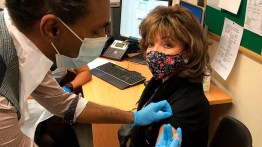
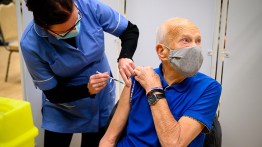
Home The government undertook to offer a first dose of vaccine to the adult population of the UK by September. More than four million had now been vaccinated. The campaign was on target to vaccinate 15 million by mid-February. A ten-day trial would see some hospitals open for vaccinations 24 hours a day, seven days a week. Racecourses, sports arenas and even cathedrals such as Salisbury, Lichfield and Blackburn became vaccination centres. St Paul’s Cathedral in London suspended public worship because of the danger of coronavirus, as did more than half of Church of England churches. At the beginning of the week, Sunday 17 January, total deaths (within 28 days of testing positive for the coronavirus) had stood at 88,590, including 7,722 in the past week.

It’s time to vaccinate teachers – and start planning a great school reopening

At the start of the Covid-19 crisis, Chris Whitty often made the point that a pandemic kills in two ways: directly and indirectly. Locking down society also costs lives — and stymies life chances. Ever since the government moved to embrace lockdown, neither ministers nor the chief medical officer have talked much about the collateral damage it inflicts. This is odd, because it is perfectly defensible to say that lockdown is the least damaging course of action while still acknowledging the harm it causes, particularly for the young. Not since Victorian times have so many children spent so little time in school. As ever, it is the poorest who will be most affected by the lack of education over the past year.

Could the Australian approach to Covid work in Britain?

The government’s most important economic policy is its vaccination programme. The speed at which people are immunised will determine when — and how quickly — the economy can reopen. If all goes to plan, Britain will be the first country in Europe to get rid of restrictions and start the job of social repair. Three factors give grounds for hope. First, there is remarkably little ‘anti-vax’ sentiment in the UK. More than 70 per cent of the population ‘would definitely get’ a Covid vaccine if it were made available to them this week. In Germany, it’s just 41 per cent; in France, 30 per cent. The willingness of the British to have the jab means that there will be no major problems with take-up.

What makes us think they’ll release lockdown after vaccines?

Has the coup happened yet? You have the advantage over me. It was supposed to have taken place on Sunday. Then it slipped back to Monday morning. When Monday morning came and went in a markedly coup-less state the date was revised to Wednesday. Anyway, there was to be a worldwide media blackout after which President Donald Trump — for it is he — would announce to the world that he was still in control and that Joe Biden and a whole bunch of others had been arrested for their various roles in covering up election fraud. The rapidly shifting date of this coup reminds me a little of my mother-in-law’s frequent assertions that the world is going to end on, for example, 12 October.

Silencing Ian Blackford is one upside to PMQs tech troubles

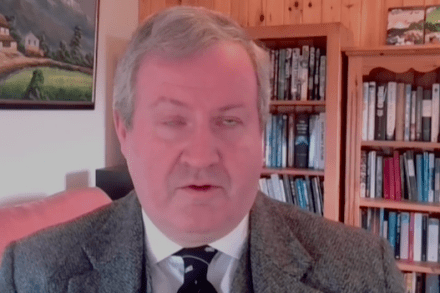
Parliament, 0. Computer Bugs 1. That was the score at PMQs today after a software glitch turned the debate into a cyber-shambles. The disaster unfolded as Ian Blackford asked his two questions. The SNP member, wearing a smart three-piece suit, joined the chamber from his sumptuously appointed country seat in the Hebrides. Blackford is known as a champion of the people and today he had a golden opportunity to stir up trouble for Boris. The very fishermen whom the PM had promised to enrich after Brexit are facing ruin because paper-wonks at sea-ports are holding up the transit of fresh fish. A perfect issue for the SNP.  But Blackford ignored the plight of Scottish trawler men and turned instead to the presidential inauguration.

The difficult vaccine debate we’ve shied away from

The Prime Minister only has himself to blame for the public outcry over 70-year-olds being vaccinated when there are still many over 80-year-olds waiting even to be invited to be vaccinated. What I mean by this is that there was a perfectly good argument for vaccinating 70-to-80 year olds before the more elderly, or at the same time. But Boris Johnson eliminated all debate about that when he ordered the Joint Committee on Vaccination and Immunisation to organise the vaccination programme so that deaths from or with Covid-19 should be cut as rapidly as possible.

Matt Hancock tight-lipped on when Covid restrictions might end

As ministers voice their hope that the country can start to lift restrictions from early March, questions are being asked as to when restrictions can go altogether and normal life resume. Members of the Tory Covid Recovery Group have argued that most restrictions should go as soon as the vulnerable are protected. While officials remain tight-lipped on the issue, Matt Hancock did offer an insight in today's press conference as to the key factors the government will consider when making that decision. Announcing that over four million people have now been vaccinated in the UK, the Health Secretary urged the public not to blow it as the route out was clear. In the Q&A, he pointed to the factors that will decide when restrictions can go.

Is the one shot jab a game changer?

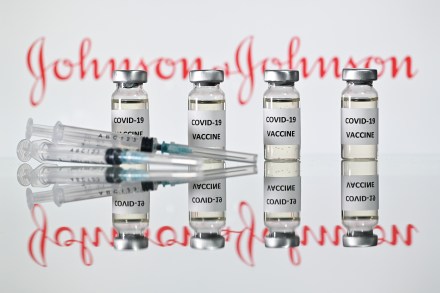
The UK’s decision to lengthen the gap between first and second doses of the Pfizer and AstraZeneca vaccines has been criticised by some. But what if we had a vaccine which only needed one dose, and had been tested on that basis? A vaccination programme could progress far more quickly and without the complication of having to ask people to come back to a clinic a second time. In particular, it would simplify the distribution of vaccines in countries with less-well developed public health systems. That is the promise of the latest vaccine candidate for which results have been reported: the Johnson & Johnson vaccine, which is based on an existing Ebola jab.

Boris can’t afford to move slowly on lifting Covid restrictions

At 3.48pm on Thursday the Sun’s political editor tweeted out an explosive story that Steve Baker, the co-convenor of the Covid Recovery Group of Tory MPs, had warned that Boris Johnson’s party leadership would soon be under threat if restrictions were not lifted soon. Less than 100 minutes later, Baker put out his own tweet as follows: ‘What this country needs is the complete success of Boris Johnson… I am clear Boris is the only person to lead us out of these difficulties and I support him in that endeavour.’ In short, Baker had overplayed his hand to an embarrassing extent – much to the delight of those parliamentary colleagues who regard him as insufferable.

Steve Baker’s warning for No. 10 points to the next Tory battle

As government ministers avoid putting a date on an easing of restrictions, let alone an end to them, scientific advisers have stepped in to fill the silence. Deputy Chief Medical Officer Jonathan Van-Tam has suggested the lockdown could remain in place well into spring while Professor Neil Ferguson – who briefly stood down from his role last year for breaking lockdown rules – has suggested measures could be in place until the autumn. This, however, is not going down well with the Tory MPs who make up the lockdown-sceptic Covid Recovery Group. As the Sun reports, Steve Baker has issued a rallying call to his fellow members over the situation.

Patient ‘safety’ checks are causing deadly vaccination delays

I have now observed a Covid-19 vaccination hub from both sides. As a patient waiting outside in a three-hour queue, much of it in the rain, I wondered why everything was moving so slowly. As a volunteer doctor working on the inside, I saw numerous good-hearted colleagues trying their hardest, bursting a gut to make the system work. Why the difference? I have concluded that the NHS approach to patient safety is a very significant contributor to vaccination delays. There has been national publicity around the mandatory training for potential volunteers before they can start work, which has included ‘diversity’ and ‘counter-extremism’ training.

Watch: Labour MP pushes for prisoners to skip the vaccine queue

Who should get the vaccine first? Those most likely to die from Covid, you would have thought. Luckily the Corbynite twenty-something Zarah Sultana was on hand to question such ill thought out assumptions.  During a science and technology select committee hearing earlier this morning, the Coventry South MP quizzed the vaccines minister Nadhim Zahawi over the government's decision to prioritise the old and infirm. Instead, the government, according to the socialist MP, should consider doing the 'humane' thing by prioritising 'disenfranchised' prisoners as it would be 'good for public health'.  Zahawi politely suggested that it was perhaps best to stick to the current plan, vaccinating those most at risk of, you know, dying...

The EU’s vaccine shambles is turning into a re-run of the euro crisis

Rewind a few months, and it was all meant to be very different. With Covid-19 rampant across the world, the European Union would take charge of sourcing vaccines from the major drugs companies. Its massive buying and regulatory power, coupled with its finely-tuned administrative machine, would make sure its 440 million people were protected from the virus before anyone else. It would be a magnificent demonstration of the whole point of the organisation. The trouble is, not only has the project already started to come off the rails, it is getting worse with every day that passes. Europe’s vaccine alliance is crumbling with potentially far-reaching consequences. Europe’s vaccine alliance is crumbling with potentially far-reaching consequences.

The next Tory debate is on post-vaccine restrictions

When the third national lockdown came to a vote in parliament last week, only 12 Conservative MPs voted against the measures. This was a far cry from the second lockdown – which saw a rebellion of over 50 – and the mood at that time. Back in November, members of the Covid Recovery Group – made up of Tory MPs sceptical of tighter restrictions – were warning that a third lockdown would see a rebellion in the three-figure mark. So, what's changed? Speak to former lockdown rebels and it's a mix of factors that has provoked a rethink. The approval of several vaccines means that there is now a reasonable argument to be made that this will be the last national lockdown rather than one in a never-ending cycle. Second, the data.