Usa

Low life | 31 August 2017

I arrived for lunch a bit late and was led to the dining table. Our hostess disappeared back into the house to bring out the food, leaving me to acquaint myself with the other guests, an Englishwoman and an American. The Englishwoman said that yesterday she had fallen off the wagon after eight weeks and today she was terribly hung over. She didn’t feel guilty, however, because she had enjoyed herself very much. The American man’s eyes were hidden behind sunglasses but he had a warm smile and great teeth and an easy, open manner. He introduced himself by saying that this was his first time in France, and that he was checking out Italy and France as possible places of refuge in the not-so-far-fetched event that he had to flee America. ‘Trump?’ I said.

The true nature of Trumpism can no longer be denied

There is a strain of wickedness so contagious that it infects every pore of the places it touches. It can be found in the failed human beings who snatch at glory by the mass slaughter of children; they have changed forever the towns of Dunblane, Newton and Columbine. New York and Paris have emerged from the violent fantasies of terrorists but Utøya, Enniskillen and Ma’alot likely never will. Charlottesville joins the grim roster of cities that stand as metonyms for racial hatred and intolerance. The Virginian municipality has been here before — it was ground zero of the Stanley Plan — but it is the arresting display, in 2017, of white supremacism that will forever bracket it with Selma and Birmingham. Evil can sometimes be terribly useful.

His dark materials | 3 August 2017

Randy Newman is already struggling to keep up with himself. His dazzling new album, Dark Matter, was written before the changes of the last year, and no matter how pointed and current some of it is, there’s something missing. ‘There was a newspaper article that said Donald Trump is like a character in a Randy Newman song,’ he says. ‘I didn’t think there were any real people like the guy in “Political Science” or “My Life Is Good”. But he’s close.’ He’s had a bash at something for the Potus. ‘I just had an idea for a Trump song,’ he says, sounding rather like Yogi Bear’s rather smarter brother. ‘But then I didn’t do anything about it.

High life | 3 August 2017

I’ve stayed far away from the new barbarians with their choppers, tank-like cars, home theatres on board, and fridge-shaped super yachts that terrorise sea life. In fact, dolphins escorted us in to Kyparissi, a tiny village on the eastern Peloponnese 60 kms from Sparta, my grandmother’s birthplace. German and Spartan; not a bad combination, especially if one thinks democracy is a biological contradiction, which I do. Just look at the Remoaners and you’ll see what I mean. Back in the good old days, we Athenians knew how to practise real democracy. All Athenian males over 18, irrespective of wealth or status, had the right to attend the Assembly, which met every nine days and was where they decided how Athens should be run.

Starting block

Conor McPherson’s new play is set in dust-bowl Minnesota in 1934. We’re in a fly-blown boarding house owned by skint, kindly Nick who has designs on a sexy widow with a big inheritance coming. Good opening. Roll the story. But there’s more. Nick’s useless son is a depressed novelist entangled with a beautiful governess betrothed to a rich man she doesn’t love. An even better opening. Roll the story. But wait. Nick has a black maid called Marianne whom he rescued as a baby and raised as one of the family. An interesting complication. Roll the story. No wait. Marianne claims to be pregnant but declines to reveal whether the father is a rapist or an honourable suitor. And local gossips whisper that her baby bump is fictional. Fascinating.

China syndrome | 13 July 2017

Every day on his way to work at Harvard, Professor Allison wondered how the reconstruction of the bridge over Boston’s Charles River could take years while in China bigger bridges are replaced in days. His book tells the extraordinary story of China’s transformation since Deng abandoned Mao’s catastrophic Stalinism, and considers whether the story will end in war between China and America. China erects skyscrapers in weeks while Parliament delays Heathrow expansion for over a decade. The EU discusses dumb rules made 60 years ago while China produces a Greece-sized economy every 16 weeks. China’s economy doubles roughly every seven years; it is already the size of America’s and will likely dwarf it in 20 years.

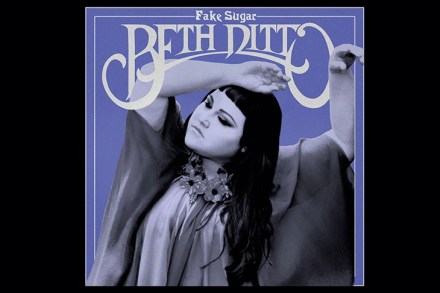
Beth Ditto: Fake Sugar

Boy is she fat, and getting fatter. I realise this is something we’re not meant to mention when talking about Beth — but it’s kinda the elephant in the room. Literally. And I worry about the lass. These days she makes Mama Cass look like Edie Sedgwick. Of course, we should accept her as she is — a lesbian-identifying, very hefty babe from good ol’ down-home Ar-kin-saw. Her difference, then, is part of the schtick, breaking the mould, etc. — and that’s just fine and (Jim) dandy, providing something palpably ‘different’ actually emanates from the stuff she does. That the proud revelling in difference is not merely a cosmetic exercise designed to shift units. And while perhaps once she could claim this, not any more.

American quartet

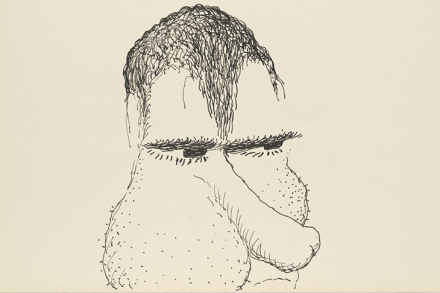
Politics and art can make for an awkward mix. Much more than with religious subjects it seems to matter whether the viewer shares the artist’s beliefs. But whatever you think of Richard M. Nixon, it would be hard not to enjoy Philip Guston’s satirical drawings of him and his cronies at Hauser & Wirth, Savile Row. These were the most exuberant, scatological, obsessive and imaginative such works since 1937 when Picasso produced an extraordinary strip-cartoon vilification and lampoon entitled ‘The Dream and Lie of Franco’. Indeed, the two series have a good deal in common. Picasso portrayed the Generalissimo as a sort of obscene, moustachioed set of bagpipes.

Heaven knows they’re miserable now | 1 June 2017

On the face of it, the two new big drama series of the week don’t have a great deal in common, with one set in a determinedly present-day Britain, the other in a dystopian American future. What they do share, though, is a general air of classiness, some impressively understated central performances and, above all, an almost heroic commitment to unrelenting misery. In the first episode of Broken (BBC1, Tuesday), a typical scene consisted of single mother Christina — who’d just been sacked from her badly paid job and told she was ineligible for benefits — reluctantly selling off her wedding and engagement rings, before returning home to find her mother dead.

Trump on the edge

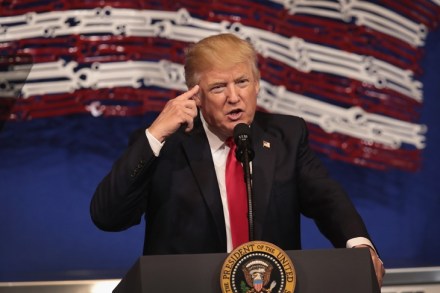
Donald Trump has often wrong-footed the media. In last year’s election his campaign seemed to be always on the verge of falling apart, but it didn’t. Candidate Trump was endlessly engulfed by crisis. The media said he could not win, but he did. It’s tempting to think that the Trump presidency fits the same pattern; that all the chaos in the White House, that reports of the horrifying incompetence of his administration and his dangerously erratic behaviour are exaggerated: fake news, as he would say. But it doesn’t. Just four months in, the Trump presidency is starting to look unviable. Trump’s greatest problem is himself. He seems determined to plunge himself into scandal. The allegations against him are grave and mounting.

Is Trump’s revolution already over?

There were three reasons why I so badly wanted Donald Trump to win the US presidential election. One was that the alternative was Hillary; another that I knew it would annoy all the worst people in the world; but the third was a positive one: I genuinely believed that as an independently wealthy, outsider candidate with no loyalties to the DC establishment, Trump was going to be the revolutionary hero who would finally free the people from the shackles of a corrupt, sclerotic and self-serving ruling elite. Some may scoff at my naivety. But there was evidence to support my view. Brexit had just happened and what seemed clear from Trump’s embrace of Nigel Farage was that he saw himself as part of the same populist wave.

Donald Trump turns on Steve Bannon

Steve Bannon fast became the most powerful person in the world you’ve never heard of. The man behind the Breitbart website became Donald Trump's chief strategist and was credited with both Trump’s presidential victory and his wholehearted embrace of an America First, nationalist position in his first month in office. But Bannon’s influence has been on the wane in recent weeks. He’s got into a power struggle with the President’s beloved son-in-law Jared Kushner; despite one of the rules of Trump world being that family always wins. The ‘establishment’ have also gained at his expense.

America’s foreign policy on Syria is more sensible than the UK’s

Well, Islamists certainly have a useful working knowledge of the Christian calendar -- probably more than most secular Brits -- which accounts for the timing of today’s bloody attacks on Coptic churches in Tanta and Alexandria -- the death toll is 45, and counting. The unfortunate Copts starting their Holy Week services today were intending to commemorate the Passion of Christ, not to join it themselves. As the British Coptic Bishop Angaelos observed, 'As we celebrate Palm Sunday today and Christ’s entry into Jerusalem, we now also mark the entry of those who have passed today into the heavenly Jerusalem.' Well quite so, and the toll in Alexandria might have included the Coptic pope Towadros II, who was at the mass, if the attackers had been even luckier.

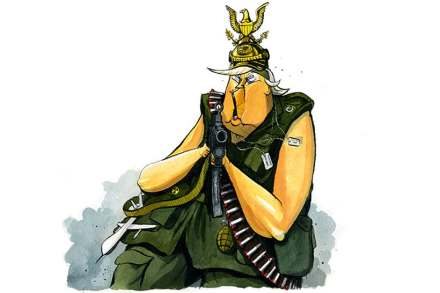
Donald Trump isn’t Hitler. Actually, he’s the new Kaiser Wilhelm II

 Massachusetts All politicians wear masks. Donald Trump’s favourite is that of Maximum Leader. It was on display during this past week. ‘If China is not going to solve North Korea, we will,’ he said at the weekend, ahead of his meeting with Xi Jinping — a throwaway comment that could end up causing mayhem in the Far East. Next, his reaction to news of a chemical bombing in Syria. Trump blamed the atrocity on his predecessor’s ‘weakness and irresolution’, suggesting that he is keen to show the world what strength and resolve look like. The President, it seems, is not too dissimilar to the nightmare his political enemies warned us about: a nuclear-armed hothead itching to show the world how tough he is.

Meritocracy isn’t fair

I’ve just made a programme for Radio 4 about the populist revolts that swept Britain and America last year. Were they predicted in a book written by my father, Michael Young, almost 60 years ago? I’m thinking of The Rise of the Meritocracy, a dystopian satire that imagines a 21st-century Britain governed by a highly educated technocratic elite. Eventually, the intellectual and moral hubris of these Masters of the Universe is too much for ordinary people and they’re overthrown in a bloody revolution in 2034. It often surprises people to learn that my father’s critique of meritocracy was underpinned by his belief that human differences are rooted in genetics, a view many on the left associate with neo-liberal economics and the libertarian right.

Is Trump leading America to war?

Michael Howard (the good one, OM, CH, MC) is 94 and still razor-sharp, but depressed by echoes of the 1930s on both sides of the Atlantic — ‘and I am one of the few people still alive who watched it all happen’. At Wellington he learned, and recites to me from memory, lines from Auden’s 1937 ‘Danse Macabre’: It’s farewell to the drawing-room’s civilised cry, The professor’s sensible whereto and why For the Devil has broken parole and arisen, He has dynamited his way out of prison. Michael believes that President Trump will get his country into a war, and I hear that some of America’s top soldiers share this expectation.

Hollywood goes East

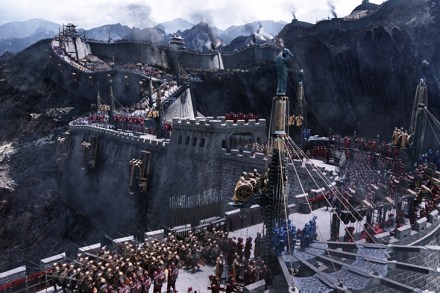
It’s kind of surreal being here.’ The general sentiment, no doubt, of most people on planet Earth right now, but the specific words of Matt Damon at the world première of his latest film earlier this year. The reason for his befuddlement? The film was The Great Wall, for which he had moved to China for half a year with his family. But the première was taking place beneath the extravagant pagoda of Grauman’s Chinese Theatre on Hollywood Boulevard. From actual China to Los Angeles’ idea of China — no wonder Damon found it weird. Yet, as so often happens in Hollywood, the weird could well become the way of things.

Beyond belief | 23 March 2017

As we know from all those newspaper articles and actress interviews, there’s a scandalous lack of high-profile British TV dramas starring women over 40. Indeed, if it wasn’t for No Offence, Unforgotten, Silent Witness, Last Tango in Halifax, The Fall, NW, Agatha Raisin, Broadchurch, Happy Valley and Apple Tree Yard, there’d really only be Vera, which returned to ITV on Sunday. The Vera in question is DCI Vera Stanhope, who, in the teeth of fierce competition, may well be the most implausible cop on television — even if she does fit snugly into a thriving sub-genre featuring sharp but kindly policewomen whose male colleagues spend much of the time shaking their heads in disbelieving admiration.

American psyche

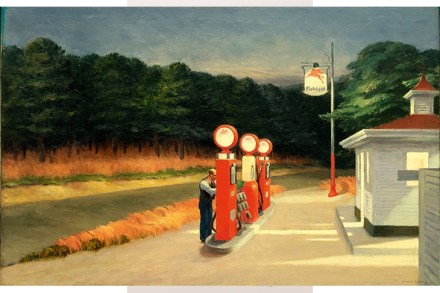
The latest exhibition at the Royal Academy is entitled America after the Fall. It deals with painting in the United States during the 1930s: that is, the decade before the tidal surge of abstract expressionism. So this show is a sort of prequel to the RA’s great ab ex blockbuster of last autumn. It might have been called, ‘Before Jackson Began Dripping’. Not much in this selection, though, can compare to the power of the abstract expressionists at their peak in the Forties and Fifties — not even an early work by Pollock himself. But it does include a couple of masterpieces by Edward Hopper, plus several pictures so brashly over the top as to be quite interesting, several others that are simply terrible — and one of the world’s most familiar images.

Letters | 26 January 2017

What is a university? Sir: As a former Russell Group vice chancellor, I think that Toby Young’s appeal for more universities (Status anxiety, 14 January) needs several caveats. First, what is a university? Recently some have been created by stapling together several institutions without any substantial element of research and renaming them as a university. There is even some suggestion that research is inimical to good teaching, because some university researchers with a duty to teach shirk it. But the presence of a weighty research community lends a university an invaluable ambience. In America, many colleges that teach only to the bachelor degree are well regarded without possessing the title of university.