Universities

Trenton Oldfield makes about as much sense as the entrails of a chicken

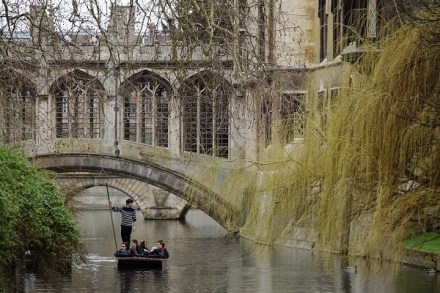
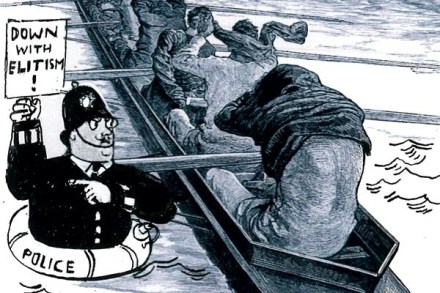
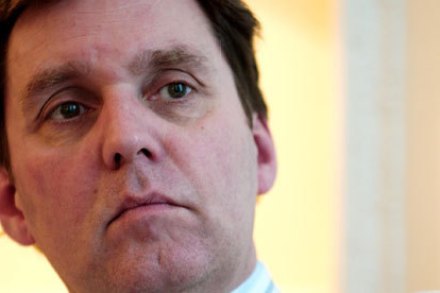
I trust everybody enjoyed the boat race this weekend  Last week the editors of this magazine made me go through the purgatory of speaking with the person who disrupted last year's race. Listeners may come away with the idea that, contrary to reports, Trenton Oldfield was coshed most terribly upon the head by last years' varsity oars. This would be a mistake. As a graduate of the London School of Economics, he has simply imbibed each and every one of the stupidities which the modern university has it in its power to bestow.

Diary – 7 March 2013

My friend and colleague Roy Brown has just sent me the draft of a statement he will submit to the UN Human Rights Council this spring, on behalf of the International Humanist and Ethical Union. This is a group to which we both belong, which campaigns on freedom of thought and expression, women’s and children’s rights, education and much besides. Roy’s draft concerns discrimination against people who do not have a religious faith. It is extraordinary how many countries discriminate by law against nonbelievers, in violation of Article 18 of the Universal Declaration of Human Rights, which protects freedom of conscience.

If Cambridge’s debating girls can’t stand the heat, they should stay out of Glasgow kitchens

Glasgow University Union is in the headlines again. The story at first sight appears typical of the petty campus rows to which undergraduates attach passionate importance but which bore the rest of the world. On closer consideration, it encompasses issues of free speech and political control that are of genuine concern. At the recently held final round of the Glasgow University Union (GUU) Ancients debating competition, involving the older-established British universities, two female speakers complained of being heckled and booed during their speeches and of being subjected to sexist abuse. One girl was from Cambridge, the other from Edinburgh University. As a reprisal, Cambridge has announced it will not send debaters to compete in GUU in future.

The tastes of temptation

There ought to be a wise adage: ‘If invited to do good works, always procrastinate. A better offer is bound to turn up.’ About a month ago, the phone rang. Would I attend the Oxford vs Cambridge wine tasting, sponsored by Pol Roger, which would also include a wine hacks vs wine trade contest? Festivities were to continue over lunch. The likelihood of a wooden spoon did not deter me. I was joyously accepting, when a horrible thought occurred. I checked the diary. My forebodings were justified. I was already engaged, to speak at the King’s School, Bruton. There was one possible solution: do both. Get thee behind me, Satan. There could be worse embarrassments than finishing last in a tasting.

A model of diversity

There’s nothing quite like diversity. Take Manchester. It has a large Muslim population and a lot of gays. What could possibly go wrong? Last week Manchester University’s Student Union played host to the ‘Global Aspirations of Women Society’. This appears to be a front group of the extremists of Hizb ut-Tahrir and therefore by no means does what it says on the tin. Anyhow – as the university’s student newspaper puts it: 'A speaker at a Students’ Union affiliated society workshop said that homosexuals would be executed in an ideal Islamic state, describing the practice of two men kissing as an “atrocity.

The Unbearable Self-Pity of Britain’s Rich and Privileged – Spectator Blogs

Is there anything more pathetic, more risible than rich and privileged Britons whining that their cadre fails to receive a fair shake in the matter of admissions to this country's most prestigious universities? Oh, sure, I suppose there must be but the smugness and evident sense of entitlement on display in these matters remains enraging. Today, for example, Anthony Seldon, headmaster of Wellington College, complains that his pupils are suffering unreasonable discrimination. Worse still, apparently, a presumed "bias" against public school pupils is a "hatred that dare not speak its name". As the Americans say, cry me a river. The evidence for this notional bias is, needless to say, emaciated.

St Andrew’s students beat ‘milking’ with ‘champagning’

The Daily Mail got very excited last month over 'a new student craze' called milking, where students post videos of themselves ‘pouring milk over their heads in public places’: The four-pint fad began in Newcastle and soon spread to Edinburgh, Oxford and other universities. Not to be outdone, the fine gentlemen of St Andrews University have given their own twist on the craze: ‘Champagning’: Robed up, their video speaks for itself. It certainly gives a new meaning to 'Champagne for the brain', but a damned waste of fine Pol if you ask me.

University personal statements under attack, but who actually writes them?

The Sutton Trust today criticised the system of personal statements for university admissions, as they favour well-connected children from private schools. Spectator readers might not be surprised by that, though: in September Molly Guinness revealed in the magazine that those who can afford to often contract the writing of the statement out to graduates for a generous fee. Guinness wrote: 'They need help, and they’d be crazy not to get it. ‘Why would anyone write their own?’ says my cousin Malachy Guinness, who set up a tutoring agency. He points out that with no interviews, there’s no way of checking the authenticity of the statements. His company fields dozens of calls each month on the personal statement question.

University applications fall 8%. But is that bad news?

University admissions service UCAS published figures today showing the number of students applying early for university has fallen by 8 per cent on last year, following a drop of just under 13 per cent the year before. 'Oh dear,' tweeted Times Higher Education's news editor Simon Baker, adding that these figures are 'worrying' while NUS president Liam Burns said the data meant the government 'should now finally admit that its higher education policies are having a significant impact on application behaviour'. Universities themselves might be worried about the effect on their business models of a decline in the number of students, particularly for undersubscribed courses. But are these figures really an unsettling indication of the effects of the government's higher education reforms?

Blair’s babes are still braying

Under the alias ‘Director General of the Russell Group’, a certain Dr Wendy Piatt has slammed the government’s policy on student visas. In a quote to the Independent, she warns: ‘as ministers crack down on abuse of the system, they must be careful about the messages they send to the world's best and brightest students.’ Surely this cannot be the same Dr Piatt who rose through the ranks of Tony Blair’s favourite think tank, IPPR, before being seconded to the Labour team at the Department of Education in 2002? The same Dr Piatt who later became a senior Downing Street aide under the Labour government? We should be told! Her Labour links do not end there.

The Pineapple of Hate

We have had the dreaded cartoons, films, teddy-bear and more. But I bet that until now nobody imagined we would ever see a (cue dreaded music) ‘Pineapple of Hate’.  Yet despite the now familiar feeling that this is all some terrible spoof, the fruit has joined the growing list of household items which can be legitimately regarded as ‘blasphemous’. As Student Rights reports, the crime-scene was the recent freshers’ fair at the University of Reading. For it was there that the Atheist, Humanist and Secular Society stall included a pineapple with the word ‘Mohammed’ on it. I always doubted that the Danish or French cartoons looked much like the prophet of Islam.

Freedom undermined by termites

I have been reading a new book by Theodore Dalrymple which I highly recommend. Readers of the Spectator will need no introduction to the good doctor, his fresh prose or his startling insight. But even for people like me who read most of what Dalrymple writes, Farewell Fear contains a great collection of unfamiliar — and typically brilliant — writings. I particularly enjoyed the essay 'Of Termites and Mad Dictators'. In analysing the threats to our freedom he says: ‘It is difficult now to imagine a modern university intellectual saying something as simple and unequivocal as 'I disagree with what you say, but I defend to the death your right to say it.

University Admissions Should Be a Matter of Discrimination – Spectator Blogs

Cristina Odone begins her latest oh-woe-is-Britain post most amusingly: Around the world, people have long envied Britain's two institutions: the BBC and Oxbridge. Britons, however, (or some of them) are determined to destroy both. They are going about it in a brutal and obvious way, by lowering standards for both Auntie and the great universities of Oxford and Cambridge. The BBC abroad was a byword for beautifully written and brilliantly produced programmes such as "The World at War" and "Upstairs Downstairs". But in its obsession with "diversity", the Beeb has allowed standards to slip: comedies that aren't funny (but don't sound middle class) and reality shows that teach nothing but how temporal celebrity is, have taken over the schedule.

Not ‘the best results ever’: Good news for GCSEs

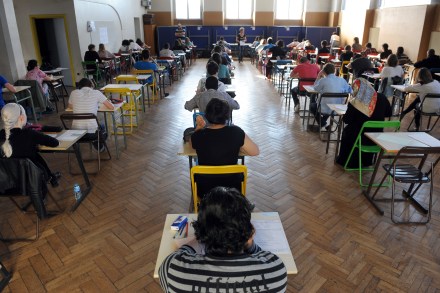
For the first year since GCSE’s came in we have not seen ‘the best results ever’.  Which is, of course, a great relief.  As Anthony Seldon, among others, has pointed out, these results suggest a return to credibility in our examination system. But there are already those, including some teachers and teacher unions who are now hinting darkly at ‘political interference’.  They are used to year-on-year grade inflation and expected this to continue forever. I think these people should themselves be asked to pass a simple test.

How students are mis-sold the benefits of university

What do you say to an Arts graduate? ‘Big Mac and fries, please!’ I used to laugh at that joke until I was served a Junior Whopper by one of my fellow arts graduates in Edinburgh and ever since then I’ve been suspicious of the story I was sold at school: that going to university takes you into a new league of earning potential. The A-Level results came out yesterday, and anyone who has opened an exams envelope will be familiar with the feeling. That you may as well have the results tattooed on your forehead because they will define the trajectory of your life. But in the 22 years since I left school, the government has added to the pressure. It has made a switch from providing university education to actually selling it.

An endangered species

Last night the BBC aired a brilliant horror-movie (viewable on iPlayer) called ‘Young, Bright and on the Right.’ It followed two young men, one at Oxford the other at Cambridge, trying to make their way in student Conservative party politics. One of the stories – of a young man from a one-parent family in Yorkshire whose father had been in prison – was genuinely interesting. Rather than being happy about himself and his background, he had become someone else. Though he presented this as being essential in order to get on in Conservative party politics, I am not certain he was right. Having never been involved I can’t say for certain, but it does occur to me that William Hague, for instance, never lost his accent.

The good news in today’s university applications figures

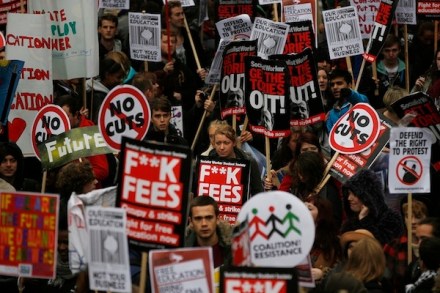
A drop of 8.8 per cent in the number of students applying for university is surprisingly small, actually, when you consider the size of the hike in tuition fees. Still, the figures released today by Independent Commission on Fees prompted an angry response from Labour's Shabana Mahmood, who said: 'The Tory-led Government's decision to treble tuition fees at the same time as cutting funding for higher education is already putting thousands of people off university who otherwise would be eagerly preparing to start their courses.' It's easy to brand this drop of 37,000 applications from the 2010/11 academic year as a failure for ministers who have insisted that the fee rise should not put off prospective students.

Social mobility — more than a political battle over universities

Nick Clegg wants to make social mobility his big theme in office. This is an ambitious target and one unlikely to be motivated by electoral consideration given that visible progress on this front is unlike to be achieved by 2015. The publication of the former Labour minister Alan Milburn’s report, commissioned by the coalition, into the professions and social mobility takes us to the heart of the debate: when can most be done to aid social mobility. Personally, I think the emphasis should be on education reform and family policy. Others, argue that more can — and should — be done later.

A law unto itself

One could meet any day in Society Harold Acton, Tom Driberg or Rowse: May there always, to add their variety, Be some rather Odd Fish at The House. Thus W. H. Auden (something of an odd fish himself) reminiscing at a Christ Church gaudy half a century ago. There have certainly been quite a lot of such fish in living memory, not least in the Senior Common Room.

Gove calls on universities to improve A-levels

It may be a sleepy day in Westminster, but Michael Gove and his school reforms have lost none of their brilliant urgency. The schools secretary has today written to Ofqual — the body in charge of regulating the exams system — to ask that universities be allowed to involve themselves, much more closely than ever before, in designing and implementing A-levels. In the letter he sums up his plans thus: ‘I want to see new arrangements that allow Awarding Organisations to work with universities to develop qualifications in a way that is unconstrained — as far as possible — by centrally determined criterion.’ And he adds that this process should eventually allow ‘universities, not Awarding Organisations, to drive the system.