Universities

The segregation of women and the appeasement of bigotry at Britain’s universities (part two)

On the Today programme this morning Justin Webb covered the decision by Universities UK to allow fundamentalist speakers to segregate women from men at public meetings. With a characteristic disdain for accepted standards of behaviour, Universities UK refused to go on air and answer his questions. Webb had to 'put the other side of the story' himself. He told a Palestinian woman demonstrating outside Universities UK headquarters in central London, [1hr 36mins in] 'What Universities UK say is, if non segregated seating is also provided, it could be all right.' Put like that it can sound just about all right. Men and women who want to sit apart can do so. Meanwhile there will be mixed seating for students who find the notion of sexual apartheid as repellent as racial apartheid.

Science versus Arts – which degree is harder?

People get competitive about the difficulty of their degrees. The accepted line at Oxford is that Science is harder than Arts, and everything is harder than PPE - three years of sleeping until 1pm and waffling about Mill’s Utilitarianism, and you still get to tell employers that you have a degree in economics. It’s probably true about the PPEists, but the Arts vs. Science stuff is a myth. Scientists’ claim to the tougher time is based on the fact that they have more contact hours. More contact hours, we are often told, make a more serious degree: it was reported as a scandal in May when Bahram Bekhradnia, director of the Higher Education Policy Institute, said the average British undergraduate gets less than 14 hours a week with academic staff.

Untold truths – how the spirit of inquiry is being suppressed in the West

It looks like Boris has offended lots of people by suggesting that some folk are where they are because they’re not very bright, something Nick Clegg calls ‘unpleasant’ and ‘careless’. It’s also, as Clegg must know perfectly well, true, but as Rod Liddle writes this week there are certain things you just can’t talk about, not just despite being true but because they’re true. Rod cites what Dominic Grieve recently said about corruption, which was rude, offensive, insulting to the Pakistani community and of course totally true. Likewise when Richard Dawkins recently pointed out a fact about the relative success of the Muslim world vs Trinity College, Cambridge – that was offensive.

Rowing at university is most fun when there’s no rowing

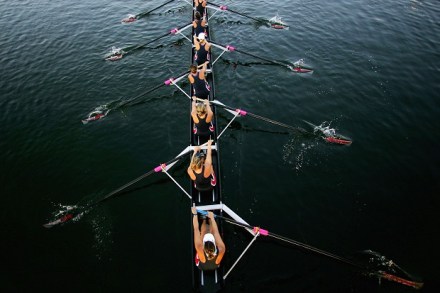
I remember telling my friends that I was going to row at Oxford. I could picture myself in flattering Magdalen College Boat Club lycra, a rosy glow on my cheeks as I enjoyed boat-based camaraderie with my team mates on a crisp spring morning. I didn’t even make it to the river. After a week of leaving grimy gyms with sore muscles and a sense of inadequacy, I jumped ship. My only contact with the sport since has been bumping into the rowers on my corridor on the way to the shower, on the rare occasions when I’m up before 10. Back from their 6am appointments with frostbite on the Thames, reached only after a 30 minute bike ride, my friends appear in a new light: disciplined, fit, driven and organised. It’s disturbing.

I’m ashamed of myself

On waking up (at noon) on Thursday morning, I found I had a text from one of my fellow History freshers. Sent at 6am and accompanied by a screenshot of a half-finished essay: ‘WHY am I still up?!’ The all-nighter is a notorious Oxford experience, and not one I thought I would ever have to sample. ‘I’ll be fine getting the work done at university,’ I blithely assured those warning me of how unstructured a History student’s life is, ‘I like to keep busy.’ What I failed to appreciate is that it’s impossible not to be busy at university. School without lessons was dire — by Tuesday afternoon of the pre-Christmas week of ‘fun’ I had lost the will to live, let alone make Chemistry-themed paper-chains.

Alexander Chancellor: Do you think you should read this piece for free?

I was in Nottingham last Sunday to address university students about journalism. The occasion was a one-day ‘media conference’ organised by the Nottingham University students’ magazine, Impact, for the purpose of encouraging students to embark on journalistic careers. The conference, it promised, would give them a ‘kick start’ in this direction. I hadn’t realised until I got there that this was the intention, for I had planned to say how it was now almost as bad an idea for a young person to try to go into journalism as it had been, in Noël Coward’s song, for Mrs Worthington to put her daughter on the stage.

Give me a tutorial over a lecture any day

I’ve been at university for 17 days, and yesterday had my fifth contact hour: my second tutorial. ‘Tutes’ are what an Oxford education is all about. They’re the reason any self-respecting applicant will give when asked why they’re putting themselves through a three-month ordeal of entrance tests; essay samples; interviews, and an agonising, Christmas-ruining wait. Of course we weren’t swayed by the architecture, the prestige or the challenge: what we really wanted, my sixth-form self often insisted, was the chance to be ‘taught by the people who write the textbooks’. It’s now dawning on me that we’re not really ‘taught’ at all — not in the conventional sense.

Cheated by freshers’ week

My freshers’ pack (a yo-yo, two balloons, a sachet of instant hot chocolate and a condom) is barely visible beneath English Historical Documents, volume 1. Two nights of dancing knee-deep in foam has taken its toll on my shoes, and I feel slightly tricked - encouraged to partake in a week of university-approved partying, and then, two days in, given a 19-item reading list and an essay due in for next week. School friends’ Facebook pages are torturous: three weeks into term at other universities, yet to hand in their first piece of work and seemingly out every night. At dinner the conversation has morphed from ‘So where are you from?’ to ‘You haven’t started writing yet either, have you?’.

The LSE and the notorious t-shirt of hate

The London School of Economics (LSE) has been in the news recently thanks to a certain ex-lecturer who was a Marxist. But while Marxism retains some grip at faculty level in the LSE, it is — like many other universities — another variety of extremism that increasingly dictates events at student level. At last week’s LSE Freshers’ Fair — as Student Rights document here — the Atheist, Secularist and Humanist society were threatened with physical removal after being discovered to have t-shirts deemed to be — wait for it — ‘offensive’. Told to cover themselves up or face removal, the atheists were informed that their t-shirts might even be considered ‘harassment’. So what was the nature of the t-shirts?

Haunted by Facebook, students can’t now reinvent themselves at university

My mum had a friend at university who had been called ‘Pudding’ at school. They’d sometimes be walking down the street, and someone who had known the now-svelte adult as a chubby 13-year-old would say ‘Hello, Pudding’. As I get ready to start at university myself in October, it’s in the knowledge that my schoolgirl self will be even harder to escape. Reinventing yourself at the end of sixth form was once a time-honoured rite of passage, hindered only by a few easily avoided old acquaintances.

There is no conspiracy against state school students going to Oxford, honest

On A-level results day it was inevitable really. Of the roughly 14,000 applicants not to have received a place at Oxford this year, one of them, Alastair Herron, has done astonishingly well in his A-levels, receiving 7 A* grades. He’s done so well in fact, that something fishy must be going on. How could Oxford reject such a brilliant student, thundered BBC Radio Ulster’s Stephen Nolan. 'On what planet do you turn someone down with seven A*s?' Presumably a planet in which over 17,000 pupils, most of them brilliant, are competing for 3,500 undergraduate places.

A-level students: why university isn’t as big a deal as you think

My A-level results day almost passed me by. It took an early morning email from an editor asking for a piece about the experience for me to remember. After a few clicks – no daunting brown envelope nowadays – I’d discovered my reasonably average grades and continued with my day. No need for celebration, but no sense of disaster, either. Towards the end my first year at college, there came a point in time when I had to make a decision. I knew where I wanted to get to; I had dreamed of being a journalist since I was first allowed to stay up and watch the News at Ten as a kid. The only thing I wasn’t sure about was how to get there. If I was a year older, I would probably have been asking myself which degree to choose.

Why I’m hiring graduates with thirds this year

Whenever I return to my old university, I am always struck by how incredibly focused, purposeful and studious everyone seems to be. It fills me with despair. It’s hard to tell the difference between a university and a business school nowadays. Where are all the hippies, the potheads and the commies? And why is everyone so intently serious and sober all the time? ‘Oh, it’s simple,’ a friend explained. ‘If you don’t get a 2:1 or a first nowadays, employers won’t look at your CV.’ So, as a keen game-theorist, I struck on an idea. Recruiting next year’s graduate intake for Ogilvy would be easy. We could simply place ads in student newpapers: ‘Headed for a 2:2 or a third? Finish your joint and come and work for us.

Cable and Willetts: the house-trained ministers?

There are few worse insults for a minister than to be called ‘house trained’. It implies that the vested interests of your department have you under their thumb. So, Vince Cable and David Willetts should be rather alarmed that one notoriously left-wing academic is boasting that they pretty much are. In an article in Times Higher Education, Martin McQuillan of Kingston University describes the pair as ‘mostly house-trained.’ One person involved in the whole spending review conundrum irritably pointed me towards the McQuillan piece when asked how things were going with BIS. McQuillan’s essay is really a long screed against Michael Gove. His agenda is to stop universities being put back under the control of the Department of Education.

Why, once again, a fall in student immigration is good

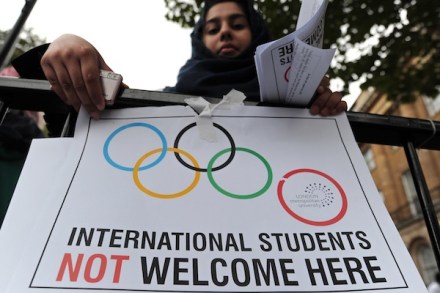
Yesterday came the news that net migration has once again fallen, this time to its lowest level for ten years. In the year ending September 2012, net migration was 153,000. That is a fall of 89,000 on the previous year when it reached a dizzy 242,000. This is undeniably good news. The public have consistently shown their desire to see net migration reduced and we now have a government which is committed to lowering net migration and has so far had considerable success. Many on the left, who cannot bring themselves to admit that net migration of 200,000 per year is too much for a small island such as ours, continue to perpetuate the idea that, in the process of reducing net migration the government is harming the economy.

Britain’s great university rip-off

The mis-selling of higher education is one of the least remarked-upon scandals of our time, but anyone under 40 should be familiar with the concept. You’re told, at school, that a degree will make you far better-off. Politicians even put a price on it: a degree will make you, on average, £100,000 better-off in your lifetime. But this is a fake figure, produced by mashing together law and medicine degrees with others. And when you get to university, you find the ‘tuition’ involves being asked to sit in crowded lecture theatres (or watch on a video in an overflow room) and be told to go read books.

US universities beat the best of British: on teaching and social mobility

The combined endowments of the three top US universities alone is more than Britain's entire defence budget. Luckily the risk of American invasion is still one of graduate students seeking a cheaper option, with old-world charm and brand name. But the days of Oxbridge and the Russell Group holding ranks with the 'new money' Ivy League are numbered. Not just because more money funds more, and better, research. But because US universities also use that money to do a better job finding, investing in and nurturing potential – potential often still excluded in the UK. They show that excellence need not mean elitism, and that’s a lesson the British academe needs to learn if it is to continue to compete globally.

To stay in the global race, British universities may have to go private.

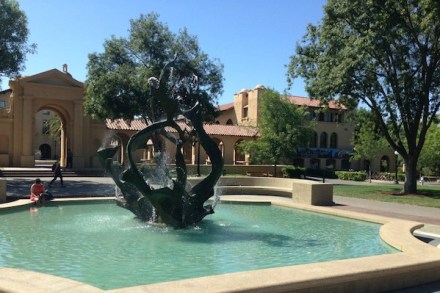
If the devil were to conduct an experiment into mankind’s ability to resist temptation, it would look something like Stanford University. It is built in one of the world’s most agreeable climates and everyone dresses as if they have just stepped off the beach - which lies only half an hour away. Hammocks lie between trees, as if to tempt the weak-willed on their way to lectures. There are jazz clubs, golf courses and swimming pools - and 1,700 students are added each  year, to see if they get any work done. But they do, enough to make Stanford one of the world’s best universities. In fact, 22 of the top 30 are American – and its universities are pulling way ahead of Britain in the world intellectual league tables.

Why has Abdul Hakim Murad not been sacked by Cambridge University?

Abdul Hakim Murad is the Islamic name of a convert to Islam called Tim Winters.  He is a lecturer and tutor and director of studies at Wolfson College, Cambridge University.  Over recent years he was the sort of fellow who was forever being produced as a ‘moderate’, enlightened Muslim scholar. I always had doubts about this claim. For instance, a couple of years back, on a BBC radio programme, I pressed him on the fact that all the main schools of Islamic law still mandate the death sentence as penalty for leaving Islam. Abdul tried to pick me up on this. ‘Are you sure of that’ he pressed. I said I was.

The LSE’s anger about BBC Panorama sounds synthetic and sententious

If I were to make a list of the things I thought the BBC should be doing, then a report from inside North Korea would come right at the top. Obviously, I would rather it were not the fairly ludicrous John Sweeney charged with delivering the report, but hell, you can’t have everything. I’m not sure that the film told us very much we didn’t know, and of course there was Sweeney’s portentous and self-important delivery to contend with. But still, it held the interest and it was an enterprise surely worth undertaking. The BBC has been savaged, as per usual, by the Daily Mail (among a few others) for having allegedly ‘duped’ students from the LSE into acting as a cover – some even said ‘human shield’ – for the trip to Pyongyang.