Unemployment

About those job losses…

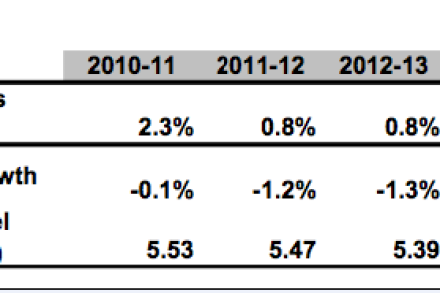
Much ado about the Guardian's scoop this evening: a leaked Treasury document which forecasts that up to 1.3 million jobs could be lost as a result of the spending cuts in the Budget.  Or, to put it in the words of the document itself: "100-120,000 public sector jobs and 120-140,000 private sector jobs assumed to be lost per annum for five years through cuts." You can expect Labour to get stuck into these numbers, and the fact that they were previously hidden from public view, with no uncertain relish.  Ed Balls has already described them as "chilling".  But it's worth making a couple of points, by way of context: i) There's job creation too. The Guardian goes onto report that "The Treasury is assuming that growth in the private sector will create 2.

Smashing the welfare ghettos

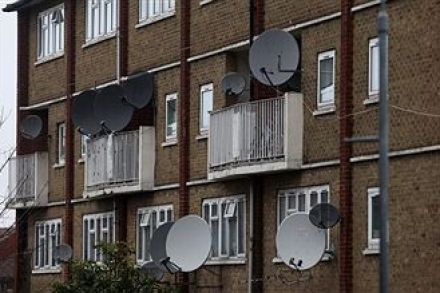
There’s nothing quiet about Iain Duncan Smith this morning. Echoing Norman Tebbitt’s infamous ‘On yer Bike’ comments of 1981, Duncan Smith has vowed to obliterate ‘welfare ghettos’. For once I agree with Ed Balls: Duncan Smith is going further than Tebbitt, much further. The government is planning to move the long-term unemployed out of sink estates and into other areas, possibly hundreds of miles away, where unemployment is negative. Incentives for work and promises of low regional taxes in Northern England, Wales and Scotland were included in the Budget to this effect. This may be manna from Heaven for Balls - the traditional candidate in the Labour leadership contest can evoke the spectre of Thatcher and ‘give us a job’.

What to do with all that knowledge on welfare

Is Frank Field back? The Labour MP has spent much of his life talking about the poor. Judging by reports today, he might be offered a job chairing a commission on child poverty. This is good news but, as Mr Field has already said, there is not much point in him debating the finer points of poverty definitions. He would need to be given remit to suggest policy. What should those suggestions be? First, he should argue that we need to be a lot less self-indulgent about how we think about child poverty. It may be great to think of ourselves as tackling a major social ill, but the past government’s approach was not nearly as successful as it or its supporters liked to think.

No, Gordon, this recession hasn’t been milder than others

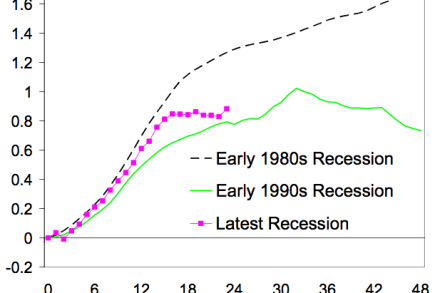
Today’s new economic data gives a handy piece of ammo to the Conservatives.  It is untrue that, as Gordon Brown says, this recession was somehow milder than others. The economy contracted by 6.3 percent this time – it was 3.8 percent in the 1980s recession and just 2.4 percent in the early 1990s recession. I feel confident that the Conservatives will get this point across clearly, next time that Brown boasts that this recession has been somehow milder, thanks to his decision to “intervene” (ie, double our national debt).

The Tories need to get economical

Nick Clegg handed Gordon Brown a lifeline in one respect: the economy’s old hat compared to the Clegg frenzy. Not any more. The news that unemployment rose by 43,000 between December and February, together with yesterday’s dramatic inflation rise, has dumped the economy back onto the front pages. The Tories must keep it there; this election should be about the economy and nothing else. Obviously, these figures, which are worse than expected, lend weight to the argument that Brown’s policies impair recovery. Also, they demolish Brown’s claim that he ran up a deficit in the boom years to protect employment: unemployment is now higher than it was 16 years ago.

Creative Survival in Hard Times

Those of you who have been following the fortunes of my New Deal of the Mind project with a mixture of interest and scepticism will perhaps wish to read the report we have published today with the Arts Council. Creative Survival in Hard Times is an attempt to grapple with the issue of employment in what has, for better or worse, become known as the "creative industries".  We make a number of recommendations, but central to the report is the conviction that a new spirit of entrepreneurship should be nurtured from the bottom up. For this reason we believe the next government should revisit the Enterprise Allowance Scheme, which ran from 1983-91. The EAS gave people slightly more than the dole for a year if they agreed to come off benefit and set up their own businesses.

Where Are the Jobs in the Election Budget?

I agree with Fraser that there is a welcome modesty about Alistair Darling's budget. It was also good to see Maggie Darling outside Number 11, a wife of whom the Chancellor is justly proud.  But I did wonder where the measures are for tackling the joblessness, which will be the likely consequence of the public sector cuts any new government will have to impose. Last year we had a "budget for jobs" with the announcement of the Future Jobs Fund, but this year the only announcement was the extension of the young person's job guarantee until 2012.  Unemployment has not hit the levels first feared at the beginning of the recession, but the situation is still grave.

Turning welfare into work

Contrary to what you might think, it is actually quite hard to find someone on benefits who doesn’t want to work. When you ask a claimant whether they would like to, they will invariably say “Yes, I want a job.” At first, this seems like a strange answer: why do we have nearly 6 million people on benefits when so many of them want to work? The answer is simple when you ask a few more questions: they don’t want just any job. They envisage doing what they used to do or would like to try – but aren’t willing to look for anything else. Getting them to try any job in order to be in employment is the key issue for any party that wants to cut the welfare rolls.

Does George Osborne finally have a big idea?

Listening to George Osborne on Today (and stripping away the visceral prejudice I always feel at his sneering patrician tone) I have to recognise that he was saying something very interesting. The idea of throwing open the public sector to worker-control is very, very intriguing. Co-operatives are the future of Britain: this is not something I ever thought I would hear from the mouth of a Conservative politician. I don't know if George Osborne has any experience of living or working in a co-op (it strikes me he is not the type). They can be a mixed bag, but the principle is great one.

The worries behind falling unemployment

Expect Labour to make much of today's employment figures, which show that unemployment fell by 7,000 in the three months to last November.  Already, Yvette Cooper has claimed it as a success for "government investment".  While Gordon Brown will surely repeat that message in PMQs. But is it really testament to government action?  Or is it a result of a naturally improving economy (which, let's not forget, is taking longer in the UK than most other developed nations)?  Well, a study commissioned by the Spectator from Oxford Economics found that Brown's "investment" would "save" around 35,000 jobs in 2009 – but then destroy considerably more jobs from this year on.

Let’s Talk About Class

My posh Tory friends get really irritated when I talk about class. Almost as annoyed as my posh Labour friends. The idea that class was somehow excised from the political discourse by New Labour is absurd. We live in a country where the two dominant political parties are essentially representative of their class. And why not? It is completely understandable that a political coalition would coagulate around the interests  of business and big money. It would be a pretty rubbishy ruling class that didn't protect its position.

Politicking on the backs of the poorest

This afternoon Jim Knight MP, the minister for welfare reform, proclaimed that the Government wants to turn the Jobcentre Plus network into a careers service for everyone. He said that welfare advisers, who currently try to help get people on benefits back into work, will start to “provide opportunities for progression” for anyone in a job – no matter whether the person is a banker or a bin man. This is a bad idea for a simple reason: it is far more important to help the unemployed back into work than give assistance to people who already have a job. The longer that someone is out of work, the worse their chances of getting back into it.

Cumbrian Floods: How Long Till We Forget?

So what happens when the news cameras leave and the people who have been flooded out are left to clear up the mess and rebuild their lives? The point is that the news agenda moves on and the people of Cockermouth will just have to get on with it.  But where is the record of what happened? Who is collecting all those stories of the extraordinary events of November 2009? Thanks to the internet, some of the oral history of the great flood has been automatically recorded. The BBC website captured some of the stories. But they will just sit there without proper curation. And in this time of high unemployment, where is the strategic work creation project to allow those without work to help with the clear up and to record what went on for posterity?

Parallel universe

Armistice Day suits Brown down to the ground. When everyone is obliged wear funeral-director garb, his grey hair and sombre jowls fit the mood perfectly while Dave’s polished and youthful glow looks a trifle out of place.  Gordon performed confidently at PMQs today. So did Dave, as it happens, but the skirmish came to nothing because neither was prepared to fight on the ground chosen by the other. Dave led on the youth unemployment figures. He wanted Brown to admit that his promise ‘to abolish youth unemployment’ had failed. Brown ignored this and took comfort from the thought that without Labour’s policies even more youngsters would be out of work. Dave went into sci-fi mode and told the PM he was ‘living in a parallel universe.

On the road to recovery? Don’t be daft

I’d forgotten what it felt like to read positive news about the British economy. To be honest life is full of much more thrilling experiences, but my lack of enthusiasm is partially explained by the fact that a 6,000 employment rise is not proof of recovery. That half the population of Cranleigh have found employment over three months is seen as salvation puts Britain’s economic reality firmly into perspective. If you delve into the Labour Market Statistics the picture becomes clear. Unemployment was expected to rise and will continue doing so, but the employment figure is an anomaly. Britain is still visibly contracting, albeit at a decelerating rate. Vacancies fell by 1,000 and have never been at a lower level since records began in 2001.

One in five children live in jobless households

The Guardian reports this morning that, “One in five – two million – British children now live in households where neither parent has a job.” This is an incredibly worrying statistic. The evidence suggests that worklessness is corrosive and soul-destroying. A child growing up in a workless household will, for obvious reasons, tend to have limited ambitions and opportunity. Obviously, as the economy recovers this number should go down — the recent rise indicates that many of these parents have been laid off in recent months. But even before the credit crunch really kicked in, there were more than 1.8 million children living in workless households.

That Philip Hammond Email in Full

There was some interesting discussion on the subject of interns after my post last night about the shadow chief secretary to the Treasury's attitude to the use of free labour in parliament. Young people are now effectively paying employers to get on the first rung of their careers. I have no doubt that some people gain valuable experience in this way. But the question is, which people? As Alan Milburn's recent work on social mobility demonstrated, the professions are still largely inaccessible to all but the relatively privileged.  Make up your own mind whether Hammond's attitude is enlightened or not:> From: HAMMOND, Philip [mailto:HAMMONDP@parliament.

Visions of Life Under a Tory Government

A fascinating post on the Interns Anonymous website. This brilliant organisation is devoted to exposing the pernicious growth in the use of free labour. It shares many of the aims of my new outfit, New Deal of the Mind. Philip Hammond, the well-respected shadow Chief Secretary to the Treasury has been tipped to leapfrog George Osborne into No 11 Downing Street.  According to the IA website, Hammond recently advertised for an intern post for which the terms were less than generous. When challenged by a member of the public about his failure to pay the national minimum wage he emailed back: "I would regard it as an abuse of taxpayer funding to pay for something that is available for nothing and which other members are obtaining for nothing.

The next government will have to help this lost generation

It's noteworthy enough when David Blanchflower - a member of the Bank of England's MPC until May this year - says that the government "isn't doing enough" to stem the unemployment crisis, as he does in an article for today's Guardian.  But his more specific points about the "lost generation" of unemployed young people are also worth highlighting. As Fraser blogged yesterday, this recession is taking a particular toll on those aged under 25.  Partially, this is down to school and university leavers being unable to find work.  But, as Blachflower points out, there's another effect at play - young people with jobs are the first in line to lose them, as firms make redundancies: "A policy of last in, first out is also operating.

The truth behind Mandy’s “half-a-million jobs” claim

Anyone listening to Lord Mandelson’s claim this morning that the Brown stimulus saved “at least” half a million jobs would have smelt a large, whiskered rat. The Treasury has tonight told The Telegraph that the 500,000 figure was a maximum estimate, not a minimum as Mandy claimed. Your baristas here at Coffee House have asked the Treasury to show us their study – not available, it seems. So we have submitted a Freedom of Information request for it. While we all hold our breath, it’s worth looking at this claim in more detail because it is a Brownie we are highly likely to hear again.