Ukraine

Are Russians turning against Putin?

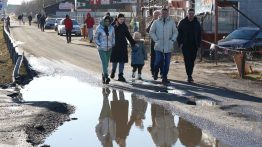
One of the reasons why I judged — wrongly — that Vladimir Putin would not order an all-out invasion of Ukraine was the likelihood of a protracted war. But another was the possibility of popular protest in Russia, which could have potentially destabilising effects on the Kremlin. After sporadic protests in the hours immediately after the invasion, all of them ending in arrests or dispersal by police — citing Covid restrictions — Thursday evening sprang a surprise. Young people came out in their hundreds with homemade placards saying 'nyet voine', no to war, not just in Moscow and St Petersburg, where political engagement tends to be higher, but in nearly 50 towns and cities across Russia. https://twitter.com/ragipsoylu/status/1496905869983768581?

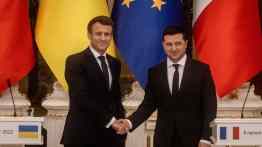
Macron’s posturing as a global statesman will get him re-elected

It is bordering on tasteless amidst the horror of war in Europe to question the political impact of the conflict on the first round of the French presidential election in 44 days. But it’s naïve to imagine that such thoughts are not occurring to the politicians themselves, not least Emmanuel Macron. As I write this on Friday, Macron has still to declare his candidacy for the presidency. He’s been letting his opponents on the right and left fight it out amongst themselves for as long as possible. He could declare tomorrow at the Salon d’Agriculture, where he is scheduled to make the customary presidential appearance. Or maybe not.

To hurt Putin, go for oil and gas – not Swift

Both the British and the Americans have been explicit that it is the Europeans who are blocking Russia being cut from Swift. Removing Russia would be a sound step, but it is far less important than a western agreement not to buy Russian oil and gas would be. Sadly, though, there is little chance of this happening — too many countries are dependent on Russian gas — which means $700 million a day will continue to flow into Moscow, strengthening the Kremlin’s belief that it can ride out whatever sanctions are imposed on it. Depressing as this may be, there are things the UK can do using domestic law that would inflict pain on the Putin circle.

Is Britain prepared for the cost of sanctions?

Sanctions hit both sides: this is a point that Joe Biden has made to Americans and Olaf Scholz is making to Germans. But Boris Johnson is not (so far) talking about the economic implications of this war. They will be — and in fact, already are — profound.  When Russian tanks moved into Ukraine, the price of gas for next-day delivery in the UK shot up 40 per cent. A study by Investec yesterday suggested this means typical household energy bills — already expected to approach £2,000 in April — could end up closer to £3,000. Quite a hit for a country already facing a cost-of-living crisis. And this is just one way in which the conflict could impact household budgets.

Harry and Meghan speak out on Ukraine

Amid all the gloom, a sliver of light has emerged from the rubble of Ukraine. As Sun-Tzu said: 'In the midst of chaos, there is also opportunity' – and some have certainly taken the opportunity to heap ridicule on themselves. Steerpike has cast his eye over the most ridiculous, self-involved and outlandish takes on Russia's invasion as celebrities and politicians trip over themselves to proclaim their thoughts to the world. Harry and Meghan No crisis would be complete without the right royal duo involving themselves. The pair released an online statement claiming that they 'stand with the people of Ukraine' – not literally of course, given that they live in an £11million mansion in Montecito, California, some 6,000 miles away from Kyiv.

biden

What happened to Tough Guy Joe Biden?

From our US edition

If you watched President Joe Biden’s press conference on Thursday afternoon, you wouldn’t know you were looking at the same man who allegedly looked Vladimir Putin in the eyes and told him he had no soul. Hell, based on Biden’s weak performance you might start to question whether or not he actually confronted and defeated a straight-razor-carrying bad dude named Corn Pop outside of a Delaware swimming pool in 1962. The president seemed to want to follow the theme of his last press conference: “Saying the Quiet Part Loud.” Who can forget the recent two-hour presser in which Biden essentially green-lit a “minor incursion” by Russia into Ukraine.

Sen. Josh Hawley (Getty Images)

Where is the neocon war cry over Russia?

From our US edition

A foreign policy debate is raging in the United States as Russia escalates its attacks on Ukraine — chiefly over what America should do in response. What is oddly absent is the unmistakable neoconservative war cry to send in the troops. Sure, some talking heads haven't been shy about where they'd like the conflict to lead. But most of it is implied. Establishment media outlets have hinted at getting involved militarily, asking Biden what he'll do next if sanctions do not work and if the US will have to use force if Putin expands beyond Ukraine. The old hawkish right has used similar softened rhetoric to imply support for a military response. Jonah Goldberg hit at the nationalist right, claiming they "don't care very much when an imperial power tries to erase a nation.

Putin’s path to war in three speeches

From our US edition

With regard to the illegal war being waged by Russia against Ukraine, no one has any right to be surprised. For all the understandable and justifiable outrage over Russian president Vladimir Putin’s decision to abandon diplomacy and launch what appears to be an unprovoked act of aggression, a look at prior statements by Mr. Putin shows that, with the passage of time, patience and rationality gave way to irrationally, paranoia and ultimately the decision to launch an armed conflict. Any proper accounting of the history of the downturn in US-Russia relations must include Putin’s 2007 address to the Munich Security Conference. To many, this was a kind of point of no return, with Putin putting the US and its European allies on notice: there are red lines not to be crossed.

The stakes for Europe are even higher than in 1938

From our US edition

Any analysis of the Ukraine situation risks lagging behind the news. As of the time this article was published, Russia had conquered the former Chernobyl nuclear power plant. Its forces are only about sixty miles away from Ukraine’s capital, Kyiv, which has already experienced shelling. Russians have also attempted to capture Antonov International Airport, just fifteen minutes away from the capital’s ring road. Meanwhile, European leaders are resorting to the usual responses: “concerned,” “strongly condemning." There is even a Twitter account mocking the EU’s approach to all major crises, called “Is EU Concerned?” The response to the invasion of Ukraine is not spared from similar mockery. Here in Europe, it feels like 1938 all over again.

Boris Johnson needs even tougher sanctions to deter Putin

Boris Johnson has just outlined a series of further sanctions on Russia. They are considerably more substantial than the ones he announced earlier this week. They exclude Russian banks from the UK financial system, bar Russian firms from raising capital in London and will see the UK join the US’s technology sanctions on Russia. However, Russia will not be cut off from the Swift payments system — it is clear that the UK has, sadly, lost the argument on that for now. This does raise the question of what, if not the unprovoked invasion of a sovereign country, would be enough to lead to Russia being cut off from Swift.

Eating donuts in Poland as the bombs fall

From our US edition

Tarnowskie Góry, Poland  There was something faintly obscene about lining up outside the bakery to celebrate Fat Thursday. Granted, it made no difference to Ukrainians whether I ate donuts or scrambled eggs for breakfast. But I had a brief sense of how fortunate it is to live in a peaceful society. Ukraine is not so lucky. Missiles have been falling throughout the night and day, and Russian soldiers have occupied key positions, right up to the outskirts of Kyiv. Some of us expected Putin to occupy Donbas and leave Western Ukraine alone. That has been proved entirely, tragically mistaken. After such a long, mysterious military build-up, the speed and scale of the Russian offensive has been stunning.

poland

Let Russia choke on Ukraine

From our US edition

At least for the moment, it looks like Russian president Vladimir Putin is intent on conquering Ukraine, a nation he's never believed has the right to exist. While the fog of war always limits accurate real-time military analysis, it seems for now that Russia has committed to annexing at least large sections of Ukraine and is winning the day militarily with ease. Of course, the media has predictably gone into overdrive, warning of World War Three, gas prices that will stay high for years and perhaps even Putin attacking NATO and nuclear war. But let’s put away the hysterics for a moment and think about the here and now. Russia’s goal in Ukraine has always been clear and does not involve war on NATO or even conquering Ukraine in its entirety.

ukraine

Head of Germany’s army admits: we’re not ready for war

You wake up in the morning and realise: there is war in Europe. Yesterday the army held a ‘Day of Values’. The core question was ‘what do we serve for?’ It has never been easier to explain this to the generation that did not live through the Cold War. In my 41st year of peacetime service I would not have believed that I would have to experience another war. And the Bundeswehr, the army that I am privileged to lead, is more or less empty handed. The policy options we can offer in support of the alliance are extremely limited. We all saw it coming and we were not able to get through with our arguments, to draw the conclusions from the Crimean annexation and implement them. This does not feel good! I'm pissed off!

Read: The Prime Minister’s address to the nation as Russia invades Ukraine

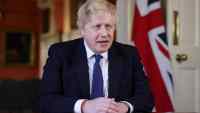
Shortly after 4 o’clock this morning I spoke to President Zelensky of Ukraine to offer the continued support of the UK, because our worst fears have now come true and all our warnings have proved tragically accurate President Putin of Russia has unleashed war in our European continent. He has attacked a friendly country without any provocation and without any credible excuse. Innumerable missiles and bombs have been raining down on an entirely innocent population. A vast invasion is underway — by land, by sea, and by air. And this is not, in the infamous phrase, some faraway country of which we know little. We have Ukrainian friends in this country; neighbours, co-workers.

Boris Johnson promises more sanctions

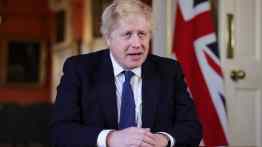
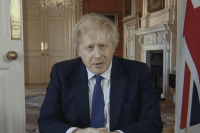
Following Vladimir Putin's decision to launch a full-scale invasion of Ukraine, Boris Johnson has addressed the nation. Speaking from 10 Downing Street, the Prime Minister spoke of his regret that 'our worst fears have now come true' and Russia had 'unleashed war in our European continent'. Johnson said he had spoken with the Ukrainian president to reiterate the UK's ongoing support. A vast invasion is underway — by land, by sea, and by air. And this is not, in the infamous phrase, some faraway country of which we know little. We have Ukrainian friends in this country; neighbours, co-workers: Ukraine is a country that for decades has enjoyed freedom and democracy and the right to choose its own destiny.

What is the point of the UN?

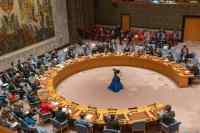
When all this is over, we will have to hold a grown-up and perhaps very difficult conversation about the United Nations. No institution is perfect, or has supernatural powers to stop war or despotism, and perhaps nothing could have dissuaded Vladimir Putin from invading Ukraine. But the UN’s failure to prevent one fifth of its permanent security council from overrunning another member state should give us pause. There are the hard realities of realpolitik, of course, but there is also the question of endemic institutional failure. It may be that we will either have to change how we think about the UN or change the UN itself.

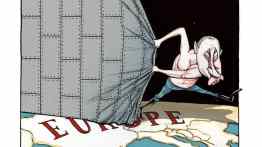
Europe is painfully reliant on Putin

Vladimir Putin declared war on Ukraine in the early hours of this morning, starting with a massive air attack from the north, south and east, targeting military and civilian infrastructure. This is the worst-case scenario. Putin's speech on Monday set the ideological groundwork. This morning he spoke again, calling Ukraine ‘our historic lands’. He said he was launching what he called a ‘special military operation’ with the goal, not of occupying the country, but of ‘demilitarising and de-Nazifying’ Ukraine. And Putin spoke too to us here in the West: To anyone who would consider interfering from the outside: if you do, you will face consequences greater than any of you have faced in history. All relevant decisions have been taken. I hope you hear me.

never trumpers

Never Trumpers play 4D chess over Russia — and lose

From our US edition

“Pro-democracy” Washington Post columnist Jennifer Rubin — she long ago ditched the “conservative” descriptor — had a howler of a tweet about foreign policy the other day. On the subject of Russia’s invasion of Ukraine, Rubin wrote that “we don’t have to guess what Trump would have done – he would have praised Putin and rolled out the red carpet to the rest of Europe. THIS is who the GOP follows.” Rubin was joined in this opinion by novelist Stephen King, who tweeted that “Mr. Putin has made a serious miscalculation. He forgot he is no longer dealing with Trump.” King is right in at least one key respect: Putin is not dealing with Trump. And we need not speculate — contra Rubin’s advice — as to what Trump would have done.