Ukraine

A state of virtual war

From our US edition

My husband came into the living room the other day as I was sitting on the couch, scrolling on my computer — doomscrolling to be more accurate. “What are you doing?” he asked. “Are you watching... war?” We laughed at the absurdity of the comment but he wasn’t wrong. That’s exactly what we had been doing for days. Watching war on social media. Needless to say, it was a challenge to focus on this piece. As the conflict escalated rapidly in Ukraine, I couldn’t tear myself away from the drama as it unfolded on Twitter. Putin seemed backed into a corner, desperate and using many of the same barbaric tactics he used in Syria. Bombing hospitals. Bombing kindergartens. Killing civilians.

war

Energy independence is a false hope

From our US edition

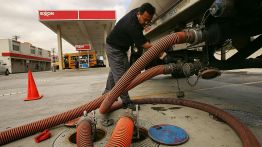
In the wake of Russia’s attack on Ukraine, gasoline and energy prices soared in the United States. While they’ve come down a bit since, it’s worth examining why war in Eastern Europe caused a spike in prices thousands of miles away — and whether a common proposal in response would have made a difference. Over the last decade, Republicans and Democrats have made “energy independence” a major policy priority. The goal in a nutshell is to produce the energy we need at home, so that the United States is more insulated economically from international disputes abroad. On this goal, advocates have made progress — in fact, the United States is already energy independent by some measures.

energy

What TV is telling Russians – and why they believe it

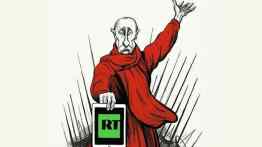
If you want to understand how Russians see the world, it helps to watch Russian TV. The Kremlin’s control over the airwaves permeates every part of Russia’s television schedules. There are no longer soaps or series during waking hours, just relentless TV shows about Russia’s place in the world. The popular and execrable ‘news’ discussion show 60 Minutes now often lasts two to three hours. It is as if EastEnders and Coronation Street were replaced with 200 minutes of state propaganda. Such shows depict Russia’s horrific assault on Ukrainian towns, cities and people as a special military operation. They are punctuated with clips of Vladimir Putin celebrating a successful and pre-emptive mission to free Donbas from genocidal Ukrainian butchers.

Kirill, the Patriarch in league with Putin

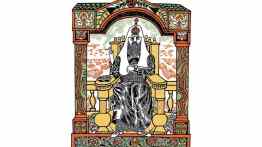
Until very recently, Patriarch Kirill of Moscow, leader of the Russian Orthodox Church, was most famous for being the owner of a phantom wristwatch. It had the magical property of disappearing from sight, visible to onlookers only as a reflection. Don’t believe me? Google ‘Kirill’ and ‘watch’ and you’ll find a photo of the Patriarch of Moscow and All Rus’ meeting the Russian justice minister. It was taken in 2009, the year Kirill succeeded the late Patriarch Alexy II as spiritual leader of 110 million Russian Orthodox Christians. On his head Kirill is wearing a white koukoulion, the so-called ‘helmet of salvation’, with side flaps like the ears of a giant basset hound. But his cassock is plain black and his wrist is bare.

Portrait of the week: Spring statement, weapons for Ukraine and no more free-range eggs

Home Britain had provided Ukraine with more than 4,000 Next Generation Light Anti-tank Weapons, the Ministry of Defence said. Shell reconsidered its decision to pull out of investing in the large Cambo oil field, 75 miles off the west coast of Shetland. The government was expected to put into special administration Gazprom Marketing & Trading Retail Ltd, with which several councils have contracts to buy gas, though it does not come from Russia. Among those seeking to buy Chelsea Football Club, on sale after the sanctioning of its owner Roman Abramovich, a group called the True Blue Consortium was given support by John Terry.

Why I’ve stayed in Kyiv

I write this from my Kyiv air raid shelter. It has become my second home, an improvised bedroom, study and kitchen. For food, we eat bread and borscht. It is a spartan existence, but conducive to reflection. I still can’t get used to the siren that sounds five times a day, although I have got used to sleeping on the floor, in hallways, subways or the metro. I keep a bag packed with essentials by the door that I can grab and run with when the alarm sounds. On the first night of the war, I spent the first hours in the subway, along with thousands of Kyivites. Nobody slept. Everyone sat in silence. From time to time in different parts of the platform, dogs barked, cats purred and, of course, babies cried.

Inside Putin’s mind: the lessons of Chechnya

As far as Vladimir Putin is concerned, ‘we are nobody, while he who chance has enabled to clamber to the top of the pile is today Tsar and God’. So said Anna Politkovskaya, the eminent Russian journalist, in her book Putin’s Russia. She continued: ‘In Russia we have had leaders with this outlook before. It led to tragedy, to bloodshed on a huge scale, to civil wars. I want no more of that.’ She wrote those prophetic words almost two decades ago. A reporter for the Russian newspaper Novaya Gazeta, Politkovskaya came to prominence during the second Chechen war. Her accounts of that conflict, which officially lasted from 1999 to 2000, revealed Putin’s war against separatist rebels in the Caucasus as a hideous, corrupt sham.

Why I drove a lorry to Poland

‘Why the hell did you hire a lorry without a spare tyre?’ asked Rizvana. Fair question. Luckily we had just pulled into a service station near Leipzig when the front tyre blew. The bang was so loud that the cashier rushed outside fearing an explosion. We waited for five hours in the biting wind. German technical prowess came to our rescue. The mechanic arrived with hydraulic lifts, the correct replacement tyre and near-perfect English. Some onlookers gathered as three of us jumped on his torque wrench to loosen the nuts. Our mission was not going to plan. Rizvana Poole is a Labour councillor in my town of Chipping Norton and she’s the reason we drove to Warsaw in a lorry filled with supplies for Ukrainian refugees.

The call of a blackbird’s full-throated song

Speaking pretty good English, Dr Tayeb came straight to the point. Was I eligible for the ground breaking new cancer treatment? He was afraid not. The radioactive test scan had illuminated the bone tumours very nicely, but the more dangerous one in the liver had remained occluded. So in my case the new treatment – a series of targeted infusions – could have only a ‘suboptimal outcome’. He was therefore not recommending that we go ahead. This was at 8.30 in the morning. I’d been in a taxi since 6.30.

In praise of amateurs

Two weeks ago in St Moritz I ran into both Nicolas Niarchos and Nikolai von Bismarck, two talented young men and Old Harrovians whose parents are friends of mine. This week I was proud to read the former’s byline and to see the latter’s pictures from the warzone in Ukraine. Good on them, the Fourth Estate could do with talented amateurs rather than world-weary pros. But don’t get me wrong. By amateurs I mean those who write and photograph for the love of their craft, not because it’s their job. I’ve always insisted that the amateur is superior to the pro because he or she glories in the execution of a stroke, a swing, an athletic contest or an artistic endeavour. The pro calculates the odds, whereas the amateur goes for glory. Ditto in wartime reporting.

Madeleine Albright was an idealist overpowered by cynics

From our US edition

People die at random, of course, but it seems poignant that Madeleine Albright has died at the very moment the liberal post-Soviet world has met its own, more violent, end. Her term as Bill Clinton’s secretary of state coincided with the moment America, the most powerful nation in the history of the world, sat, unknowingly, at its own apogee. The Soviet Union was newly gone. America stood peerless and unchallenged. The attacks of September 11, 2001, and the twenty years of War on Terror that followed, were still unthinkable. China’s GDP rivaled Italy’s, not America’s. Even offhand, Albright could describe America as the “indispensable nation.” Charles Krauthammer had called it early — this was the “unipolar moment.

Volodymyr Zelensky’s sitcom is now as sad as it is funny

From our US edition

There are few world leaders braver than Volodymyr Zelensky. Ukraine's president spends his time holed up in his capital, defending his homeland from an onslaught of invading Russian troops. He's addressed every major parliament in the West to plead for weapons and aid. Joe Biden calls him weekly; Emmanuel Macron has started to dress like him. Given his present international standing, it's incredible to think that just six and a half years ago, Zelensky was settling down to watch himself play the president of Ukraine in the premiere of Servant of the People, the sitcom which set the stage for his political career.

How will the battlefield stalemate end in Ukraine?

From our US edition

The simplest description of the war in Ukraine is this: stalemate, accompanied by constant, deadly bombardment. For the Ukrainians, that bombardment is aimed at the Russian military. For the Russians, it is aimed mostly at civilian targets, a deliberate strategy that is also a war crime. Russian artillery shells, cluster bombs and cruise missiles are killing tens of thousands of Ukrainian civilians and destroying their homes, schools and businesses. Meanwhile, Ukraine’s counterattack is imposing huge, irreplaceable losses on Russia’s army, killing soldiers, destroying their equipment and liquidating incompetent military leaders who come to the front to untangle the mess. Russia’s initial war plan failed, abysmally.

stalemate

The drone era has arrived

The Ukrainian airforce has so far held out in the battle for the skies. Russia continues to rely on missiles for deep strikes into Ukrainian territory while the defenders have been able to contest the airspace by employing drones. Ukraine has proven a turning point in the age of drone warfare. The first great drone superpower, the United States, used its unmanned aerial vehicles in places like Afghanistan where few fighters had the technology to shoot them down. But Ukraine isn’t primarily using drones to hunt people, loitering over targets for days; rather, it's using them to go after Russian armoured vehicles and supply columns. This seems like a strategy designed particularly for Russia.

Is Germany already backsliding on Russia?

Just three weeks after Chancellor Olaf Scholz announced that Germany would directly arm Ukraine, Europe’s economic powerhouse is running out of weapons to send. 'We’re delivering Stingers. We’re delivering Strelas. The Defence Minister has looked at what we can deliver but honesty also requires us to say: we don’t have enough,' Foreign Minister Annalena Baerbock told the Bundestag last week. 'If we could conjure up more weapons to send, then we would.' Scholz then appeared to revert to an old German habit: trumpeting the importance of diplomacy as an end in itself.

yemen

What’s the difference between Yemen and Ukraine?

From our US edition

Millions of innocent civilians uprooted from their homes. Residential areas turned into dust, rubble and wire. Thousands of people killed in errant airstrikes. Store shelves emptied of basic staples. A humanitarian crisis dominating the everyday lives of a large swath of the population, who just want to escape the shelling and the fighting. This is the scene the world now equates with Ukraine, which has been subjected to a barbaric war of choice courtesy of Russian president Vladimir Putin. Yet for one poverty-stricken nation more than 2,400 miles to the south, this has been the grim reality for years.

Where Europe ends and the war begins

From our US edition

On a nondescript bridge in the northeastern Hungarian town of Záhony, the European Union ends and the war begins. Even amid the turmoil in Ukraine, the local border crossing is strangely quiescent. The flood of cars from the early days of the war has slowed to a trickle, and big eighteen-wheelers continue to cross over from Hungary into Ukraine. There are only two signs that something is amiss: a small notice on the door of the nearby Penny Market asking customers to help Ukrainian refugees, and a massive billboard of Hungarian prime minister Viktor Orbán’s stern face, promising voters that he will keep Hungary safe and peaceful.

viktor orban eu hungary

How much is Europe (still) paying Putin for oil?

When sanctions were imposed on Russia there was a big exception: Europe was still buying and paying for oil – leading to a bizarre situation. The West was doing everything it could to help Ukraine while still sending Putin hundreds of millions of dollars a day. But how much was that revenue worth to the Kremlin? As sanctions began to hit Russia, the price of Brent crude (the oil benchmark) soared to $130 a barrel, the highest since the 2008 financial crisis: an increase of over 90 per cent. It’s fallen since then but today it's still sitting between $107 and $115 dollars a barrel – well above where it had been weeks ago. But are these price rises making money for the Kremlin?

Boris’s Brexit-Ukraine comparison was a mistake

After years of post-Brexit rancour, the last few weeks have been a striking display of European (not just EU) unity. Britain was the first to send arms to Ukraine, now the EU is (for the first time) buying weapons so it can follow suit. No one forced Norway’s strategic wealth fund to disinvest all Russian assets, but it chose to. Even Switzerland is marching in lockstep with the sanctions. Putin had counted on European divisions, which had certainly been on display when Germany was still going ahead with the Nord Stream 2 pipeline, in defiance of protests and pleas from Eastern Europe and the European parliament.