Ukraine

The lives of even anti-Putin Russian artists are being made impossible

Swift and sure, the guillotine blade came down on Russians in the West on 24 February last year, the day Russia invaded Ukraine. The logic was clear as concerned Putin loyalists; cutting them off from western gravy trains in the face of their dear leader’s grotesque aggression made some sense. They could bed down with the devil, so to speak, but not on our buck. So one doesn’t weep much over the relegation to Europe’s fringes of the likes of openly pro-Putin musicians such as pianist Denis Matsuev or the former LSO and Munich Philharmonic chief conductor Valery Gergiev. Then there’s the soprano Anna Netrebko, who, seen as being close to Putin, was sacked immediately by the Met when she didn’t condemn the Russian President fast enough.

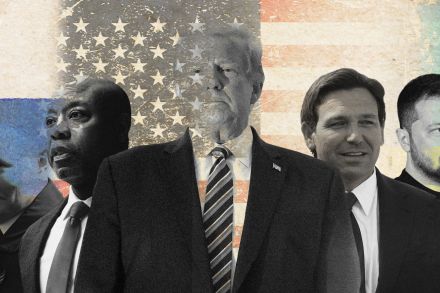
Can Trump’s opponents prove him wrong on Ukraine?

Boris Johnson, Britain’s most sought-after Churchill impersonator, visited Texas on Monday to urge a group of rich right-wing Americans to never, never, never give in to Vladimir Putin. ‘I just urge you all to stick with it,’ Agent Bojo told a private lunch of conservative politicians and donors in Dallas. ‘You are backing the right horse. Ukraine is going to win.’ Johnson wasn’t paid to speak at the lunch, though it’s worth noting that he only stopped over in Texas on the way to the SCALE Fintech conference in Las Vegas, where he is expected to receive a six-figure sum for talking about the future of innovation alongside Saudi Arabia’s ambassador to the US. Nobody said freedom was free.

Portrait of the week: Rioting in Cardiff, rising migration and falling inflation

Home A crash in which a 15- and a 16-year-old boy riding on an electric bike were killed led to rioting, the burning of cars and attacks on police in the Ely estate in Cardiff; social media had said the deaths followed a police chase, which the police denied. But video evidence seemed to show a chase. During the riot, one of the boys’ mothers posted a Facebook message: ‘Please I beg you all to stop and let my son be moved to hospital so I can see him.’ A woman hit on 10 May by a police motorcycle escorting the Duchess of Edinburgh died.

Lithuania’s PM: ‘If Russia is not defeated it will come for somebody else’

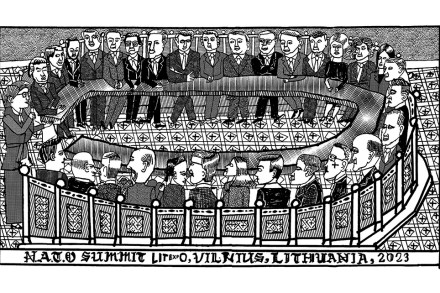
Vilnius In July, Lithuania’s Prime Minister Ingrida Simonyte will welcome Nato leaders to Vilnius for one of the most important summits in the alliance’s history. Top of the agenda will be how to help Ukraine push back Vladimir Putin’s forces. But a more thorny problem will be whether to formally offer membership to Kyiv – a move that would make Ukraine’s front lines Nato’s own. Simonyte believes that the war could have been avoided if Nato had accepted Ukraine and Georgia’s membership bids back in 2008. Before Putin invaded Ukraine last year, she says, ‘western leaders and western organisations were ready to abandon their positions every time Russia was pressing’.

Hunter Biden is running out of time

From our US edition

We've come a long way in the two and a half years since the contents of Hunter Biden's laptop were unleashed on the world. In addition to the splashy, X-rated photos and videos of Hunter surrounded by drugs and prostitutes, the New York Post's reporting honed in on a set of emails that suggested Hunter's foreign business dealings involved his father, President Joe Biden. In one email, an official for the Ukrainian energy company Burisma thanks Hunter for the "opportunity" to meet then-Vice President Biden. In another, Hunter's business partner alludes to setting aside 10 percent of a deal with a Chinese firm for "the Big Guy." These bombshells served as the flashpoint for a series of investigations that are finally nearing their conclusion.

hunter biden

Why the economic war against Russia has failed

There was much mirth in the West this week when Vladimir Putin’s Victory Day parade through Red Square included just one tank, itself a relic from a museum. The inference was that Russia has lost so much military kit in Ukraine that it is a shadow of the military superpower the Soviet Union used to be. Russia has certainly borne heavy losses (although any country conducting a foreign war would presumably have its military hardware on active duty rather than on ceremonial parade). But we should avoid being smug. The truth is that the war is not going well for the West either – at least in one respect. When Putin sent tanks into Ukraine on 24 February last year, western countries rapidly adopted a two-pronged strategy.

In Kyiv, tech start-ups are thriving

What better cocktail to try in Kyiv than ‘Lesya Ukrainka’s Dream’? Born in 1871, Ukrainka was a fierce feminist, poet, titan of Ukrainian literature and the angel-faced symbol of independent nationhood. In this time of war, writers like Ukrainka and Taras Shevchenko, the great 19th-century poet persecuted by the Russians, a man who has come to define Ukrainian national identity and liberation, are all the rage. The last verse of Ukrainka’s poem ‘Contra Spem Spero’ (‘I hope against hope’) captures the national mood: Yes, I will laugh despite my tears, I’ll sing out songs amidst my misfortunes; I’ll have hope despite all odds, I will live! Away, you sorrowful thoughts!

Ukraine’s vitality is its greatest strength

From our US edition

Lviv, Ukraine Deep in a forested park, hundreds of people — men, women, children — in traditional embroidered clothes danced, clapped, and sang in a wild circle around fiddle-playing musicians. It was war, but it was also Easter, celebrated then according to the old calendar by the Greek Catholics of Lviv.  In that forest grove on a chilly afternoon, I stood next to Linda Netsch, a professor at Harvard Law, who had just arrived by train to give wartime guest lectures at Lviv’s Ukrainian Catholic University.  “Now I know why Russia cannot defeat Ukraine,” she told me as she pointed at the crowd of people dancing on the chilly grey afternoon while a friend poured me a whiskey. “It’s this. This is real power.

ukraine

I was injured covering Ukraine — but I’ll work my way back

From our US edition

A little over a year ago, I was gravely injured in a missile blast while covering the Ukraine-Russia war for Fox News. The severity of my injuries has made recovery a very long and arduous process. Every day I have a number of things I have to do. So in the morning, I’ve got about an hour and a half or so of facing all the problems that have popped up overnight. I do a lot of exercises, a lot of stretches. I do a lot of balance work. Everything from using rubber bands to try and get my thumb to move a little bit more to taking care of my burns because if I don’t, they break open and bleed a lot. I do that every single day. The list is honestly endless, and the beginning of every day is tough. I tell myself that the worst part of the day is finished in the morning, which is great.

recovery

The security state says jump. The media asks ‘how high?’

From our US edition

The tacit alliance between operatives of the national security state and corporate media burst into view last week when the New York Times and the Washington Post did the FBI’s job for it by tracking down the leaker of documents that detailed, among other things, the extent of American and allied involvement in the Ukraine war.  That Bellingcat, the shadowy, government-funded open-source intelligence group, played a role in helping to identify the twenty-one-year-old Air National Guardsmen Jack Teixeira proves (once again) that many media outlets are now de facto agents of the national security state.

media leak tows security state

Should Ukrainians stop speaking Russian?

A young woman called Lyudmila walks into a cafe in Odessa, the southern Ukrainian city. Her phone is switched on and the camera set to record mode. She approaches the owner and asks for service in Ukrainian. He declines. He says his Ukrainian language skills are poor. When she insists he makes excuses, then tells her the cafe is closed, and finally asks her to leave. But unbeknownst to the owner, Lyudmila is a member of a small Ukrainian-language vigilante group. The group, who call themselves ‘Getting on your Nerves’, has made it their business to turn this Russophone city, founded in 1796 by Catherine the Great, into a Ukrainian-speaking one, one small intervention at a time.

Who will save Republicans from themselves?

From our US edition

What’d I miss? The week I chose to take off (thanks to my colleagues for keeping the DC Diary show on the road) was the worst for Republicans in a while. The last Republican president and the party’s 2024 frontrunner was arrested and charged in Manhattan. In a high-stakes, big-spending Wisconsin Supreme Court race, voters delivered a thumping progressive victory and a clear thumbs down to the Republican stance on abortion in the Dobbs era.  Meanwhile, GOP donors are reportedly going wobbly on the man many hoped would swoop in and save the party. Ron DeSantis is struggling to make himself heard over the Trump-arrest cacophony.

napoleon macron tantrum diplomacy

Macron tries to be the Xi whisperer

From our US edition

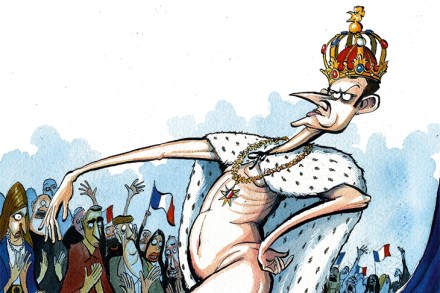
God bless Emmanuel Macron for his perseverance and self-confidence. The French president seeks to lead Europe and turn the continent into a strong, independent player in its own right. And he is eager to take on the hard, thankless diplomatic work that few of his peers are willing to do. Whether it was his ploy in 2019 to connect then-US president Donald Trump and then-Iranian president Hassan Rouhani on the phone or his months-long, intensive personal dialogue with Russian President Vladimir Putin before the war in Ukraine, Macron invests a lot of time and capital into these gambits. Unfortunately for him, many of them fail to accomplish anything of substance. Macron wasn’t able to convince Rouhani to speak with Trump (although Trump reportedly agreed to the call).

Use Russia’s money to destroy Russia’s military

From our US edition

After thirteen months of war, Ukraine’s infrastructure is in a dire state. Its armies are preparing for a counteroffensive, and its economy is not likely to fare any better this year than it did in the last. Kyiv will need more money from the West — and the West will have to provide. The need is clear, but the will, in the United States and Europe, less so. Thankfully there is a way around this looming problem, courtesy of the Central Bank of the Russian Federation.  Representative Stephanie Bice of Oklahoma has submitted the Make Russia Pay Act, which authorizes the federal government to seize, deem as forfeited, and liquidate Russian assets that are currently frozen in the US.

vladimir putin hawks

Andrey Kurkov brings clarity to the Ukraine invasion

From our US edition

"War and books are incompatible,” decided Andrey Kurkov, one month into Putin’s war against Ukraine. Reading his Diary of an Invasion, it’s not hard to see why he thinks so. Homes are evacuated; air raid sirens go off day and night. You get shelled. There is a never-ending cascade of bad news: about friends, about war crimes, about the possibility of nuclear catastrophe. The loss of luxuries. No tonic water, no whiskey-and-soda. There isn’t much time to think. Kurkov’s book came to the attention of the West when it was published in the UK last September. Since then, it has emerged as one of the first serious works of literature to come out of Ukraine since the invasion.

kurkov

A history lesson for Joe Biden

From our US edition

Some moderately clever people, reflecting on the confusing morass of current events, knowingly quote George Santayana’s most famous observation: that those who cannot remember the past are condemned to repeat it. Since the past is largely an almanac of unfortunate (not to say horrific) events, the idea that we are “condemned to repeat it” concentrates the mind in approximately the way Dr. Johnson said the prospect of hanging in a fortnight tends to do. But of course the past never really repeats itself. When it comes to history, Heraclitus rules: you cannot step into the same river twice, mon brave. Moreover, as that sage of Ionia said, “the true nature of things loves to conceal itself.

Vladimir Putin

After his trip to Moscow, Xi Jinping still holds all the cards

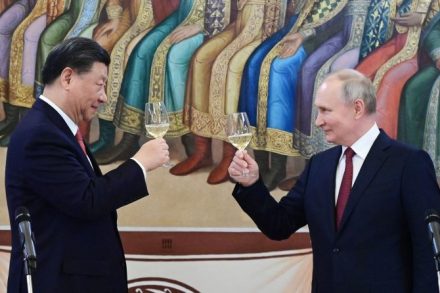
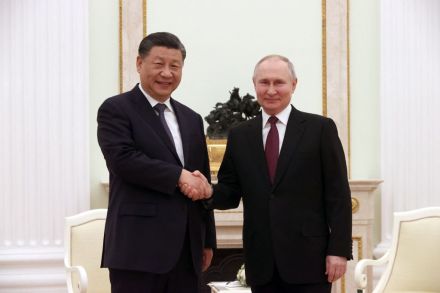
After his arrival in Moscow on Monday, President Xi Jinping said that China is ready, along with Russia, ‘to stand guard over the world order based on international law’. This statement came closer than ever before to articulating his view that a normative struggle is going on between a western-dominated order, and one more suited to Beijing’s interests. As he departed yesterday, he went further: ‘Right now there are changes, the likes of which we haven’t seen for 100 years. And we are the ones driving these changes together.’ Having positioned himself as a potential peacemaker, Xi clearly believes the war in Ukraine presents him with a win-win situation ­­­– or even a win-win-win one.

Putin and Xi: authoritarian bros

From our US edition

Relationships between dictators are bound to be a bit strange, but Xi Jinping and Vladimir Putin’s stands out for its theatrical quality. Meetings are carefully choreographed for maximum propaganda effect. Lavish gifts and gilded state rooms are the norm. Fluent in the language of autocratic flattery, the two always have gushing praise for each other. In 2019, before traveling to Russia, Xi said that Putin was his “best and bosom friend,” while just a year earlier Putin praised Xi as being a “remarkable thinker” and “a good friend I can count on.” Leading up to this week’s visit, Putin referred to Xi as his “good old friend,” and recalling Confucius, wrote, “Isn’t it a joy when a friend comes from afar!

putin xi authoritarian bros
war

How to win the war that everyone is losing

From our US edition

Russia is losing the war in Ukraine. So is Ukraine. And so are we. Imagine the good guys win tomorrow. What exactly will we have won? Ukraine was the poorest country in Europe even before the war. Afterward it will remain as dependent on American dollars as it is now — and on American arms. Russia will not have disappeared, after all. The last war-torn and impoverished country that required open-ended American support was Afghanistan. Yet all the weapons and funds we lavished on Hamid Karzai and Ashraf Ghani failed to keep the Taliban at bay after we left. The money also didn’t help with Afghanistan’s corruption problem. Will it help with Ukraine’s? In 2021, Transparency International ranked Ukraine second only to Russia as the most corrupt country in Europe.