Anna Arutunyan

Anna Arutunyan is a Russian-American writer and a global fellow at the Wilson Center. She is the author of The Putin Mystique: Inside Russia’s Power Cult and Hybrid Warriors

Navalny showed there is a better Russia

From our UK edition

Everything was angular about him: his brilliant smile, the choppy movements of his hands as he spoke, the western mannerisms he had picked up abroad at Yale. But it was the smile that really stood out. Alexei Navalny didn’t know me, probably didn’t trust me, but his smile was a signal of trust – an open sincerity I’d never seen among Russian politicians. It was the kind of trust that comes from an inner self-confidence, the belief that his country’s laws are for him and for the people, and most of all, the belief in solutions. As a reporter in Russia, it was not the only time I had seen or spoken to him, but when I learned of his death, it was that memory in particular that broke my heart.
Putin’s secret weapon is fragility

From our UK edition

As the dust settles on Yevgeny Prigozhin’s mutiny that wasn’t, the consensus is clear: Vladimir Putin has been left weakened and vulnerable. Rebellions like this historically spell the beginning of the end of Russian authoritarian regimes, and observers are watching excitedly for signs of more vultures circling the Kremlin. But Putin's weakness might, conversely, be the reason he clings on to power – at least for now. That Putin was damaged by the events of last weekend seems obvious: a private businessman with an army of just 10,000 men crosses your border, calls you a liar, takes one of your military bases in Rostov, marches on Moscow and shoots down and kills at least 13 of your pilots.

Who is running Russia while Putin plays war? 

From our UK edition

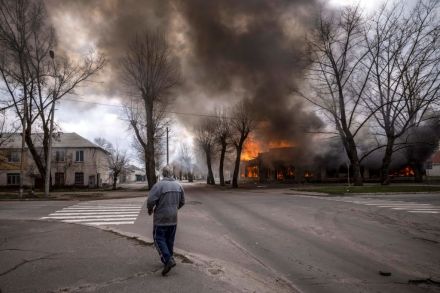
As the war in Ukraine spilled into Russian territory, with shelling in the Russian city of Belgorod, President Vladimir Putin was busy explaining that he ‘sleeps like a normal person’ during an online meeting with families to honour Children’s day. That Putin mentioned his healthy sleeping pattern, without discussing the ongoing Ukrainian incursion into Belgorod – where civilians, including children, were being evacuated – left some observers wondering who is actually running the country while he plays war.   The Russian regime is far from monolithic, and there are other forces in power besides Putin and the turbo-patriots Putin has a penchant for disengaging and struggling to make decisions, especially when there are no good ones left to make.

Is Yevgeny Prigozhin having second thoughts about the Ukraine war?

From our UK edition

Something strange is happening to Yevgeny Prigozhin. The chief of Vladimir Putin’s mercenary army in Ukraine has begun withdrawing his forces from Bakhmut, has all but conceded defeat in one of his most bizarre interviews yet, and, to top it off, now the journalist who interviewed him has been fired. 'We came in boorishly, trampling all over Ukraine’s territory in search of Nazis. And while we searched for Nazis, we fucked up everyone we could,' Prigozhin told the pro-war political journalist Konstantin Dolgov in an interview on Tuesday. 'The special military operation was done for the purpose of ‘denazification’…But we ended up legitimising Ukraine. We’ve made Ukraine into a nation known all over the world. As for demilitarisation....

Russian patriotism isn’t what Putin thinks it is

From our UK edition

With Russia’s brutal war against Ukraine showing no signs of reaching a conclusion, a recent study by the country's main state-run pollster, VTsIOM, revealed that 91 per cent of Russians consider themselves patriots. On the face of it, these numbers seem to vindicate two camps with a strikingly similar worldview. On the one hand, there is Vladimir Putin’s Kremlin, desperate to prove that he is fighting this war in the name of all Russians; and on the other, a growing handful of those in the West who claim to be supporters of Ukraine and Putin’s foes, but who insist with equal vehemence on the populist fallacy that it is not just Putin’s war, but that of all Russians.

The ‘sham subculture’ sparking panic in the Kremlin

From our UK edition

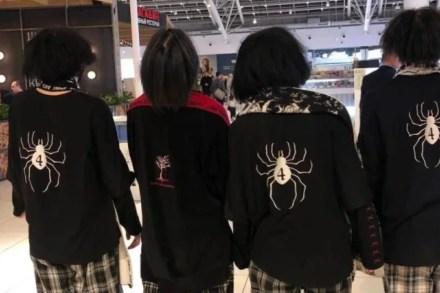
Their two countries may be at war, but Russian and Ukrainian police have a common and apparently formidable enemy. That is, judging by their efforts to infiltrate groups of 13- to 17-year-old kids sporting long black hair and hoodies emblazoned with a picture of a spider on the back. The so-called PMC Ryodan – a fan club dedicated to the Japanese anime series Hunter x Hunter, featuring a criminal gang – may be many things, but a private military company it is not. On 22 February these fans gathered at a Moscow mall and were confronted by a rival group who picked a fight with them, offended by their weird clothes.

Can Ukraine ever win over Crimea and the Donbas?

From our UK edition

It’s a topic that few are willing to talk about, but at some point – and especially if it is to get the victory it seeks – Ukraine will have to confront a looming problem: what to do with millions of its own citizens who currently have closer ties to Russia than they do to Ukraine.   President Volodymyr Zelensky has made it quite clear that Ukraine intends to reclaim all of its territory – that includes a large chunk of the Donbas region that pro-Russian separatists, aided by Russian troops, turned into unrecognised pseudo-states in 2014, and the Crimean peninsula, which Russia annexed that March.  If this is a problem in areas liberated after less than a year of Russian occupation, how does Ukraine plan to reintegrate millions of people in the Donbas?

Putin will stick to his world war two narrative – it’s all he’s got left

From our UK edition

‘It’s unbelievable but true,’ Vladmir Putin said on the 80th anniversary of the conclusion of the battle of Stalingrad. ‘We are again being threatened by German Leopard tanks.’ The Russian president is once again turning to an old staple he has often used to rally support in the absence of a genuine, unifying ideology: the great patriotic war, as the Russians call the eastern front in world war two. And this time, he’s doing it as he wages a war in Ukraine he has sought to portray as existential, while Russia struggles to mobilise resources, personnel and morale.

Why Putin needs Prigozhin

From our UK edition

It’s been a tense couple of weeks for Yevgeny Prigozhin, the businessman and founder the of Wagner Group of mercenaries. Russian troops and Prigozhin’s mercenaries have been closing in on the strategic town of Bakhmut in eastern Ukraine, capturing territories around it. On 10 January, Prigozhin boasted that his forces had ‘taken control’ of Soledar, even as fighting continued inside the town and Ukraine disputed the claims. Two days later, Russia’s defence ministry announced that the ‘liberation’ of Soledar was complete. In a separate statement that same day, claiming to respond to various media inquiries, the ministry clarified that the urban territories of Soledar had been captured thanks to the “courageous and selfless actions” of the Wagner Group.

Putin is running out of options – and shopping for more

From our UK edition

As Vladimir Putin geared up to commemorate the 80th anniversary of the end of the Siege of Leningrad, all the chatter pointed to a second wave of mobilisation to prop up Russian troops struggling to hold on to occupied Ukrainian territories. But the Russian president announced no such thing. Instead, addressing veterans and workers at a weapons factory in St Petersburg on Wednesday, he rallied Russians with promises of an ‘assured victory’ and pledged that he was trying to end the war. It was, in the end, a rather anticlimactic message. Vladimir Rogov, the Kremlin appointed head of Russian-occupied Zaporizhzhia had promised ‘a very important statement,’ before the speech while western and Ukrainian intelligence officials predicted another mobilisation drive.

Latvia’s Russian media crackdown will delight Putin

From our UK edition

When Russia was preparing to annex Crimea in the late winter of 2014, the newly-appointed head of the Russian agency that published our newspaper, the Moscow News, laid down some new rules. The age of disinterested, objective reporting was over. Our job, this Kremlin-picked patriotic zealot told staff, was to love the Motherland. We all resigned. As a journalist, striving for disinterested objectivity was literally my job description – the values instilled in me when I trained in New York. Praising your Motherland for money can be called all sorts of things, just not love. Instead, I went on to report on the start of Russia’s incursion into Ukraine for Western publications, and watched in dismay as the Kremlin began its crackdown on independent media.

The best way to stop Russian trolls is to ignore them

From our UK edition

Almost from the moment the polls closed in the 2016 US presidential contest between Donald Trump and Hillary Clinton, accusations emerged of Russian interference in the election. Now it appears to have been confirmed from the horse’s mouth: Russian trolls recruited by the Putin-linked businessman Yevgeny Prigozhin have meddled in multiple US elections. Prigozhin, known for supplying catering contracts to the Kremlin, openly admitted as much.   ‘Gentlemen, we interfered, we are interfering and we will interfere,’ he boasted on the eve of Wednesday’s US midterm elections.

Putin’s acolytes are boxing him in

From our UK edition

As Russia continues to get routed in eastern Ukraine – losing territory, machinery and personnel to an emboldened Ukrainian counteroffensive – infighting has intensified in the Kremlin. Looking for someone to blame, the various factions are increasingly attacking Defense Minister Sergei Shoigu and his Ministry, and seeking an escalation of hostilities in Ukraine.  When Russia lost the town of Lyman less than 24 hours after illegally annexing four regions that included it, Chechen leader Ramzan Kadyrov called for a tactical nuclear strike on Ukraine. He also lashed out against the General Staff, and threatened to send Central Military District Commander Alexander Lapin to the front to 'cleanse his shame in blood'.