Vazha Tavberidze

Vazha Tavberidze is a staff writer with Radio Free Europe/Radio Liberty’s Georgian service. RFE/RL is a media organisation covering news in Eastern Europe, Central Asia, the Caucasus and the Middle East.

Oleksii Reznikov: ‘Trump and Zelensky fall-out was a clash of emotions’

From our UK edition

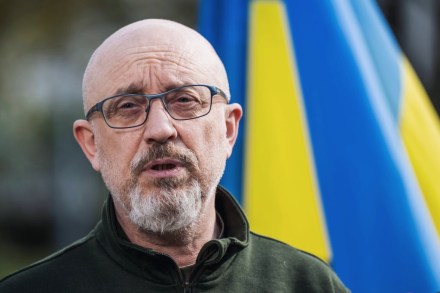
‘What just happened – the suspension of military aid – was predictable. I expected it. It wasn’t too hard to predict,’ the former Ukrainian defence minister tells me. Oleksii Reznikov, speaking to me from Kyiv and wearing a ‘Saint Himars’ T-shirt, remains as upbeat as ever, chuckling as he recalls how, back in 2022, Ukraine was supposed to fall in three days. ‘We knew we wouldn’t. It was a matter of survival – three days became three weeks, three months, and now three years. These current events? Just another phase. We have tough negotiations ahead. This isn’t a two-player game – it’s multilateral, with competing interests and big personalities.’ Back then, among Ukraine’s allies, there was no consensus even whether Russians would invade or not.
Who is Mikheil Kavelashvili?

From our UK edition

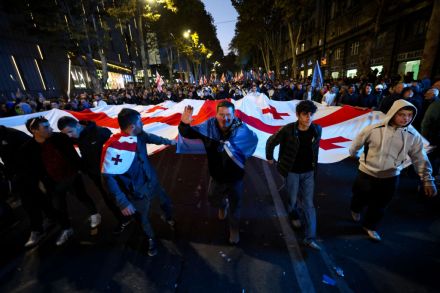
‘They say the human body, given time, builds a resistance to pain. But after being tear-gassed six times in 21 nights, I can’t say I’ve started to tolerate it, let alone appreciate it,’ says a colleague who hasn’t missed a single night of the pro-European protests on Tbilisi’s Rustaveli Avenue since 28 November. She counts herself lucky; so far, she has avoided the brutal beatings meted out by the masked riot police, nicknamed ‘robocops’. These enforcers have become the Georgian government’s ruthless arm for crushing dissent, their mission seemingly to maim and mangle those who find the prospect of embracing the Kremlin’s Russkiy mir less than appealing and aren’t afraid to say so.

Georgia is in an existential fight

From our UK edition

Georgia is defined by its fight for survival. Lying in the shadow of Russia, Turkey and Iran, it has navigated – not always successfully – between the great powers for centuries, longing for freedom.  The 26 October parliamentary elections were billed as the latest existential chapter in this centuries-old struggle – a choice between returning to the West or sliding further into Russia’s orbit. Instead, it became yet another interlude to Georgia’s political crisis, with high-stakes actors in Moscow, Brussels, and Washington watching on as both sides apparently pull their punches, waiting for one another to make the first mistake.

The man behind Georgia’s pro-Putin turn

From our UK edition

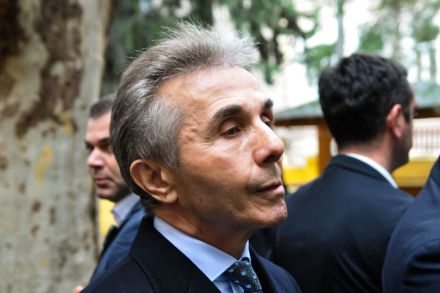
‘He wasn’t my first billionaire, so I kind of knew my way around him’, a senior US diplomat who plied his trade in Georgia told me at the sidelines of the Munich Security Conference. ‘And the weirdest thing? He was starry-eyed about Nato and the West in the beginning. I remember at one meeting with a US delegation, he outright asked, “So what I” – notice the I, not we – “what I gotta do to get into Nato by 2016?” We all looked at each other, then gave him the usual line about democratic reforms and so on. He listened for a while, then interrupted, “But what do I really have to do?”’ The billionaire in question is Bidzina Ivanishvili, Georgia’s richest and most influential figure.

Georgia’s Euros run gave the nation some respite

From our UK edition

If you had told me a month ago that Georgia would make it into the play-offs, defeating Portugal on the way, I’d have called you mad – which, much like in English, isn’t a word in Georgian that necessarily carries a negative connotation. Over these last two weeks, especially after the historic 2-0 win against Portugal, we Georgians all went a little bit mad. With Georgia being the cradle of wine (we invented it), it’s perhaps unsurprising that copious amounts were consumed. Come Sunday, however, after the utter demolition inflicted by a ruthless and vastly superior Spanish team, the mood was somewhat subdued. Georgians are like that. We believe we can always win, even when all the evidence points to the contrary.