Uk politics

Minutes of an EU coup: How Martin Selmayr made his move

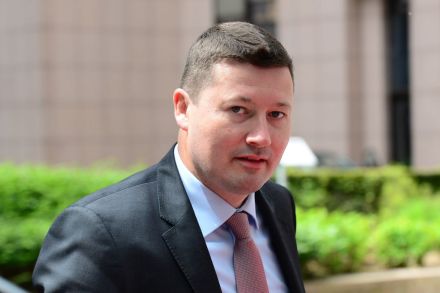
Martin Selmayr’s power grab, elevating him to the post of Secretary-General and putting him in charge of 33,000 staff, was a brilliantly-executed Brussels coup. As Jean Quatremer reveals in The Spectator, the double promotion of Juncker’s chief of staff was over in nine minutes flat, and was described by one of those present as an 'impeccably prepared and audacious power-grab'. So how did he do it? And how can such skullduggery be covered up? On Friday, the European Commission slipped out the minutes for the meeting on February 21st at which Selmayr earned his promotion. Early in the meeting, we learn that the job of Deputy Secretary General was vacant: But then – surprise! – Selmayr wasn't finished there.
‘Stalin’s nanny’ backs Corbyn

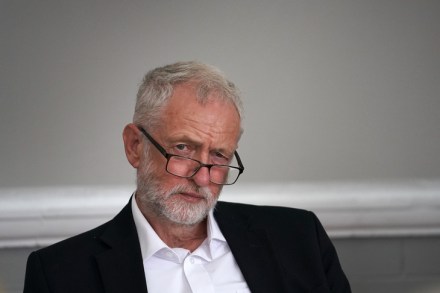
There was much excitement last week when Susan Michie told Communist Party members – at a meeting at the Marx Memorial Library in Clerkenwell – that they should work 'full tilt' to propel Jeremy Corbyn into No 10. Her claim that such a stance could act as 'a potential springboard for strengthening organic ties with Labour' will no doubt have worried moderates concerned about the party's direction of travel under Corbyn. So, Mr S was curious to read Sarah Baxter's column in the Sunday Times.

Philip Hammond’s false hope

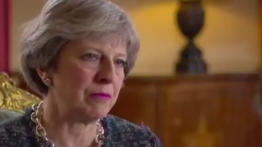
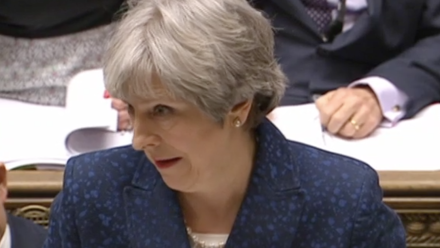
Theresa May came under fire last year when she appeared to dodge a question on whether – if there was a referendum tomorrow – she would now back Brexit. Since then, the Prime Minister managed to set tongues-wagging once again when asked in a Q&A after her big Brexit speech whether Brexit was worth it. May swerved the question – opting to confirm that she will deliver the will of the people. So, Mr S nearly choked on his tea this morning when the Eeyore-esque Chancellor appeared to enthusiastically say that Brexit was worth it, on the Andrew Marr show: AM: Is it worth it? PH: Yes.

My mum bought her council house. Can Laura Pidcock explain why that’s wrong?

The moment that has defined my approach to politics came when my mother told me the proudest moment of her life: buying her council house.  Growing up in Consett, a former steel town in the north east, that house seemed to be like any of the other identikit terraced properties in the area. But to my mother, it was an asset she now owned and was able to pass on to me and my siblings. Later in life, I realised that Right to Buy had opened up new avenues for my mother, beyond having a roof over her head: it gave her choice, security, and a sense of achievement and self esteem. Especially as a single parent with three kids.

With 240 potential witnesses, were Skripal’s poisoners trying to send a message?

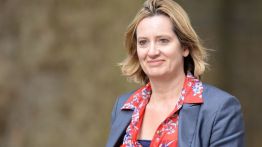
‘Any fool can commit murder, but it takes an artist to make it look like suicide’ the KGB used to say. But whoever put Sergei Skripal and his daughter Yulia in hospital was rather less subtle: police have identified 240 potential witnesses, according to Amber Rudd, and have extensive CCTV coverage to go through.  I write in The Sun this morning that anyone capable of getting hold of the nerve agent used was capable of killing him in a far more subtle manner - with no witnesses and nothing in CCTV. Whoever carried out the attack on Skripal wanted to send a message. They wanted to prove that enemies of Russia are not safe wherever they may be.

Labour’s ‘woman’ problem

There are plenty of things you could say about Labour’s All-Women Shortlists (AWS). Tony Blair called them 'not ideal at all' in 1995. In 1996, Peter Jepson and Roger Dyas-Elliott – two men who’d been rejected as Labour candidates – called them sex discrimination. An industrial tribunal agreed with them, and Labour was forced to suspend the policy until 2002, when it was able to bring in the Sex Discrimination (Election Candidates) Act, permitting positive discrimination in candidate selection. In 2002, Owen Jones called them 'most successful at expanding the career options of a tiny elite of professional, university-educated women', Blair’s hesitancy forgotten and AWS rewritten as a tool of centrist hegemony.

Will Philip Hammond drop the Eeyore act in his Spring Statement?

A spring without a Budget is a bit like one without the Grand National or the Boat Race. It doesn’t feel right. The sight of the Chancellor’s red box, regardless of its contents, has always instilled in me a frisson of elation as one contemplates the warmer, sunnier months ahead. We do, however, have the consolation of a spring statement, which Phillip Hammond will deliver next Tuesday. What can we expect? Very little, if the briefings are anything to go by. Hammond has let it be known that the occasion will not mirror the autumn statements of the Brown, Darling and Osborne years, which were used as a second opportunity to jack up taxes or come up with a handout. In some years it was the autumn statement, not the Budget, which carried the more significant fiscal changes.

Great British Bake Off judge backs Brexit

Although the BBC has earned a reputation for leaning towards Remain, tonight's Question Time shed light on the various political allegiances at the BBC. Prue Leith – the Great British Bake Off judge and Spectator writer – told the audience that she had backed Brexit in the EU referendum: ‘There was a life before we were in the EU. I ended up voting for Brexit but I dithered and dithered for ages because there were really good arguments on both sides, and really intelligent people on both sides, it’s such as pity we have everyone fighting.’ With GBBO fans taking to Twitter in dismay at their heroine's revelation, Mr S hopes that viewers will take Leith's advice on board going forward.

Truss takes over No 11

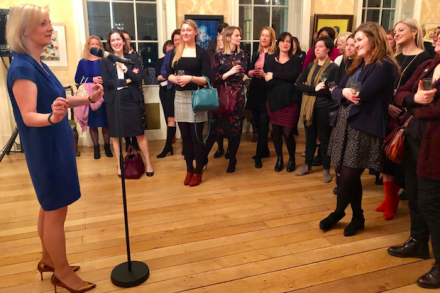
To mark International Women's Day, Liz Truss took over the Treasury for one night only. The Chief Secretary to the Treasury kicked off the celebrations at No 11 with a speech praising Destiny's Child, the American girl group: 'I can't put it better than Destiny's Child when they sang "all the honeys making money"' While Truss's speech was primarily focussed on encouraging the women of the world to open their minds to finance (and liberty) – it also appeared to have a message for Philip Hammond. Truss told a room of female businesswomen and hacks that there was still much work to do for women's progress. She noted that while things had improved, there was yet to be a female governor of the Bank of England or, for that matter, a... female Chancellor.

Watch: Maybot’s awkward International Women’s Day interview

Happy International Women's Day. To mark the occasion, there are several events taking place across Westminster this evening – with Liz Truss opening up the Treasury to leading businesswomen. So, how would the Prime Minister like to mark the occasion? That's the question that left Theresa May flummoxed today in an interview with ITV. The Maybot appeared rather taken aback when Julie Etchingham innocently asked what May would do to let her 'hair down' on her 'perfect get-together' with her 'girlfriends': https://twitter.com/itvnews/status/971803875870113792 Time for a reboot?

Domestic abuse is undergoing the same revolution as mental health

Over the past ten years, mental health has gone from being one of those problems that no-one liked to talk about to something politicians tussle over to show they are the most committed. There is still a stigma floating around certain conditions, and people are still struggling to access the basic treatment that they need. But it is clear that society is growing better at understanding these illnesses - and is becoming angrier that there is not better provision for caring for them. That same slow shift is now starting with domestic abuse. Like mental illness, its victims have often been dismissed as either being flawed or in some way bringing the crime upon themselves. There was a narrow understanding of what abuse meant, and what both perpetrators and victims might look like.

SNP’s fake news

The SNP are a quieter force in Westminster since the snap election. Along with a reduction in size, they now have to face down the equally rowdy Scottish Conservatives each week at PMQs. Alas, it seems the new challenge is proving too great for the party's digital operation. At PMQs, the SNP's Mhairi Black criticised the government for singing the virtues of universal credit when her Tory colleagues in Stirling council have called for half a million pounds in extra funding to mitigate its effects. https://www.youtube.com/watch?v=m1yY-Ofuqpc The SNP's digital operation was quick to go on the offensive – criticising the Tories over their 'hypocrisy' on Universal Credit after 'Tory-run Stirling council asked for funding to offset its effects'. Only there is a problem.

‘Mansplaining’ Corbyn plumbs new depths at PMQs

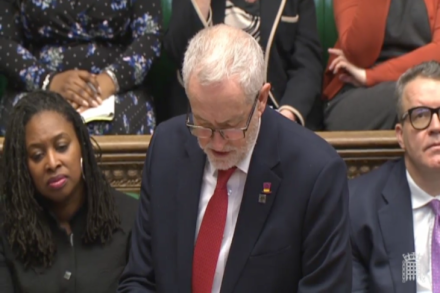
Jezza was on spectacularly dreary form at PMQs. He droned through a communique about International Women’s Day which made the celebration sound inexpressively dispiriting. The movement is all about ‘how far we’ve come and how far we have to go,’ he moaned. He sounded like an Arctic explorer giving a live commentary as he slices off his frost-bitten toes, one by one, with a pen-knife. May hadn’t mentioned Women’s Day. And Corbyn, by bringing it up, had laid himself open to attack. It was swift and deadly. And beautiful in its way. ‘Thank-you for telling me it’s International Women’s Day tomorrow,’ said May in a voice that was full of blades. She turned towards him, both lasers on full beam.

European Commission rain on Theresa May’s parade

Here we go. The European Commission draft guidelines for the Brexit trade negotiations have leaked – and, as expected, it doesn't make all that pretty reading for the British government. Although Theresa May's Brexit speech was well-received in the UK, in Brussels many of May's arguments and proposals appear to have fallen on deaf ears. Speaking today, Donald Tusk has warned that it is not his priority to make Brexit a success: 'I fully understand and respect Theresa May’s political objective to demonstrate at any price that Brexit could be a success and was the right choice. But sorry, it is not our objective.' The main takeaways from the text, obtained by Politico, are that there can be no 'partial participation' – aka cherry-picking – in the single market.

Guardian’s Saudi dilemma

The crown prince of Saudi Arabia, Mohammed bin Salman, is in town today for a three-day state visit with a charm offensive from the British government and royal family. Proving that he is a very modern prince, Mohammed bin Salman has also managed a media PR blitz with pro-Saudi Arabia adverts in a host of papers and media outlets. The Guardian is one of the many papers to do so today: https://twitter.com/Tweet_Dec/status/971309288223330304 Only Mr S can't help but wonder how Grauniad columnist and Saudi critic Owen Jones will react? Jones has been heavily critical of any government, politician or company working with or taking money from the Saudi regime. Will Jones now boycott the Guardian?

Britain should rise above Trump’s trade war

The stock market is reeling. The White House has already witnessed the resignation of the President’s most senior economic adviser. The EU is preparing retaliation, and other countries are checking the rule books to see what sort of tariffs and quotas they might be allowed to impose. In the wake of Donald Trump’s decision to whack hefty tariffs on steel imports into the United States a full-blown transatlantic trade war is brewing – and if China and Japan wade in, that may quickly turn global. That will, of course, be terrible for the global economy. But it might also be the perfect moment for a soon-to-be-out-of-the-EU Britain to reassert its historic role as a champion of free trade. In truth, the US and the EU are both being as bone-headed as each other.

How the Conservatives plan to revive their youth wing

There are many things the Conservative party needs to do before it is election fit – whether local or national. There's securing a good Brexit deal, building more homes and repairing the damage done in the snap election – to name a few. As I write in today's i paper, one of the big things brains at CCHQ are currently working on is firing up the party's campaign machine. While the Tories don't have a problem attracting party donors, they do have a problem getting people out door-knocking. One of the many missteps Theresa May made last year was catching her own party’s campaign machine off guard with her decision to call a general election.

Why opponents of the Thatcher statue are wasting their time

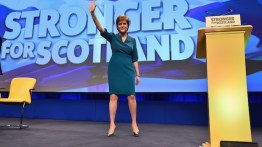
Why on earth would we want to put up a statue of Margaret Thatcher in Parliament Square? That's the question that a number of politicians are asking after the possibility arose once again at the weekend. 'Steady on,' said Nicola Sturgeon. Labour's Chris Bryant was (unsurprisingly, perhaps) rather more verbose. 'What Mrs Thatcher did to communities like the Rhondda deserves recognition in the annals of callousness; not another statue.' Down with the Tory fool behind the suggestion who just cannot stop reminiscing about the 1980s. Except the suggestion came not from a Conservative but a Liberal Democrat MP. Jo Swinson wrote a piece in the Mail on Sunday in which she describes witnessing the very policies that Bryant is so angry about: 'I grew up in the West of Scotland during the 1980s.

Will Britain stand up to Russia?

A Russian man convicted of spying for Britain has mysteriously been taken ill due to an ‘unknown substance’ – I wonder who could be responsible? Of course one can’t assume at this point, and the Russians will express bafflement as to why they’re being accused of poisoning Sergei Skripal and his daughter Yulia. No doubt the London Embassy’s perky Twitter feed will make light of western paranoia in that surreal way international politics is conducted these days.